Your Cart is Empty


More than 60 percent of American restaurant managers now prioritize sustainability when making design choices for their kitchens. When you want to impress guests and reduce your environmental footprint, choosing the right fixtures matters. Discover how stylish bamboo paper towel dispensers deliver exceptional aesthetics for commercial spaces while supporting greener operations with every use.
| Point | Details |
|---|---|
| Bamboo’s Rapid Growth | Bamboo can grow up to 35 inches per day, making it a highly renewable resource compared to traditional timber. |
| Sustainability Potential | Bamboo supports biodiversity and carbon sequestration, positioning it as an ideal choice for eco-conscious businesses. |
| Variety in Processing | Different processing techniques enable bamboo to be used in various applications, from construction to textiles. |
| Comparative Advantages | Bamboo outperforms many traditional materials in terms of growth cycle, carbon footprint, and flexibility, promoting sustainable innovations. |
Bamboo represents a fascinating botanical marvel that transcends traditional plant classifications, offering remarkable sustainability potential for eco-conscious businesses. Unlike conventional timber, bamboo is actually a type of grass characterized by extraordinary growth rates and structural versatility. Scientific research on bamboo’s biological characteristics reveals its unique morphological properties that distinguish it from traditional woody plants.
The defining characteristics of bamboo include its incredibly rapid growth cycle, with some species capable of growing up to 35 inches per day under optimal conditions. This remarkable growth potential makes bamboo a highly renewable resource that regenerates much faster than traditional timber. Structurally, bamboo possesses a complex cellular composition featuring strong, flexible fibers that provide exceptional durability and resilience. These fibers are arranged in intricate patterns that contribute to the material’s strength, making it comparable to steel in certain engineering applications.
Despite its numerous advantages, bamboo is frequently surrounded by persistent myths that require careful examination. One common misconception is that bamboo is inherently invasive and uncontrollable. While some bamboo species can spread aggressively, many varieties can be cultivated responsibly through careful management techniques. Global research on bamboo’s ecological impact demonstrates that with proper agricultural practices, bamboo can be a sustainable and environmentally beneficial crop that supports biodiversity and soil health.
Pro tip: When considering bamboo for commercial applications, always consult with ecological experts who can recommend specific bamboo varieties best suited to your regional climate and sustainability goals.
Bamboo encompasses a diverse range of species and processing techniques that offer unique opportunities for sustainable industrial applications. Worldwide engineered bamboo material research reveals multiple sophisticated methods for transforming raw bamboo into functional products suitable for various commercial uses. The primary types of bamboo include running bamboo, which spreads quickly through underground rhizomes, and clumping bamboo, which grows in tight, controlled clusters.
The processing of bamboo involves several sophisticated techniques that transform raw culms into usable materials. Key processing methods include laminated bamboo lumber, parallel strand bamboo, and bamboo mat boards. Each method requires precise techniques to convert bamboo’s natural structure into stable, durable materials. Systematic conversion methods demonstrate how bamboo is transformed from raw culms into bundled strips, mats, and engineered strands, enabling its use in construction, furniture manufacturing, and specialized commercial applications.
Commercial bamboo processing typically follows a standardized sequence of steps: harvesting mature bamboo culms, splitting and cleaning the material, treating against potential insect or fungal damage, drying to remove moisture, and then applying specific manufacturing techniques based on the desired end product. Specialized industrial processes can convert bamboo into everything from structural building materials to delicate textile fibers, showcasing the material’s remarkable versatility and potential for sustainable manufacturing.
Pro tip: When selecting bamboo for commercial production, prioritize species native to your region and consult with local agricultural experts to ensure optimal sustainability and growth performance.
Here’s a summary of major bamboo processing techniques and their commercial applications:
| Processing Method | Output Material | Main Application |
|---|---|---|
| Laminated bamboo lumber | Structural boards | Construction, flooring |
| Parallel strand bamboo | Reinforced beams | Building structures |
| Bamboo mat board | Compressed sheets | Furniture, paneling |
| Mechanical pulping | Fibers and pulp | Textiles, paper products |
| Chemical processing | Dissolved bamboo fiber | Bioplastics, specialty uses |
Bamboo represents a botanical marvel with extraordinary growth characteristics and intricate mechanical properties that set it apart from traditional plant species. Multiscale investigations of bamboo’s cellular structures reveal a complex biological system that enables remarkable adaptability and resilience across diverse environmental conditions. The plant’s unique cellular architecture allows for rapid vertical growth, with some species capable of expanding up to 35 inches in a single day under optimal circumstances.

The mechanical features of bamboo are equally impressive, characterized by an extraordinary combination of strength, flexibility, and lightweight composition. Comprehensive mechanical property evaluations demonstrate significant variations in tensile strength, compressive capacity, and elastic modulus across different species. These variations are influenced by factors such as the plant’s age, moisture content, and specific genetic characteristics. Bamboo’s internal structure features longitudinal fibers and nodes that provide exceptional structural integrity, enabling it to withstand significant environmental stresses while maintaining remarkable flexibility.
Bamboo’s growth patterns are equally fascinating, with two primary taxonomic categories driving its development: running bamboo and clumping bamboo. Running bamboo spreads aggressively through underground rhizome networks, while clumping bamboo grows in more controlled, dense clusters. These distinct growth strategies reflect the plant’s evolutionary adaptations, allowing it to thrive in varied ecological zones ranging from tropical rainforests to temperate mountain regions. The plant’s ability to regenerate rapidly after harvesting—often reaching full maturity within 3-5 years compared to decades for traditional timber—makes it an exceptionally sustainable resource for eco-conscious industries.
Pro tip: When analyzing bamboo for commercial applications, conduct comprehensive testing across multiple specimens to account for the significant mechanical variations between different species and growth conditions.
Bamboo represents a revolutionary sustainable resource with transformative potential for eco-conscious businesses seeking to reduce their environmental footprint. Technological innovations in bamboo product development have dramatically expanded its commercial applications, enabling industries to leverage its exceptional environmental characteristics across multiple sectors. The material’s rapid growth cycle, low carbon emissions, and versatile manufacturing potential make it an increasingly attractive alternative to traditional resource-intensive materials.
The ecological advantages of bamboo extend far beyond its immediate commercial utility. Global research on bamboo’s systemic environmental impact reveals its critical role in carbon sequestration, biodiversity preservation, and ecosystem restoration. Bamboo’s unique root systems help prevent soil erosion, stabilize landscapes, and regenerate depleted agricultural lands, while simultaneously capturing significant volumes of atmospheric carbon dioxide—making it a powerful tool for climate change mitigation.
Commercial sectors ranging from construction and textiles to packaging and furniture manufacturing are increasingly recognizing bamboo’s sustainability potential. The material offers remarkable benefits including rapid renewable growth, minimal agricultural inputs, and the ability to thrive in diverse ecological conditions without extensive irrigation or chemical treatments. By integrating bamboo into their supply chains, businesses can simultaneously reduce environmental impact, demonstrate corporate social responsibility, and access a versatile, high-performance material that meets increasingly stringent sustainability standards.
Pro tip: Conduct a comprehensive lifecycle assessment of your current materials to accurately quantify the potential sustainability gains from transitioning to bamboo-based alternatives.
Bamboo presents a compelling alternative to traditional materials, offering unique advantages that position it as a superior choice for environmentally conscious businesses. Comprehensive comparative studies of construction materials reveal bamboo’s exceptional performance across mechanical strength, environmental sustainability, and cost-effectiveness. Unlike steel or concrete, bamboo provides remarkable tensile strength while maintaining a significantly lower carbon footprint, making it an attractive option for industries seeking sustainable material solutions.
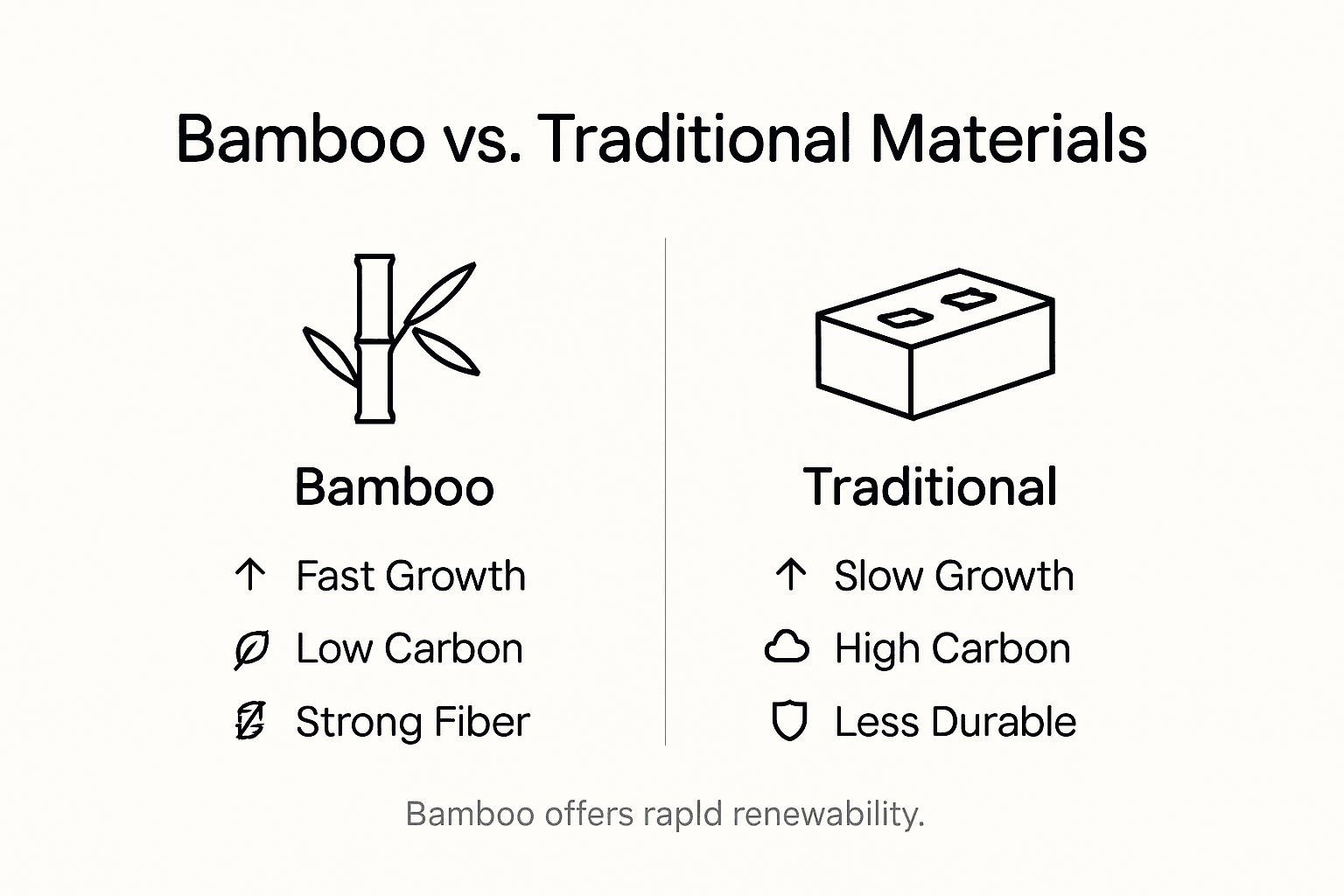
Global benchmarking research demonstrates bamboo’s versatility in outperforming conventional materials across multiple sectors. In construction, bamboo exhibits comparable structural integrity to traditional timber, with added benefits of faster regeneration and lower environmental impact. Its natural properties enable it to compete effectively with plastics, metals, and fossil-based materials, particularly in applications requiring lightweight, durable, and eco-friendly components. The material’s inherent flexibility and strength make it especially valuable in industries ranging from architecture and furniture manufacturing to packaging and textile production.
When comparing bamboo to alternative materials, key distinguishing factors emerge. Traditional hardwoods require decades to mature, whereas bamboo reaches full harvest potential in just 3-5 years. Plastic-based materials generate significant environmental waste, while bamboo naturally biodegrades and sequesters carbon during growth. Steel and aluminum production involve energy-intensive processes that generate substantial greenhouse gas emissions, contrasting sharply with bamboo’s renewable and carbon-negative characteristics. These comparative advantages position bamboo as a transformative material for businesses committed to sustainable innovation and environmental responsibility.
This table highlights key differences between bamboo and other common materials:
| Material | Growth Cycle | Carbon Footprint | Durability |
|---|---|---|---|
| Bamboo | 3-5 years | Minimal, absorbs CO₂ | High strength, flexible |
| Traditional wood | 20-80 years | Moderate to high | Dense, less flexible |
| Plastic | Non-renewable | High emissions | Long-lasting, polluting |
| Steel | Non-renewable | Very high emissions | Extremely strong, heavy |
Pro tip: Conduct a detailed lifecycle assessment comparing bamboo with your current material inputs to quantify potential sustainability and cost-saving opportunities.
Navigating the complex landscape of bamboo product selection requires a strategic approach that balances sustainability goals with practical business considerations. Research on bamboo commercialization barriers reveals significant challenges that eco-conscious businesses must carefully evaluate, including cost competitiveness, regulatory compliance, and market perception. Understanding these nuanced factors is crucial for making informed decisions that align with both environmental objectives and operational requirements.
Emerging technological innovations in bamboo product development highlight several critical selection criteria businesses should consider. Key considerations include raw material utilization efficiency, supply chain sustainability, processing technology standards, and potential environmental impact. Companies must look beyond surface-level sustainability claims and conduct comprehensive assessments that examine the entire lifecycle of bamboo products, from harvesting and processing to end-of-life disposal.
Successful bamboo product selection involves a multifaceted evaluation process. Businesses should prioritize products from suppliers with transparent sourcing practices, certifications from recognized environmental organizations, and demonstrated commitment to responsible manufacturing. This means examining factors such as harvest methods, worker conditions, carbon footprint, and biodegradability. Additionally, companies should assess the specific performance characteristics of bamboo products in their intended application, recognizing that not all bamboo materials are equally suited to every use case.
Pro tip: Request detailed sustainability documentation and third-party certifications from potential bamboo product suppliers to validate their environmental claims and ensure alignment with your organization’s ecological standards.
As the article highlights, bamboo offers remarkable sustainability benefits with its rapid growth, low carbon footprint, and impressive durability. Businesses aiming to reduce environmental impact face challenges like sourcing responsibly managed bamboo products that marry function with style. Cozee Bay specializes in handcrafted bamboo items designed exactly for this purpose. Our Bamboo Paper Towel Dispenser- A Sleek Look Home or Office collection blends sustainability with elegance, perfect for commercial and residential environments that demand both form and eco-functionality.
Discover how switching to bamboo can transform your space and reinforce your commitment to sustainability today. Explore our full range of bamboo products including practical accessories at Paper Towel Dispensers - Accessories | Cozee Bay®. Visit us now at Cozee Bay and take the next step toward greener, more responsible business practices with quality-crafted bamboo solutions.
Bamboo offers rapid renewability, carbon sequestration, and minimal agricultural inputs, making it an eco-friendly alternative to traditional materials like timber and plastics.
Bamboo has a much lower carbon footprint than traditional hardwoods, and unlike plastics, it naturally biodegrades. Its fast growth cycle allows for quicker replenishment, while traditional materials may take decades to mature.
Key bamboo processing methods include laminated bamboo lumber, parallel strand bamboo, and bamboo mat boards, each suitable for different applications such as construction, furniture manufacturing, and textile production.
Businesses should evaluate cost competitiveness, regulatory compliance, and market perception when choosing bamboo products. Transparency in supply chains and sustainability certifications are also crucial to ensure responsible sourcing.
Comments will be approved before showing up.