Your Cart is Empty


TL;DR:
- Non-biodegradable materials resist microbial breakdown and persist in landfills and ecosystems for decades or centuries.
- Reducing reliance on these materials through source reduction and using certified biodegradable alternatives is more effective than recycling alone.
Non-biodegradable materials are substances that resist breakdown by microorganisms under normal environmental conditions, meaning they do not convert into biomass, carbon dioxide, or water the way organic matter does. While food scraps and paper decompose relatively quickly, non-biodegradable materials simply accumulate. They sit in landfills, float in waterways, and persist in soil for decades or even centuries.
Key characteristics that define a non-biodegradable material:
The term covers a wide range of everyday items, from plastic packaging to synthetic textiles, and understanding it is the first step toward making smarter choices at home and at work.
The impact goes well beyond an overflowing landfill. Non-biodegradable waste contributes to some of the most stubborn environmental problems we face today.
The scale is significant. US municipalities face practical challenges that result in most plastic waste being landfilled or incinerated rather than recycled, compounding long-term accumulation.
Key environmental and health consequences include:
Several U.S. states have responded by restricting polystyrene products and plastic bags, citing both non-biodegradability and litter harm. Those bans have meaningfully reduced consumption in affected regions.
These three terms get used interchangeably all the time, and that mix-up causes real problems when you are trying to make eco-friendly choices. Here is what each actually means:
Watch out for misleading labels. A product stamped “degradable” or even “biodegradable” may not meet any verified standard. Look for certifications like BPI (Biodegradable Products Institute) for industrial compostability or OK Compost HOME for home composting. The difference between those two labels matters more than most packaging lets on. For a deeper look, Cozee-bay’s guide on biodegradable versus compostable breaks it down clearly.
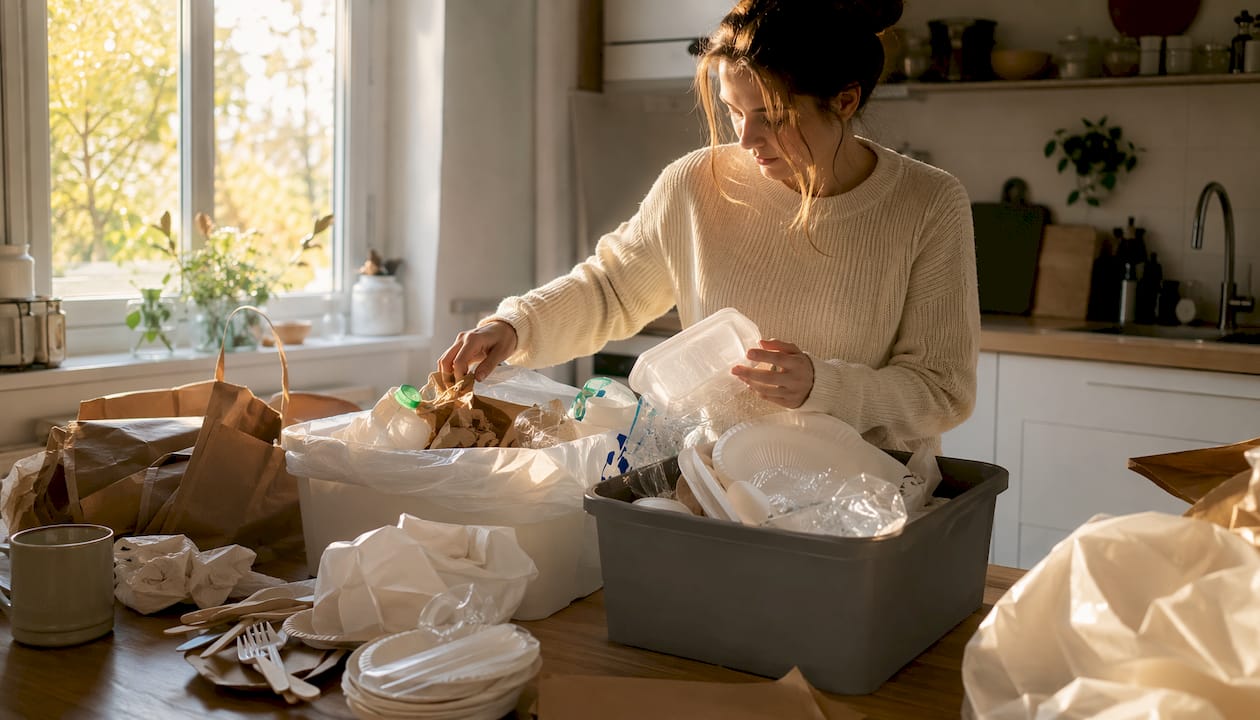
You encounter these every day, often without thinking twice about what happens to them after the trash truck leaves:
Single-use items contribute disproportionately to the overall waste stream. Bio-based versions of some of these, like Bio-PET, sound greener but persist in the environment the same way conventional plastics do. The “bio-based” label refers to the feedstock, not the end-of-life behavior.
Switching away from non-biodegradable materials does not mean sacrificing quality or style. Natural fibers like bamboo, hemp, and jute combine genuine end-of-life biodegradability with durability that holds up in real-world use. Sustainability researchers consistently point to these materials as necessary for reducing long-term landfill accumulation.
Bamboo stands out for several reasons. It grows without pesticides, regenerates rapidly after harvest, and produces a material strong enough for kitchen accessories, dispensers, and commercial fixtures. Cozee-bay’s handcrafted bamboo products are used in restaurants, schools, coffee shops, churches, and senior living centers precisely because they hold up to daily use while keeping the environmental footprint low.
Pro Tip: When shopping for eco-friendly products, check whether the item carries a recognized biodegradability or compostability certification rather than relying on vague “natural” or “eco” marketing language. A BPI-certified or FSC-certified bamboo product gives you real assurance, not just good branding.
For more on why the switch pays off, Cozee-bay’s guide on choosing biodegradable products walks through the practical benefits.
The US relies on three primary disposal methods for non-biodegradable waste: landfilling, incineration, and recycling. Landfills remain the dominant destination, accepting the majority of plastic and synthetic material that cannot be recycled economically. Waste-to-energy incineration reduces volume but generates emissions and leaves behind ash that still requires disposal. Municipal recycling programs handle some plastics, glass, and metals, though coverage varies widely by city and county.
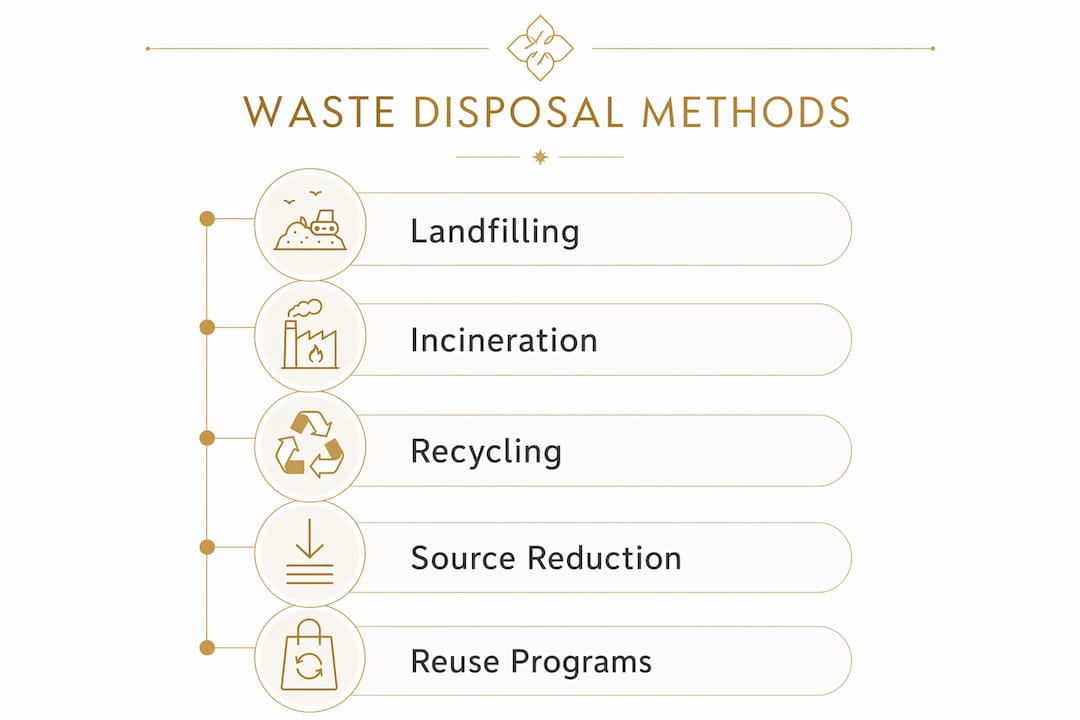
Source reduction, meaning buying less disposable material in the first place, is the most effective strategy. Reuse programs, take-back schemes for electronics and batteries, and composting for organic fractions all reduce the volume heading to landfill. The EPA’s waste management hierarchy places source reduction at the top for good reason: material that never becomes waste never needs managing.
The consequences of non-biodegradable pollution compound over time. Plastics that entered waterways decades ago are still circulating, breaking into ever-smaller fragments that work their way into plankton, fish, birds, and eventually human food. Soil contaminated with persistent synthetic materials loses fertility and microbial diversity, affecting agricultural productivity over the long run.
Human health effects are still being studied, but microplastics have been detected in lung tissue, blood, and breast milk. Chemical additives in plastics, including plasticizers and flame retardants, are known endocrine disruptors. The longer non-biodegradable materials remain in production without viable end-of-life pathways, the more those exposures accumulate across generations.
Federal and state-level action has accelerated. California, New York, and more than a dozen other states have enacted bans or restrictions on single-use plastic bags, polystyrene food containers, and plastic straws. The EPA’s Sustainable Materials Management program sets national goals for reducing waste generation and increasing recovery rates. The Break Free From Plastic Pollution Act, introduced in Congress, would establish producer responsibility requirements and phase out certain single-use plastics at the federal level.
Extended Producer Responsibility (EPR) laws, already enacted in several states, shift the cost of end-of-life management back to manufacturers, creating financial incentives to design products that are easier to recycle or compost. These regulations signal a clear direction: non-biodegradable, single-use materials face growing legal pressure across the country.
Recycling is valuable but limited. Many plastics are technically recyclable yet rarely get recycled in practice because of contamination, lack of collection infrastructure, and weak commodity markets for recovered material. Collection, sorting, and market constraints mean that most plastic waste in the US ends up landfilled or incinerated regardless of the recycling symbol on the label.
Plastics numbered 3 through 7 have especially low recovery rates. Even PET (number 1) and HDPE (number 2), the most commonly recycled plastics, face contamination issues that downgrade material quality. Recycling also does not address the fundamental problem: a material that cannot biodegrade will persist whether it is recycled once or ten times, eventually reaching end-of-life with nowhere to go. Reducing reliance on non-biodegradable materials from the start, and choosing genuinely biodegradable alternatives where possible, closes that gap in a way recycling alone cannot.
Non-biodegradable materials persist in the environment indefinitely because microorganisms cannot break them down, making source reduction and material substitution more effective than recycling alone.
| Point | Details |
|---|---|
| Definition matters | Non-biodegradable materials resist microbial breakdown and accumulate in landfills, soil, and waterways. |
| Bio-based is not always better | Bio-PE and Bio-PET behave like conventional plastics in the environment despite renewable feedstocks. |
| Labels can mislead | Look for BPI or OK Compost HOME certification rather than vague “eco” or “degradable” claims. |
| Bamboo is a proven swap | Cozee-bay’s handcrafted bamboo products replace plastic-bodied items in homes, restaurants, schools, and more. |
| Recycling has real limits | Most US plastic waste ends up landfilled or incinerated; source reduction and biodegradable alternatives offer a more effective solution. |
Comments will be approved before showing up.