Your Cart is Empty


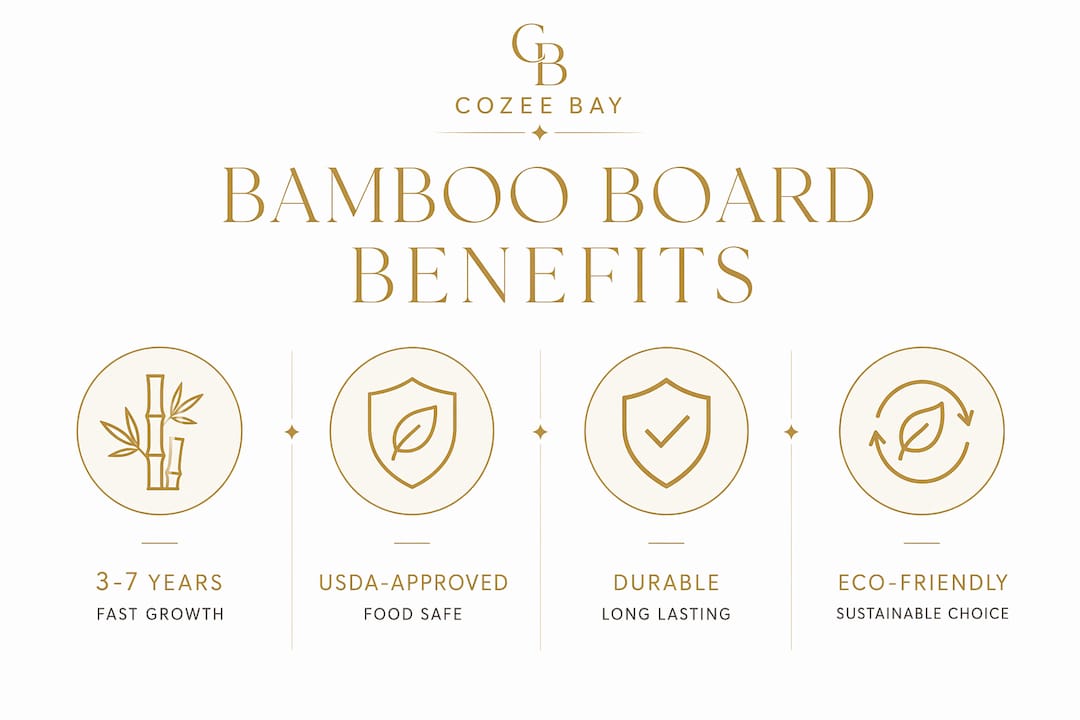
Bamboo boards are cutting and serving surfaces made from compressed bamboo strips, and they outperform traditional hardwoods and plastic in nearly every category that matters to eco-conscious buyers. The USDA Food Safety and Inspection Service confirms that bamboo is harder and less porous than most hardwoods, absorbs very little moisture, and resists scarring from knives. Both the USDA and FDA recognize bamboo as food-safe and non-toxic for kitchen use.
Key properties that set bamboo boards apart:
Bamboo is one of the most renewable building materials available, reaching harvest maturity in just 3–7 years compared to decades for most hardwoods. That speed means sourcing bamboo puts far less pressure on forests. For anyone serious about reducing their environmental footprint, that difference is hard to ignore.
On the performance side, bamboo boards don’t shed microplastics the way plastic boards do during regular knife use, keeping your food cleaner. They’re also refinishable: a light sanding and a fresh coat of food-grade oil can restore a worn surface to near-new condition, extending the board’s life well beyond what plastic or cheaper wood alternatives offer.
Environmental and performance benefits at a glance:
Bamboo’s tensile strength is comparable to steel, giving it exceptional resistance to the knife marks and surface grooves where bacteria typically hide on softer boards.
The bamboo itself is never the problem. What separates a safe, long-lasting board from a risky one is almost entirely the adhesive used to bond the strips together. Cheap boards often use formaldehyde-based resins that off-gas harmful vapors, especially when the board gets wet or warm. A sharp chemical smell on a new, wet board is a reliable warning sign.
Look for these markers before you buy:
Good maintenance is straightforward, and skipping it is the fastest way to ruin an otherwise excellent board. The USDA guidance is clear: never leave bamboo boards soaking in standing water, and keep them out of the dishwasher. Heat and prolonged moisture cause splitting and warping that no amount of oiling will fix afterward.
Follow these steps to maintain your bamboo board properly:
Pro Tip: Apply oil generously, let it soak overnight, then wipe away the excess in the morning. Your board will feel noticeably smoother and look refreshed.
Cozee-bay specializes in handcrafted bamboo products built for both home kitchens and commercial settings, from restaurants and coffee shops to senior living centers and schools. Every product uses FSC-certified bamboo and formaldehyde-free adhesives imported from Europe, meeting the same food-safety standards outlined above. Free shipping across the contiguous U.S. and a money-back guarantee back every purchase.
What sets Cozee-bay apart:
Bamboo boards bring a warm, minimalist aesthetic that works equally well as a prep surface and a serving platter. The natural grain runs light and consistent, with a smooth texture that photographs well and complements both modern and rustic kitchen styles. That versatility is why you’ll see them used as charcuterie and cheese boards at dinner parties just as often as for daily meal prep.
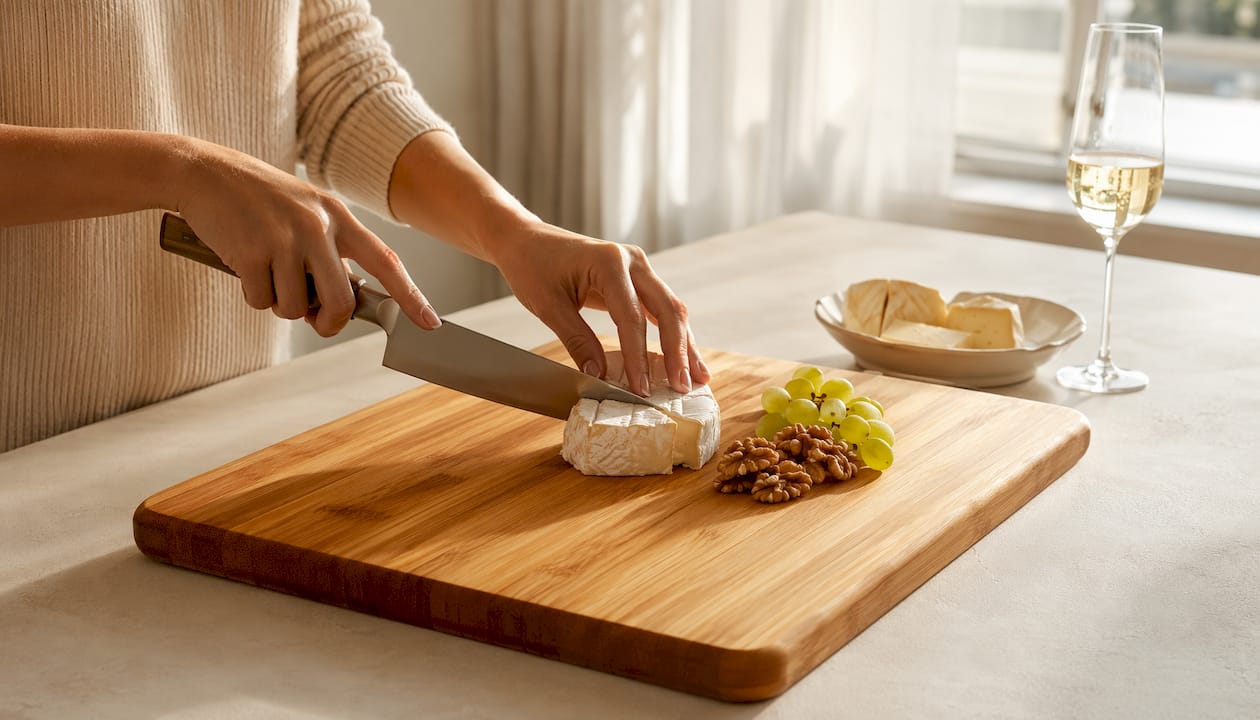
Unlike plastic boards, which look utilitarian and show wear quickly, bamboo develops a gentle patina over time that actually adds character. For commercial settings like coffee shops or boutique restaurants, that natural look reinforces a brand identity built around quality and sustainability.
Bamboo boards sit in a practical middle ground on price. They cost more than basic plastic boards but significantly less than premium hardwoods like walnut or maple. The real value shows up over time: because bamboo is refinishable and resists the warping that ruins cheaper boards, you replace it far less often. For eco-conscious buyers, that longer lifespan also means less waste heading to landfill.
Plastic boards are dishwasher-safe, which is their main practical advantage, but they scar easily and shed microplastics. Premium woods like maple are gentler on knife edges but require more frequent oiling and cost considerably more upfront. Bamboo hits the right balance of affordability, durability, and sustainability for most home and commercial buyers.

Tired of guessing whether a board is actually food-safe or just labeled “natural”? Cozee-bay takes the guesswork out entirely. Every bamboo product ships with full material transparency, FSC certification, and formaldehyde-free adhesives, so you know exactly what you’re bringing into your kitchen or commercial space. The eco-friendly bamboo collection covers everything from cutting and serving boards to paper towel dispensers and kitchen organizers, all crafted for real daily use. Shop Cozee-bay today and get free shipping across the contiguous U.S., backed by a money-back guarantee.
Bamboo boards are the most practical eco-friendly cutting surface available, combining USDA-recognized food safety, refinishable durability, and a clean aesthetic at a price point below premium hardwoods.
| Point | Details |
|---|---|
| Adhesive safety matters most | Choose boards with formaldehyde-free, FDA-compliant adhesives; skip any board that won’t disclose its glue. |
| Bamboo outlasts plastic | Refinishable surfaces and moisture resistance mean bamboo boards can last for decades with basic monthly oiling. |
| No microplastics | Unlike plastic boards, bamboo does not shed microplastic fragments during knife use. |
| Cost vs. value | Bamboo costs more than plastic but far less than premium hardwoods, with a longer usable lifespan than either. |
| Cozee-bay | Offers FSC-certified, formaldehyde-free bamboo products for home and commercial use, with free U.S. shipping and a money-back guarantee. |
Comments will be approved before showing up.