Your Cart is Empty


TL;DR:
- Sustainable living involves small, consistent home habits that benefit the environment and quality of life.
- Core principles focus on energy, water, waste, and material choices achievable without major renovations.
- Progress depends on habit-building, tracking, and understanding system limits rather than perfection.
If you’ve ever felt like living sustainably means overhauling your entire lifestyle overnight, you’re not alone. Many homeowners picture solar panels, composting systems, and a complete kitchen remodel before they even start. But sustainable living isn’t an all-or-nothing commitment, and it certainly doesn’t require perfection. The truth is, small, consistent choices made inside your home add up to real, measurable impact over time. This article breaks down what sustainable living actually means, lays out the core principles you can apply room by room, and gives you a practical roadmap to get started without the overwhelm.
| Point | Details |
|---|---|
| Sustainable living defined | It’s about making choices that balance environmental, social, and economic needs for both current and future generations. |
| Focus on small steps | Simple actions like conserving energy or water can make a practical difference without major home upgrades. |
| Understand real impacts | Not every green change brings big results, but consistent efforts lead to meaningful progress over time. |
| Mindset matters | A flexible, persistent approach to sustainability is more effective than striving for one-time perfection. |
Sustainable living is one of those phrases that gets thrown around a lot, but its actual meaning is broader and more encouraging than most people realize. At its core, sustainable living is about meeting today’s needs without compromising future generations, balancing environmental, economic, and social considerations together. That means it’s not just about recycling or buying organic produce. It’s about how you use energy, what you buy, how you dispose of things, and even how your choices affect your community.
The United Nations Environment Programme takes a similarly grounded view. Sustainable lifestyles minimize environmental impact while supporting equitable socio-economic development and a better quality of life. That last part matters. Sustainable living, done right, should actually improve your daily experience, not shrink it.
“Sustainable lifestyles minimize environmental impact while supporting equitable socio-economic development and a better quality of life.” — UNEP
Some of the most stubborn misconceptions about sustainable living include:
Think of sustainable living as a spectrum rather than a destination. You don’t have to be at the far end of that spectrum to make a genuine difference. Checking out sustainable living tips is a great first step toward understanding where you can realistically begin. The goal is to move forward, not to achieve eco-perfection by next Tuesday.
With a clear overview of what sustainable living actually means, let’s look at why sustainable choices matter in daily life and how they translate into real home habits.
Once you strip away the jargon, sustainable living at home rests on four practical pillars: energy, water, waste, and material choices. Concrete changes around these four areas are where meaningful home sustainability actually happens. Each pillar is manageable on its own, and together they create a home that’s noticeably lighter on the planet.
Energy is often the easiest place to start. Switching to LED bulbs, unplugging devices when not in use, and using a programmable thermostat are all low-effort changes that cut your electricity bill while reducing your carbon footprint. Exploring energy efficient home products can help you identify which upgrades offer the best return for your specific home setup.

Water is another area where small habits make a visible difference. Fixing leaky faucets, taking shorter showers, and running the dishwasher only when full are all changes that require zero investment but deliver consistent savings.
Waste reduction is where many homeowners feel the most friction, but it doesn’t have to be complicated. Composting kitchen scraps, switching to reusable bags, and choosing products with minimal packaging all move the needle. Even small wins, like reducing food waste by planning meals better, contribute meaningfully.
Material choices refer to what you bring into your home. Choosing durable, sustainably sourced materials over disposable or synthetic alternatives reduces your long-term environmental footprint.
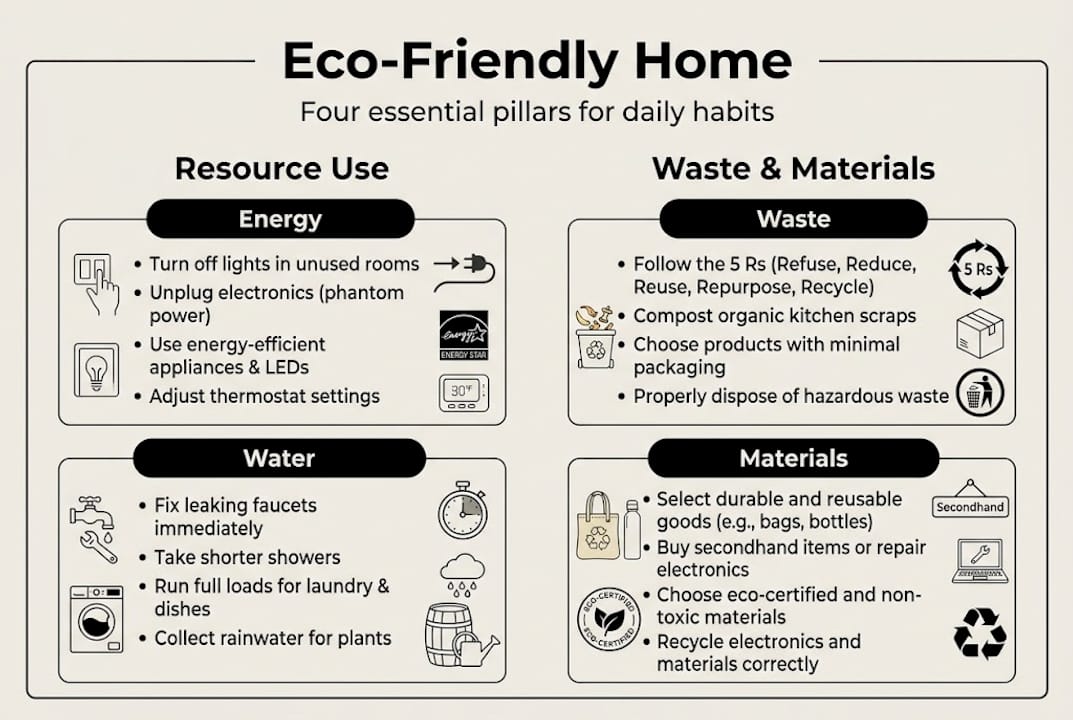
Here’s a quick comparison of typical versus sustainable household actions:
| Area | Typical action | Sustainable alternative |
|---|---|---|
| Lighting | Incandescent bulbs | LED bulbs |
| Cleaning | Single-use wipes | Reusable cloths |
| Kitchen | Plastic wrap | Beeswax wraps or reusable covers |
| Shopping | Plastic bags | Reusable tote bags |
| Hydration | Bottled water | Filtered tap with reusable bottle |
Pro Tip: Track your monthly utility bills for three months after making a change. Seeing even a 5% drop in your energy or water bill is a concrete reminder that your efforts are working, and it keeps you motivated to do more.
Practicing everyday sustainable living doesn’t demand a dramatic lifestyle shift. It demands attention to the four pillars, applied consistently over time.
Knowing the principles is one thing. Building habits around them is another. The good news is that household actions like energy conservation, water saving, and better materials selection are recognized as crucial to sustainability at the national level, which means the resources and products to support you are more available than ever.
Here’s a five-step cycle you can use to build sustainable habits that actually stick:
Some quick wins worth adding to your action list right away:
Pro Tip: Start with just one room. Pick the space where you spend the most time, whether that’s the kitchen or the living room, and make it your sustainability pilot project. Once you see results there, rolling the same changes out to the rest of your home feels natural rather than overwhelming.
Learning how to select green home essentials takes some of the guesswork out of shopping sustainably. And if you want a broader set of ideas to work from, a roundup of eco-friendly home tips can spark ideas you might not have considered.
Even with the best intentions, it helps to go in with clear eyes. Sustainable living has real power, but it also has real limits, and understanding both makes you a smarter, more effective eco-conscious homeowner.
Let’s start with the myths:
Here’s a reality check on some commonly cited eco impacts versus what research actually supports:
| Action | Commonly assumed benefit | Reality |
|---|---|---|
| Recycling all plastics | Eliminates plastic waste | Many plastics aren’t recyclable in practice |
| Going vegetarian | Eliminates food carbon footprint | Reduces it significantly, but not to zero |
| Using reusable bags | Offsets single-use plastic entirely | Depends on how often bag is reused |
| Installing solar panels | Immediate carbon neutrality | Takes years to offset manufacturing emissions |
It’s also worth knowing about the “rebound effect.” This is when efficiency gains lead people to consume more, canceling out some of the savings. For example, a more fuel-efficient car might encourage more driving. System-level constraints and rebound effects mean individual actions, while valuable, can have variable system-wide impact.
The actual scale of benefits from household-level changes depends on specifics like how much food waste is truly preventable and how carbon emissions are measured in your region. And researchers measuring sustainability in buildings use several methods, each with its own uncertainty, which is why you’ll sometimes see conflicting headlines about the same topic.
“The scale of household-level benefits depends on specifics like how much food waste is truly preventable and how carbon emissions are measured.” — Nature
None of this should discourage you. It should sharpen your focus. Prioritize changes that have clear, direct benefits in your specific home and region. Start with choosing eco-friendly products that are durable, functional, and made from sustainably sourced materials. That’s a choice with traceable, real-world impact.
After working with eco-conscious homeowners across all kinds of living situations, here’s what we’ve seen time and again: the people who make the most lasting progress aren’t the ones who go all-in overnight. They’re the ones who pick two or three changes, make them stick, and then quietly inspire everyone around them.
Sustainable living isn’t a solo sport. When your neighbor sees your bamboo kitchen setup or your reusable wrap organizer and asks where you got it, that’s a ripple effect money can’t buy. Voting with your dollar by choosing sustainably made products also sends a clear signal to manufacturers about what the market wants.
Avoid eco-guilt. It’s real, it’s common, and it’s counterproductive. You don’t have to be perfect. You just have to keep moving forward. Small, consistent choices compound over months and years into lasting eco-friendly home changes that genuinely shift your household’s footprint. That’s the practical wisdom we’d pass on to any homeowner starting this journey.
Ready to put these ideas into action? At Cozee Bay, we’ve built our entire product line around the idea that sustainable living should be stylish, practical, and accessible for every home. From handcrafted bamboo paper towel dispensers to wrap and foil organizers, each product is designed to replace a disposable habit with something durable and beautiful.

If you’re not sure where to start shopping with sustainability in mind, our eco-friendly product guide walks you through exactly what to look for, what to avoid, and how to make choices that align with your values. Free shipping within the contiguous U.S. and a money-back guarantee mean there’s no risk in taking that first step.
Sustainable lifestyles support better quality of life and efficient resource use, which means you’ll likely see lower utility bills, less clutter, and a healthier home environment over time.
Not at all. Small concrete actions like switching to energy-efficient bulbs, reducing water waste, and cutting back on single-use items are enough to get meaningful results without touching a single wall.
Track your utility bills, monitor how much waste you generate weekly, and note whether you’re replacing disposable products with durable alternatives. Various methods exist to assess household sustainability, but your monthly bills are the simplest and most honest indicator.
The biggest myth is that individual actions don’t matter at scale. System constraints exist, but individual choices add up meaningfully when adopted widely across communities and households.
Comments will be approved before showing up.