Your Cart is Empty


You might assume that mass-produced goods are the practical, budget-friendly default, and that handcrafted items are a luxury reserved for design enthusiasts with deep pockets. But that assumption quietly ignores hidden costs: excess waste, fast replacement cycles, and the environmental toll of global supply chains. Whether you’re outfitting a home kitchen, a coffee shop, or a senior living center, the choice between handcrafted and mass-produced shapes more than your budget. It shapes your space, your values, and your long-term footprint. This guide breaks down the real differences so you can make a confident, informed decision.
| Point | Details |
|---|---|
| Handcrafted means lower impact | Local, small-scale production usually reduces waste and emissions versus mass-produced goods. |
| Durability saves resources | Longevity of handcrafted items means less frequent replacements, decreasing environmental and financial costs. |
| Uniqueness and community | Handcrafted purchases foster emotional connections, cultural preservation, and stronger local economies. |
| Nuances matter | Some mass-produced products may be better when sustainably managed or access and price are priorities. |
The word “handcrafted” gets tossed around a lot, but it has a specific meaning worth understanding. A handcrafted product is made by skilled artisans, often in small batches, using hands-on techniques rather than automated assembly lines. The process is slower, more intentional, and often tied to local or regional sourcing. You can usually see the human touch in the final piece, whether that’s a slight variation in grain, a hand-applied finish, or joinery that reflects real skill.
Mass-produced goods, by contrast, are manufactured at scale using automation and standardized processes. They’re designed for consistency, high volume, and global distribution. That’s not inherently bad. But it does mean the focus shifts from craftsmanship to efficiency, and materials are often chosen for cost rather than quality or sustainability.
The benefits of handcrafted home items go beyond aesthetics. As research confirms, handcrafted products typically have lower environmental impact due to local sourcing, minimal packaging, less energy use, and small-batch production that prevents overproduction. That’s a meaningful advantage when you’re trying to build a more sustainable space.
| Feature | Handcrafted | Mass-produced |
|---|---|---|
| Materials | Natural, local, often recycled | Standardized, cost-optimized |
| Process | Artisan-driven, small batch | Automated, high volume |
| Scale | Limited, intentional | Global, unlimited |
| Uniqueness | Each piece varies | Identical units |
| Packaging | Minimal, often recycled | Often excessive plastic |
People choose each approach for different reasons. Here’s a quick breakdown:
Knowing what drives each approach helps you ask the right questions before you buy.
Having defined the terms, let’s dig into their real-world environmental impacts, because this is where the conversation gets genuinely surprising.
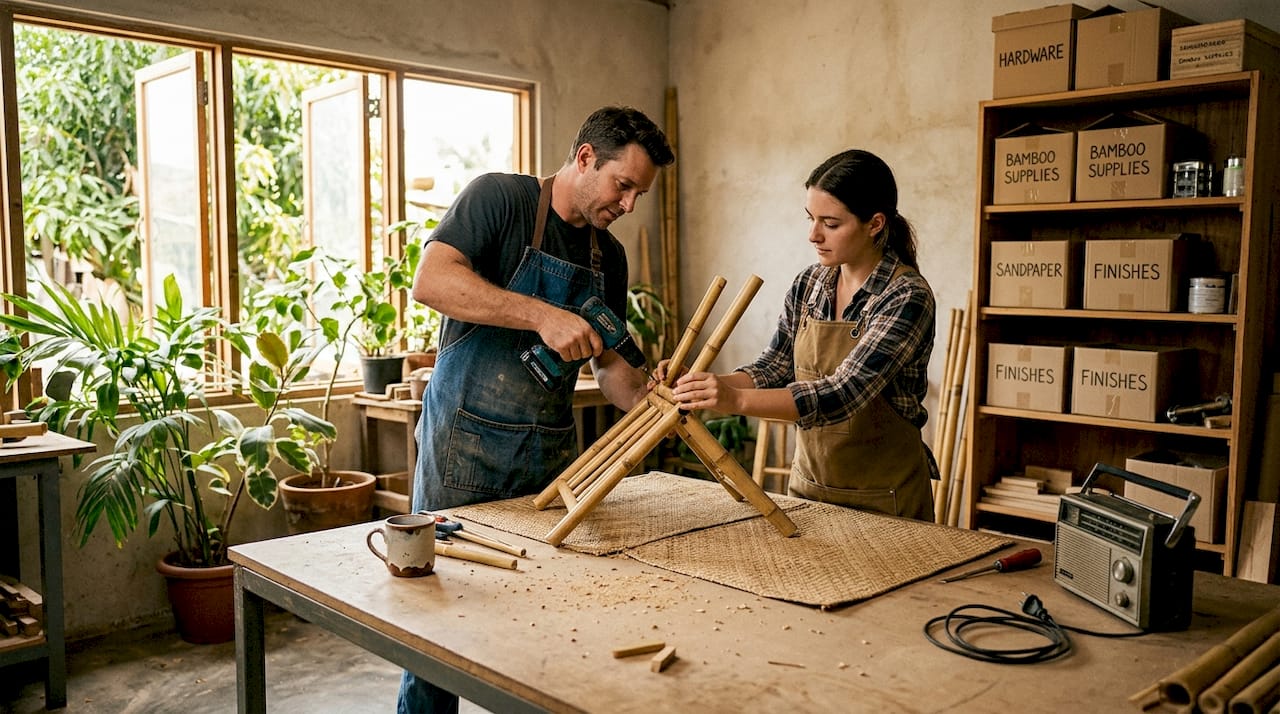
Handcrafted production typically means less waste and lower transport emissions due to local sourcing. When an artisan sources bamboo from a regional supplier and ships finished goods within a few hundred miles, the carbon footprint shrinks considerably compared to a product manufactured overseas and shipped across multiple continents.
Mass production offers efficiency at scale, but that efficiency often encourages overconsumption. When items are cheap and easy to replace, people replace them more often. That cycle generates more waste, more shipping, and more raw material extraction than most people account for when comparing price tags.
Lifecycle assessment studies show that material choice and pre-production can dominate a product’s total environmental impact, which is why local and natural materials give handcrafted goods a structural advantage.
| Lifecycle stage | Handcrafted impact | Mass-produced impact |
|---|---|---|
| Pre-production (materials) | Lower, local/natural sourcing | Higher, global supply chains |
| Production (energy use) | Lower, small batch | Higher, industrial scale |
| Transport | Lower, regional distribution | Higher, global shipping |
| End of life | Often repairable/biodegradable | Often landfill-bound |
Pre-production and material sourcing can account for up to 76% of a furniture product’s total environmental impact. Choosing natural, locally sourced materials is one of the highest-leverage decisions you can make as a consumer.
You can explore how eco-friendly home decor choices compound over time, or look deeper into handcrafted bamboo wood advantages for a practical example of how material selection changes the equation.
Pro Tip: Not all handcrafted products are automatically sustainable. Before you buy, check whether the maker discloses their material sources, uses natural or recycled inputs, avoids harmful finishes, and ships with minimal packaging. Transparency is a green flag. Vague claims are not. You can also look for guidance on how to source specialty fabrics as a model for vetting any handcrafted supplier.
Environmental impact is crucial, but what about the value you actually get from handcrafted purchases? This is where the math often surprises people.
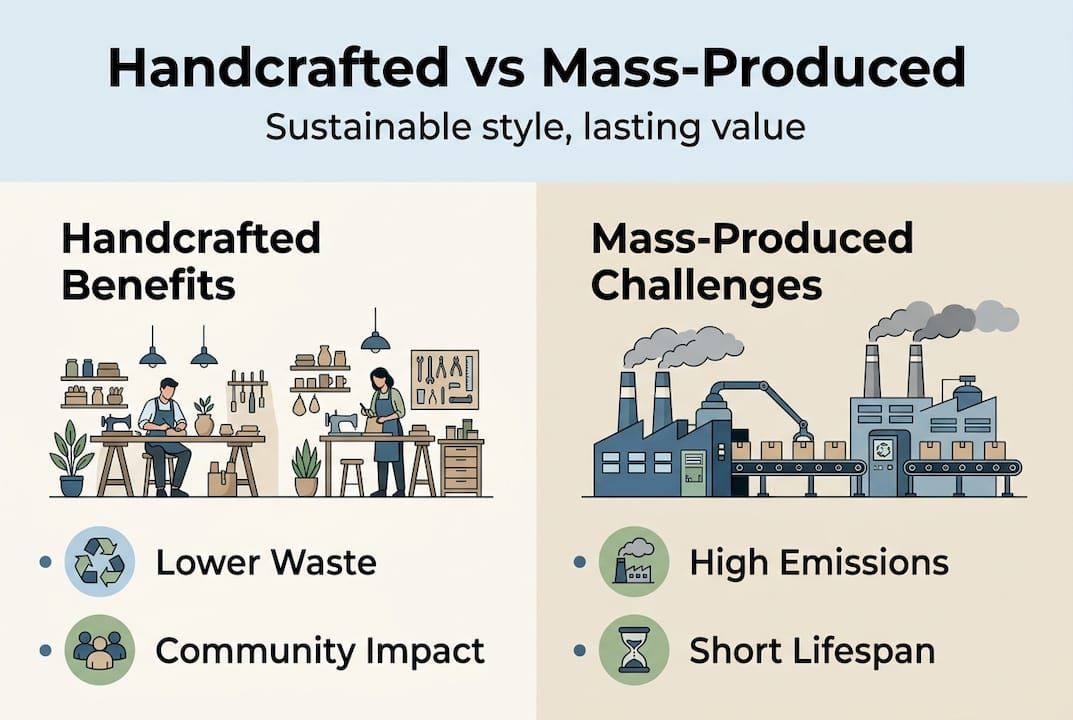
A well-made handcrafted leather wallet can last over a decade. Solid wood furniture, built with proper joinery and quality materials, can last generations. Handcrafted items offer superior durability and longevity, which directly reduces replacement frequency and the waste that comes with it.
Think about it this way: if you buy a mass-produced paper towel dispenser that warps, cracks, or fades within two years, you’ve already paid twice before a handcrafted version would need any attention. That’s not savings. That’s a hidden tax on your budget and the environment.
Longevity also matters for commercial spaces. Restaurants, coffee shops, and senior living centers need products that hold up under daily use without looking worn. A bamboo dispenser or organizer that stays beautiful for years is a better investment than replacing cheap plastic every season.
Here are the signs of durable craftsmanship to look for:
Pro Tip: When evaluating a brand, look for a clear repair or replacement policy on their website. If they explain what happens when something breaks, that’s a sign they built the product to last and care about the full lifecycle. Explore the handcrafted wood products role in long-term home value, and the benefits of bamboo decor for a material-specific example.
Alongside longevity, handcrafted goods impact both personal experience and community ties in ways that mass-produced items rarely match.
Every handcrafted piece carries a small variation, a detail that makes it yours. That imperfect beauty and individuality creates an emotional connection that uniform, factory-made items simply can’t replicate. When your kitchen counter holds a bamboo dispenser made by a real artisan, it tells a story. That story makes you more likely to care for it, keep it longer, and feel good about your space.
The community impact is equally real. When you support local artisans and fair labor, you’re contributing to a healthier local economy and preserving traditional skills that would otherwise disappear.
Spending $100 at a local business keeps approximately $68 circulating in the local community, compared to far less when spent at a national chain or global retailer.
Here’s how handcrafted purchasing benefits the broader community:
For business owners, choosing handcrafted decor and functional pieces also signals values to your customers. A coffee shop with bamboo craftsmanship and sustainable style throughout its space communicates care and intentionality. That’s a brand statement no mass-produced fixture can make. If you’re still weighing options, understanding why choose bamboo products gives you a clear picture of how material choice ties into all of this. You can also review ethical fabric sourcing practices as a broader model for evaluating any handcrafted supplier’s values.
To make the wisest choice, it’s vital to consider the exceptions and best uses for both approaches.
Not every handcrafted item is eco-friendly. Some use exotic or unsustainably harvested materials, or ship from far away, which erases any local-sourcing advantage. And as the artisan’s paradox points out, higher cost limits accessibility, and mass-produced goods can actually be efficient at scale when responsibly managed.
The real goal is to buy less and choose better. When mass-produced makes sense:
The key is transparency. Whether handcrafted or mass-produced, the best choice is always the one where the maker can tell you exactly where materials came from and how the product was made.
Now, having compared both sides, here’s the perspective missing from most guides on this topic.
Most comparisons focus on the upfront purchase. They weigh price, aesthetics, and maybe a carbon footprint stat. What they miss is the cumulative impact of your buying habits over a decade or two. If you buy a cheap item every two years versus a quality handcrafted piece every ten, the difference in waste, shipping, and spending adds up fast.
There’s also an emotional dimension that rarely gets discussed. When you feel a genuine connection to an object, you take better care of it. You don’t impulse-replace it when a new trend arrives. That emotional attachment is actually one of the most powerful sustainability tools you have, and it’s something qualities of handcrafted bamboo items deliver naturally.
Mass-produced goods absolutely have a role. But mindful selection means asking: will I still want this in five years? Can it be repaired? Do I know where it came from? Those questions, asked consistently, do more for sustainable style than any single purchase decision.
If this guide has you thinking more carefully about what you bring into your home or business, you’re already ahead of most buyers. The next step is finding products that actually live up to these standards.
Cozee Bay offers a curated collection of eco-friendly, handcrafted bamboo products designed for both residential and commercial spaces, from paper towel dispensers to drawer organizers, food bag organizers, and wrap and foil dispensers. Every piece is built with sustainable materials, clean craftsmanship, and long-term use in mind. Free shipping within the contiguous U.S. and a money-back guarantee make it easy to try. Ready to see what genuinely sustainable style looks like in practice? Learn more about handcrafted benefits and explore the full collection today.
Usually, handcrafted items use less energy and create less waste, but material choice and pre-production have the biggest impact, so sourcing still matters most.
They’re made in smaller batches, require more time and skill, and often use higher-quality or local materials. As skilled labor and material costs confirm, the price reflects real investment in quality rather than markup.
Look for transparent sourcing, natural or recycled materials, fair labor details, and clear maker information. If a brand can’t explain their sourcing and practices, that’s a red flag worth taking seriously.
Yes. If you need affordability, standard sizing, or trusted certified options, economies of scale can make mass-produced goods a responsible choice, especially when sustainability certifications are in place.
Comments will be approved before showing up.