Your Cart is Empty


Bamboo shoots grow up to three feet in 24 hours, making it one of nature’s fastest renewable resources. Yet most consumers don’t realize that handcrafted bamboo wood products offer dramatically different sustainability and durability benefits compared to mass-produced alternatives. This article explores how artisanal bamboo craftsmanship transforms rapid renewability into long-lasting, stylish home and commercial solutions that align with your eco-conscious values while delivering superior performance and unique aesthetic appeal.
| Point | Details |
|---|---|
| Sustainability advantage | Handcrafted bamboo matures in 3 to 5 years versus hardwoods requiring decades, with significantly lower chemical use in artisanal production. |
| Superior durability | Manual processing preserves natural fiber alignment, resulting in 30% higher shock resistance compared to machine-pressed alternatives. |
| Unique design appeal | Each handcrafted piece features distinct grain patterns and customizable options that enhance both residential and commercial aesthetics. |
| Common myths debunked | Bamboo requires proper sealing for water resistance but can outperform many hardwoods when crafted using traditional artisan techniques. |
| Versatile applications | Suitable for restaurants, offices, senior centers, and homes where sustainable style meets functional durability requirements. |
Handcrafted bamboo wood products are items created through artisanal techniques using bamboo as the primary material, emphasizing manual processing and traditional joinery methods rather than industrial manufacturing. Unlike mass-produced bamboo goods manufactured in high-volume factories, handcrafted pieces preserve bamboo’s natural characteristics through careful selection, shaping, and finishing by skilled artisans.
Bamboo’s remarkable growth cycle sets it apart from traditional hardwoods. Most bamboo species reach full maturity within three to five years, allowing sustainable harvesting without depleting forests. Oak, maple, and similar hardwoods require 30 to 50 years to reach harvest maturity. This rapid renewability makes bamboo an exceptional sustainable resource when paired with responsible harvesting practices.
The handcrafted approach involves sustainable harvesting from managed bamboo groves, followed by careful drying, cutting, and assembly using manual tools and time-tested techniques. Artisans select individual stalks based on grain quality, strength characteristics, and aesthetic potential. They shape components through hand-planing, sanding, and precise joinery rather than automated cutting and pressing.
Consumer interest in eco-friendly materials has surged dramatically. Homeowners and commercial property managers increasingly seek products that reduce environmental impact without sacrificing style or durability. Handcrafted bamboo wood addresses this demand by combining sustainability credentials with artisanal quality and distinctive visual appeal that mass-produced alternatives cannot replicate.
Key characteristics distinguishing handcrafted bamboo include:
The environmental advantages of handcrafted bamboo wood extend beyond rapid growth rates to encompass the entire production lifecycle. When you compare bamboo’s three to five year maturity cycle with hardwood trees requiring multiple decades, the renewable resource advantage becomes immediately apparent. A single bamboo grove can produce harvestable material year after year without replanting, as bamboo regenerates from its root system.
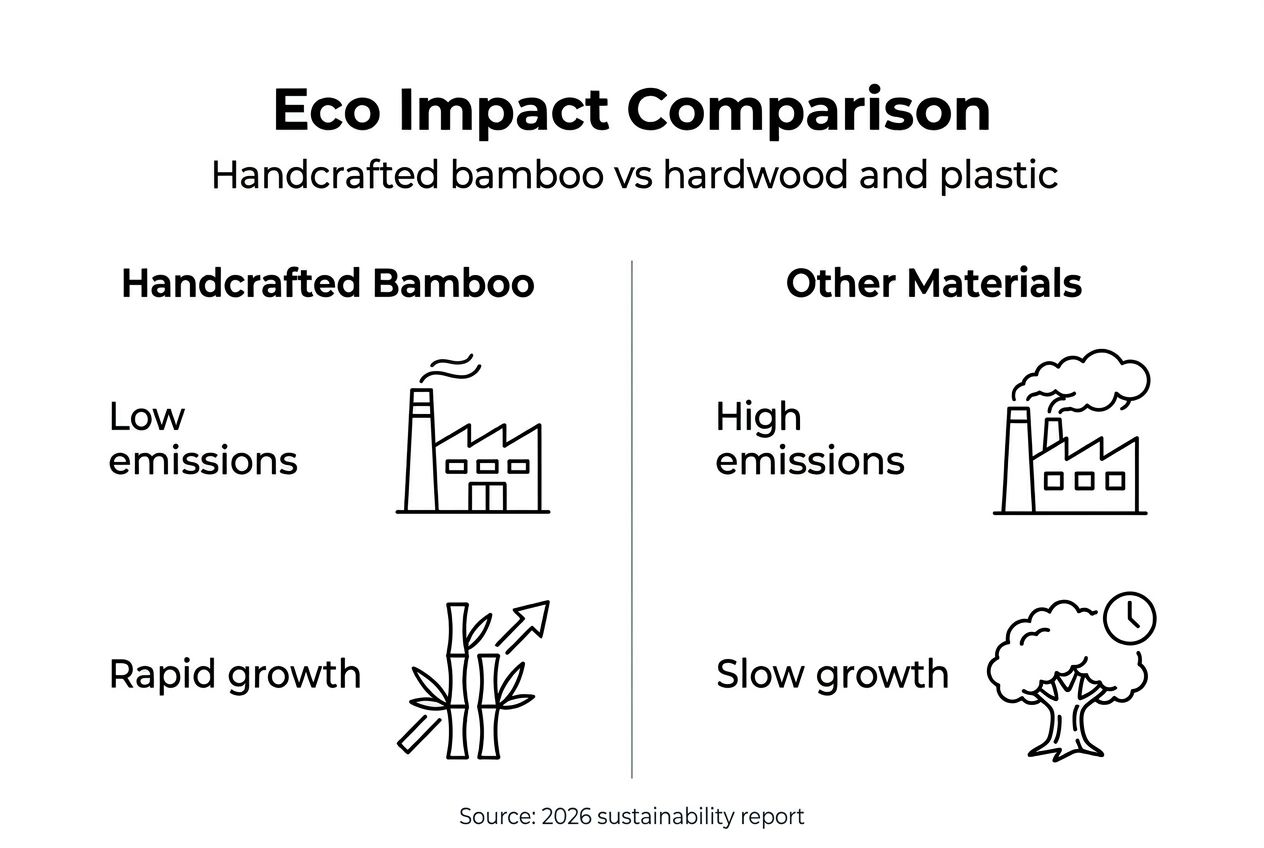
Handcrafted production methods significantly reduce chemical use compared to industrial bamboo manufacturing. Mass-produced bamboo often involves adhesives, formaldehyde-based binders, and chemical treatments that release volatile organic compounds. Artisanal processes favor natural oils, beeswax finishes, and traditional water-based sealants. The benefits of handcrafted home items include lower VOC emissions and reduced indoor air quality concerns. Bamboo’s fast growth and renewability support environmental sustainability, making it an ideal choice for eco-conscious consumers.
Small-batch artisanal production generates a substantially smaller carbon footprint. Factory manufacturing requires extensive energy for machinery operation, climate-controlled facilities, and long-distance transportation networks. Handcrafted workshops typically operate with minimal mechanization, rely on natural ventilation, and source materials locally or regionally. This localized production model reduces transportation emissions and supports regional economies.
Lifecycle analysis reveals handcrafted bamboo’s cumulative environmental advantages:
| Environmental Factor | Handcrafted Bamboo | Mass-Produced Bamboo | Traditional Hardwood |
|---|---|---|---|
| Maturity cycle | 3 to 5 years | 3 to 5 years | 30 to 50 years |
| Chemical use | Minimal natural finishes | High adhesive/binder use | Moderate treatments |
| Carbon footprint | Low localized production | High factory energy | High harvest/transport |
| Replanting need | None, regenerates | None, regenerates | Required after harvest |
| VOC emissions | Very low | Moderate to high | Low to moderate |
Artisanal craftsmanship transforms bamboo’s inherent strength into exceptionally durable products. Manual processing preserves the natural alignment of bamboo fibers, which run longitudinally through the stalk. Machine pressing and automated cutting can disrupt this fiber orientation, reducing structural integrity. Handcrafted pieces maintain optimal fiber alignment, resulting in superior toughness and resistance to stress.
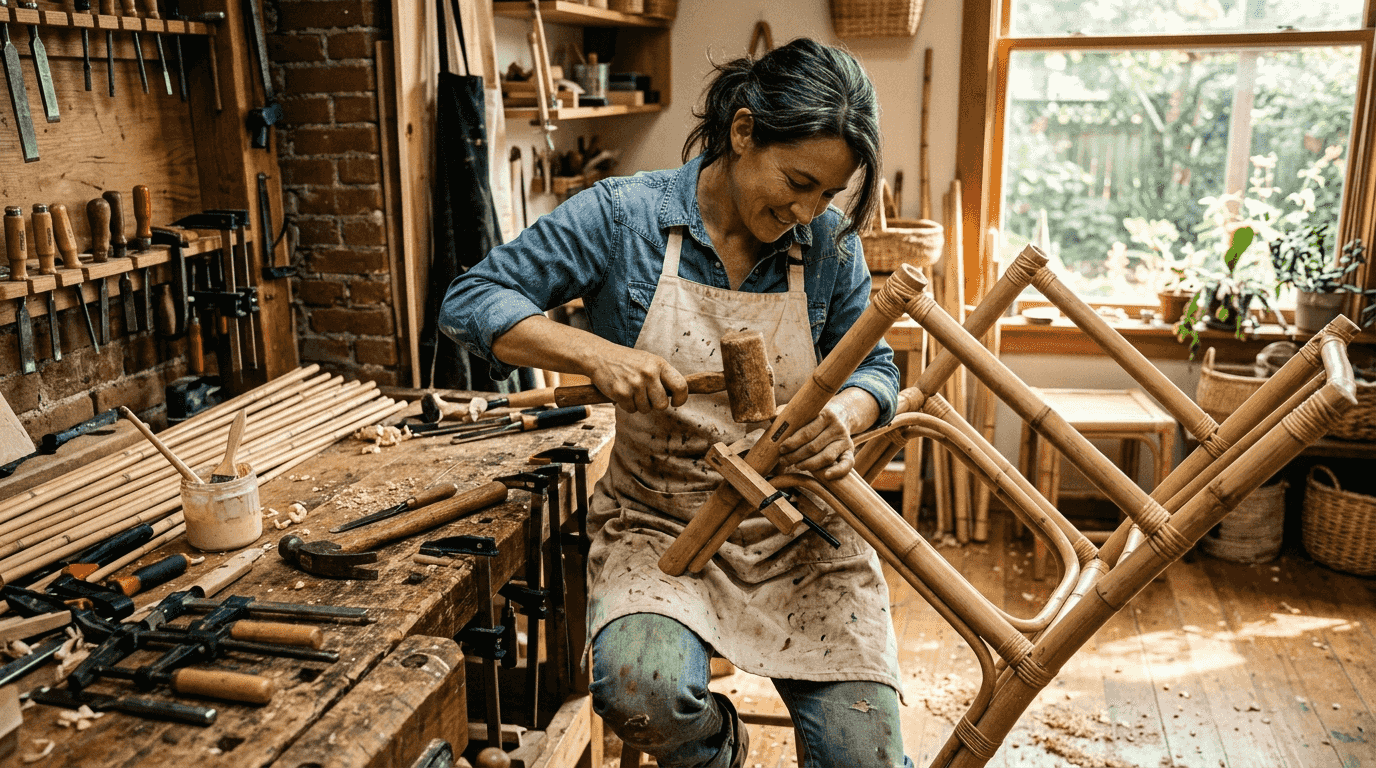
Traditional joinery methods significantly enhance product lifespan. Artisans use mortise and tenon joints, dovetails, and precision-fitted connections rather than relying solely on adhesives or mechanical fasteners. These time-tested techniques distribute stress across broader surface areas and allow slight movement without compromising structural integrity. Products assembled with proper joinery withstand daily use, temperature fluctuations, and humidity changes far better than glued assemblies.
Research demonstrates that shock resistance is 30% higher in handcrafted bamboo compared to machine-pressed alternatives. This mechanical advantage translates to fewer chips, cracks, and breaks during normal use. The careful selection and orientation of bamboo sections by skilled artisans optimizes load-bearing capacity and impact resistance.
Water resistance receives particular attention in handcrafted production. Artisanal sealing methods involve multiple coats of natural oils or specialized bamboo finishes applied by hand, ensuring complete penetration and coverage. Studies show these traditional techniques improve water resistance by 40% compared to spray-applied factory finishes. Proper sealing prevents moisture infiltration that causes swelling, warping, and eventual deterioration.
Bamboo’s hardness rating on the Janka scale ranges from 1,300 to 1,800 pounds-force depending on species and processing method. This places quality handcrafted bamboo comparable to red oak at 1,290 and exceeding many softwoods. When you explore why bamboo performs better than hardwood in certain applications, fiber density and natural silica content emerge as key factors. Understanding why bamboo products last longer helps you make informed purchasing decisions.
Pro Tip: Inspect handcrafted bamboo products for visible joinery and smooth, even finish application. These indicators reveal artisan attention to detail that directly correlates with long-term durability and performance.
Durability factors in handcrafted bamboo:
Handcrafted bamboo wood products offer distinctive visual characteristics that mass production cannot replicate. Each piece displays unique grain patterns, natural color variations, and subtle texture differences that reflect the individual bamboo stalk’s growth conditions. These organic variations create visual interest and ensure no two items look identical, appealing to consumers who value authenticity and individuality.
Customization options expand dramatically with artisanal production. Skilled craftspeople can modify dimensions, adjust design elements, incorporate specific joinery styles, and apply custom finishes to match your aesthetic vision. This flexibility proves particularly valuable for commercial properties seeking cohesive design themes or homeowners coordinating with existing decor. Off-the-shelf mass-produced items rarely accommodate such personalization.
The natural warmth of bamboo enhances ambiance in residential and commercial environments. Its light to medium golden tone with subtle grain striping creates an inviting atmosphere that feels both modern and organic. When you consider bamboo product applications in commercial settings, the aesthetic impact on customer perception and employee satisfaction becomes clear. Restaurants, coffee shops, and hospitality venues leverage bamboo’s natural elegance to reinforce sustainability messaging while maintaining upscale appearance.
Consumer satisfaction increases when products reflect artisanal quality and bespoke design. Research shows buyers perceive handcrafted items as premium offerings worth higher investment due to visible craftsmanship markers and unique character. The knowledge that skilled artisans created each piece adds intangible value beyond functional performance, fostering emotional connection and brand loyalty.
Aesthetic advantages of handcrafted bamboo:
Several persistent myths about bamboo wood create confusion among eco-conscious consumers. Addressing these misconceptions helps you make informed decisions based on accurate information rather than popular misunderstandings.
The most common misconception claims bamboo is naturally waterproof. In reality, bamboo requires proper sealing for moisture resistance. Raw bamboo absorbs water readily, leading to swelling, warping, and potential mold growth. Traditional artisan sealing techniques using natural oils, waxes, or specialized bamboo finishes create the necessary moisture barrier. Properly sealed handcrafted bamboo performs excellently in kitchens, bathrooms, and other humid environments, but the sealing step remains essential.
Another misconception suggests bamboo lacks durability compared to traditional hardwoods. Testing data contradicts this assumption. Quality handcrafted bamboo matches or exceeds the hardness, impact resistance, and longevity of oak, maple, and similar popular hardwoods. The confusion often stems from experience with poorly manufactured bamboo products that used inferior materials or inadequate processing. Artisanal craftsmanship leverages bamboo’s natural strength properties effectively.
Many consumers assume all bamboo products equally support environmental sustainability. Mass-produced bamboo manufacturing frequently involves formaldehyde-based adhesives, chemical bleaching, and energy-intensive pressing operations that diminish sustainability benefits. Factory production also generates significant waste and pollution. Handcrafted bamboo using traditional methods and natural finishes delivers genuinely superior environmental performance. Verify production methods rather than assuming bamboo automatically means eco-friendly.
Some believe bamboo’s rapid growth makes it invasive or environmentally harmful. Responsible bamboo cultivation in managed groves prevents invasive spread while providing sustainable harvest material. The confusion arises from certain running bamboo species that spread aggressively when planted inappropriately. Commercial bamboo production uses clumping varieties in controlled environments, eliminating invasiveness concerns.
“The distinction between handcrafted and mass-produced bamboo is crucial. Traditional artisan methods preserve bamboo’s inherent qualities while minimizing chemical use and environmental impact. Consumers should seek transparency about production methods to ensure genuine sustainability.”
Key misconceptions corrected:
Handcrafted bamboo wood products serve diverse practical applications across residential and commercial environments. Understanding these use cases helps you identify opportunities to incorporate sustainable, stylish bamboo solutions.
Restaurant and hospitality applications: Dining establishments increasingly choose bamboo for its combination of durability, easy maintenance, and sustainability messaging. Handcrafted bamboo paper towel dispensers, serving trays, utensil holders, and organizational items withstand heavy daily use while reinforcing eco-conscious brand identity. The natural antimicrobial properties of properly finished bamboo add hygiene benefits in food service environments.
Office and workspace solutions: Commercial offices benefit from bamboo desk organizers, storage solutions, and functional accessories that support sustainability initiatives. Handcrafted pieces communicate corporate environmental responsibility while providing employees with durable, attractive workspace tools. When you explore the role of bamboo in commercial spaces, productivity and employee satisfaction improvements become evident.
Healthcare and senior living facilities: These environments require durable, easy-to-clean materials that minimize allergens and chemical exposure. Handcrafted bamboo finished with natural, low-VOC products meets strict safety and hygiene standards. The warm aesthetic creates comforting atmospheres while supporting infection control protocols through antimicrobial properties.
Retail and customer-facing spaces: Coffee shops, boutiques, and service businesses use handcrafted bamboo fixtures and organizational items to differentiate brand identity. Custom designs incorporating logos or specific color finishes strengthen visual branding while demonstrating sustainability commitment to increasingly eco-aware customers.
Residential kitchens and bathrooms: Homeowners appreciate bamboo’s moisture resistance when properly sealed, making it ideal for kitchen organizers, bathroom storage, and similar applications. Understanding bamboo’s commercial viability translates directly to residential durability expectations.
Churches and community centers: These venues value bamboo’s combination of affordability, durability, and alignment with stewardship values. Handcrafted bamboo provides functional solutions for high-traffic environments while supporting sustainable resource management principles.
While handcrafted bamboo offers substantial benefits, realistic assessment requires acknowledging tradeoffs and limitations. Understanding these factors enables informed decision-making aligned with your priorities and constraints.
Cost represents the most significant tradeoff. Artisanal production involves skilled labor, individual attention, and time-intensive techniques that increase per-unit costs compared to mass manufacturing. Handcrafted bamboo products typically cost 30 to 60 percent more than factory equivalents. This premium reflects superior craftsmanship, sustainability practices, and customization capabilities. Budget-conscious buyers must weigh initial cost against longer lifespan and reduced replacement frequency.
Lead times extend beyond off-the-shelf availability. Handcrafted items require production time ranging from several days to weeks depending on complexity and artisan workload. Custom orders add additional time for design consultation and approval. Organizations needing immediate solutions or operating on tight timelines may find these delays challenging.
Availability varies by region and artisan network. Mass-produced bamboo floods retail channels and online marketplaces, while handcrafted alternatives require identifying reputable artisan sources. Selection breadth may be narrower, and specific designs might require custom commissioning rather than catalog purchase.
Maintenance requirements differ from synthetic alternatives. Bamboo benefits from periodic reconditioning with natural oils to preserve finish integrity and moisture resistance. This maintenance, while straightforward, exceeds the hands-off care of plastic or metal alternatives. Proper maintenance significantly extends lifespan, but busy households or commercial environments must commit to basic upkeep routines.
Tradeoff considerations:
| Factor | Handcrafted Bamboo | Mass-Produced Bamboo | Plastic Alternatives |
|---|---|---|---|
| Initial cost | Higher premium | Moderate | Low |
| Lifespan | 10 to 20+ years | 5 to 10 years | 3 to 7 years |
| Customization | Extensive options | Limited | Minimal |
| Environmental impact | Very low | Moderate | High |
| Maintenance needs | Periodic reconditioning | Minimal | None |
| Availability | Limited artisan sources | Widely available | Ubiquitous |
The positive impacts of handcrafted bamboo production extend beyond environmental sustainability to encompass significant economic and social benefits. Supporting artisan-made bamboo products contributes to ethical supply chains and community development.
Local artisan economies gain vital support through handcrafted bamboo demand. Small workshops and individual craftspeople earn fair wages while maintaining traditional skills that might otherwise disappear. Unlike factory workers earning minimal wages in large-scale operations, artisans typically receive compensation reflecting their expertise and the value their craftsmanship creates. This economic model distributes income more equitably and sustains middle-class livelihoods in production communities.
Cultural preservation represents another crucial benefit. Traditional woodworking and bamboo crafting techniques developed over generations face extinction as industrialization dominates manufacturing. Supporting handcrafted production maintains these cultural practices and the knowledge systems surrounding them. Younger generations gain opportunities to learn ancestral skills, ensuring cultural continuity and craft tradition survival.
Sustainable rural development emerges naturally from artisan bamboo production. Bamboo cultivation and processing provide income opportunities in regions where industrial employment options remain limited. This economic activity reduces rural-to-urban migration pressures while supporting agricultural communities. Bamboo’s fast growth and continuous harvest potential creates stable, long-term income streams superior to annual crop farming.
Ethical supply chain transparency increases with handcrafted production. Small-scale artisan workshops maintain direct relationships with bamboo suppliers and end customers. This shortened supply chain facilitates verification of sustainable harvesting practices, fair labor conditions, and production methods. Consumers gain confidence their purchases support genuinely ethical and sustainable operations.
Pro Tip: Research artisan partnerships and sourcing transparency when evaluating handcrafted bamboo brands. Companies committed to ethical production readily share information about craftspeople, production locations, and supply chain practices. This transparency distinguishes authentic artisan-made products from greenwashed alternatives.
Socioeconomic benefits:
Handcrafted bamboo wood delivers compelling advantages for eco-conscious consumers seeking sustainable, durable, and stylish solutions. The combination of rapid renewability, superior craftsmanship, unique aesthetics, and positive socioeconomic impacts positions artisan bamboo as an excellent choice for residential and commercial applications.
To ensure you select authentic handcrafted bamboo products aligned with your values, follow this systematic evaluation process:
Verify production methods: Confirm products use artisanal techniques rather than industrial manufacturing. Look for detailed descriptions mentioning hand finishing, traditional joinery, and small-batch production. Request information about workshop practices and craftspeople involvement.
Assess material sourcing: Investigate bamboo origin and harvesting practices. Responsible suppliers provide transparency about grove management, species selection, and sustainability certifications. Avoid products lacking clear sourcing information or making vague sustainability claims.
Evaluate craftsmanship quality: Examine finish consistency, joinery visibility, and overall construction. Quality handcrafted pieces show even finish application, tight joint fitting, and attention to detail. Request close-up images or samples before purchasing if possible.
Consider customization needs: Determine whether standard designs meet your requirements or customization would add value. Artisans typically accommodate dimensional adjustments, finish preferences, and design modifications. Discuss options early in the buying process.
Review brand practices: Choose companies demonstrating transparency about artisan partnerships, supply chains, and production standards. Look for satisfaction guarantees, responsive customer service, and detailed product information. Read customer reviews focusing on durability and long-term satisfaction.
Calculate total value: Compare initial costs against expected lifespan and replacement frequency. Handcrafted bamboo’s superior durability often delivers better long-term value despite higher upfront investment. Factor in sustainability benefits and aesthetic appeal when assessing overall worth.
Plan maintenance commitment: Understand care requirements and ensure you can maintain products properly. Basic reconditioning with natural oils extends lifespan significantly but requires periodic attention. Match maintenance expectations with household or organizational capabilities.
Now that you understand handcrafted bamboo’s sustainability advantages, superior durability, and unique aesthetic appeal, you’re ready to explore authentic artisan-made products that align with your eco-conscious values. Cozee Bay specializes in handcrafted bamboo solutions designed for discerning homeowners and commercial property managers who refuse to compromise on style, functionality, or environmental responsibility.
Our curated collection features premium bamboo paper towel dispensers, organizers, and functional accessories crafted using traditional techniques that preserve bamboo’s natural strength and beauty. Each product reflects artisan expertise, transparent sourcing from responsibly managed bamboo groves, and commitment to chemical-free finishing methods. We support ethical supply chains connecting skilled craftspeople with customers who value genuine sustainability and exceptional craftsmanship. Explore our collection today and discover how handcrafted bamboo transforms everyday items into sustainable style statements backed by our satisfaction guarantee and free shipping throughout the contiguous United States.
Yes, handcrafted bamboo demonstrates significantly lower environmental impact through reduced chemical use, minimal energy consumption, and localized production eliminating extensive transportation emissions. Artisanal methods favor natural finishes and traditional techniques rather than formaldehyde-based adhesives and industrial processing that characterize mass manufacturing.
Quality handcrafted bamboo matches or exceeds oak’s durability with Janka hardness ratings from 1,300 to 1,800 pounds-force. Research shows 30% higher shock resistance in handcrafted bamboo compared to machine-pressed alternatives. Proper artisan finishing and traditional joinery techniques maximize bamboo’s inherent strength properties.
Handcrafted bamboo requires regular dusting with soft cloths and periodic reconditioning using natural oils or bamboo-specific finishes to preserve moisture resistance. Reapply artisan sealants every 6 to 12 months depending on use intensity and environmental exposure. Avoid harsh chemical cleaners that degrade natural finishes and compromise protective barriers.
Yes, artisans provide extensive customization options including dimensional modifications, finish selections, design element adjustments, and logo incorporation. This flexibility makes handcrafted bamboo ideal for commercial environments requiring cohesive branding, specific aesthetic themes, or functional adaptations meeting unique operational requirements.
Comments will be approved before showing up.