Your Cart is Empty


Facility managers and business owners face a tough choice when upgrading commercial bathrooms: how to balance sustainability, durability, and aesthetics without compromising performance. The right eco-friendly essentials reduce environmental impact while elevating user experience and supporting your green brand image. This guide delivers practical criteria, a curated product list, and expert insights to help you invest confidently in sustainable bathroom solutions that work in real-world commercial settings.
| Point | Details |
|---|---|
| Certification ensures quality | FSC, Cradle to Cradle, and Green Seal verify sustainability and responsible sourcing. |
| Bamboo outperforms alternatives | Bamboo delivers superior durability, renewability, and warm aesthetics for commercial use. |
| Maintenance drives total cost | Proper upkeep extends product lifespan and reduces long-term replacement expenses. |
| Match products to facility needs | High-traffic spaces require robust, hygienic solutions; choose based on usage patterns. |
| Market favors eco-friendly options | Recent 40% growth in sustainable bathroom products reflects strong demand and availability. |
Selecting sustainable bathroom products requires evaluating several critical factors. Start with certifications that verify genuine environmental responsibility. FSC-certified bamboo products ensure wood is harvested following strict environmental standards, covering 199 million hectares globally. Cradle to Cradle certification guarantees products are designed for circular economy principles, while products certified by Green Seal meet rigorous environmental standards including low VOC emissions and sustainable materials. These labels give you confidence that suppliers back their claims with verified practices.
Material choice directly influences renewability, durability, and maintenance needs. Bamboo grows rapidly with minimal water and no pesticides, making it highly renewable. Recycled plastics reduce landfill waste but may lack longevity in high-traffic environments. Metals offer strength but carry higher environmental costs during production. Understanding these trade-offs helps you choose eco-friendly bathroom essentials that align with your facility’s sustainability goals.
Durability is non-negotiable in commercial settings. High-use bathrooms in restaurants, schools, and offices demand products that withstand constant interaction without frequent replacement. Look for materials tested in similar environments and backed by warranties. Installation ease and user convenience also matter. Products that mount quickly and require minimal training reduce labor costs and downtime.
Balance upfront costs with life cycle savings. Sustainable products may carry a moderate price premium, but lower maintenance and longer lifespans often offset initial investments. Calculate total ownership costs over five years, factoring in replacement frequency and cleaning requirements. This how to select eco-friendly products guide approach reveals the true value of quality sustainable essentials.
Pro Tip: Request samples before bulk purchasing. Testing products in your actual bathroom environment reveals performance issues early and ensures compatibility with existing fixtures.
Bamboo paper towel dispensers top the list of sustainable commercial essentials. These units replace plastic dispensers, reducing long-term waste while delivering durability and visual appeal. Bamboo paper towel dispensers outperform recycled plastic and metal units in sustainability, durability, and user preference. Their natural antimicrobial properties resist bacteria buildup, supporting hygiene without harsh chemicals. Wall-mounted designs save counter space and streamline cleaning routines.
Sensor-activated soap dispensers cut water and soap wastage by dispensing precise amounts. Touchless operation improves hygiene in high-traffic facilities, reducing cross-contamination risks. Choose models with refillable reservoirs to minimize single-use packaging. Pairing these with bamboo housings combines functionality with sustainability, creating a cohesive eco-friendly aesthetic.
Eco-friendly toilet paper holders and dispensers optimize material use. Look for designs that accommodate bulk rolls, reducing refill frequency and packaging waste. Bamboo or recycled metal holders withstand heavy use while complementing modern bathroom design. Systems that prevent over-dispensing help control costs and environmental impact.
Recycled plastic bins support waste diversion efforts. Clearly labeled bins for recycling, compost, and trash encourage proper sorting. Durable construction ensures bins survive daily use without cracking or fading. Position bins strategically near exits to maximize participation in sustainability programs.
Sustainable hand dryers offer energy and paper savings. High-efficiency models dry hands in seconds using minimal electricity. While initial costs run higher than paper towel systems, operational savings accumulate quickly in busy facilities. Combining hand dryers with bamboo paper towel dispensers gives users options while reducing overall paper consumption.
Pro Tip: Integrate signage near dispensers explaining your sustainability commitment. This reinforces your green brand while educating customers about their role in reducing waste.
For facilities prioritizing comprehensive sustainability, explore how to improve restroom hygiene naturally and choose eco-friendly dispensers that meet both environmental and performance standards.
Bamboo stands out for rapid renewability and minimal environmental footprint. It matures in three to five years compared to decades for hardwoods, requiring no replanting after harvest. Its natural strength rivals many hardwoods, making it ideal for commercial bathroom applications. Bamboo’s moisture resistance prevents warping and mold growth, critical advantages in humid environments.
Recycled plastic offers cost savings upfront but typically lasts only three to four years under heavy use. Its industrial appearance may clash with upscale design goals, and UV exposure can cause fading or brittleness over time. While recycling plastic diverts waste, the material’s shorter lifespan means more frequent replacements, potentially negating environmental benefits.
Metal dispensers provide exceptional durability, often lasting a decade or more. However, metal production carries significant energy costs and environmental impact. Stainless steel resists corrosion well but projects a clinical aesthetic that may feel cold in hospitality settings. Powder-coated metals add color options but can chip with rough handling.
| Material | Renewability | Durability | Aesthetics | Cost |
|---|---|---|---|---|
| Bamboo | High (3-5 year growth) | 5+ years | Warm, natural | Moderate premium |
| Recycled Plastic | Moderate (diverts waste) | 3-4 years | Industrial | Budget-friendly |
| Metal | Low (energy-intensive) | 10+ years | Clinical | Higher upfront |
Bamboo dispensers have rapid renewability, high durability over 5 years, warm aesthetics, and moderate price premium. This combination delivers strong value for facilities balancing sustainability with style.
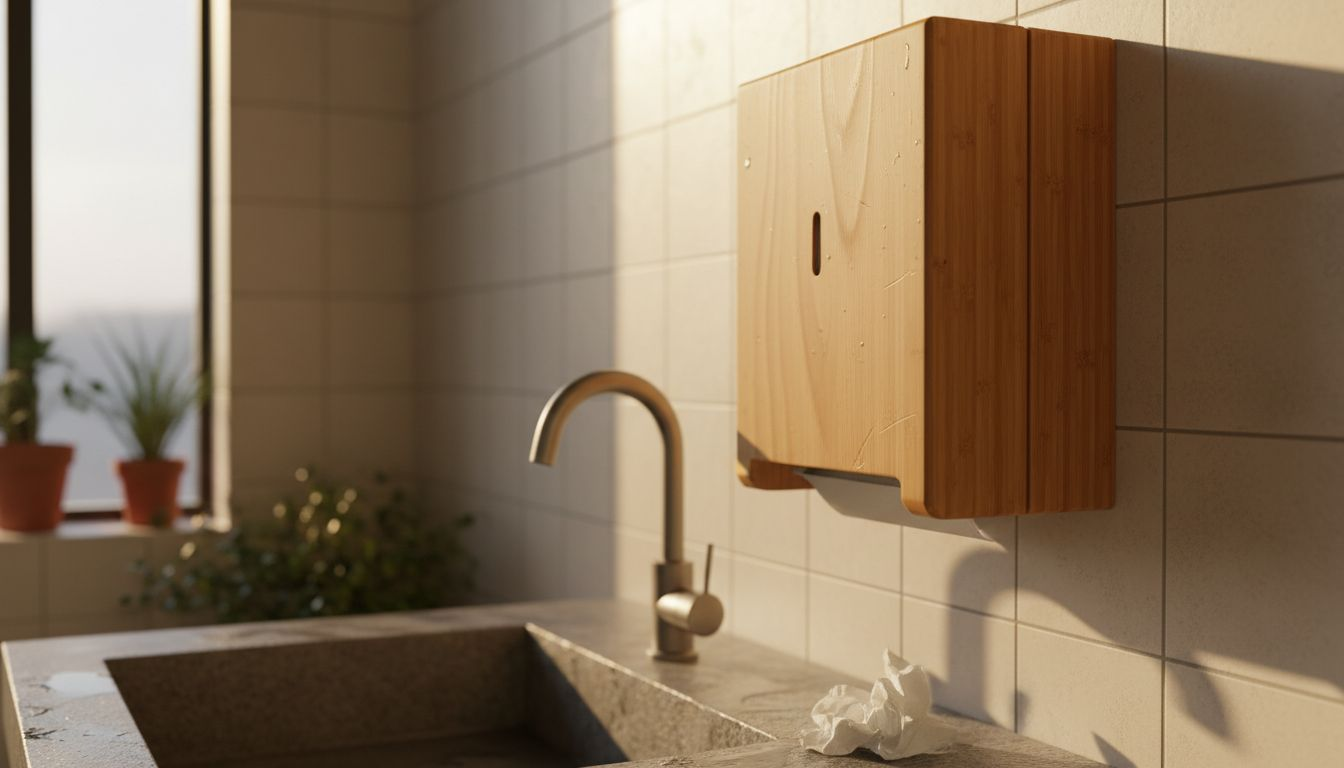
Bamboo’s natural warmth enhances commercial bathroom ambiance, creating inviting spaces that customers notice. The grain patterns and honey tones complement diverse design schemes, from rustic cafes to modern offices. This versatility makes bamboo a strategic choice when aesthetics influence customer perception and brand identity.
Pro Tip: Mix bamboo essentials with metal accents for visual interest. Bamboo dispensers paired with brushed nickel fixtures create sophisticated contrast while maintaining sustainability focus.
For detailed analysis of material performance, review this bamboo bathroom storage durability guide and explore the bamboo vs plastic comparison list to understand long-term value differences.
Bamboo items last over 5 years in high-traffic commercial settings, outperforming recycled plastic alternatives. This longevity stems from bamboo’s natural density and moisture resistance. Proper installation with quality mounting hardware prevents wobbling and stress that shortens product life. Choose dispensers with reinforced corners and thick-walled construction for maximum durability.
Plastic dispensers tend to last three to four years before cracking or discoloration requires replacement. Frequent refills and cleaning accelerate wear on hinges and latches. Budget for replacement cycles when calculating total costs. While initial savings attract attention, the hidden expense of repeated purchases adds up.
Regular cleaning extends bamboo product lifespan significantly. Wipe surfaces weekly with mild soap and water, avoiding harsh chemicals that strip natural oils. Dry thoroughly to prevent moisture accumulation in joints. Monthly inspections catch loose screws or worn parts before failures occur. This simple maintenance routine preserves appearance and function.
Durability reduces replacement costs and environmental footprint. Fewer replacements mean less packaging waste, reduced shipping emissions, and lower disposal impact. Investing in quality sustainable products aligns operational efficiency with environmental responsibility.
Maintenance ease is key to minimizing facility downtime and labor. Products with tool-free refilling save staff time during high-volume periods. Designs that resist fingerprints and water spots reduce cleaning frequency. Modular components allow quick part replacement without full unit removal.
For comprehensive durability insights, consult the bamboo bathroom durability guide covering real-world performance data from commercial installations.
Bamboo’s warm, natural appearance enhances bathroom ambiance positively, creating welcoming spaces that stand out. The organic texture and grain variation add visual interest without overwhelming minimalist designs. In hospitality settings, bamboo signals environmental commitment while elevating perceived quality. Customers increasingly expect businesses to demonstrate sustainability, and visible eco-friendly choices reinforce that message.
Customers perceive bamboo products as a mark of sustainability commitment. This perception translates into stronger brand loyalty and positive word-of-mouth. A restaurant installing bamboo dispensers may see customers share photos on social media, generating organic marketing. The subtle statement supports green branding without requiring extensive campaigns.
Functional benefits include biodegradability and modular, easy-to-maintain designs. When products eventually reach end of life, bamboo decomposes naturally instead of persisting in landfills for centuries. Modular construction allows replacing worn components rather than entire units, extending useful life and reducing waste. Mounting systems accommodate various wall types, simplifying installation across diverse facilities.
Bamboo supports elevated customer satisfaction and repeat visits in hospitality. Clean, attractive bathrooms influence overall experience ratings and review scores. Investing in quality essentials demonstrates attention to detail that customers notice and appreciate. The tactile quality of bamboo adds a premium feel that plastic cannot match.
“Incorporating bamboo essentials subtly promotes a green brand image while delivering practical durability that withstands daily commercial demands. The material’s natural antimicrobial properties reduce cleaning chemical use, creating healthier environments for staff and customers alike.”
Explore bamboo interior design ideas and bamboo decor ideas to integrate sustainable materials throughout your facility. For broader sustainability strategies, review sustainable building products examples that complement bathroom upgrades.
The eco-friendly bathroom products market has grown by 40% recently, with bamboo products gaining strong traction. This growth reflects consumer demand and improving supply chains. Major distributors now stock sustainable options alongside conventional products, eliminating special-order delays. Online marketplaces offer wider selection and competitive pricing, making sustainable choices more accessible.
Bamboo dispensers typically carry a moderate price premium over plastic, ranging from 20% to 40% higher upfront. A quality bamboo paper towel dispenser may cost $35 to $50 compared to $25 for basic plastic. However, the five-year-plus lifespan versus three to four years for plastic narrows the gap significantly when calculated annually. Volume discounts reduce per-unit costs for facilities upgrading multiple bathrooms simultaneously.
| Product Type | Plastic Price | Bamboo Price | Expected Lifespan |
|---|---|---|---|
| Paper Towel Dispenser | $25 | $35-50 | Plastic: 3-4 yrs, Bamboo: 5+ yrs |
| Soap Dispenser | $20 | $30-45 | Plastic: 3 yrs, Bamboo: 5+ yrs |
| Toilet Paper Holder | $15 | $25-35 | Plastic: 3-4 yrs, Bamboo: 5+ yrs |
Free shipping and warranty offers are available from brands like Cozee Bay, adding value beyond product cost. Money-back guarantees reduce purchase risk, allowing facilities to test products without long-term commitment. These offerings make premium sustainable products more competitive with budget alternatives.
Sourcing trends favor FSC-certified and cradle-to-cradle products as corporate sustainability reporting intensifies. Businesses facing ESG requirements seek verified sustainable suppliers. This demand drives manufacturers to pursue certifications and improve transparency. Expect continued innovation in materials and designs as competition increases.
Availability is improving across commercial product categories. Five years ago, sustainable options meant limited selection and long lead times. Today, major suppliers maintain inventory and offer next-day shipping in many regions. Custom branding and color matching services expand design possibilities without sacrificing sustainability.
High-traffic restaurants and cafes benefit from durable bamboo dispensers with warm aesthetics. These environments demand products that survive hundreds of daily uses while maintaining visual appeal. Bamboo’s natural antimicrobial properties reduce bacteria buildup between cleanings, supporting food safety standards. The welcoming appearance aligns with hospitality goals, creating memorable restroom experiences that reflect overall service quality.
Healthcare and senior living centers should prioritize sensor-activated bamboo dispensers for hygiene and sustainability. Touchless operation minimizes disease transmission risks critical in medical settings. Bamboo’s chemical-free antimicrobial action supports infection control without harsh disinfectants. Seniors appreciate easy-to-use designs that accommodate limited mobility or dexterity challenges.
Education facilities and offices can choose recycled plastic dispensers for budget and moderate sustainability. Schools managing tight budgets may find plastic options sufficient for lower-traffic bathrooms. Offices with sustainability goals but limited capital can phase in upgrades, starting with high-visibility restrooms and expanding over time. Plastic products still divert waste from landfills while delivering acceptable performance.
Businesses focused on green branding should invest in FSC-certified bamboo products. Hotels, spas, and boutique retailers competing on eco-credentials need verified sustainable solutions. The certification provides third-party validation for marketing claims, supporting green certifications like LEED or Green Seal for buildings. Visible sustainable choices reinforce brand messaging at every customer touchpoint.
Choosing the right eco-friendly bathroom essentials requires balancing multiple factors. This comparison summarizes key differences to guide your decision.
| Criteria | Bamboo | Recycled Plastic | Metal |
|---|---|---|---|
| Sustainability Score | 87-93/100 | 70-75/100 | 65-72/100 |
| Typical Lifespan | 5+ years | 3-4 years | 10+ years |
| Upfront Cost | Moderate premium | Budget-friendly | Higher |
| Maintenance Needs | Low (simple cleaning) | Moderate (prone to wear) | Low (resistant to damage) |
| Aesthetic Appeal | Warm, natural | Industrial | Clinical |
| Best For | Hospitality, green branding | Budget-conscious, offices | Heavy-duty, longevity |
Bamboo products score between 87 to 93 out of 100 in eco-friendly commercial product reviews, outperforming plastic and metal options. This superior rating stems from bamboo’s renewability, durability, and lower environmental impact across its lifecycle.
Bamboo offers top sustainability and durability with moderate cost premium, making it ideal for facilities prioritizing environmental responsibility and aesthetics. The natural warmth enhances user experience while supporting green brand positioning. Five-year-plus lifespan delivers strong return on investment despite higher initial cost.
Recycled plastic is cost-effective but less durable and appealing, suitable for budget-conscious facilities with moderate sustainability goals. It diverts waste from landfills and performs adequately in lower-traffic environments. Consider plastic for pilot projects or phased upgrades when capital is limited.
Metal is very durable but less environmentally friendly and more costly, best reserved for extreme heavy-duty applications. The industrial aesthetic may limit use in customer-facing spaces. Longevity justifies higher costs in specific scenarios where replacement is impractical.
Selection depends on facility usage, budget, and branding priorities. High-traffic hospitality spaces gain maximum value from bamboo’s durability and aesthetics. Budget-focused offices may accept shorter plastic lifespans. Green-certified facilities require verified sustainable materials regardless of premium.
Investing in eco-friendly essentials yields long-term environmental and operational benefits. Reduced waste, lower replacement costs, and enhanced brand perception create competitive advantages. The sustainable bathroom products market continues expanding, ensuring improving availability and innovation. Your choice today positions your facility for future regulations and customer expectations around environmental responsibility.
Ready to upgrade your commercial bathrooms with sustainable solutions that deliver? Cozee Bay offers FSC-certified bamboo dispensers and eco-friendly essentials designed for real-world commercial use. Our products combine durability with natural beauty, backed by warranties and free shipping within the contiguous U.S. Whether you manage a busy restaurant, healthcare facility, or office building, we have solutions matching your sustainability and aesthetic goals.
Our bamboo paper towel dispensers have proven themselves in restaurants, schools, senior living centers, and coffee shops nationwide. Expert product descriptions and customer reviews help you select confidently. Enjoy straightforward navigation, detailed specifications, and responsive support. Explore Cozee Bay eco-friendly bathroom products today and discover how sustainable choices enhance your facility while supporting environmental responsibility.
FSC, Cradle to Cradle, and Green Seal are primary certifications ensuring sustainability and environmental responsibility. FSC certification verifies responsible forest management and sustainable harvesting practices. Cradle to Cradle evaluates products across material health, recyclability, renewable energy use, water stewardship, and social fairness. Green Seal focuses on reduced environmental impact throughout product lifecycles, including low VOC emissions and sustainable materials. These certifications provide third-party validation that products meet rigorous environmental standards, giving facility managers confidence in their purchasing decisions.
Bamboo accessories typically last over five years, longer than recycled plastic’s three to four years, with comparable durability to metal but easier maintenance and a warmer look. Bamboo’s natural density and moisture resistance withstand high-traffic commercial use without cracking or warping. Proper upkeep extends bamboo products’ lifespan significantly, making them a cost-effective long-term investment despite moderate price premiums.
Bamboo paper towel dispensers and sensor-activated soap dispensers provide durability and hygiene in high-traffic spaces like restaurants and cafes. Bamboo withstands hundreds of daily uses while maintaining appearance and function. Sensor activation reduces cross-contamination and controls waste. Combining eco-friendliness with robustness supports sustainability goals without sacrificing performance, making these products ideal for demanding commercial environments.
Many eco-friendly products have a moderate price premium initially but offer long-term savings due to durability and reduced replacements. Bamboo dispensers may cost 20% to 40% more than plastic but last significantly longer, reducing total ownership costs over five years. Investing in certified sustainable products often improves brand image and customer satisfaction, adding indirect value beyond direct cost comparisons.
Comments will be approved before showing up.