Your Cart is Empty


TL;DR:
- Handcrafted bamboo products offer superior quality, durability, and unique character compared to mass-produced items.
- Bamboo’s fast growth, low environmental impact, and biodegradability make it an eco-friendly material choice.
- Genuine sustainability requires verifying certifications, transparent sourcing, and responsible artisan practices.
Many people assume mass-produced goods win on value, convenience, and consistency. It makes sense on the surface. But once you start living with a handcrafted bamboo paper towel dispenser in your kitchen or a beautifully made bamboo organizer on your desk, something shifts. You realize these products carry a quality that factory lines simply cannot replicate. This guide breaks down exactly why handcrafted bamboo products stand apart, from the raw material advantages and sustainability credentials to the emotional and economic reasons that make every purchase feel meaningful. Whether you’re outfitting a home, a restaurant, or a senior living center, this is the clarity you’ve been looking for.
| Point | Details |
|---|---|
| Handcrafted lasts longer | Products made by artisans often last for decades, unlike most mass-produced alternatives. |
| Bamboo is truly eco-friendly | With rapid growth and high carbon capture, bamboo outperforms traditional woods environmentally. |
| Supports communities | Choosing handcrafted helps local economies and independent makers thrive. |
| Beware greenwashing | Real sustainability means checking for certifications and ethical practices, not just trusting marketing. |
Handcrafted products are made primarily by hand, with artisans guiding each step of the process rather than relying on automated machinery to churn out identical units. That distinction matters more than most people realize. When a skilled maker selects materials, shapes each piece, and applies finishing touches with deliberate attention, the result is a product built with intention rather than speed.
Mass-produced goods prioritize volume. Factories optimize for cost reduction, which often means thinner materials, shortcuts in finishing, and components designed to be replaced rather than repaired. Handcrafted goods take the opposite approach. Each item receives individual attention, and the maker’s reputation is tied directly to its quality.
Here’s what sets handcrafted products apart in practical terms:
Handcrafted products offer superior durability due to intentional craftsmanship and high-quality materials, often lasting decades compared to mass-produced items designed for disposability. That’s not a small thing when you’re furnishing a space you care about.
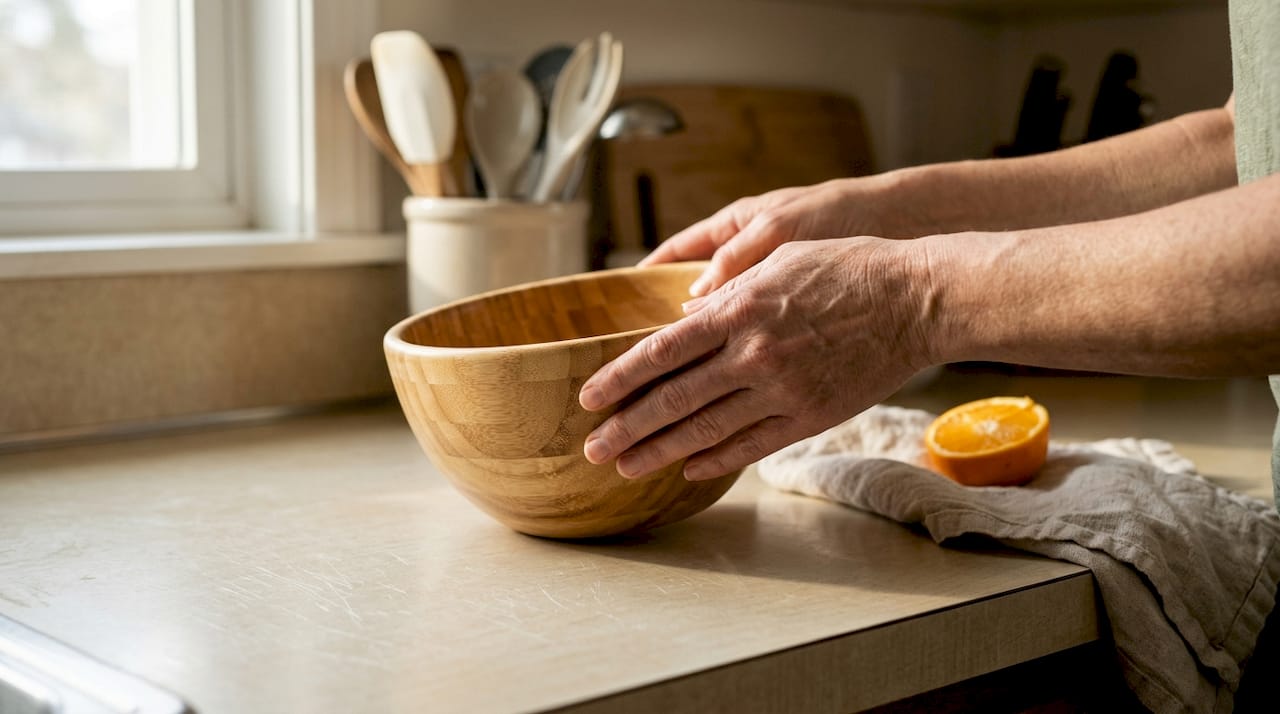
There’s also an emotional dimension here. Research into artisan wisdom suggests that consumers perceive handcrafted goods as more creative and more thoughtful, which creates a deeper connection between the buyer and the object. You’re not just buying a product. You’re bringing home something made with skill and care.
For a closer look at why this matters in everyday living, the handcrafted home benefits are worth exploring, especially if you’re weighing your options between artisan-made and off-the-shelf items. And if you want a direct side-by-side breakdown, the handcrafted vs mass-produced comparison lays it out clearly.
“The handcrafted object is not just a product. It is a record of human skill, time, and intention — and that is precisely what gives it lasting value.”
Not every material is created equal when it comes to eco-friendly production. Bamboo stands in a category of its own, and once you understand why, it’s hard to look at plastic or even traditional hardwood the same way.
Bamboo is technically a grass, not a tree, and it grows at a remarkable pace. Bamboo grows 30x faster than timber, sequesters 12 to 17 tons of CO2 per hectare per year, and is fully biodegradable. Compare that to oak or walnut, which can take 50 to 100 years to reach harvestable maturity, and the environmental math becomes obvious.
Here’s a quick comparison to put bamboo’s advantages in perspective:
| Feature | Bamboo | Hardwood | Plastic |
|---|---|---|---|
| Growth to harvest | 3 to 5 years | 50 to 100 years | N/A (petroleum-based) |
| CO2 sequestration | 12 to 17 tons/hectare/year | Lower rates | None |
| Biodegradable | Yes | Yes | No |
| Chemical requirements | Minimal to none | Often high | High |
| Renewability | Extremely high | Moderate | None |
Beyond the numbers, bamboo requires no pesticides or fertilizers in most growing conditions, and it regenerates from its own root system after harvesting. That means the soil stays intact and the ecosystem around the crop remains largely undisturbed. For eco-conscious buyers, that’s a meaningful difference.
The bamboo wood advantages go even further when you factor in how well the material holds up in finished products. Bamboo is harder than many traditional hardwoods, resistant to moisture when properly treated, and naturally beautiful without requiring heavy staining or chemical finishes.
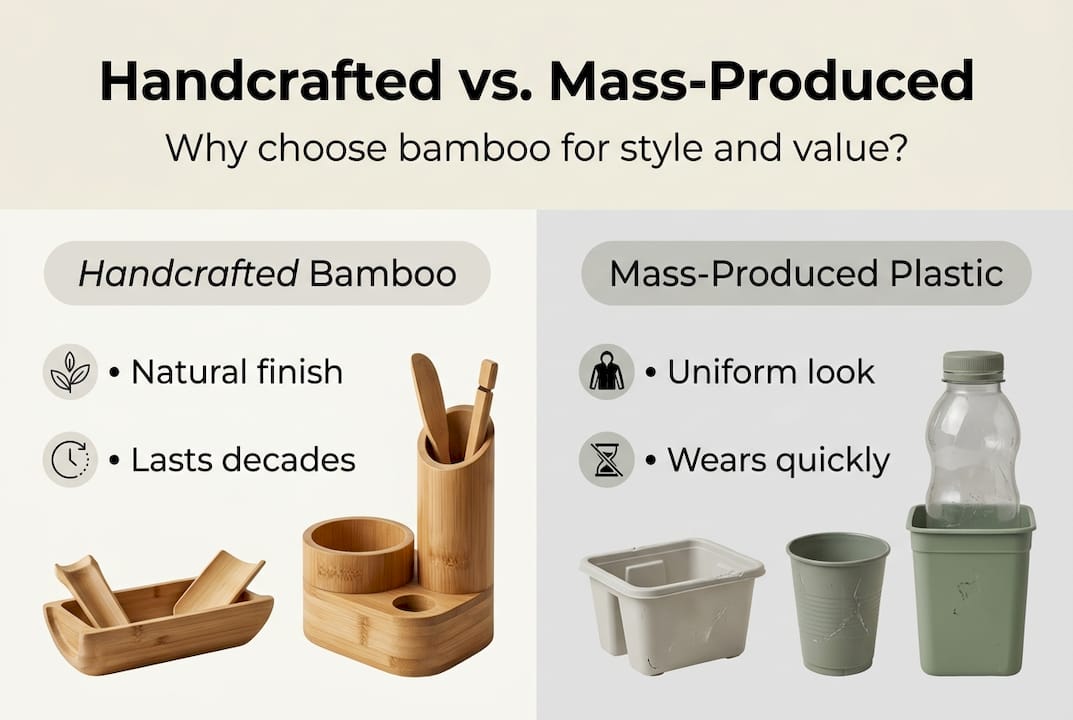
If you want to go deeper on what makes bamboo items stand out in terms of qualities of bamboo items, the material’s natural properties translate directly into functional, long-lasting goods.
Pro Tip: When shopping for bamboo products, look for items certified by responsible forestry initiatives like the Forest Stewardship Council (FSC). Certification confirms that the bamboo was harvested responsibly and that workers throughout the supply chain were treated fairly.
Sustainability is important, but let’s be honest: if a product doesn’t look good and work well, it won’t stay in your home for long. Handcrafted bamboo products clear that bar easily, and then some.
In the kitchen, bamboo shines. Using bamboo in kitchens makes practical sense because the material is naturally antimicrobial, meaning it resists the growth of bacteria and mold without any chemical treatment. That matters a lot when you’re dealing with paper towel dispensers, food bag organizers, or wrap and foil dispensers that sit near food prep areas.
Beyond the kitchen, handcrafted bamboo products fit naturally into a wide range of spaces:
The bamboo homeware benefits extend to low maintenance as well. Unlike wood that needs regular oiling or metal that can rust, bamboo holds up beautifully with minimal care. A quick wipe-down is usually all it takes.
From a style standpoint, bamboo’s warm, natural grain pairs well with modern, minimalist, and rustic interiors alike. It doesn’t fight with your existing decor. It complements it. For inspiration on how to work bamboo into your space, bamboo décor ideas offer practical room-by-room guidance.
The market is catching on, too. Bamboo product demand has been rising steadily as more consumers and businesses prioritize sustainability without sacrificing style. This isn’t a passing trend. It’s a shift in how people think about the things they bring into their spaces.
Handcrafted bamboo products provide stylish, practical uses for homes and businesses, featuring natural antimicrobial properties and modern aesthetics that hold up in real-world use.
Choosing handcrafted bamboo products isn’t just a personal preference. It’s a decision with real-world ripple effects that reach well beyond your home or office.
Start with the economics. Consumers perceive handcrafted products as higher in creativity and wisdom, and $68 of every $100 spent on local goods stays in the community. That’s a stark contrast to large-scale retail, where most of that money flows to distant corporate headquarters. When you buy from a small artisan operation, you’re helping sustain livelihoods, fund local suppliers, and keep traditional skills alive.
Here’s a comparison that puts the broader impact in perspective:
| Factor | Local handcrafted | Mass-produced |
|---|---|---|
| Money staying local | Up to 68% | Minimal |
| Worker wages | Fair, traceable | Often unclear |
| Production transparency | High | Low |
| Environmental footprint | Lower | Higher |
| Emotional connection | Strong | Weak |
The ethical side of this choice matters too. With mass production, it’s nearly impossible to trace where materials came from, who made them, or under what conditions. With handcrafted goods from transparent brands, you can often find out exactly where the bamboo was sourced, who shaped it, and what standards guided the process. That traceability is increasingly important to buyers who want their purchases to reflect their values.
Here are the top reasons buyers choose handcrafted over mass-produced:
For a deeper look at how handcrafted vs mass-produced choices play out across different product categories, and why artisan bamboo sustainability represents a genuinely different approach, these resources are worth your time. The handcrafted value insights from sustainability researchers reinforce why this shift in buying habits carries real weight.
Here’s the part most guides skip: not everything labeled “handcrafted” or “eco-friendly” actually earns those titles. Greenwashing is real, and it’s frustratingly common in the bamboo and artisan goods market. Knowing how to spot the difference protects your wallet and your values.
Not all handcrafted is sustainable; consumers must check practices, certifications, and consider price and time trade-offs before committing to a purchase. That’s honest advice, and it’s worth taking seriously.
Here’s what to look for when evaluating a handcrafted bamboo product:
The craftsmanship pitfalls in the broader artisan market are well-documented. Vague language like “inspired by artisan techniques” or “crafted with care” without any supporting detail is a red flag.
Pro Tip: Search for the brand’s production story before you buy. A genuine artisan operation will have photos, names, and specific details about their process. Generic stock imagery and vague claims are signs that the “handcrafted” label is more marketing than reality.
For guidance on making smart choices, sustainable craftsmanship tips and advice on choosing bamboo wisely can help you filter out the noise and focus on what genuinely matters.
We’ve seen a lot of “eco” and “handcrafted” labels get thrown around in the last few years, and honestly, it’s created more confusion than clarity. The words have been stretched so thin that they’ve almost lost meaning for careful shoppers.
True sustainability isn’t a sticker on a box. It’s a set of decisions made at every stage of production: where the bamboo grows, how it’s harvested, who shapes it, what finishes are applied, and how the product is packaged and shipped. When all of those decisions align with genuine environmental and ethical standards, you get something worth buying. When even one of those steps cuts corners, the whole story unravels.
Experts note challenges like market access, import tariffs, and fake artisanal claims, which is exactly why certifications are vital for genuine sustainability. Certifications aren’t perfect, but they’re the best tool buyers currently have to verify that a brand’s claims hold up under scrutiny.
Supporting authentic artisans also protects something less tangible but equally important: traditional knowledge. When skilled makers lose their livelihoods to cheap imitations, those techniques disappear. The artisan sustainability wisdom built over generations doesn’t transfer to a factory floor. Once it’s gone, it’s gone. Buying with intention keeps it alive.
If this guide has you ready to make a more intentional choice about the products you bring into your home or business, you’re in the right place.
At Cozee Bay, every bamboo product is designed with genuine eco-consciousness and real craftsmanship in mind. From paper towel dispensers and drawer organizers to wrap and foil dispensers and food bag organizers, the collection is built for people who want their everyday items to look great, work hard, and carry a lighter footprint. Cozee Bay offers free shipping within the contiguous U.S. and backs every purchase with a money-back guarantee, so you can shop with confidence. Explore the full catalog and find the pieces that fit your space and your values.
Yes, handcrafted bamboo items are intentionally built for longevity using higher-quality materials and careful construction, and handcrafted bamboo products are exceptionally durable compared to mass-produced goods, often lasting for decades with proper care.
Look for credible certifications like FSC, transparent supply chains, and brands that openly detail their sourcing and production ethics. Verified certifications are the clearest indicator of genuine sustainability claims.
Bamboo grows up to 30 times faster than timber, sequesters more carbon, requires no chemicals, and is fully biodegradable. Bamboo sequesters 35% more CO2 than trees and matures in just 3 to 5 years, making it far more eco-friendly than wood or plastic alternatives.
For eco-conscious buyers, the durability, ethical production, and lasting impact of handcrafted goods usually outweigh the higher initial price over time. Handmade goods cost more up front but deliver lasting value and sustainability benefits that cheap alternatives simply cannot match.
Comments will be approved before showing up.