Your Cart is Empty


You’ve probably heard that bamboo products naturally fight bacteria, but here’s the truth: not all bamboo items retain these antimicrobial properties. Processing methods dramatically impact whether bamboo kun, the natural antibacterial agent in raw bamboo, survives manufacturing. Many bamboo fabrics lose their antimicrobial power during chemical processing, while other bamboo products preserve these benefits through gentler methods. Understanding which bamboo products truly deliver antimicrobial protection helps you make informed choices for your home or business. This guide reveals how bamboo’s natural defenses work, which products maintain these properties, and how to identify genuinely antimicrobial bamboo items that combine sustainability with real health benefits.
| Point | Details |
|---|---|
| Natural antimicrobial agent | Bamboo contains bamboo kun, which inhibits bacteria, fungi, and viruses naturally. |
| Processing matters critically | Chemical processing like rayon production removes natural antimicrobial compounds entirely. |
| Superior bacterial inhibition | Bamboo materials reduce bacterial colonization by 60-80% compared to plastic alternatives. |
| Sustainable hygiene solution | Antimicrobial bamboo eliminates synthetic additives while biodegrading completely during composting. |
| Verification essential | Consumers must check manufacturing methods to ensure products retain genuine antimicrobial benefits. |
Bamboo’s remarkable ability to resist bacteria stems from bamboo kun, a natural antimicrobial substance embedded in the plant’s cellular structure. This organic compound provides antibacterial, antifungal, and antiviral protection without any chemical intervention. Unlike synthetic antimicrobials that manufacturers add during production, bamboo kun exists naturally in the plant from growth through harvest.
The compound demonstrates broad-spectrum effectiveness against various pathogens, including Staphylococcus aureus, Escherichia coli, and Streptococcus mutans. Research shows bamboo’s natural defenses achieve bacterial inhibition rates up to 99.8% in controlled studies. These impressive results explain why bamboo products naturally resist odor development and maintain freshness longer than conventional materials.
Bamboo kun works by disrupting bacterial cell walls and interfering with microbial reproduction cycles. The mechanism targets multiple bacterial strains simultaneously, making it difficult for pathogens to develop resistance. This multi-pronged approach provides consistent protection across diverse environments, from humid bathrooms to busy commercial kitchens.
Beyond fighting bacteria, bamboo’s antimicrobial properties create tangible benefits for users:
The environmental advantages of bamboo extend beyond its antimicrobial properties. Bamboo grows rapidly without pesticides, regenerates from root systems after harvesting, and sequesters carbon dioxide more efficiently than hardwood trees. These sustainability factors combine with natural antimicrobial action to create genuinely eco-friendly products.
“Bamboo fiber’s antibacterial properties stem from its unique cellular structure and natural compounds, making it an ideal material for health-conscious consumers seeking sustainable alternatives to synthetic antimicrobials.”
Understanding bamboo kun’s natural presence helps you evaluate product claims critically. When manufacturers preserve this compound through appropriate processing, you gain authentic antimicrobial benefits. However, aggressive chemical treatments can strip away these natural defenses, leaving you with products that lack the protective qualities you expect.
The journey from bamboo plant to finished product determines whether antimicrobial properties survive or disappear entirely. Processing methods create a critical divide between products that deliver genuine bacterial protection and those that make empty claims. Understanding these manufacturing differences empowers you to choose products that truly perform.
Chemical processing, particularly rayon or viscose production, involves dissolving bamboo cellulose in harsh solvents like sodium hydroxide and carbon disulfide. These aggressive chemicals remove natural compounds, including bamboo kun, leaving behind only reconstituted cellulose fibers. The Federal Trade Commission explicitly states that chemically processed bamboo contains no trace of the plant’s original antimicrobial agents.
Gentler manufacturing approaches preserve bamboo’s natural defenses more effectively. Mechanical processing crushes bamboo stalks and uses natural enzymes to separate fibers, maintaining the plant’s inherent properties. Bamboo pulp products created through controlled pressing without synthetic adhesives retain antimicrobial compounds throughout the manufacturing cycle. These methods cost more and take longer but deliver authentic bacterial protection.
The manufacturing process dramatically impacts final product performance:
| Product Type | Processing Method | Antimicrobial Efficacy | Sustainability Rating |
|---|---|---|---|
| Raw bamboo fiber | Mechanical crushing | 95-99% bacterial inhibition | Excellent |
| Bamboo rayon fabric | Chemical dissolution | 0-5% bacterial inhibition | Poor |
| Bamboo pulp trays | Controlled pressing | 85-95% bacterial inhibition | Excellent |
| Bamboo lyocell fabric | Closed-loop solvent | 60-75% bacterial inhibition | Good |
Pro Tip: Request third-party laboratory test results showing bacterial inhibition rates before purchasing antimicrobial bamboo products, especially textiles and food contact items.
Identifying genuinely antimicrobial bamboo products requires examining several factors beyond marketing claims. Look for transparency about manufacturing processes, with specific mentions of mechanical processing or enzyme-based fiber separation. Certifications from independent testing laboratories provide objective evidence of antimicrobial performance. Product descriptions should explain how natural compounds were preserved rather than simply asserting antibacterial properties.
Proper care and maintenance also influence how long antimicrobial benefits last. Harsh detergents, bleach, and high-temperature washing can degrade remaining natural compounds over time. Gentle cleaning with mild soaps and air drying help preserve bamboo kun’s effectiveness throughout the product’s lifespan.
Consumers should verify these key indicators:
The processing divide creates two distinct categories of bamboo products. Those manufactured through gentle methods deliver the antimicrobial protection you expect, while chemically processed alternatives offer sustainability benefits without bacterial resistance. Knowing this difference helps you match products to your specific needs, whether prioritizing antimicrobial action or simply seeking renewable materials.
Bamboo’s antimicrobial performance stands out when measured against materials you use daily. Understanding these differences helps you make informed decisions about which products truly deliver superior bacterial protection. Real-world testing reveals significant gaps between bamboo and conventional alternatives in both effectiveness and sustainability.
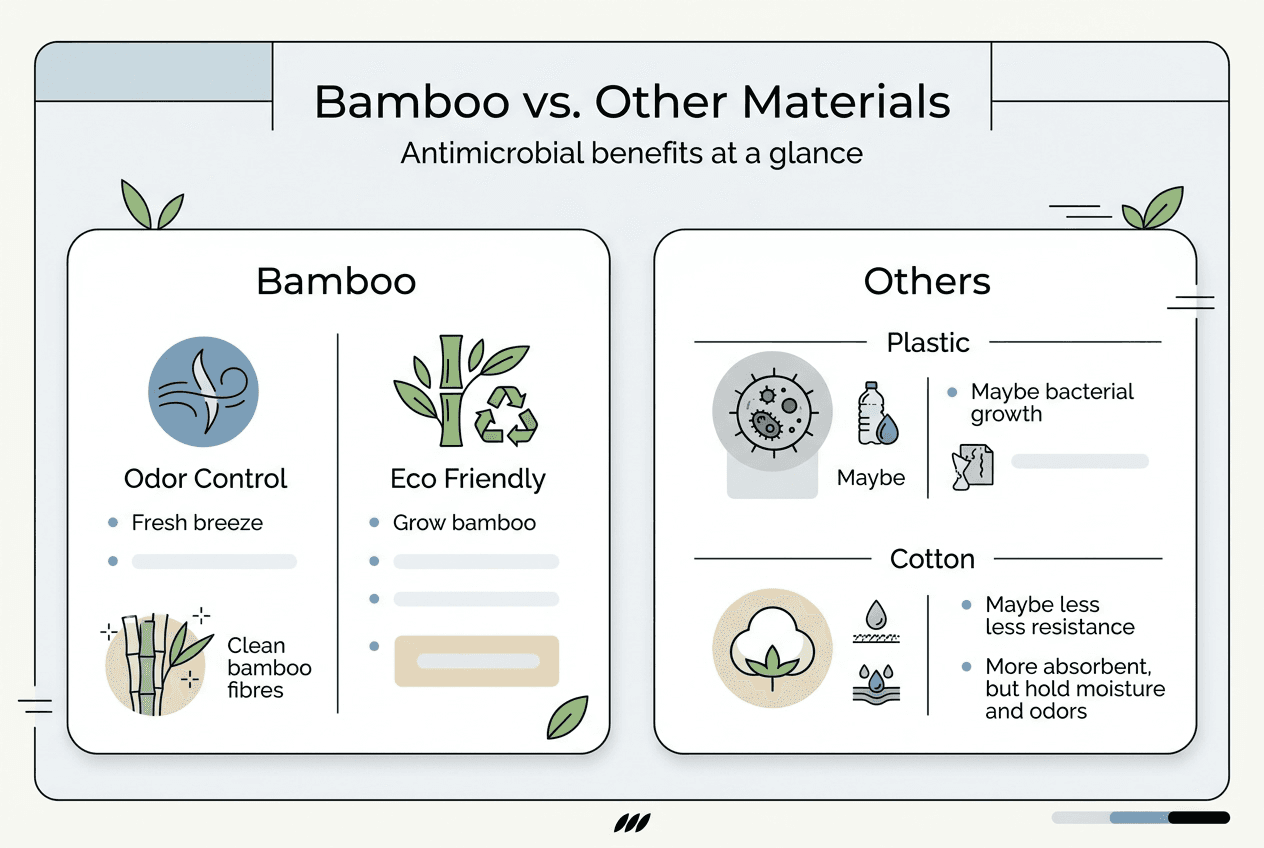
Bacterial inhibition rates tell a compelling story about material performance:
| Material | Bacterial Inhibition Rate | Odor Resistance | Durability | Environmental Impact |
|---|---|---|---|---|
| Antimicrobial bamboo | 85-99% | Excellent | High | Low |
| Cotton | 15-25% | Poor | Medium | Medium |
| Polyester | 10-20% | Very poor | High | High |
| Plastic with additives | 40-60% | Fair | Medium | Very high |
| Untreated wood | 30-45% | Fair | Medium | Low |
Research demonstrates bamboo materials reduced bacterial colonization by 60-80% compared to plastic alternatives in identical conditions. This dramatic difference stems from bamboo kun’s natural action versus synthetic antimicrobials that leach out over time or lose effectiveness through repeated exposure.
Cotton and polyester fabrics face particular challenges with bacterial growth. Cotton absorbs moisture readily, creating ideal conditions for microbial proliferation without natural defenses against bacteria. Polyester’s synthetic structure traps oils and dead skin cells, feeding bacterial colonies that produce unpleasant odors. Bamboo shows superior resistance to both Staphylococcus aureus and Escherichia coli compared to these conventional fabrics.
Plastic products often incorporate synthetic antimicrobial additives like triclosan or silver ions. These chemicals raise environmental and health concerns, with triclosan linked to hormone disruption and silver nanoparticles accumulating in waterways. Bamboo’s natural antimicrobial action avoids these risks while delivering comparable or superior bacterial inhibition.
Choosing antimicrobial bamboo over conventional materials provides multiple advantages:
Practical applications demonstrate bamboo’s advantages across diverse settings. Bamboo cutting boards naturally inhibit bacteria in food preparation areas where plastic boards harbor dangerous pathogens in knife grooves. Bamboo textiles in healthcare settings reduce cross-contamination risks compared to cotton linens that require chemical sanitizers. Food packaging made from bamboo pulp extends produce freshness while eliminating plastic waste.
Understanding bamboo’s benefits helps you evaluate whether premium pricing justifies the investment. For high-touch surfaces, food contact applications, and moisture-prone environments, bamboo’s superior antimicrobial performance delivers measurable value. In situations where bacterial control matters less, conventional materials might suffice at lower cost.
The durability factor compounds bamboo’s advantages over time. While cotton towels develop musty odors and require frequent replacement, bamboo textiles maintain freshness through years of use. Plastic containers crack and discolor, but bamboo products retain structural integrity and appearance. These longevity benefits offset higher initial costs through reduced replacement frequency.
Skin-friendliness represents another critical distinction. Bamboo’s natural compounds reduce irritation and allergic reactions compared to synthetic antimicrobials in treated fabrics. People with eczema, psoriasis, or chemical sensitivities often tolerate bamboo products better than conventional alternatives containing harsh treatments or residual processing chemicals.
Transforming knowledge about bamboo’s antimicrobial properties into practical action starts with identifying high-impact applications in your daily environment. Strategic placement of bamboo products in bacteria-prone areas maximizes hygiene benefits while supporting sustainability goals. Both residential and commercial settings offer numerous opportunities to leverage bamboo’s natural defenses.

Home applications where antimicrobial bamboo delivers exceptional value include kitchen towels and cutting boards that contact raw foods, bathroom textiles exposed to moisture and body oils, and storage containers for produce that benefit from bacterial inhibition. Bedroom linens made from mechanically processed bamboo reduce dust mite populations and skin bacteria that cause acne. Pet owners appreciate bamboo’s odor resistance in bedding and feeding areas.
Commercial environments gain even greater advantages from antimicrobial bamboo products. Restaurants using bamboo serving trays and utensils reduce foodborne illness risks while projecting eco-conscious branding. Healthcare facilities incorporating bamboo textiles lower hospital-acquired infection rates compared to conventional linens. Commercial spaces benefit from bamboo’s durability and low maintenance requirements in high-traffic areas.
Food service applications demonstrate bamboo’s practical advantages clearly. Bamboo pulp trays reduce decay rates and extend freshness compared to plastic packaging by inhibiting bacterial and fungal growth on produce surfaces. This preservation effect reduces food waste while eliminating plastic contamination. Coffee shops and bakeries using bamboo packaging align product quality with environmental values customers increasingly demand.
Sustainability advantages extend beyond renewable sourcing:
Proper care and maintenance preserve antimicrobial benefits throughout product lifespan. Wash bamboo textiles in cool or warm water with gentle, plant-based detergents rather than harsh chemicals that strip natural compounds. Air drying maintains fiber integrity better than high-heat machine drying. For bamboo kitchenware, hand washing with mild soap and thorough drying prevents moisture damage while preserving antibacterial properties.
Pro Tip: Place antimicrobial bamboo products in high-touch areas like kitchen counters, bathroom vanities, and food preparation zones where bacterial control matters most for health and hygiene.
Integrating bamboo products strategically amplifies their impact. Start with items you replace frequently due to odor or degradation, such as dish towels, cutting boards, and food storage containers. These high-use applications showcase bamboo’s advantages most dramatically. Gradually expand to bedding, bath linens, and organizational products as you experience the benefits firsthand.
Understanding product benefits helps you prioritize purchases based on your specific needs. Families with young children gain peace of mind from naturally antimicrobial surfaces that reduce illness transmission. Individuals with compromised immune systems benefit from bamboo’s bacterial resistance without exposure to harsh chemical sanitizers. Businesses improve customer perception while reducing cleaning costs and replacement frequency.
Educating staff or family members about proper bamboo product care ensures maximum longevity and performance. Simple practices like avoiding bleach, using appropriate water temperatures, and allowing complete drying between uses maintain antimicrobial effectiveness for years. This knowledge transforms bamboo products from simple purchases into long-term investments in health and sustainability.
Finding authentic antimicrobial bamboo products requires partnering with suppliers who prioritize genuine sustainability over marketing claims. Cozee Bay specializes in eco-friendly bamboo goods manufactured through processes that preserve natural antimicrobial properties. Our curated selection focuses on products where bamboo’s bacterial resistance delivers real value, from paper towel dispensers used in restaurants to organizational solutions for eco-conscious homes.
We verify manufacturing methods before adding products to our catalog, ensuring gentle processing techniques maintain bamboo kun’s effectiveness. Our commitment to transparency means you receive detailed information about how each item preserves antimicrobial benefits. This approach helps you make informed decisions based on actual performance rather than vague claims.

Our product range serves both residential and commercial customers seeking stylish, sustainable solutions that combine form with function. From kitchen organization to bathroom accessories, each item undergoes rigorous quality checks. We provide care instructions designed to maximize product lifespan while maintaining natural antimicrobial properties. Customer support helps you understand bamboo’s benefits and select items matching your specific needs.
Explore our collection at Cozee Bay to discover how antimicrobial bamboo products enhance your space while supporting environmental responsibility. Our educational blog content deepens your bamboo knowledge, helping you become a more informed consumer. Free shipping within the contiguous United States and our money-back guarantee reflect our confidence in product quality and customer satisfaction.
Yes, bamboo’s natural antimicrobial properties reduce irritation and allergens, making it ideal for sensitive skin. The plant’s organic compounds provide bacterial protection without harsh chemicals that trigger reactions. Properly manufactured bamboo fabric retains hypoallergenic benefits while delivering softness comparable to high-thread-count cotton.
High-quality bamboo fabrics maintain antibacterial efficacy after fifty washes, preserving hygiene and odor control throughout their lifespan. Proper care using gentle detergents and appropriate water temperatures enhances longevity of antimicrobial benefits. Mechanically processed bamboo retains natural compounds better than chemically treated alternatives.
No, antimicrobial efficacy depends critically on product type and processing methods used during manufacturing. Chemically processed bamboo fabrics lose natural compounds entirely, eliminating antibacterial properties despite bamboo content. Consumers should verify manufacturing details and request third-party testing results to ensure genuine antimicrobial benefits rather than relying on marketing claims alone.
Antimicrobial properties in properly manufactured bamboo products last throughout the item’s functional lifespan when maintained correctly. Natural bamboo kun remains stable in the plant’s cellular structure, providing consistent bacterial inhibition for years. Harsh chemicals, excessive heat, and improper care can degrade these compounds over time, reducing effectiveness.
Antimicrobial bamboo products complement but do not completely replace chemical sanitizers in commercial environments requiring strict hygiene protocols. Bamboo’s natural defenses reduce bacterial colonization between cleaning cycles, lowering overall pathogen loads. Healthcare and food service facilities should use bamboo products as part of comprehensive sanitation programs rather than sole bacterial control methods.
Comments will be approved before showing up.