Your Cart is Empty


Restroom cleanliness looks simple on the surface. Wipe counters, mop floors, restock supplies. But commercial restroom hygiene runs deeper than appearances. It protects public health through systematic disinfection, ensures compliance with OSHA and local health codes, and directly shapes customer perceptions of your business. Facilities managers and business owners face rising expectations for both hygiene standards and environmental responsibility. Eco-friendly solutions now deliver both objectives, reducing costs while meeting regulatory demands. This guide clarifies what commercial restroom hygiene truly requires, explains the regulations shaping your obligations, and shows how sustainable practices improve outcomes in 2026.
| Point | Details |
|---|---|
| Hygiene requires systematic disinfection | Visible cleaning alone fails to eliminate pathogens or meet health standards |
| Regulations mandate specific standards | OSHA and local codes require toilet ratios, daily cleaning, and sanitary conditions |
| Eco-friendly options reduce costs | Certified cleaners and touchless fixtures lower environmental impact and operating expenses |
| Customer perceptions drive business outcomes | Restroom cleanliness directly affects dwell time, spending behavior, and brand reputation |
| High-traffic facilities need stricter protocols | Monitoring systems and frequent disinfection prevent hygiene failures in busy environments |
Commercial restroom hygiene refers to systematic practices ensuring cleanliness, disinfection, and compliance in business restrooms to prevent pathogen spread, meet health regulations, and enhance user satisfaction. This definition highlights three core objectives. First, protect public health by eliminating bacteria, viruses, and fungi that thrive on restroom surfaces. Second, fulfill OSHA requirements and local health codes that mandate sanitary conditions. Third, enhance user experience and business reputation through consistently clean facilities.
Facilities managers and business owners must implement systems that go beyond surface cleaning. Scheduled disinfection targets high-touch areas like door handles, faucets, and toilet seats. Supply management ensures soap, paper towels, and toilet paper remain available throughout operating hours. Monitoring protocols track completion of cleaning tasks and identify hygiene failures before they escalate.
Visible cleanliness matters, but it represents only the first layer. A restroom can appear spotless while harboring dangerous pathogens on fixtures and floors. Effective hygiene requires EPA-registered disinfectants applied at proper concentrations and contact times. Staff training ensures cleaning crews understand the difference between cleaning and disinfecting.
“Commercial restroom hygiene protects health, ensures compliance, and shapes customer perceptions through systematic cleaning, disinfection, and monitoring.”
Your role extends beyond hiring a cleaning service. You must establish standards, verify compliance, and adapt protocols to your facility’s unique traffic patterns and user needs. High-traffic restrooms require more frequent attention than low-use facilities. Specialized environments like healthcare settings or food service operations face stricter regulatory scrutiny.
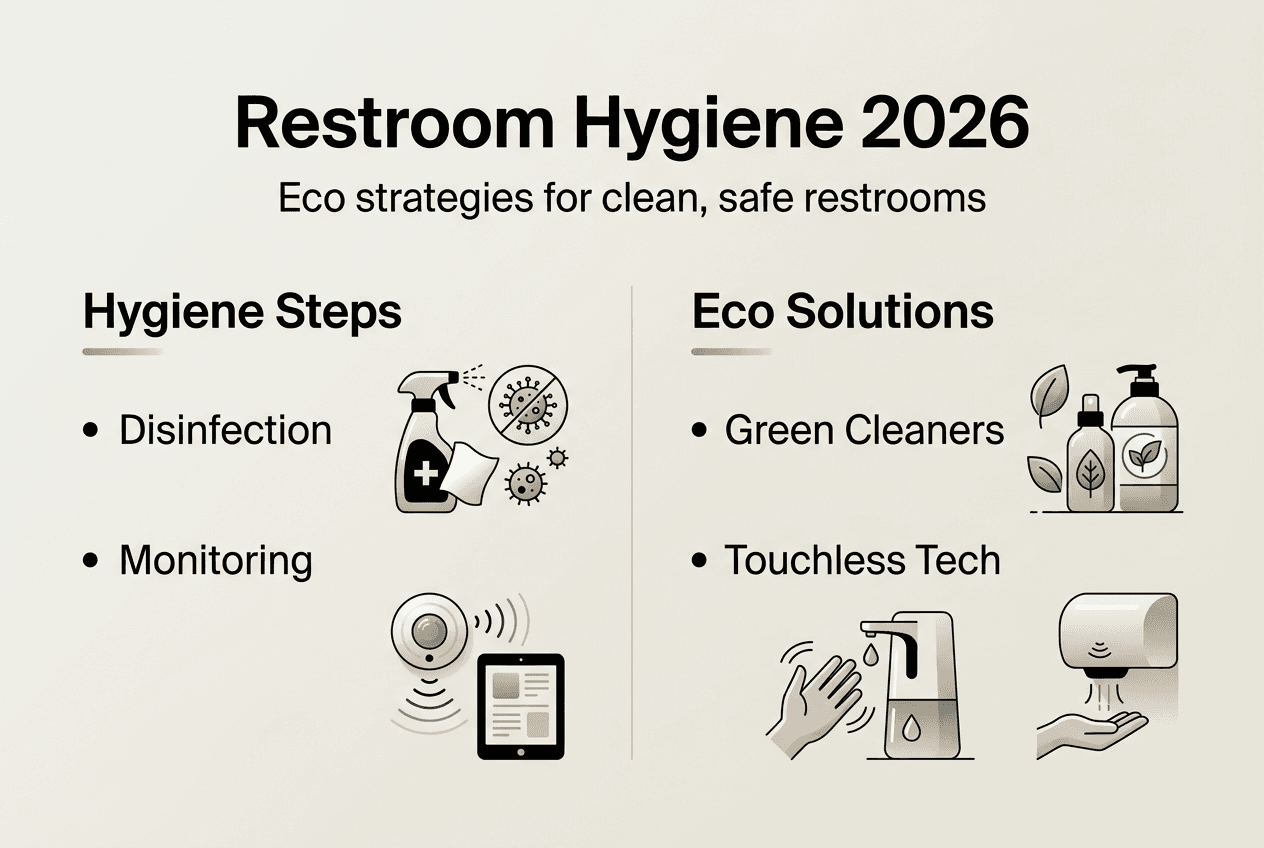
The business case for rigorous hygiene grows stronger each year. Customers judge your entire operation based on restroom conditions. A single negative restroom experience can override positive impressions from other touchpoints. Meanwhile, regulatory violations trigger fines and potential closures. Improve restroom hygiene naturally by integrating sustainable materials and practices that support both compliance and environmental goals.
OSHA 29 CFR 1910.141 mandates clean sanitary toilets with specific ratios and requires warm water and soap; local NYC and NJ codes demand daily cleaning; CDC classifies restrooms as high-risk zones. These regulations create a compliance framework that facilities managers must navigate carefully.
OSHA establishes minimum toilet requirements based on employee count. Facilities with 15 or fewer employees need one toilet. The ratio increases to two toilets for 16 to 35 employees, three for 36 to 55, and continues scaling upward. Each toilet facility must provide warm running water, soap, and individual towels or air dryers. Sanitary conditions must be maintained at all times, though OSHA does not specify exact cleaning frequencies.
Local codes fill this gap with explicit requirements. New York City mandates daily cleaning of commercial restrooms. New Jersey enforces similar daily standards for food service and retail establishments. These local regulations carry enforcement teeth through health department inspections and violation penalties.
The CDC designates restrooms as high-risk areas for pathogen transmission. This classification reflects research showing that toilet flushing aerosolizes particles, door handles accumulate bacteria from multiple users, and moisture creates ideal conditions for microbial growth. Your hygiene protocols must address these transmission pathways through proper disinfection and ventilation.
Pro Tip: Maintain detailed compliance documentation including cleaning logs, supply inventory records, and staff training certificates to demonstrate regulatory adherence during inspections and protect against liability claims.
Regulatory compliance checklist:
| Regulation | Requirement | Enforcement |
|---|---|---|
| OSHA 29 CFR 1910.141 | Toilet ratios, warm water, soap, sanitary conditions | Federal workplace safety inspections |
| NYC Health Code | Daily cleaning of commercial restrooms | City health department violations |
| NJ Sanitation Standards | Daily cleaning for food service and retail | State health inspections |
| CDC Guidelines | Disinfection of high-risk surfaces | Public health recommendations |
Your bathroom decluttering checklist supports compliance by organizing supplies and equipment for efficient cleaning workflows. Clear organization reduces the time required for each cleaning cycle while improving consistency.
Sustainable hygiene solutions include EPA Safer Choice and Green Seal certified cleaners, touchless sensor faucets and dryers to reduce water and energy use, and enzyme-based cleaners; high-capacity dispensers reduce waste. These options align environmental responsibility with hygiene effectiveness.
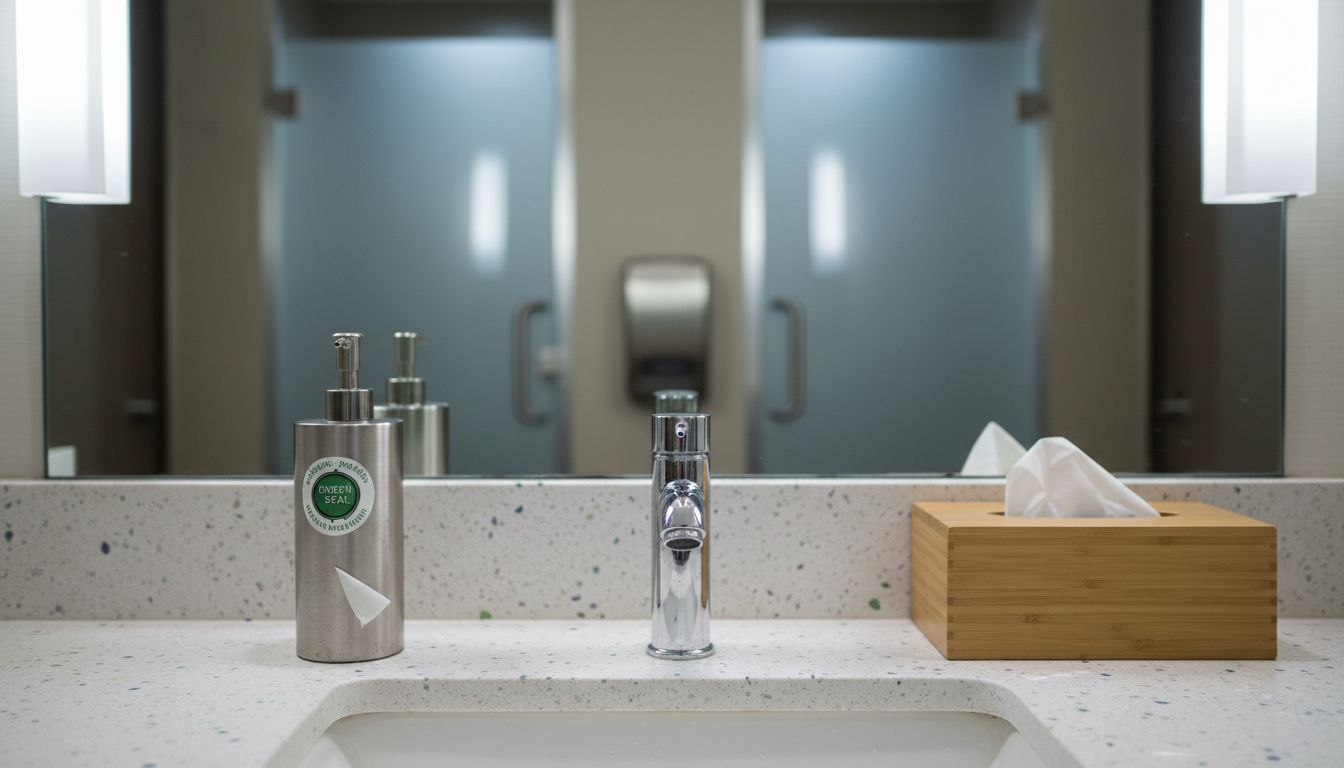
Certified eco-friendly cleaning products eliminate harmful chemicals while maintaining disinfection power. EPA Safer Choice certification identifies products with safer chemical ingredients that protect indoor air quality. Green Seal certified cleaners meet strict environmental and performance standards. Enzyme-based formulas break down organic matter naturally, reducing reliance on harsh chemicals that can irritate skin and respiratory systems.
Touchless fixtures address both hygiene and sustainability objectives. Sensor-activated faucets prevent cross-contamination by eliminating shared handles. They also reduce water consumption by 30 to 50 percent compared to manual faucets. Touchless soap dispensers and paper towel systems follow the same principle, minimizing touchpoints while controlling product usage.
Energy-efficient hand dryers with HEPA filters offer an alternative to paper towels. Modern dryers use 80 percent less energy than older models and eliminate paper waste entirely. However, some studies suggest paper towels remove more bacteria from hands during the drying process. Evaluate this tradeoff based on your facility’s priorities and user preferences.
High-capacity dispensers reduce waste and maintenance requirements. Larger rolls or reservoirs decrease packaging waste and refill frequency. This translates to lower labor costs and reduced environmental impact from transportation and disposal.
Pro Tip: Evaluate lifecycle environmental footprints including manufacturing, transportation, use, and disposal when selecting products, not just recycled content percentages or biodegradability claims.
Eco-friendly product categories:
| Solution | Hygiene Benefit | Environmental Benefit |
|---|---|---|
| Touchless faucets | Eliminate handle contamination | Reduce water use 30-50% |
| Certified cleaners | Effective disinfection without harsh chemicals | Safer ingredients, better air quality |
| High-capacity dispensers | Consistent supply availability | Less packaging waste, fewer refills |
| HEPA hand dryers | Remove airborne particles | Eliminate paper towel waste |
Explore eco-friendly commercial bathroom essentials and learn to choose eco-friendly bathroom essentials that match your facility’s specific needs and usage patterns.
Regular disinfection every three days reduces norovirus infection risk by over 98%; dirty restrooms damage business image and reduce customer dwell time and spending. These findings underscore the direct connection between hygiene protocols and business outcomes.
Disinfection frequency must match facility traffic and risk levels. High-traffic restrooms in restaurants, retail stores, and office buildings require multiple daily disinfection cycles. Focus on peak usage times when pathogen accumulation accelerates. Low-traffic facilities can maintain hygiene with daily disinfection, though high-touch surfaces still need multiple daily treatments.
Monitoring protocols ensure consistency and identify problems quickly. Cleaning logs document task completion times and staff signatures. Checklists standardize procedures across shifts and team members. Peak-time inspections by supervisors catch missed tasks and verify quality standards.
Customer behavior responds directly to restroom conditions. Research shows dirty restrooms reduce customer dwell time by 28 percent and decrease spending by 23 percent. These impacts hit bottom-line performance immediately. Conversely, well-maintained restrooms enhance brand perception and encourage repeat visits.
Managing edge cases requires specific strategies. Accessibility barriers demand ADA-compliant fixtures and clear floor space. Vandalism prevention includes durable materials, strategic fixture placement, and rapid repair protocols. Staff burnout prevention involves reasonable workload distribution, adequate training, and recognition programs.
Daily hygiene maintenance steps:
Weekly supplemental tasks:
Pro Tip: Use color-coded cleaning tools and supplies to prevent cross-contamination between restrooms and other facility areas, and implement staff incentive programs recognizing consistent hygiene performance to improve morale and reduce turnover.
| Customer Perception Factor | Impact on Business |
|---|---|
| Dirty restrooms reduce dwell time | 28% decrease |
| Dirty restrooms reduce spending | 23% decrease |
| Restroom cleanliness affects brand image | Direct correlation to overall satisfaction |
| Norovirus risk reduction with 3-day disinfection | 98% lower infection rates |
Discover eco-friendly cleaning supplies and explore types of paper towel dispensers that support efficient maintenance workflows while meeting sustainability objectives.
You now understand the comprehensive requirements for commercial restroom hygiene in 2026. Implementing these standards requires reliable partners who share your commitment to health, compliance, and environmental responsibility.

Cozee Bay specializes in eco-friendly, handcrafted bamboo restroom products designed for commercial environments. Our paper towel dispensers combine sustainable materials with functional design, serving restaurants, offices, schools, and retail locations across the country. Explore our eco-friendly restroom products including dispensers, organizers, and accessories that support your hygiene goals while reducing environmental impact. Visit our blog for expert guidance on eco-friendly bathroom essentials and discover sustainable bamboo restroom solutions that align with 2026 compliance standards and customer expectations.
Disinfect all high-touch surfaces including door handles, faucets, toilet seats, and dispensers multiple times daily. Restock soap, paper towels, and toilet paper continuously. Mop floors with EPA-registered disinfectant and empty trash receptacles. Document completion times on cleaning logs to verify consistency and identify gaps.
EPA Safer Choice and Green Seal certified products eliminate pathogens while reducing exposure to harsh chemicals that irritate skin and respiratory systems. Enzyme-based cleaners break down organic matter naturally, improving air quality. These products meet the same disinfection standards as traditional cleaners while protecting both users and cleaning staff.
OSHA 29 CFR 1910.141 mandates specific toilet-to-employee ratios, warm water availability, and sanitary conditions. Local codes in cities like New York and states like New Jersey require daily cleaning of commercial restrooms. CDC guidelines classify restrooms as high-risk zones requiring systematic disinfection protocols. Maintain documentation proving compliance with all applicable standards.
High-traffic commercial restrooms require disinfection at least three times daily to reduce pathogen transmission effectively. Focus on peak usage periods when contamination accumulates fastest. Disinfect high-touch surfaces more frequently, potentially every two hours during heavy use periods. Adjust frequency based on actual traffic patterns and usage monitoring.
Touchless faucets, soap dispensers, and hand dryers eliminate shared contact points that spread pathogens between users. They reduce water consumption by 30 to 50 percent and control product usage, lowering costs and waste. Modern touchless systems meet both hygiene and sustainability objectives, though initial installation costs exceed traditional fixtures. Learn more about eco-friendly commercial bathroom essentials that support these goals.
Comments will be approved before showing up.