Your Cart is Empty


TL;DR:
- Creating a natural bathroom involves selecting authentic materials like stone, wood, and bamboo to promote well-being. Incorporating humidity-tolerant plants and eco-friendly fixtures enhances the space’s sustainability and calming atmosphere. Proper maintenance with gentle, natural cleaners ensures lasting beauty and function of natural elements.
Styling a bathroom with natural elements means integrating authentic materials, organic textures, and living greenery to create a calming space that supports your wellbeing. Known in design circles as biophilic design, this approach goes far beyond aesthetics. Biophilic design reduces cortisol, improves mental focus, and enhances perceived indoor air quality. The good news is that you do not need a full renovation to get there. A few well-chosen materials and plants can shift the entire feel of your bathroom in a single afternoon.
The foundation of any natural elements bathroom design is authentic material selection. Synthetic substitutes simply do not deliver the same sensory experience. Natural stone, wood, bamboo, and copper each bring something distinct to the space.
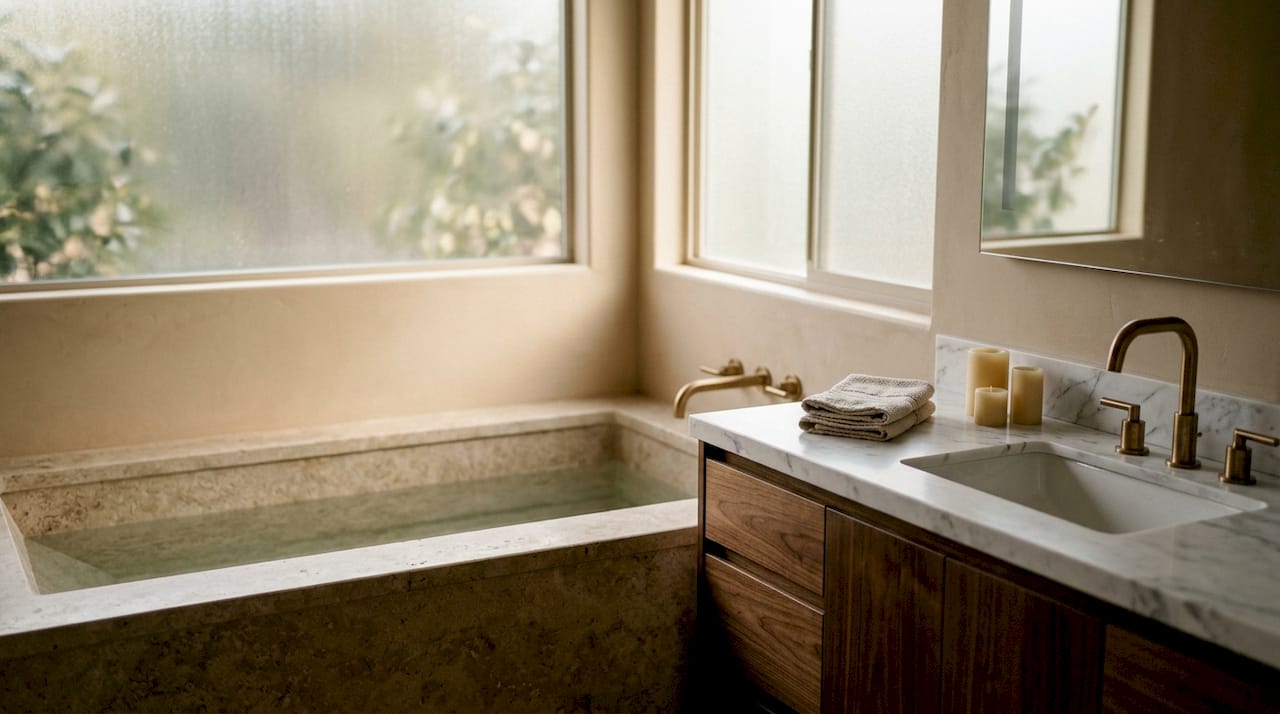
Natural stone like marble and limestone adds visual complexity and tactile variation that no manufactured tile can replicate. Marble brings dramatic veining and a cool, smooth surface. Limestone offers a softer, more matte finish that reads as earthy and grounded. Granite and travertine are both highly durable and work well on floors where foot traffic is heavy.
Pro Tip: Grout color matters more than most homeowners realize. Matching grout to tile creates a unified surface that makes a small bathroom feel larger, while contrasting grout adds definition and visual texture.
Teak and bamboo are the two best wood options for humid bathroom environments. Teak contains natural oils that resist moisture and warping. Bamboo grows faster than any hardwood, making it the more sustainable choice for eco-friendly bathroom decor. Use bamboo for shelving, bath mats, trays, and accessories rather than structural elements.
Copper and bronze fixtures develop a living patina over time, which connects visually to natural aging and provides inherent antimicrobial benefits. That patina is not a flaw. It is the material doing exactly what it is supposed to do.
Organic cotton towels, seagrass baskets, and beeswax candles transform bathroom ambiance quickly and with minimal effort. These are low-commitment changes you can make in a single afternoon. For walls, choose low-VOC paints and finishes to protect indoor air quality. Many conventional paints off-gas volatile organic compounds for months after application, which works against the clean, natural environment you are building.
Plants are the fastest way to bring life into a bathroom, but not every variety survives the conditions. Humidity, low light, and temperature swings are the main challenges. Choose plants that are built for exactly those conditions.
The best bathroom plants include:
Placement matters as much as plant selection. A shelf near a frosted glass window gives plants the indirect light they need while maintaining your privacy. Built-in alcoves with drainage trays keep things tidy. Avoid placing plants directly on the floor if your bathroom has poor air circulation, since stagnant moisture around the pot base invites mold.
Pro Tip: Frosted glass panels and skylights are the two best ways to maximize natural light in a bathroom while keeping it private. Natural light supports plant growth and makes natural materials like wood and stone look their best.
Biophilic design elements like greenery and natural materials work together to reduce stress and improve the quality of time you spend in the space. A bathroom is where most people start and end their day. That makes it worth getting right.
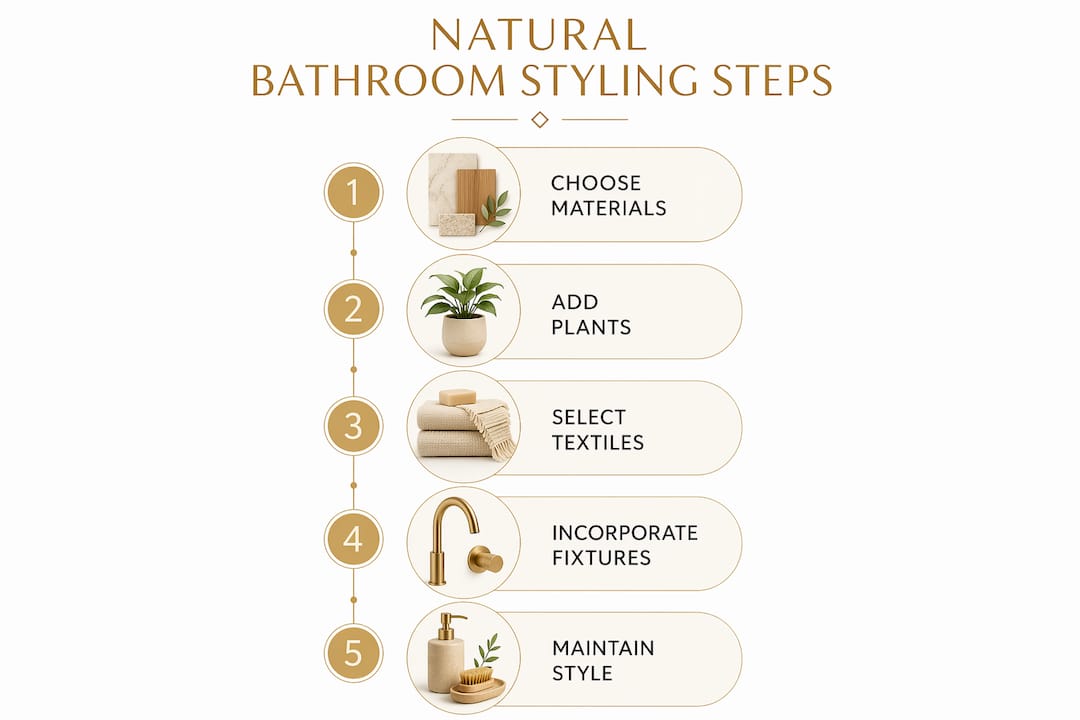
A practical approach prevents costly mistakes and wasted materials. Work through these steps in order.
Assess your space first. Check your light sources, moisture levels, and available wall and floor space. A north-facing bathroom with one small window needs different plant and material choices than a sun-filled room with a skylight.
Choose your anchor material. Pick one dominant natural material, such as stone tile, a wood vanity, or a bamboo shelf unit, and build around it. Trying to use all materials at once creates visual noise.
Source sustainable fixtures. Low-flow fixtures cut water use by 30% or more. Pair them with LED lighting, which uses up to 75% less electricity than halogen bulbs. Both choices reduce your environmental footprint without sacrificing function.
Install stone and wood features. Seal natural stone before use and reseal annually. For wood elements, apply a waterproof finish rated for wet areas. Bamboo accessories require no special installation but benefit from occasional oiling to prevent drying.
Layer your lighting. Warm lighting at 2700K reads like candlelight and enhances the glow of wood and stone surfaces. Use a combination of overhead ambient light and lower accent lighting near the vanity for depth.
Add plants and textiles last. Once your hard materials and fixtures are in place, bring in plants, organic cotton towels, and natural fiber baskets. These finishing layers add warmth and softness without competing with the structural elements.
Edit ruthlessly. Natural styling works best with restraint. If a surface feels cluttered, remove one item. Negative space lets each natural material breathe and be noticed.
The most common pitfall is rushing the material selection phase. Buying the first stone tile or wood shelf you find often leads to mismatched tones and textures. Take time to gather samples and view them together in your bathroom’s actual light before committing.
Pro Tip: Bring physical material samples into your bathroom and observe them at different times of day. Morning light and evening artificial light read very differently on stone and wood surfaces.
Natural materials reward consistent, gentle care. Neglect or harsh chemicals will degrade them faster than humidity ever would.
Pro Tip: Replace single-use plastic dispensers and containers with bamboo bathroom accessories that serve the same function while reinforcing your natural design theme.
Styling a bathroom with natural elements requires selecting authentic materials, incorporating humidity-tolerant plants, and maintaining them with gentle, eco-friendly care for lasting results.
| Point | Details |
|---|---|
| Start with authentic materials | Choose stone, teak, or bamboo as your anchor material before adding accessories. |
| Use biophilic design principles | Natural materials and greenery reduce cortisol and improve indoor air quality. |
| Layer lighting at 2700K | Warm LED lighting enhances wood and stone and uses 75% less energy than halogen. |
| Pick humidity-tolerant plants | Snake plants, peace lilies, and Boston ferns thrive in bathroom conditions. |
| Maintain with natural cleaners | Vinegar and lemon protect surfaces without stripping sealant or damaging finishes. |
By Cozee
Most articles on organic bathroom styling treat it as a weekend project. Pick some plants, swap a towel, done. My honest view is that the homeowners who get the most out of natural design treat it as an ongoing relationship with their space rather than a one-time fix.
The materials that age the most gracefully are also the ones that demand the most attention early on. Copper fixtures that develop a beautiful patina need to be chosen with that future in mind, not just for how they look on day one. Stone that feels luxurious in year one will feel neglected in year three if you skip the annual reseal. That is not a flaw in natural design. It is the whole point.
What I find most rewarding about biophilic bathroom design is how quickly small changes shift the sensory experience of a room. A bamboo tray, a peace lily on the windowsill, and a warm-toned bulb can make a plain white bathroom feel genuinely restorative. You do not need to spend thousands or gut your tile work. You need to make thoughtful choices in the right sequence.
Start with light and materials. Add plants once the hard surfaces are in place. Bring in textiles and accessories last. That sequence matters more than any single product you choose.
— Cozee
Pulling together a naturally styled bathroom is much easier when your accessories are already doing the work for you.

Cozee-bay specializes in handcrafted bamboo products designed for exactly this kind of space. From paper towel dispensers to drawer organizers and wrap and foil dispensers, every product combines sustainable bamboo with clean, functional design. Bamboo is naturally moisture-resistant, renewable, and visually warm, which makes it a perfect fit for the organic bathroom styling tips covered throughout this guide. Browse the full range of eco-friendly bamboo products at Cozee-bay and find pieces that work as hard as they look good. Free shipping is available within the contiguous U.S., and every purchase is backed by a money-back guarantee.
Stone (marble, limestone, granite), teak, and bamboo are the top choices for natural elements bathroom design. They handle humidity well and improve with age when properly maintained.
Mount a small shelf near a frosted glass window and place humidity-tolerant plants like snake plants or peace lilies there. Vertical placement keeps floor space clear and puts plants in better light.
Yes. Biophilic design reduces cortisol, improves mental focus, and enhances perceived indoor air quality, making it one of the most evidence-backed approaches in residential design.
Reseal natural stone annually and clean it with pH-neutral or natural cleaners like diluted vinegar. Avoid bleach, which strips sealant and dulls the surface over time.
Bamboo grows faster than any hardwood and requires no pesticides or replanting after harvest. It is one of the most renewable materials available for sustainable bathroom design and holds up well in humid conditions with minimal care.
Comments will be approved before showing up.