Your Cart is Empty


Cluttered kitchen drawers and countertops create daily frustration for homeowners trying to cook efficiently. When utensils pile up without organization, you waste time searching for the right tool and feel stressed in a space that should inspire creativity. This guide shows you how to transform your kitchen using sustainable bamboo organizers and smart placement strategies that reduce plastic waste while creating a stylish, functional space. You’ll learn preparation steps, organization techniques, maintenance habits, and styling tips to achieve a clutter-free kitchen that reflects your eco-conscious values in 2026.
| Point | Details |
|---|---|
| Sustainable materials reduce waste | Using bamboo organizers reduces plastic waste by 60% compared to conventional options. |
| Preparation creates success | Decluttering and grouping utensils by type and frequency sets a strong foundation for lasting organization. |
| Strategic placement saves time | Organizing kitchen drawers efficiently provides 25% faster access and 80% less waste. |
| Consistent maintenance preserves order | Regular cleaning and reassessment prevent clutter from returning and extend the life of your organizing system. |
| Style meets sustainability | Premium bamboo accessories enhance kitchen aesthetics while supporting environmental responsibility. |
Before organizing your utensils, you need the right tools and a clear workspace. Selecting sustainable materials sets the foundation for an eco-friendly kitchen that aligns with your values. Bamboo organizers offer the perfect combination of durability, renewability, and visual appeal that plastic simply cannot match.
Bamboo grows rapidly without pesticides and regenerates after harvesting, making it one of the most sustainable materials available. When you choose bamboo drawer dividers, utensil trays, and countertop holders, you actively reduce demand for petroleum-based plastics that pollute oceans and landfills. Understanding bamboo vs plastic organizers reveals how bamboo’s natural antibacterial properties keep your kitchen more hygienic while its warm tones add elegance to any design scheme.
Start by removing every utensil from your drawers and cabinets. Spread them across your counter or table so you can see exactly what you own. This step often surprises people who discover duplicate tools, broken items, or gadgets they never use. Be honest about what deserves space in your kitchen. Donate functional items you haven’t touched in six months and discard anything damaged or worn beyond repair.
Next, group your utensils into categories based on function and how often you use them. Create piles for everyday essentials like spatulas and wooden spoons, occasional tools like meat thermometers and zesters, and specialty items like pastry brushes. This sorting process makes the next organizing phase much smoother because you’ll know exactly which storage solutions each category requires.
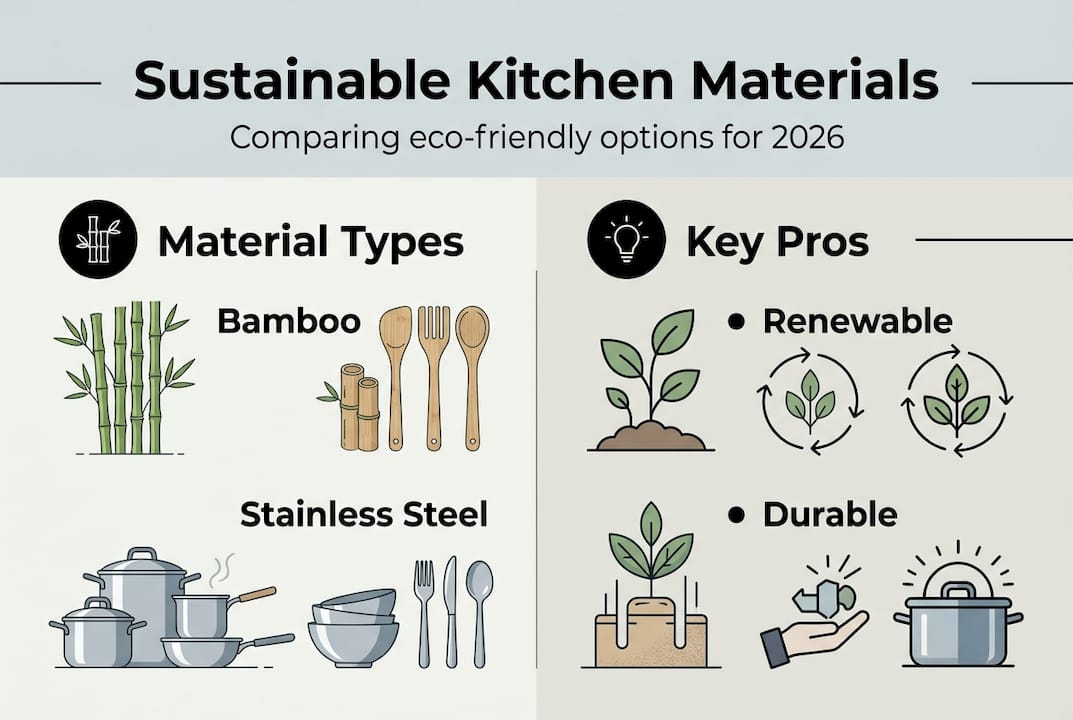
| Material | Pros | Cons | | — | — | | Bamboo | Renewable, durable, naturally antibacterial, stylish | Requires proper care to prevent warping | | Plastic | Inexpensive, widely available, lightweight | Non-biodegradable, releases microplastics, prone to staining | | Metal | Very durable, easy to clean, modern aesthetic | Can scratch surfaces, heavier, often more expensive | | Wood (non-bamboo) | Natural appearance, sturdy | Varies by type, may require more maintenance |
Pro Tip: Measure your drawer dimensions before purchasing organizers to ensure a perfect fit that maximizes every inch of available space.
With your utensils sorted and sustainable organizers ready, you can now create a system that makes cooking faster and more enjoyable. Strategic placement transforms chaotic drawers into functional workspaces where every tool has a designated home. This approach eliminates the frustration of rummaging through tangled utensils when you’re in the middle of preparing a meal.
Place your most frequently used utensils in the drawer closest to your primary prep area. Spatulas, wooden spoons, tongs, and whisks should sit within arm’s reach of your stove and cutting board. This simple placement rule saves countless steps during meal preparation.
Install bamboo drawer dividers to create distinct sections for each utensil category. Adjustable dividers work best because they adapt to different drawer sizes and allow you to customize compartment widths. Position larger items like ladles and serving spoons in wider sections while smaller tools like peelers and corers fit into narrow slots.
Utilize vertical storage for bulky or less frequently used items. Wall-mounted bamboo holders, magnetic strips, or countertop crocks keep specialty tools accessible without consuming valuable drawer space. Store items like rolling pins, large whisks, and kitchen shears vertically to free up horizontal storage for everyday essentials.
Label sections if you share your kitchen with family members or roommates. Simple labels help everyone maintain the system you’ve created and prevent tools from migrating to wrong locations. You can use a label maker or write directly on small bamboo tags that clip onto dividers.
Optimize drawer depth by using tiered organizers that create multiple levels within a single drawer. This technique works exceptionally well for measuring spoons, small spatulas, and other flat tools that stack efficiently. The vertical layering approach can double your effective storage capacity.
Reserve one small section for miscellaneous tools you use occasionally but don’t want to store far away. This catch-all area prevents random items from disrupting your organized categories while keeping them conveniently located.
Pro Tip: Group utensils by cooking task rather than just by type. Keep all baking tools together, all grilling tools together, and all prep tools together so you can grab everything you need for a specific activity in one motion.
Even the best organization system fails without proper maintenance and awareness of common mistakes. Many homeowners organize their kitchens beautifully only to watch the system collapse within weeks because they overlooked crucial sustainability practices. Maintaining organized kitchen drawers prevents clutter from creeping back and protects your investment in quality organizers.
Avoid overfilling drawers beyond their comfortable capacity. When you cram too many utensils into a single space, you defeat the purpose of organization because tools become difficult to retrieve and return. If a drawer feels tight, remove items you rarely use and store them elsewhere. Your everyday drawers should close smoothly with a bit of empty space remaining for new additions.
Schedule monthly reviews of your utensil collection to identify tools that no longer serve your cooking style. Tastes and techniques evolve, so a gadget you loved last year might now collect dust. Regular assessments keep your collection lean and prevent unnecessary clutter from accumulating. Donate functional items promptly rather than letting them linger in the back of drawers.
Clean bamboo organizers regularly with mild soap and warm water to maintain their appearance and antibacterial properties. Wipe spills immediately and dry thoroughly to prevent water damage. Unlike plastic organizers that hide grime in crevices, bamboo’s smooth surface makes cleaning quick and straightforward. This routine maintenance extends the life of your organizers significantly.
“Consistent upkeep is not an extra chore but the foundation of lasting kitchen organization. When you invest two minutes daily returning utensils to their designated spots, you save hours of frustration and prevent the chaos that makes cooking feel overwhelming.”
Use clear boundaries for each utensil category and resist the temptation to mix types. When you place a spatula in the spoon section because it’s convenient in the moment, you create confusion that gradually erodes your system. Teach everyone in your household to respect these boundaries and model the behavior yourself.
Implement a one-in, one-out rule for new utensils. When you purchase a new tool, remove an old one to maintain your current inventory level. This practice prevents gradual accumulation and forces you to evaluate whether you truly need each new item. The discipline keeps your drawers from overflowing and your spending more intentional.
Functional organization doesn’t require sacrificing style. Premium bamboo accessories elevate your kitchen’s visual appeal while maintaining your commitment to sustainability. The natural grain patterns and warm honey tones of bamboo create an inviting atmosphere that plastic organizers simply cannot replicate. Bamboo vs plastic organizers demonstrates how sustainable choices enhance both form and function.
Selecting coordinated bamboo pieces creates a cohesive look that makes your kitchen feel intentionally designed rather than haphazardly assembled. Match your drawer organizers with countertop utensil holders, cutting boards, and storage containers for a unified aesthetic. The consistency signals attention to detail and transforms everyday kitchen tools into design elements that guests notice and admire.
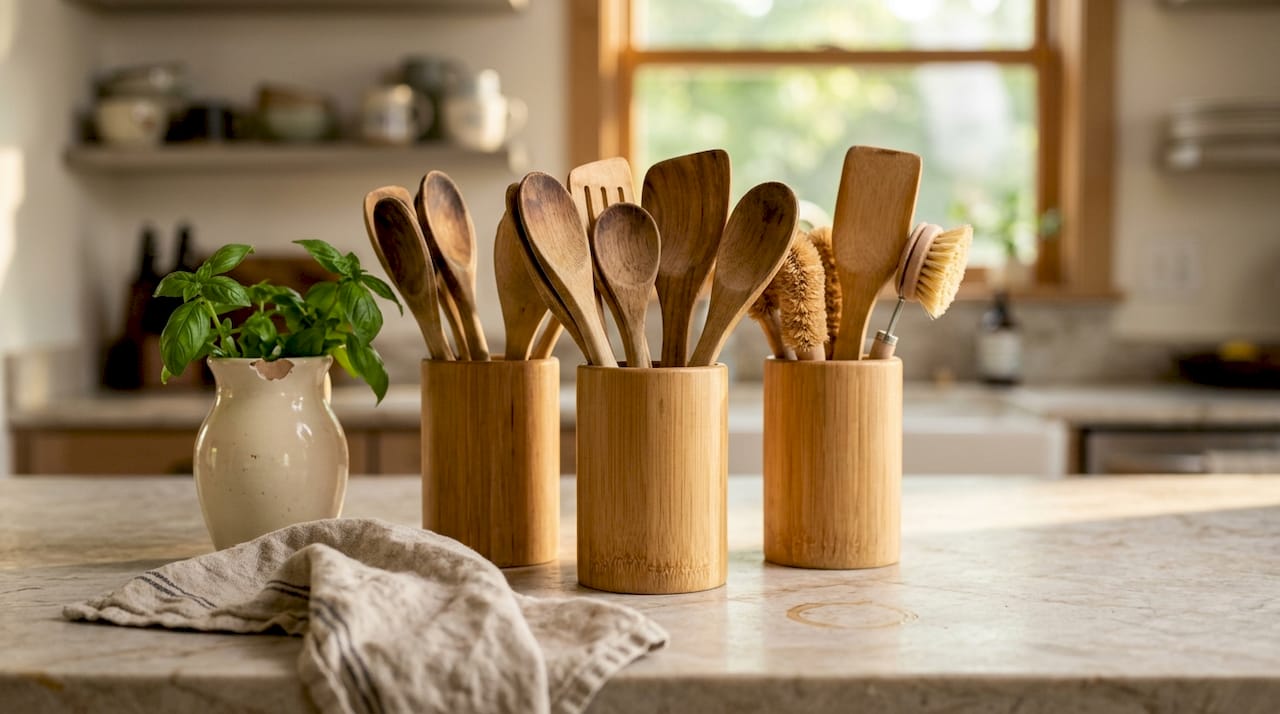
| Feature | Bamboo Accessories | Plastic Accessories | | — | — | | Environmental impact | Renewable, biodegradable, low carbon footprint | Petroleum-based, non-biodegradable, high pollution | | Durability | Resistant to scratches and dents with proper care | Prone to cracking, staining, and degradation | | Aesthetic appeal | Natural grain, warm tones, premium appearance | Uniform color, clinical look, budget appearance | | Maintenance | Requires occasional oiling, hand wash recommended | Dishwasher safe, minimal care needed | | Cost | Moderate to premium initial investment | Low initial cost, frequent replacement |
Consider these stylish bamboo options that combine beauty with practicality:
Pro Tip: Mix different bamboo finishes and textures to add depth to your kitchen design. Pair smooth, polished organizers with natural, unfinished bamboo accessories for visual contrast that feels sophisticated rather than matchy.
Incorporate plants and natural elements alongside your bamboo organizers to amplify the organic aesthetic. Small herb gardens in bamboo planters, woven baskets for produce, and linen dish towels create a harmonious environment that celebrates natural materials. This approach transforms your kitchen into a space that reflects your values and inspires healthier, more mindful cooking habits.
Display your most beautiful utensils in open bamboo holders where they become functional art. Wooden spoons with interesting grain patterns, copper measuring cups, or vintage whisks deserve visibility rather than hiding in drawers. This curated approach to storage adds personality to your kitchen while keeping essential tools within easy reach.
Transforming your kitchen with sustainable organization becomes effortless when you have access to premium bamboo products designed specifically for modern homeowners. Cozee Bay specializes in handcrafted bamboo organizers that combine exceptional durability with elegant design, helping you create the clutter-free kitchen you’ve envisioned. From drawer dividers to countertop accessories, each product reflects a commitment to environmental responsibility without compromising on style or functionality.

Explore the full collection at Cozee Bay to find organizing solutions that fit your specific needs and kitchen layout. The website features detailed product descriptions, customer reviews, and helpful guides that make selecting the right organizers simple and confident. Whether you’re organizing a compact apartment kitchen or a spacious culinary workspace, you’ll discover bamboo accessories that enhance both efficiency and aesthetics. Visit the blog section for ongoing tips about understanding bamboo vs plastic organizers and kitchen organization ideas for clutter-free space that help you maintain your beautifully organized kitchen for years to come.
Clean bamboo utensils with mild soap and warm water immediately after use to prevent food residue from drying. Avoid soaking them for extended periods because prolonged water exposure can cause warping or splitting. Dry bamboo items thoroughly with a clean towel right after washing to maintain their structural integrity and prevent moisture damage.
Bamboo utensils handle most kitchen tasks effectively, from stirring and flipping to serving and mixing. They work beautifully for everyday cooking but should not be used with extremely hot liquids or left in boiling pots for long periods. With proper care, bamboo provides a sustainable alternative to the majority of plastic utensils in your kitchen.
Maximize vertical space with wall-mounted holders and magnetic strips that keep counters clear while maintaining accessibility. Use drawer organizers to create defined sections that prevent tools from jumbling together, and prioritize storing frequently used items in the most convenient locations. How to organize kitchen drawers efficiently offers additional strategies for compact spaces.
Quality bamboo organizers last five to ten years with proper maintenance, making them a worthwhile investment compared to plastic alternatives that degrade quickly. Inspect your organizers annually for cracks, warping, or excessive wear, and replace individual pieces as needed rather than the entire system. Regular cleaning and avoiding excessive moisture exposure significantly extends their lifespan.
Bamboo is naturally antibacterial and food-safe when properly finished and maintained, making it an excellent choice for kitchen organization. Choose organizers from reputable manufacturers who use food-grade finishes and avoid chemical treatments. The natural properties of bamboo actually inhibit bacterial growth better than many plastic alternatives.
Comments will be approved before showing up.