Your Cart is Empty


Over 60 percent of American households now choose eco-friendly products for daily living. As bamboo items become more popular in American homes, taking care of them with natural cleaning methods is growing in importance. Learning the right way to clean and maintain bamboo supports a healthier environment, protects your investment, and gives your favorite bamboo products their longest possible life.
| Key Insight | Explanation |
|---|---|
| 1. Use eco-friendly cleaning supplies | Choose plant-based solutions like vinegar and unscented soap to protect bamboo’s surface. |
| 2. Clean gently with soft materials | Use damp microfiber cloths to prevent scratches and water damage while cleaning bamboo. |
| 3. Dry thoroughly and air properly | Ensure bamboo items are dried completely to avoid moisture buildup and potential mildew. |
| 4. Apply natural oils for conditioning | Use natural oils like coconut or tung oil to nourish bamboo and enhance its longevity. |
| 5. Regularly inspect for damage | Check for wear and tear to address issues early and maintain the integrity of bamboo products. |
Preparing the right natural cleaning toolkit is crucial for maintaining your bamboo products effectively and sustainably. Your goal is to collect gentle yet powerful cleaning materials that protect bamboo’s delicate surface while ensuring long lasting performance.
Start by sourcing plant-based cleaning solutions that are free from harsh chemicals. White vinegar, mild unscented castile soap, and vegetable-based alcohol make excellent base ingredients for creating bamboo-safe cleaners. Waterproofing treatments using natural oils can also help preserve your bamboo items’ structural integrity. Select soft microfiber cloths or cotton rags that will clean without scratching delicate bamboo surfaces. Consider purchasing specialized bamboo-friendly cleaning solutions or making your own by mixing natural ingredients like olive oil, lemon juice, and warm water.
As you assemble your cleaning kit, prioritize materials that are gentle, biodegradable, and environmentally responsible. Sustainable home practices extend beyond just cleaning techniques and involve choosing eco-conscious tools and solutions.
Pro Tip: Always test your homemade cleaning solution on a small, inconspicuous area of your bamboo product first to ensure it does not cause discoloration or damage.
Here’s a quick summary of natural cleaning solution ingredients and their functions:
| Ingredient | Primary Function | Eco-Friendly Benefit |
|---|---|---|
| White vinegar | Removes stains and odors | Biodegradable, plant-derived |
| Unscented castile soap | Gentle cleaning | Chemical-free, safe for environment |
| Vegetable-based alcohol | Disinfects surfaces | Derived from renewable plants |
| Olive oil | Conditions and shines bamboo | Natural moisturizer, non-toxic |
| Lemon juice | Cuts grease and freshens | Antibacterial, compostable |
Cleaning bamboo surfaces requires a delicate touch to preserve their natural beauty and structural integrity. Your primary goal is to remove dirt and grime without causing damage or stripping away the material’s protective qualities.
Natural cleaning methods for bamboo surfaces emphasize using soft cloths and mild solutions that protect the material’s inherent properties. Begin by creating a gentle cleaning mixture using warm water and a small amount of mild unscented soap. Dampen a soft microfiber cloth with the solution rather than saturating the bamboo surface directly. Wipe in the direction of the grain using light pressure to prevent scratching or water damage. Research indicates that applying natural oils can help maintain bamboo’s mechanical properties while providing additional protection against moisture and wear.
After cleaning, immediately dry the surface with a clean soft cloth to prevent water absorption. For more stubborn dirt, use a soft bristled brush with extremely gentle motions. Always avoid abrasive materials, harsh chemicals, or excessive moisture that could compromise bamboo’s delicate structure.
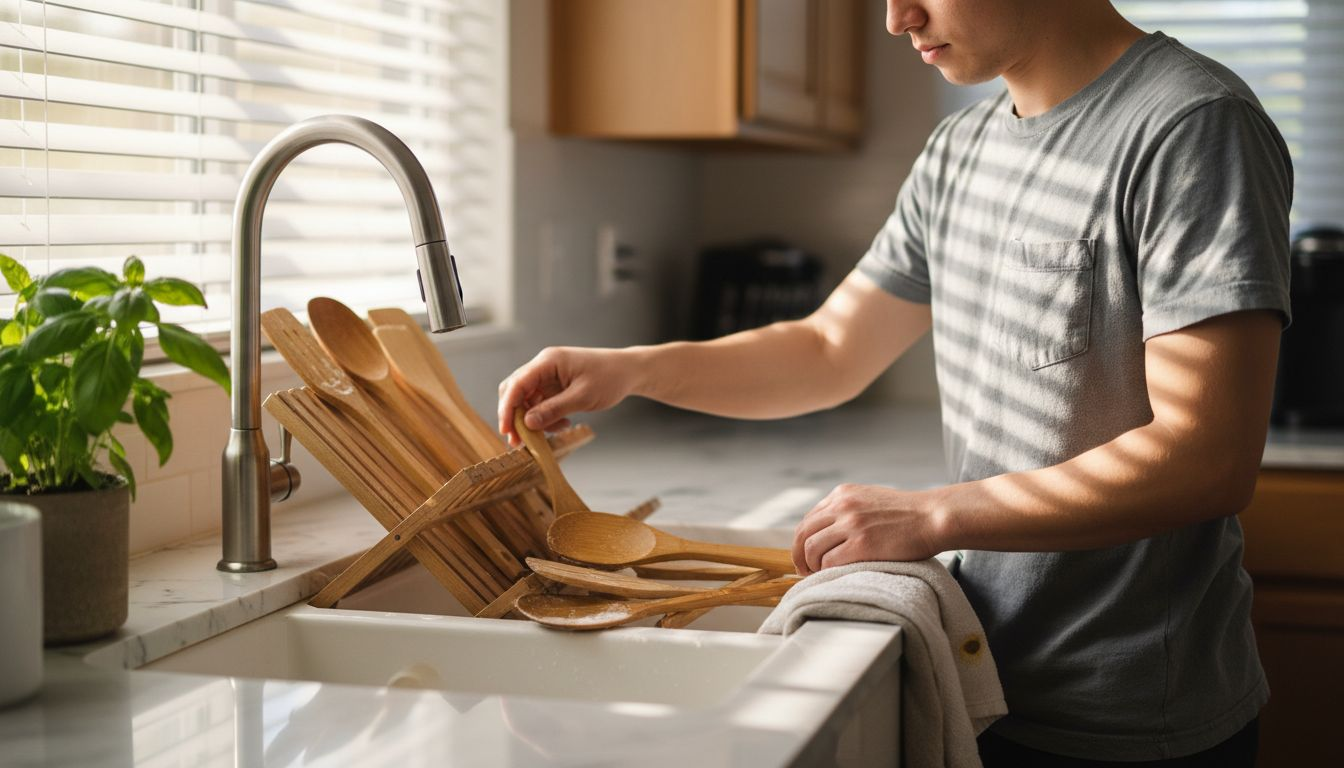
Pro Tip: Keep a dedicated microfiber cloth specifically for bamboo surfaces to prevent cross contamination and ensure consistent gentle care.
Drying bamboo products properly is essential to prevent moisture damage and extend their lifespan. Your primary objective is to remove all moisture quickly and thoroughly while allowing adequate air circulation to protect the material’s structural integrity.
Essential oil treatments demonstrate the critical importance of preventing moisture buildup by highlighting the risks of fungal growth. Immediately after cleaning, use a clean soft cotton towel to pat bamboo surfaces dry completely. Avoid rubbing aggressively, which can damage the material’s surface. Position your bamboo items in a well ventilated area with indirect sunlight, ensuring they are not exposed to direct heat sources that could cause warping or cracking. Research on waterproofing treatments underscores the necessity of thorough drying to maintain the material’s natural protective qualities.
When possible, use a fan to enhance air circulation and speed up the drying process. For items like cutting boards or kitchen utensils, stand them vertically to allow maximum air exposure on all surfaces. Never stack wet bamboo items together, as this can trap moisture and potentially lead to mildew or structural degradation.
Pro Tip: Create a dedicated drying rack with good air circulation specifically for your bamboo products to ensure consistent and proper drying techniques.
Natural conditioning oils are essential for protecting and preserving your bamboo products, creating a protective barrier that maintains their beauty and structural integrity. Your goal is to nourish the bamboo surface while preventing moisture damage and potential deterioration.
Research on bamboo waterproofing treatments demonstrates the significant benefits of natural oil applications by enhancing the material’s protective qualities. Select high quality natural oils like tung oil, coconut oil, or food grade mineral oil specifically designed for wood surfaces. Apply a thin, even layer using a soft clean cloth, working in the direction of the grain. Essential oil treatments provide additional protection against fungal growth and can help extend the lifespan of your bamboo products.
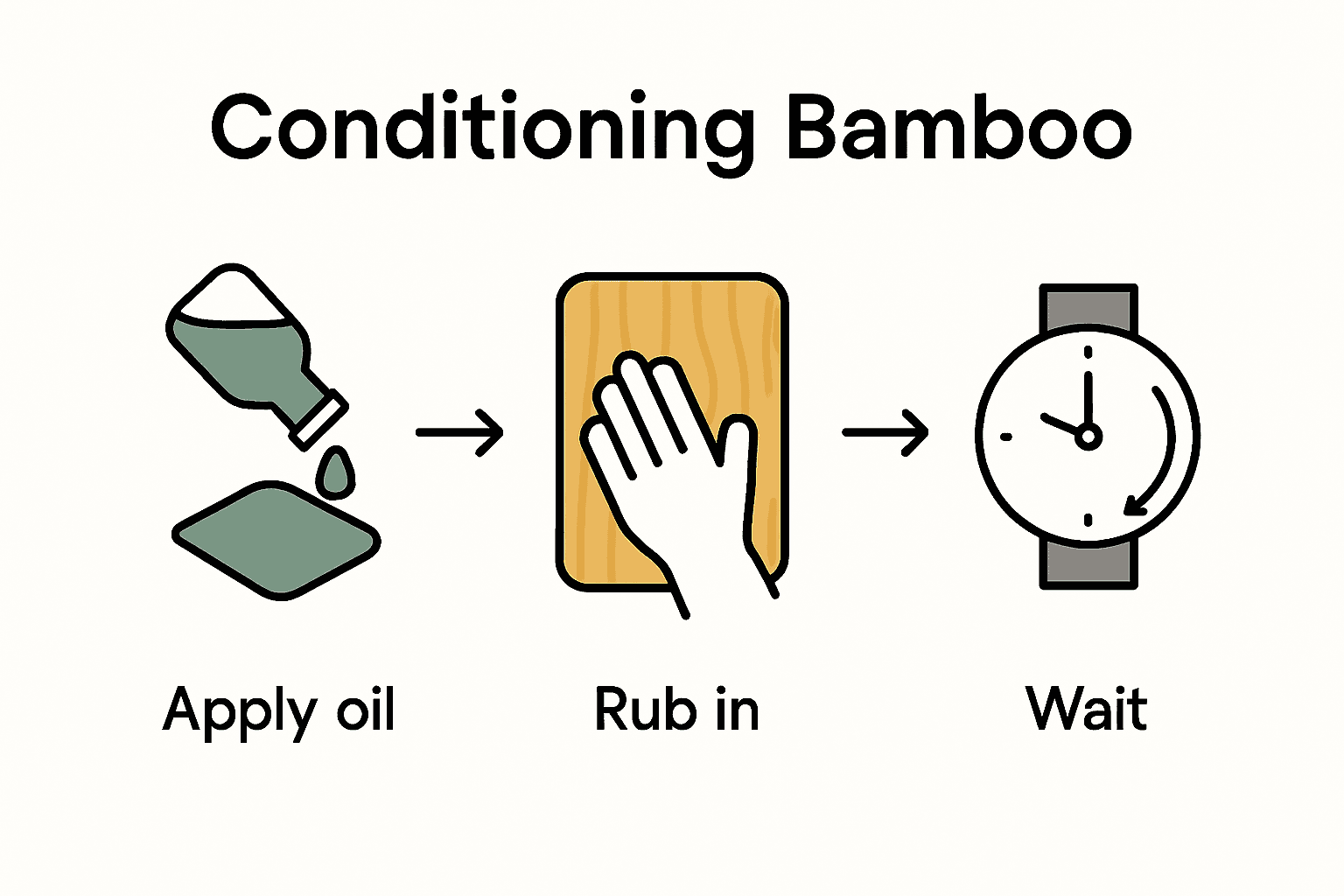
Allow the oil to absorb completely by letting the item rest in a warm, dry area for at least 30 minutes. Use sparingly prevent oversaturation, which can lead to surface buildup or potential damage. Repeat the conditioning process every few months or when the bamboo surface starts to look dry or lacks its original luster.
Pro Tip: Always test the conditioning oil on a small inconspicuous area first to ensure it does not discolor or negatively impact the bamboo surface.
Regular inspection of your bamboo products is crucial for maintaining their longevity and aesthetic appeal. Your goal is to catch and address potential issues before they become significant problems that could compromise the item’s structural integrity or functionality.
Research on bamboo maintenance emphasizes the importance of systematic product inspections to preserve the material’s protective qualities. Examine your bamboo items thoroughly under good lighting, checking for signs of discoloration, surface cracks, splintering, or unusual texture changes. Pay special attention to areas that experience frequent use or moisture exposure. Essential oil treatments underscore the need for vigilant monitoring to prevent fungal growth and potential structural degradation.
For minor surface wear, gently sand the affected area with fine grit sandpaper and reapply a thin layer of natural conditioning oil. More significant damage like deep cracks or significant splintering might require professional repair or potential replacement. Keep track of your bamboo products maintenance history and create a simple inspection schedule to ensure consistent care.
Pro Tip: Create a maintenance log for each bamboo item to track inspection dates, repairs, and conditioning treatments for more effective long term preservation.
This table compares traditional vs. natural bamboo care methods:
| Factor | Traditional Methods | Natural/Eco-Friendly Methods |
|---|---|---|
| Cleaning agents | Chemical detergents | Plant-based soaps, vinegar |
| Surface protection | Synthetic wax or sealant | Natural oils like coconut, tung oil |
| Environmental impact | Generates chemical waste | Biodegradable, minimal pollution |
| Surface durability | Can cause gradual harm | Preserves strength, prevents wear |
Maintaining your bamboo items naturally takes care and the right approach as described in the article. From gentle cleaning to applying natural conditioning oils, protecting your bamboo’s strength and beauty is essential to enjoy lasting use. If you want premium bamboo products designed for sustainability and durability, explore Cozee Bay’s carefully crafted collection. Their Bamboo Paper Towel Dispensers offer a sleek look combined with eco-friendly materials ideal for both home and commercial spaces.

Experience the difference of eco-conscious craftsmanship by shopping at Cozee Bay today. Pair your bamboo paper towel dispenser with accessories from their Paper Towel Dispensers - Accessories collection to complete the natural care setup. Act now to embrace sustainable living while enhancing your space with style and function.
To gather eco-friendly cleaning supplies, look for plant-based solutions like white vinegar, mild unscented castile soap, and natural oils. Start by collecting these ingredients to create gentle cleaning mixtures that won’t harm your bamboo items.
The best way to clean bamboo surfaces is to use a mixture of warm water and mild soap on a damp microfiber cloth. Wipe the bamboo in the direction of the grain using light pressure to avoid scratches and damage.
After cleaning, you should pat bamboo surfaces dry immediately with a soft cotton towel and ensure they are placed in a well-ventilated area. Avoid stacking wet items to prevent trapping moisture, which can lead to mildew or damage.
Natural conditioning oils such as tung oil, coconut oil, or food-grade mineral oil are ideal for bamboo products. Apply a thin, even layer of oil using a soft cloth to nourish the bamboo and create a protective barrier against moisture damage.
Inspect bamboo products by checking for discoloration, cracks, or unusual texture changes in good lighting. Regularly examining your items can help you catch minor issues early and perform maintenance as needed, such as sanding and reconditioning.
You should condition your bamboo products every few months or whenever they start to look dry. Apply a thin layer of natural oil during each conditioning to maintain their luster and prolong their lifespan.
Comments will be approved before showing up.