Your Cart is Empty


TL;DR:
- Organizing your pots and pans with eco-friendly materials maximizes space and reduces kitchen clutter efficiently. Proper measurement, strategic placement near the cooktop, and sustainable dividers ensure faster access and less waste over time. Regular reorganization keeps your system functional and environmentally conscious, supporting a healthier home.
If you’ve ever yanked open a kitchen drawer only to have a heavy skillet slide out and crash onto your foot, you already know the pain of a poorly organized cookware setup. Pots and pans piled on top of each other, lids rolling around freely, handles jutting out at odd angles — it’s a daily frustration that adds unnecessary stress to every meal you cook. This guide walks you through a practical, step-by-step method for organizing your pots and pans in drawers using sustainable, eco-friendly tools and materials, so your kitchen works with you, not against you.
| Point | Details |
|---|---|
| Maximize drawer space | Measure drawers carefully and use vertical dividers to make the best use of available space. |
| Choose eco-friendly organizers | Opt for sustainable materials like bamboo and recycled plastics for drawer inserts and trays. |
| Organize by usage | Keep pots and pans grouped by frequency of use and store lids separately for faster access. |
| Avoid common mistakes | Do not overfill drawers or mismatch organizer sizes, and set reminders for periodic maintenance. |
| Sustainable systems last longer | Thoughtful, eco-conscious drawer setups lead to less stress and less waste over time. |
Now that we’ve set the stage for tackling kitchen clutter, let’s start with your current setup and drawer options.
Before you buy a single organizer or move one pot, take time to measure your drawers carefully. Grab a tape measure and record each drawer’s width, depth, and interior height. This step sounds obvious, but skipping it is exactly how people end up with organizers that don’t fit or dividers that block drawers from closing fully. Write everything down, even if you think you’ll remember.
When it comes to drawer types, not all of them are created equal for cookware storage. Here’s a quick breakdown:
| Drawer type | Typical depth | Best use |
|---|---|---|
| Standard shallow drawer | 2 to 3 inches | Lids, flat utensils, small pans |
| Standard deep drawer | 4 to 6 inches | Medium saucepans, skillets |
| Extra-deep base drawer | 8 to 12 inches | Large pots, Dutch ovens, stackable sets |
| Pull-out cabinet drawer | Variable | Heavy cast iron, oversized cookware |
Position matters too. Drawers closest to your cooktop are prime real estate, as kitchen drawer organization experts consistently point out. Keeping your most-used pots and pans within arm’s reach of the stove saves steps, reduces clutter spread throughout the kitchen, and makes cooking a much smoother experience overall.
Think about which pots you reach for every day versus the ones that only come out for holiday cooking. Your everyday skillet and two-quart saucepan deserve the most accessible spot. The stock pot you use twice a year can live in a less convenient location without causing any real disruption to your routine.
From a sustainability standpoint, eco-friendly drawer solutions made from bamboo or recycled materials are worth seeking out from the start. Bamboo is naturally moisture-resistant, durable, and far more renewable than most cabinet materials. Choosing organizers made from responsibly sourced materials means your organizational upgrade also supports a healthier home environment. Pair that with sustainable kitchen organization principles and you’ve set yourself up for a system that lasts.
Key things to assess before moving forward:
Once you know your drawer spaces, it’s time to prepare the right tools and materials for sustainable organizing.
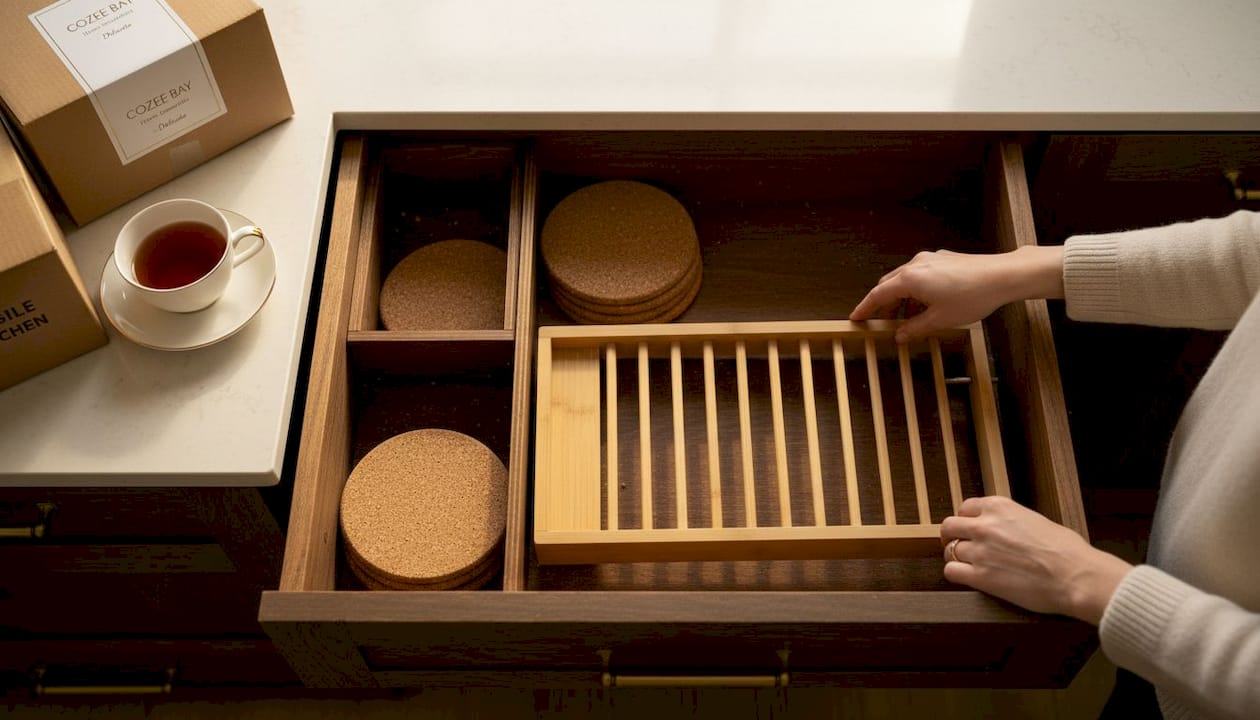
Walking into a home goods store without a plan is a great way to come home with organizers that don’t match your drawers or your values. Instead, go in with your measurements and a clear preference for sustainable materials. The most effective and eco-conscious organizers for pots and pans fall into a few main categories.
Here’s what you’ll need before you start:
Now, compare what most people use versus what actually serves the planet better:
| Organizer type | Conventional option | Eco-friendly alternative |
|---|---|---|
| Drawer dividers | Plastic PVC | Bamboo or FSC-certified wood |
| Shelf liners | Vinyl foam rolls | Natural cork or recycled rubber |
| Storage trays | Single-use plastic bins | Recycled plastic or reclaimed wood trays |
| Lid holders | Chrome wire racks | Bamboo slotted stands |
The eco-friendly organizing steps for drawers make it clear: choosing durable, sustainably made materials upfront reduces the need to replace organizers every year or two, which cuts down on both household waste and spending over time. That’s a real win for your wallet and the environment.
For deep drawer organization, you may also want a pegboard-style insert that lets you customize divider placement based on your specific cookware sizes. These are especially helpful if your collection includes a mix of small skillets, medium saucepans, and larger stockpots, because you can arrange the pegs around each piece rather than forcing your cookware to fit a fixed grid.
Pro Tip: Before spending money on new organizers, take stock of what you already have around the house. Shallow cardboard boxes from deliveries, old baking pans you no longer use, or even wooden cutting boards laid flat can serve as temporary dividers while you figure out what permanent setup works best for your kitchen.
Materials ready, let’s move on to the systematic process for actually organizing your pots and pans.
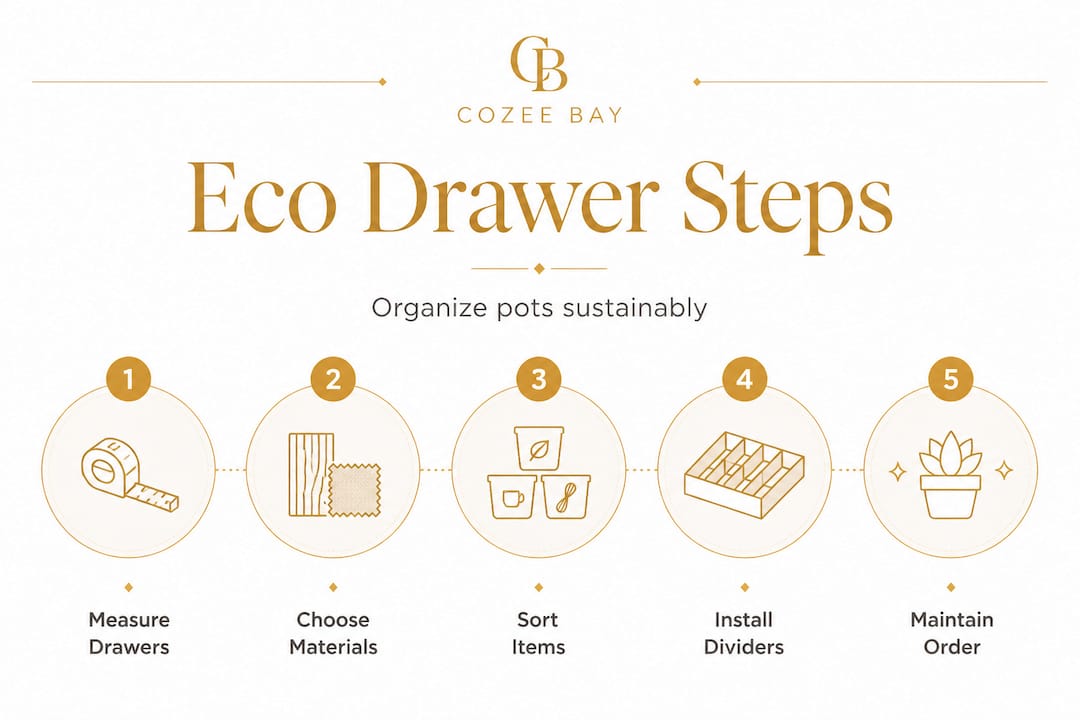
This is where the real transformation happens. Follow these steps in order and you’ll avoid the common trap of rearranging things multiple times before landing on a system that actually sticks.
Empty every target drawer completely. Pull everything out and lay it on the counter or kitchen table so you can see the full scope of what you’re working with. This step alone is eye-opening.
Sort your cookware by size and frequency of use. Group your pieces into three categories: daily use, weekly use, and occasional use. This sorting determines placement priority within your drawers.
Clean each drawer thoroughly. Wipe down the interior with a mild solution of dish soap and warm water. Let it dry completely before adding any liner or organizer. Old grease and crumbs will compromise any liner you place on top.
Install your drawer liner. Natural cork or recycled rubber liners grip organizers and cookware better than bare wood, and they prevent that annoying sliding and rattling every time you open or close a drawer.
Place your dividers or inserts. Set bamboo dividers or peg inserts according to your pre-measured layout. Confirm the drawer still closes fully before moving on to placing any cookware.
Nest pots carefully by size. Place larger pots first, then nest smaller ones inside. Always use a soft cloth or silicone mat between non-stick surfaces to prevent scratching. Never stack non-stick cookware directly against cast iron or stainless steel.
Arrange by access priority. Daily-use items go closest to the front of the drawer for the easiest reach. Weekly and occasional pieces go toward the back.
As practical kitchen drawer guides remind us, the goal isn’t just visual order — it’s faster and safer daily access. Organizing your cookware this way also supports drawer access and waste reduction, since you stop forgetting about that saucepan buried at the back and start actually using everything you own.
“Efficient organization can reduce kitchen waste by 80%, making a tidy drawer as much about sustainability as it is about convenience.”
Using vertical space is a game-changer in deep drawers. Slotted bamboo stands allow you to store lids or flat pans upright rather than flat, immediately freeing up horizontal room. You’ll be amazed how much additional space you uncover when you shift even two or three lids from horizontal to vertical storage. Combine this with clutter-free kitchen ideas and you have a genuinely functional system.
Pro Tip: Lids deserve their own dedicated organizer. A slotted bamboo lid rack, placed in a separate drawer section or mounted inside a cabinet door, keeps lids accessible without adding chaos to your main cookware drawer. You’ll spend a fraction of the time searching for the right lid when it has its own assigned spot, and your morning cooking routine will feel noticeably smoother.
Explore smart drawer ideas if you want more creative layouts beyond the basics covered here.
After initial setup, here’s how to avoid pitfalls and make your new system stick.
Even the best-planned organization system can fall apart within a few weeks if a few key mistakes go uncorrected. Here are the most common problems people run into, and exactly how to fix them:
Maintaining order over time is just as important as setting it up correctly. The organization of cooking utensils and cookware in sustainable drawers works best when you build a few simple habits. After washing and drying pots and pans, always return them to their designated spot instead of setting them in the nearest open space. Rotate your cookware occasionally so that pieces in the back get used and not forgotten.
Keeping your silverware drawers organized on the same schedule as your cookware drawers helps you treat the entire kitchen as one cohesive system, rather than solving one area while others spiral back into disorder.
Pro Tip: Set a biannual calendar reminder, once in spring and once in fall, to fully empty, clean, and reassess your cookware drawers. Cookware collections change as you add new pieces or phase out old ones, and your organizer layout should evolve right along with it.
With practical steps covered, let’s look at why the right approach matters more than quick fixes.
Here’s something most organization content won’t tell you directly: quick fixes make things look better but rarely make them work better. Shoving pots into a drawer after watching a five-minute tutorial might clear your counter for a day, but within a week that drawer is a noisy jumble again. The reason isn’t lack of effort — it’s lack of intention.
Sustainable organization is different because it forces you to make deliberate decisions about every item you keep, where it lives, and what material holds it in place. That decision-making process is where the real transformation happens. You stop reacting to clutter and start preventing it.
From an eco organization wisdom standpoint, investing in quality bamboo or recycled organizers upfront means you won’t be tossing broken plastic dividers into the trash every year. That reduced waste compounds meaningfully over time. A bamboo drawer insert that lasts a decade has a tiny fraction of the environmental footprint of three rounds of cheap plastic replacements.
There’s also a stress reduction benefit that is genuinely hard to quantify until you experience it. When you open a drawer and every pot is exactly where you expect it, the cognitive load of cooking drops noticeably. You focus on the food, not the search. Over the course of a week, that kind of friction reduction adds up to real time saved and real frustration avoided. This is practical wisdom that only comes from actually committing to a system instead of patching it together repeatedly.
To make your sustainable organization journey even easier, here’s where you can find eco-friendly resources for your kitchen.
If reading through these steps has you motivated to finally overhaul your cookware drawers, you’re in the right place to take that next step. Cozee Bay’s range of eco-friendly products is designed with exactly these kinds of everyday organization challenges in mind.

From bamboo drawer organizers to food bag organizers, wrap and foil dispensers, and more, every product at Cozee Bay is crafted with sustainable materials and real kitchen functionality in mind. Whether you’re organizing a compact apartment kitchen or a large family home, you’ll find well-made solutions that look great and last for years. Browse the full selection of eco-friendly kitchen solutions at Cozee Bay and take the first practical step toward a calmer, more organized kitchen today. Free shipping is available within the contiguous U.S., and every purchase comes backed by a satisfaction guarantee.
Use vertical dividers and nest pots by size for efficient space use, and keep lids in a separate deep drawer organizer for quick, frustration-free access.
Place soft dividers or cork mats between items and avoid stacking non-stick surfaces directly against other materials, following eco-friendly organizer steps for lasting surface protection.
Bamboo, recycled plastics, and reclaimed wood are the top eco-conscious choices, as highlighted in kitchen drawer efficiency guides for sustainable home organization.
Set biannual reorganization reminders in spring and fall to declutter, clean, and adjust your layout as your cookware collection evolves over time.
Comments will be approved before showing up.