Your Cart is Empty


Finding the perfect blend of style, sustainability, and practicality can feel challenging when choosing new equipment for your restaurant or cafe. American owners who want to build a reputation for eco-conscious values know that every detail counts, even down to paper towel dispensers. Focusing on sustainable material options like bamboo not only highlights your commitment to the environment but also adds a sophisticated touch that will catch the eye of guests who value green practices.
| Key Point | Explanation |
|---|---|
| 1. Assess Space for Dispenser Needs | Evaluate the specific dimensions and usage patterns of your space for optimal dispenser selection. |
| 2. Choose Sustainable Materials | Select materials like bamboo or recycled content that reduce environmental impact and enhance durability. |
| 3. Compare Functionality and Design | Identify dispensers with features like touchless operation and antimicrobial surfaces for enhanced hygiene. |
| 4. Check Eco-Certifications | Look for recognized certifications that validate environmental claims and verify long-term durability. |
| 5. Verify Supplier Reputation | Research customer reviews and supplier credibility to ensure quality and reliability before purchase. |
Choosing the right eco-friendly dispenser begins with a strategic assessment of your unique space requirements. Understanding your specific needs helps ensure you select a dispenser that not only looks stylish but functions seamlessly within your environment. By carefully evaluating your space and usage patterns, you can make an informed decision that supports both sustainability and aesthetic goals.
Start by measuring the exact dimensions where you plan to install the dispenser. Consider factors like wall space, counter area, and proximity to sinks or work zones. Sustainable amenity design considerations emphasize the importance of matching dispenser size to available installation areas. Restaurant and cafe owners should pay special attention to high traffic zones where paper towel accessibility matters most. Think about your typical usage patterns: Do you need a compact unit for a small cafe counter or a more robust dispenser for a busy restaurant kitchen?
Look beyond just physical dimensions and evaluate the dispenser’s functional requirements. Consider aspects like mounting options (wall mounted versus countertop), dispenser capacity, and ease of maintenance. Some bamboo dispensers offer modular designs that adapt to different spatial constraints. Examine your specific environmental needs: Will the dispenser be exposed to moisture? Does it need to withstand frequent use? These practical considerations will guide your selection process.
To help you assess which dispenser best suits your environment and priorities, here is a comparison of key dispenser features and their potential business impact:
| Feature | Benefits for Cafes & Restaurants | Long-Term Impact |
|---|---|---|
| Modular Design | Flexible placement in limited spaces | Simplifies future upgrades |
| High Capacity | Reduces refill frequency | Cuts maintenance labor costs |
| Antimicrobial Surface | Improves hygiene for customers | Lowers risk of contamination |
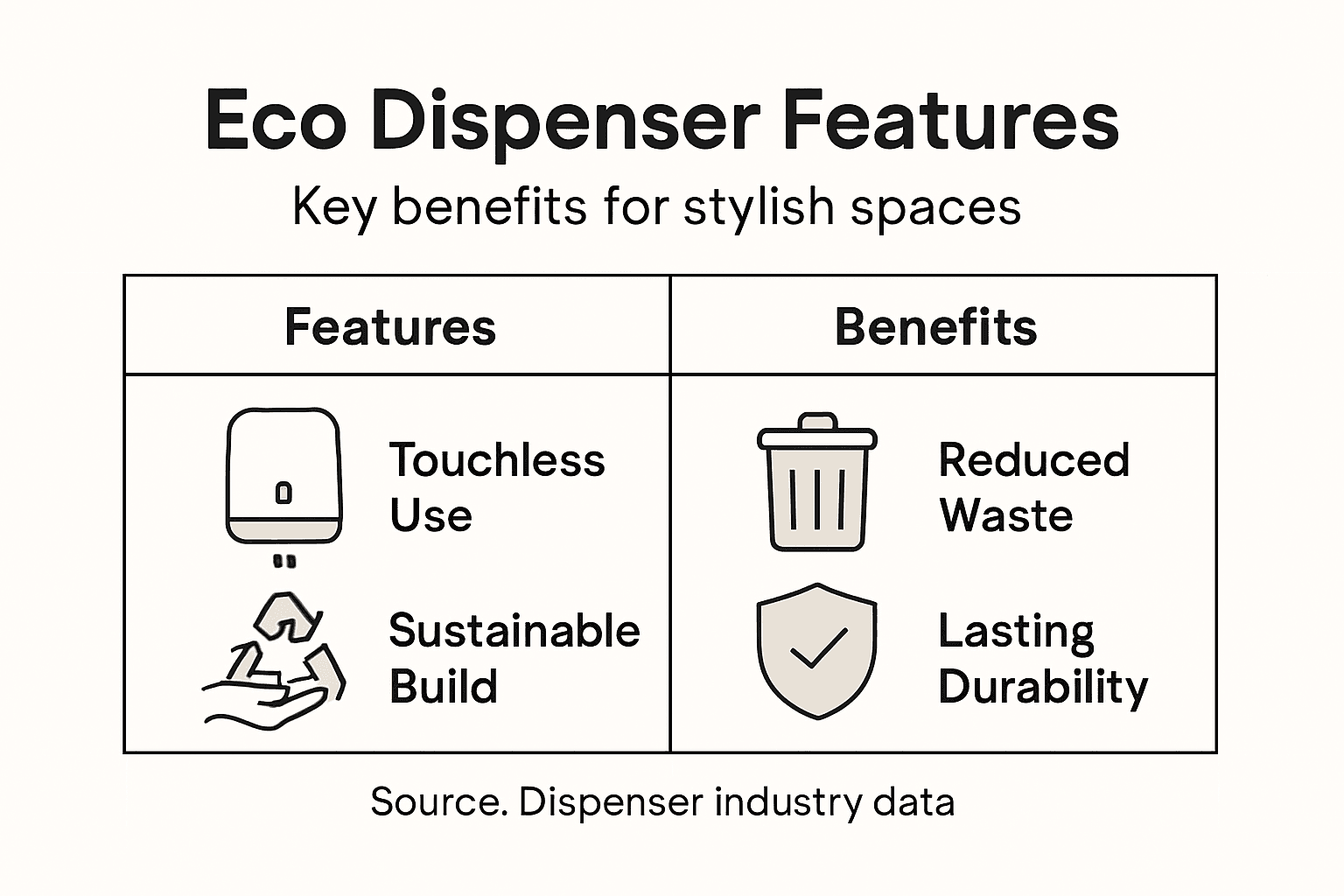
| Touchless Operation | Enhances user convenience | Supports health and safety |
| Recycled/Bio Materials | Demonstrates sustainability commitment | Attracts eco-conscious clientele |
Pro Tip: Always measure your installation space twice and keep a digital or physical template handy to visualize how the dispenser will fit before making a final purchase.
Selecting the right sustainable materials for your eco-friendly dispenser is a crucial step in creating an environmentally responsible solution that looks great in your space. Your choice of material will impact not just aesthetics but also the overall environmental footprint of your product.

Start by exploring innovative sustainable material technologies that are transforming the dispenser market. Modern sustainable options include biodegradable plastics, recycled metals, and bio-based polymers that dramatically reduce ecological impact. Bamboo stands out as an exceptional material for dispensers because it grows rapidly, requires minimal resources, and offers natural durability. Restaurant and cafe owners should prioritize materials that can withstand frequent use while maintaining an attractive appearance.
Consider the full lifecycle of the material beyond its initial appearance. Look for options with circular design principles like modular construction that enables easy repair and eventual recycling. Examine whether the material was sourced responsibly and can be completely recycled or biodegraded at the end of its useful life. Materials made from ocean-bound plastics or innovative composites like mushroom-based alternatives demonstrate a commitment to reducing environmental waste while supporting emerging green technologies.
Pro Tip: Request material samples and durability test reports before making your final dispenser selection to ensure the sustainable material meets both your aesthetic and functional requirements.
Comparing dispenser functionality and design requires a strategic approach that balances aesthetic appeal with practical performance. Your goal is to find a solution that not only looks great in your space but also meets your specific operational needs.
Begin by examining smart dispenser technologies that integrate advanced features with sustainable design. Modern eco-friendly dispensers offer innovative capabilities like touchless sensors, energy-efficient mechanisms, and modular construction that support waste reduction. Restaurant and cafe owners should prioritize dispensers with features that enhance hygiene, such as antimicrobial surfaces and controlled dispensing mechanisms that minimize unnecessary product usage.
Evaluate each dispenser by considering key design elements that impact functionality. Look for customizable options that can align with your brand identity while providing practical benefits. Consider factors like mounting flexibility, ease of maintenance, capacity, and compatibility with your existing space. Pay attention to material durability and how different design elements contribute to long-term performance. Some dispensers offer multiple dispensing options, adjustable settings, and integrated filtration systems that can provide added value beyond basic product distribution.
Pro Tip: Request live demonstrations or detailed product specifications to thoroughly assess how a dispenser’s design and functionality will perform in your specific environment.
Evaluating eco-certifications and durability is a critical step in selecting a sustainable dispenser that will serve your business effectively while minimizing environmental impact. Your goal is to identify products that demonstrate genuine commitment to sustainability through verifiable standards and long-term performance.
Start by understanding sustainability product regulations that guide eco-friendly manufacturing. Look for dispensers with recognized certifications that validate their environmental credentials and durability. These certifications go beyond surface level claims by providing rigorous testing and verification of a product’s sustainability profile. Restaurant and cafe owners should prioritize products with marks that indicate extended lifespan, energy efficiency, and potential for repair or recycling.
Carefully examine the specific durability markers and sustainability credentials of each dispenser. Some certifications offer tiered verification levels that demonstrate increasing commitment to environmental standards. Pay attention to details like material sourcing, manufacturing processes, potential for future repairs, and end-of-life recyclability. Seek out products with verifiable testing marks that show resilience against wear and tear while supporting circular economy principles. Understanding these nuanced certification standards will help you make an informed decision that aligns with your environmental values and practical operational needs.
Pro Tip: Request detailed certification documentation and ask manufacturers about their specific sustainability testing protocols to gain deeper insights into a product’s true environmental performance.
The following table summarizes common eco-certifications, what they verify, and typical advantages for business operators:
| Certification | What It Verifies | Business Advantage |
|---|---|---|
| ENERGY STAR | Energy efficiency standards | Lowers energy and utility costs |
| Cradle to Cradle | Safe, circular production | Improves brand reputation |
| FSC (Wood/Bamboo) | Responsible sourcing | Ensures legal, ethical supply chain |
| Recyclable Mark | End-of-life recyclability | Simplifies sustainable disposal |
| Green Seal | Rigorous eco-friendly design | Builds customer trust |
Verifying supplier reputation and customer reviews is a crucial step in ensuring you invest in a high-quality, reliable eco-friendly dispenser. Your goal is to gather comprehensive insights about product performance and vendor credibility before making a final purchasing decision.
Begin by exploring customer satisfaction metrics that reveal genuine user experiences. Look beyond promotional materials and delve into detailed customer reviews that highlight real-world performance. Pay special attention to comments about product durability, customer service responsiveness, and specific features like ease of maintenance or installation. Restaurant and cafe owners should focus on reviews that discuss long-term usability, reliability in high-traffic environments, and how well the dispenser meets sustainability claims.
Expand your research by examining multiple review platforms, manufacturer websites, and independent consumer forums. Cross-reference feedback to identify consistent themes about product quality and supplier reliability. Watch for patterns in user experiences such as recurring maintenance issues, warranty claim processes, or unexpected performance limitations. Consider reaching out directly to suppliers with specific questions about their product’s sustainability credentials, manufacturing processes, and after-sales support. Gathering comprehensive information from diverse sources will help you make an informed decision that aligns with your business needs and environmental values.
Pro Tip: Create a structured review comparison spreadsheet to systematically track and evaluate different supplier ratings and customer feedback for objective decision making.
Confirming product quality and potential satisfaction requires a strategic approach that goes beyond surface level assessments. Your goal is to thoroughly evaluate the dispenser’s performance potential and alignment with your specific business requirements before finalizing your purchase.
Understand the critical factors influencing product quality that directly impact customer satisfaction. Restaurant and cafe owners should conduct comprehensive evaluations that examine not just immediate functionality but long-term performance and sustainability credentials. Look for detailed documentation demonstrating rigorous quality assurance processes, including material durability testing, stress performance metrics, and environmental impact assessments. Pay attention to specific indicators like manufacturing transparency, potential repair capabilities, and the manufacturer’s commitment to sustainable production practices.
Develop a systematic approach to quality verification by requesting comprehensive product documentation, performance certifications, and independent testing reports. Compare multiple dispensers across key performance indicators such as material resilience, energy efficiency, and potential environmental impact. Engage directly with manufacturers to understand their quality control processes, request sample testing if possible, and seek detailed explanations about product specifications. Gathering multiple perspectives and verification points will help you make a confident purchasing decision that balances aesthetic appeal, functional performance, and sustainability goals.
Pro Tip: Request a trial period or demonstration unit to personally assess the dispenser’s real-world performance before making a final commitment.
Choosing the perfect eco-friendly dispenser can feel overwhelming when balancing style, functionality, and sustainability. This article highlights how important it is to assess your space, identify the right sustainable materials like bamboo, and consider features such as antimicrobial surfaces and modular design. If your goal is to create a stylish and environmentally responsible environment whether for your home, cafe, or restaurant, Cozee Bay offers solutions that meet these exact needs.
Experience premium craftsmanship with our curated selection of bamboo paper towel dispensers designed to blend seamlessly into any space. Our Bamboo Paper Towel Dispenser- A Sleek Look Home or Office collection provides versatile options that combine sustainability with durability and elegant design. For commercial settings requiring a robust and functional unit, explore our Commercial Paper Towel Dispensers | Cozee Bay® lineup. Each product reflects our commitment to eco-conscious materials and practical innovation.
Ready to upgrade your space with thoughtfully crafted, eco-friendly dispensers? Visit Cozee Bay now to browse our full selection and enjoy free shipping within the contiguous U.S. Act today to bring sustainable style and enhanced functionality to your environment.
Begin by measuring the area where you plan to install the dispenser, considering wall space, counter area, and proximity to sinks. This helps ensure that you choose a dispenser that fits well in both size and function, ultimately enhancing your space’s style and sustainability.
Look for dispensers made from biodegradable plastics, recycled metals, or bamboo, as these materials are durable and environmentally friendly. Prioritize options that are designed for longevity and can be easily recycled or biodegraded at the end of their life cycle.
Examine dispensers for features like touchless operation, antimicrobial surfaces, and high capacity. Assess how these functionalities align with your operational needs and consider requesting product demonstrations to see their effectiveness firsthand.
Eco-certifications verify the environmental claims of a product, ensuring it meets rigorous standards for sustainability and durability. Look for certifications that indicate energy efficiency and responsible sourcing to make a reliable and eco-conscious choice.
Research customer reviews and satisfaction metrics to gain insights into the supplier’s reliability and product performance. Create a comparison document to track feedback, noting patterns in durability, customer service, and any recurrent issues to inform your purchasing decision.
Request detailed product documentation, including specifications and performance testing results, to evaluate quality thoroughly. Consider asking for a trial period or demonstration unit to assess the dispenser’s performance in your specific environment before finalizing your order.
Comments will be approved before showing up.