Your Cart is Empty


TL;DR:
- A sealed bamboo dish rack with raised feet and a built-in drip channel is the most practical and eco-friendly option for most U.S. kitchens. Proper maintenance, including regular drying and oiling, extends its lifespan and prevents mold or warping. Cozee-bay’s bamboo dish rack offers durability, clear sizing, and a satisfaction guarantee with free U.S. shipping.
If you want one clear answer: go with a sealed bamboo wooden dish rack that has raised feet, a built-in drip channel, and a utensil caddy. Cozee-bay’s bamboo option hits all three. It keeps your counter dry, looks polished on open shelving, and holds up to daily hand-washing without warping. Compact enough for apartment counters, sturdy enough for a family’s morning rush.
The short rationale: bamboo’s warm aesthetic adds a refined contrast to steel-heavy kitchens, but only works long-term when dishes stay elevated above pooled water. A sealed finish and angled drain spout handle that. Sustainably harvested bamboo also carries a lower environmental footprint than slow-growth hardwoods, making it the practical pick for eco-conscious buyers.
Before you click “add to cart,” run through this list. It takes two minutes and saves you a return.
Core checks:
Durability and certification:
Nice-to-have features:
Price brackets to expect:
Not every format works for every kitchen. Here’s how to match the rack to your setup.
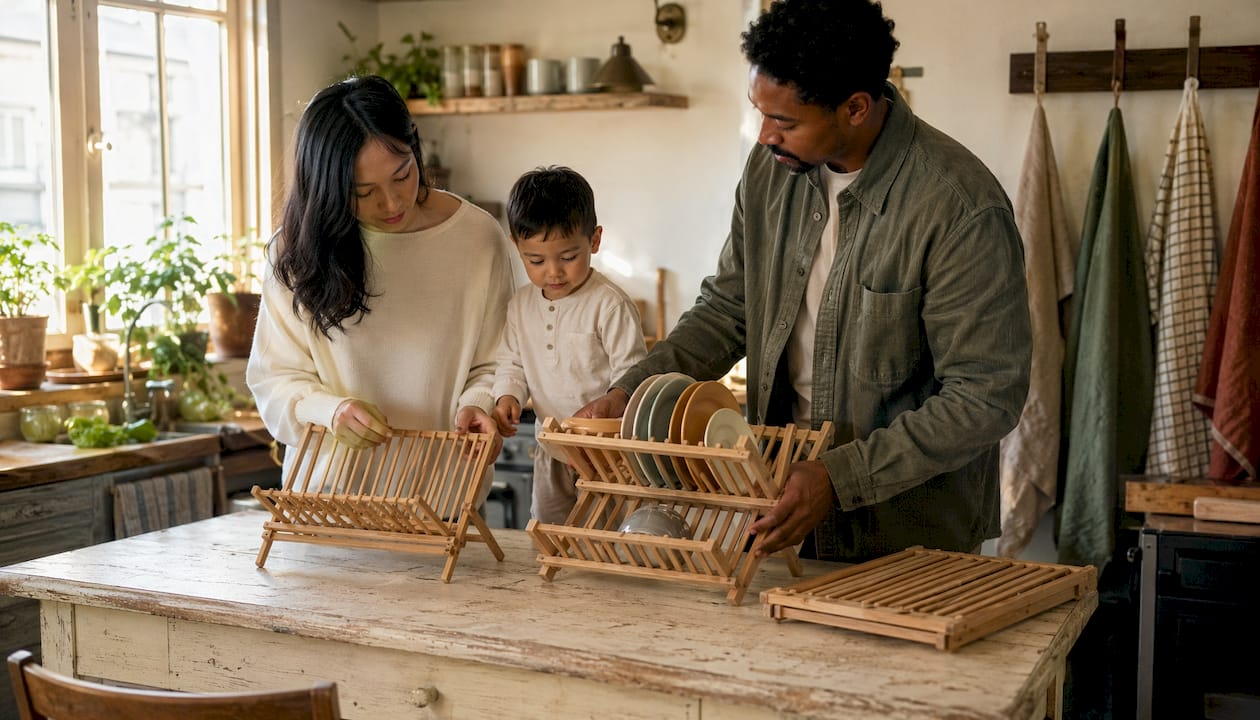
Single-tier racks sit low on the counter and work well in small apartments or as a secondary drying surface next to a larger rack. They’re easy to tuck away and suit anyone who hand-washes a few items at a time rather than a full load.
Two- and three-tier racks are the workhorses. They hold more plates, mugs, and bowls without eating up extra counter length, stacking capacity vertically instead. A family of four will almost always want at least two tiers.
Collapsible and fold-flat designs are a smart call for renters or anyone with limited counter space. Foldable wooden racks fold down to a fraction of their open size, so you can stow them in a cabinet between uses. The trade-off is slightly less rigidity than that of a fixed-frame rack.
Over-the-sink inserts and slotted organizers are the best space-saving dish rack option when counter real estate is genuinely scarce. They sit across the sink basin, so drips fall straight down the drain. Bamboo slot organizers also pull double duty: compact bamboo organizers can hold pot lids, cutting boards, or even act as a mail sorter when you’re not drying dishes.
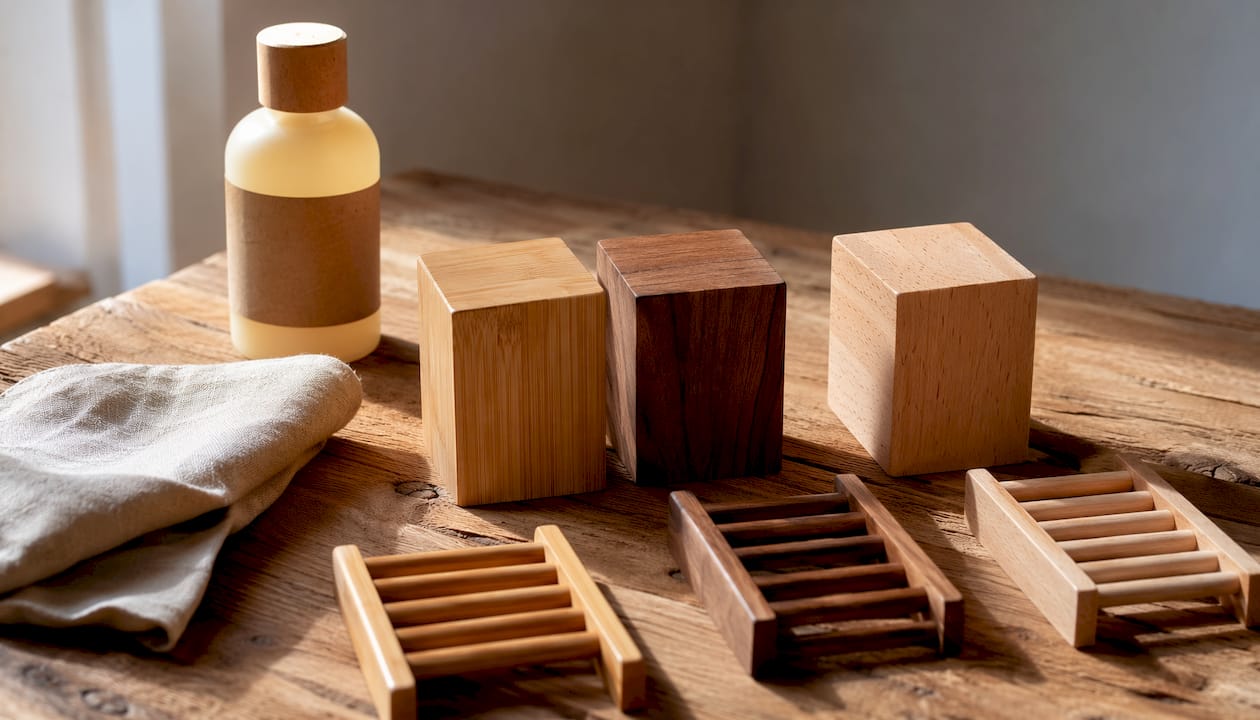
The wood you choose affects how much maintenance you’ll do and how long the rack lasts. Here’s a direct comparison.
| Material | Moisture resistance | Durability | Sustainability | Maintenance level | Best for |
|---|---|---|---|---|---|
| Bamboo (sealed) | Good with sealant | High (fast-growth density) | Excellent (fast-renewing) | Low–moderate | Eco-first buyers, compact kitchens |
| Teak | Excellent (natural oils) | Very high | Moderate (slow-growth) | Low | Wet kitchens, heavy daily use |
| Beech | Moderate | Moderate | Good | High (frequent oiling) | Dry climates, occasional use |
| Sealed/finished wood | Varies by base wood | High with intact seal | Depends on sourcing | Low while seal holds | Style-forward, open shelving |
Teak’s natural oil content makes it particularly resilient in wet environments, resisting warping and swelling where other woods would struggle. Bamboo, while technically a grass, rivals hardwood density when properly processed and sealed, and its fast growth cycle makes it the more renewable choice.
Finish matters as much as the base material. An eco-friendly, non-toxic lacquer or sealant extends any wood’s life by closing the grain against moisture. Without it, even teak will eventually show wear. Drainage design works alongside the material: raised slots and angled drip trays reduce the time water sits against the wood, which cuts rot risk regardless of species.
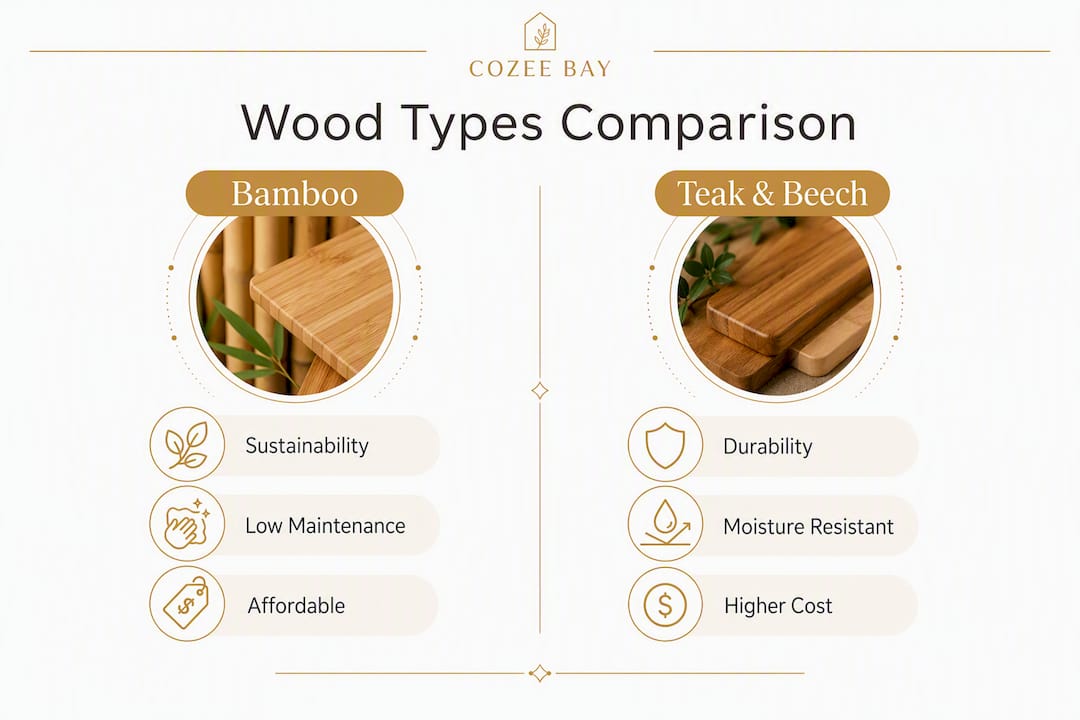
For eco-conscious shoppers, sustainably harvested bamboo offers a lower price point and faster renewability than slow-growth hardwoods. Look for clear sourcing claims or FSC certification on the product page.
Pro Tip: If your kitchen runs humid year-round or you hand-wash dishes twice a day, choose teak or sealed bamboo. For a drier kitchen with occasional use, beech works fine as long as you oil it every two to three months.
Wood and water can coexist, but only with a consistent routine. Follow these steps and your rack will stay clean and warp-free for years.
Never soak a wooden rack. Prolonged water contact breaks down the grain and invites mold, even on sealed surfaces.
A well-maintained bamboo or teak rack typically lasts several years under normal daily use. When you notice persistent dark spots, deep cracking, or a sour smell that won’t clear after cleaning, it’s time to replace it.
Pro Tip: Place a small absorbent mat under the rack if your drip tray tends to overflow during use. High-quality racks often include one in the box — it’s a trust signal worth looking for when you’re comparing listings.
You have three main channels, each with different trade-offs.
Brand-direct stores (like Cozee-bay’s site) give you the clearest product specs, direct customer service, and often the best return policies. You’re buying from the maker, so questions about finish type or dimensions get answered faster.
Specialty home retailers and boutique makers carry curated selections with higher average quality. You’ll pay more, but the product specs and trust signals — precise dimensions, finish details, included drip mat — are usually more reliable than generic marketplace listings.
Large online marketplaces offer the widest price range and fastest shipping, but quality varies significantly. Read the listing carefully: look for photos showing the sealed finish, check that dimensions are listed, and confirm whether a drip tray is included or sold separately.
When shopping, factor in shipping costs and return policies for wood goods. Some sellers offer free returns; others charge restocking fees. For a product where fit and finish matter, a free-return policy is worth prioritizing. If you’re building out a broader kitchen organization system, buying from a single source with consistent materials keeps the look cohesive.
The honest answer: it depends on your habits and priorities.
Reasons to choose a wooden or bamboo rack:
Reasons to think twice:
Quick guide by user profile:
Cozee-bay’s bamboo dish rack brings together the features that matter most: a sealed finish for moisture resistance, raised feet to keep the base off standing water, a built-in utensil caddy, and a compact footprint that fits most standard counters without crowding your prep space.
What makes it a practical pick:
Trust signals to confirm on the product page:
Cozee-bay backs its products with a money-back guarantee and free shipping in the contiguous U.S., which takes the risk out of ordering online. For renters and design-focused buyers especially, it’s a low-commitment way to upgrade your kitchen dish drying setup without committing to a heavy investment.
Pro Tip: Before you order, check whether an absorbent drip mat is included or sold separately. If it’s not in the box, budget a few dollars for one — it protects your counter and extends the rack’s life by reducing splash-back moisture.
If you’re building out a fully eco-friendly kitchen, bamboo accessories coordinate naturally with other natural-material pieces.
A sealed bamboo wooden dish rack with raised feet and a built-in drip channel is the most practical, eco-friendly choice for most U.S. kitchens in 2026.
| Point | Details |
|---|---|
| Prioritize drainage design | An angled drain spout or removable drip tray prevents pooling and extends the rack’s life. |
| Match the material to your habits | Teak suits heavy daily use; sealed bamboo balances eco credentials, cost, and durability for most buyers. |
| Maintain consistently | Wipe dry after each use and apply food-grade oil every two to three months to prevent warping and mold. |
| Check specs before buying | Confirm dimensions, finish type, and return policy on the product page before purchasing. |
| Cozee-bay bamboo option | Sealed finish, raised feet, utensil caddy, money-back guarantee, and free U.S. shipping make it a low-risk buy. |
Wood in a kitchen does something metal never quite manages: it makes the space feel lived-in and intentional rather than purely functional. A bamboo or teak rack on an open counter signals that you’ve thought about the details, not just the appliances.
That said, the trade-off is real. After about a year of normal use, you’ll notice the finish showing wear in the spots where wet dishes sit most often. That’s normal, and it’s manageable with the oiling routine covered above. What catches people off guard is how quickly neglect compounds: skip the drying step a few times during a busy week, and you’ll see the early signs of mold in the base joints within a month.
The buying checklist and maintenance steps in this article aren’t just nice-to-haves. They’re the difference between a rack that looks great for three years and one that goes soft and discolored by month eight. Go in with realistic expectations, keep the routine simple, and a quality wooden dish rack rewards you with a kitchen that looks genuinely put-together.
Tired of dish racks that look fine in the listing photo but feel flimsy the moment you load them up? Cozee-bay’s handcrafted bamboo products are built for real kitchens: sealed for moisture resistance, sized for standard counters, and backed by a money-back guarantee so you’re not stuck with something that doesn’t work for your space.

Free shipping within the contiguous U.S. means no surprise charges at checkout. Whether you’re outfitting a compact apartment kitchen or refreshing an open-shelf setup, Cozee-bay’s bamboo range gives you the natural warmth and clean lines you’re after, without the guesswork of marketplace listings. Browse the full bamboo product collection and confirm the dimensions, finish, and return policy before you buy. That’s all it takes to get a kitchen that finally looks as good as it functions.
Comments will be approved before showing up.