Your Cart is Empty


TL;DR:
- Bamboo underwear is made from viscose or rayon derived from bamboo pulp, offering superior breathability, softness, and moisture management compared to cotton or synthetics. Its environmental benefits include rapid renewability, low-input cultivation, and biodegradability, but responsible chemical processing is crucial for genuine sustainability. To ensure high quality and safety, consumers should verify labels specify “viscose from bamboo,” seek third-party certifications like OEKO-TEX, and evaluate fabric construction details.
Bamboo underwear is defined as intimate apparel made from viscose or rayon derived from bamboo pulp, and it delivers measurably superior breathability, softness, and moisture management compared to cotton or synthetic alternatives. The bamboo fabric advantages go well beyond marketing claims. A 2025 University of Manchester study quantified bamboo’s thermal conductivity at 0.049 W/m·K and air permeability at 695 mm/s, outperforming other eco-friendly textiles across every comfort metric. For eco-conscious buyers who also care about skin health, the bamboo underwear benefits are grounded in real science, though a few marketing myths deserve a closer look before you shop.
Bamboo fabric properties give it a genuine performance edge over cotton and synthetics, and the science is specific enough to be convincing. The University of Manchester’s 2025 study measured comfort variables quantitatively across eco-friendly textiles, and bamboo’s air permeability of 695 mm/s places it well ahead of standard cotton knits. That number matters because higher air permeability means heat and moisture escape faster, which translates directly to a cooler, drier feel throughout the day.

Fiber diameter also plays a role that most shoppers never think about. Bamboo viscose fibers are finer than standard cotton fibers, which reduces friction against skin and creates the silky texture that bamboo underwear is known for. Synthetics like polyester can match bamboo’s smoothness in some constructions, but they trap heat rather than releasing it, making them a poor choice for underwear worn close to the body.
Fabric construction matters just as much as fiber content. A 2025 Springer Nature study on bi-layer knitted structures found that bamboo viscose outer layers show low thermal conductivity and excellent moisture vapor permeability, improving wearer comfort significantly. This means the same bamboo fiber can perform very differently depending on how the fabric is knitted and which layer faces the skin.
| Comfort Metric | Bamboo Viscose | Cotton | Synthetic (Polyester) |
|---|---|---|---|
| Thermal conductivity | 0.049 W/m·K (low, cooling) | Moderate | High (heat-trapping) |
| Air permeability | 695 mm/s (high) | Moderate | Low to moderate |
| Moisture vapor transfer | Excellent | Good | Poor |
| Tactile softness | Very high (fine fiber) | Moderate | Variable |
Pro Tip: When shopping for bamboo underwear, look for products that specify a bi-layer or moisture-wicking knit construction. A label that says “bamboo viscose outer layer” signals that the manufacturer has paid attention to fabric orientation, which directly affects how cool and dry you feel.
Bamboo’s environmental credentials start with the plant itself. Bamboo grows up to 1 meter per day, requiring minimal water, no synthetic fertilizers, and virtually no pesticides compared to conventional cotton farming. Cotton is one of the most water-intensive crops on the planet, and its pesticide use accounts for a disproportionate share of global agricultural chemical consumption. Bamboo sidesteps most of those inputs entirely.
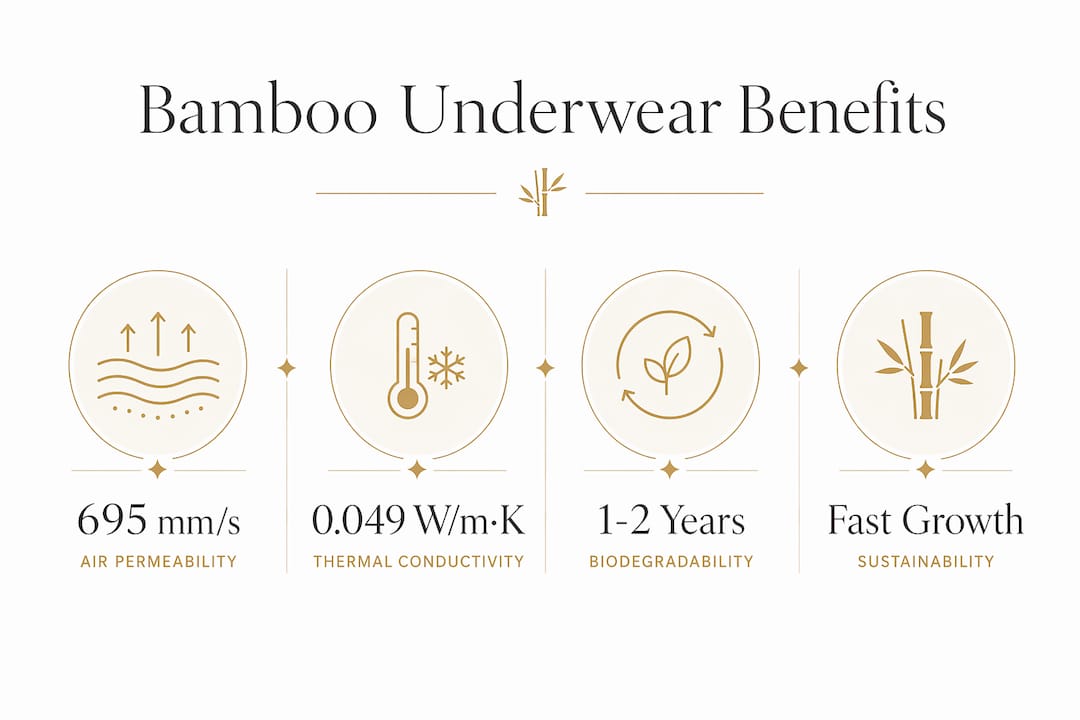
The end-of-life story is equally compelling. Bamboo textiles biodegrade within 1 to 2 years, while synthetic fibers like polyester and nylon take decades to centuries to break down in landfill conditions. For underwear, which has a shorter useful life than outerwear, that biodegradability gap is especially relevant. You replace underwear more often, so the material’s environmental footprint compounds over time.
That said, the sustainability picture is not entirely simple. Turning raw bamboo into wearable viscose fiber requires a chemical process that uses sodium hydroxide and carbon disulfide. Responsible manufacturers recycle those chemicals in a closed-loop system, dramatically reducing environmental impact. Brands that skip that step can produce bamboo viscose with a larger chemical footprint than the plant’s cultivation would suggest.
Here is what to look for when evaluating the eco-friendly credentials of bamboo underwear:
Pro Tip: Sustainable bamboo underwear combines the plant’s fast-growing, low-input cultivation with verified responsible fiber processing. An OEKO-TEX or similar certification on the finished garment is a reliable signal that both the fiber and the manufacturing process meet environmental and safety standards.
The health benefits of bamboo fabric are real, but they come with important nuance. Bamboo contains a natural bio-agent called bamboo kun, and laboratory testing has shown that bamboo-based fabrics can reduce E. coli and Staphylococcus aureus by up to 99.7% within two hours of contact. That is an impressive result, and it explains why so many brands lead with antibacterial claims in their marketing.
The catch is that most bamboo underwear is made from viscose rayon, not raw bamboo fiber. The chemical process used to create viscose strips out much of the bamboo kun. An April 2026 review by AuraTouchGlobal found that antibacterial claims for bamboo viscose vary significantly with fiber processing, and the natural antibacterial property is not consistently present without additional finishing treatments. This means a product labeled “natural antibacterial bamboo” may be relying on a topical antimicrobial coating rather than the fiber’s inherent properties.
For sensitive skin, the more reliable indicator of safety is third-party certification. OEKO-TEX Standard 100 Class II certifies textiles safe for direct skin contact, testing for harmful substances including chemical residues, dyes, and heavy metals. For underwear worn against the most sensitive areas of the body, that certification carries more weight than any fiber origin claim. You can read more about antimicrobial bamboo properties and how processing affects them in detail.
| Factor | Bamboo Viscose | Raw Bamboo Fiber | Cotton | Synthetic |
|---|---|---|---|---|
| Natural antibacterial | Reduced by processing | Yes (bamboo kun) | No | No |
| Hypoallergenic potential | High (with OEKO-TEX) | High | Moderate | Low |
| Moisture management | Excellent | Good | Good | Poor |
| Skin safety certification | OEKO-TEX Class II | N/A (rare in apparel) | Available | Available |
| Chemical residue risk | Low (if certified) | Low | Moderate | Moderate to high |
Reading a bamboo underwear label correctly is the single most useful skill you can develop as a buyer. The U.S. Federal Trade Commission requires that bamboo-derived fibers be labeled accurately, and FTC rules mandate “rayon from bamboo” or “viscose from bamboo” rather than simply “100% bamboo.” A product labeled “100% bamboo” without that qualifier is either mislabeled or non-compliant, and the FTC has a documented history of enforcement actions against brands that cut corners here.
Beyond the label, here is a practical checklist for evaluating bamboo underwear before you buy:
Texture and durability are also worth testing. Quality bamboo viscose underwear should feel smooth and slightly cool to the touch, hold its shape after washing, and show no pilling after five or more wash cycles. If a pair pills quickly or loses elasticity after a few washes, the fabric construction was likely compromised regardless of the bamboo content on the label.
Bamboo underwear delivers genuine comfort, breathability, and sustainability advantages, but those benefits depend on fiber processing quality, fabric construction, and verified certification rather than bamboo content alone.
| Point | Details |
|---|---|
| Breathability is measurable | Bamboo viscose achieves 695 mm/s air permeability, outperforming cotton and synthetics in lab testing. |
| Fabric construction matters | Bi-layer knit orientation significantly affects moisture transfer and thermal comfort, not just fiber content. |
| Antibacterial claims need scrutiny | Bamboo kun is reduced by viscose processing; look for finishing treatments or OEKO-TEX certification instead. |
| Sustainability is real but nuanced | Bamboo grows fast and biodegrades quickly, but responsible chemical processing is required to complete the eco story. |
| Labels reveal compliance | FTC-compliant labels say “viscose from bamboo,” not “100% bamboo.” Non-compliant labels signal broader quality concerns. |
I have spent years working with bamboo as a material, and the comfort claims are not exaggerated. The first time you wear a well-made pair of bamboo viscose underwear on a warm day, the difference from cotton is immediate and obvious. It genuinely feels cooler, and that is not placebo. The thermal conductivity data from Manchester backs up exactly what you feel.
What I have also observed is enormous variability across brands. Two products with identical fiber content labels can perform completely differently because one manufacturer paid attention to knit construction and the other did not. Consumers often overlook those garment construction details, and that is where disappointment comes from. The fiber is not the whole story.
The antibacterial marketing frustrates me most. Brands lean hard on bamboo kun as a selling point when most of their products are viscose rayon where that property has been largely processed out. It is not dishonest in every case, but it is often misleading. If skin health is your reason for choosing bamboo underwear, prioritize OEKO-TEX Class II certification over any “natural antibacterial” claim on the packaging.
My advice is simple: buy certified, read the label, and pay attention to construction details. Bamboo underwear genuinely earns its reputation when the product is made well. When it is not, you are paying a premium for a label rather than a benefit. The eco-conscious buyer’s guide to bamboo fabric is a good place to start if you want to dig deeper before your next purchase.
— Cozee
If you have been burned by bamboo underwear that did not live up to its claims, you are not alone. The difference between a great pair and a disappointing one almost always comes down to fiber processing, fabric construction, and whether the brand bothered to get certified.

Cozee-bay carries bamboo underwear built around the properties that actually matter: verified breathability, OEKO-TEX-compliant materials, and FTC-accurate labeling. Whether you are shopping for everyday comfort, sensitive skin needs, or a genuinely sustainable underwear option, the collection is designed for buyers who want real performance, not just a green story. Free shipping within the contiguous U.S. and a money-back guarantee mean you can try it without the guesswork.
Bamboo underwear is made from viscose or rayon derived from bamboo pulp, not raw bamboo fiber. The FTC requires labels to read “viscose from bamboo” or “rayon from bamboo” to accurately reflect this manufacturing process.
Yes. A 2025 University of Manchester study measured bamboo viscose’s thermal conductivity at 0.049 W/m·K and air permeability at 695 mm/s, both of which outperform standard cotton and synthetic fabrics in cooling and breathability.
Bamboo underwear is generally safe for sensitive skin, especially when certified to OEKO-TEX Standard 100 Class II, which tests finished garments for harmful chemical residues, dyes, and heavy metals relevant to intimate apparel.
Not always. Bamboo’s natural antibacterial agent, bamboo kun, is largely removed during viscose processing. Antibacterial performance in finished bamboo underwear typically depends on topical finishing treatments rather than the fiber’s inherent properties.
Bamboo textiles biodegrade within 1 to 2 years under typical conditions, compared to decades or centuries for synthetic fibers like polyester and nylon, making bamboo a significantly better choice for reducing long-term textile waste.
Comments will be approved before showing up.