Your Cart is Empty


TL;DR:
- Paper towels are not recyclable because of their short fibers and contamination from grease, chemicals, and moisture. Composting clean towels and recycling cardboard tubes are practical disposal options, while switching to reusable cloths significantly reduces waste and environmental impact. Prioritizing reduction and reusing methods offers the most sustainable benefits over recycling alone.
Paper towels are not recyclable in standard municipal recycling programs, and tossing them in the blue bin does more harm than good. Their fibers are too short and too easily contaminated to survive the recycling process. Americans dispose of around 3,000 tons of paper towels every single day, and nearly all of it heads straight to landfill. The good news is that smarter disposal options exist, and a few simple swaps can cut your household paper towel waste dramatically.
Paper towels cannot be recycled because of two fundamental issues: fiber length and contamination. Understanding both helps you make better choices at the bin.
Paper towels are made from short fibers that break down quickly under moisture and pressure. That rapid breakdown is exactly what makes them absorbent and soft. But recycling paper requires fibers long enough to bond together into new sheets. Paper towels simply do not have them. Cardboard, office paper, and newspaper all use longer fibers that can be pulped and reformed. Paper towels cannot.
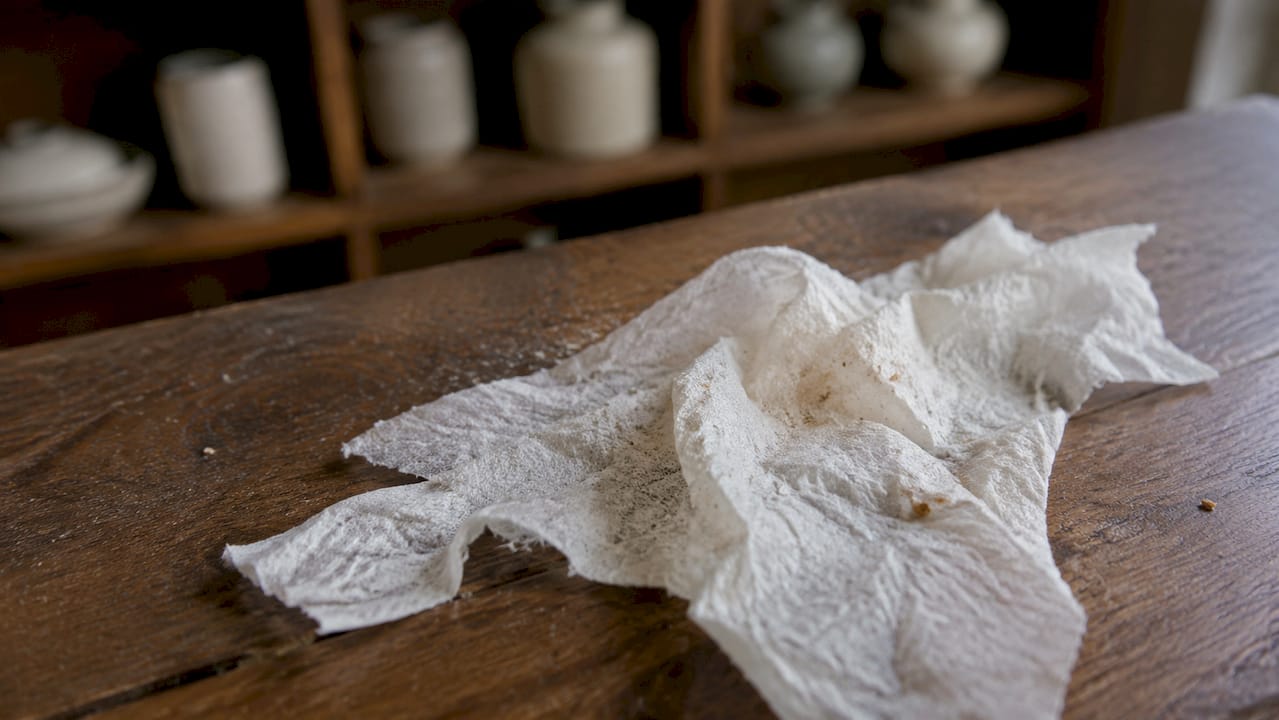
Even if fiber length were not an issue, contamination would be. A used paper towel carries grease, food residue, cleaning chemicals, or bacteria. When contaminated materials enter a recycling batch, they can ruin the entire load. Recycling facilities are not equipped to sort or clean individual towels. One greasy towel mixed into a batch of cardboard can cause the whole load to be rejected and sent to landfill instead.
Here is what makes paper towels particularly problematic in recycling streams:
The one recyclable component in your paper towel routine is the cardboard tube. Most municipalities accept cardboard tubes from paper towels provided they are completely clean and dry. Even a small amount of residue left on the tube can contaminate a recycling batch, so give it a quick check before tossing it in the bin.
Proper disposal depends on what the towel touched. The rules are straightforward once you know them.
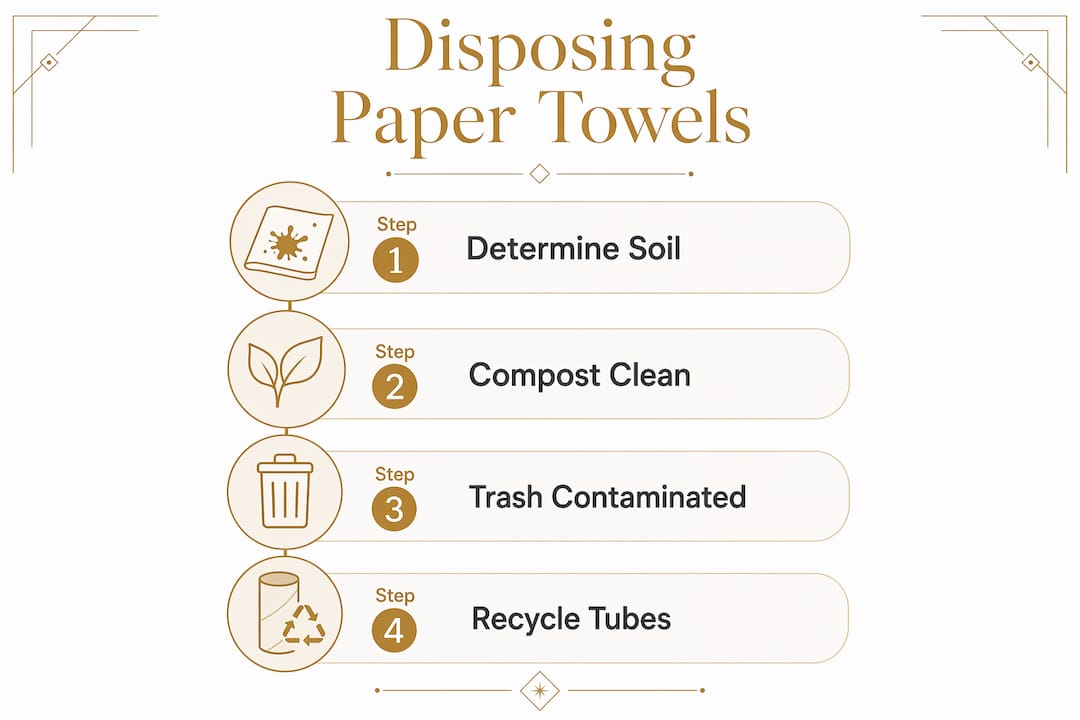
Clean or lightly soiled paper towels, meaning those used to dry hands or wipe up plain water, can go into your compost bin or organic waste cart where local programs allow. Many cities, including those using green bin programs, accept paper towels as compostable material. Local rules vary widely, so check your municipality’s waste guidelines before adding towels to your organics bin.
Towels soiled with grease, meat drippings, or household chemicals belong in the trash. No composting program accepts chemically contaminated paper, and attempting to compost them can disrupt the breakdown process and introduce harmful residues into finished compost.
The following paper towels should always go directly into the trash:
Flushing paper towels causes serious plumbing damage. Unlike toilet paper, paper towels do not break down in water. They clump together, catch on pipe joints, and create blockages that can back up your entire plumbing system. Municipal wastewater systems issue explicit warnings against flushing them. The cost of a plumber visit is a strong motivator to keep paper towels out of the toilet.
Pro Tip: Set up a small labeled bin near your kitchen sink with two sections: one for compostable towels (plain water, hand drying) and one for trash-bound towels (chemicals, grease). It takes 30 seconds to set up and removes all guesswork.
Switching away from disposable paper towels is the most impactful step an eco-conscious household can take. Recycling is downstream. Reducing consumption is upstream, and upstream always wins.
| Option | Environmental Impact | Cost Over Time | Hygiene Maintenance |
|---|---|---|---|
| Virgin fiber paper towels | Highest impact, no recyclability | Ongoing purchase cost | Single use, no maintenance |
| 100% recycled content paper towels | Lower impact, still not recyclable | Moderate ongoing cost | Single use, no maintenance |
| Bamboo paper towels (FSC certified) | Lower than virgin, still disposable | Higher upfront, moderate ongoing | Single use, no maintenance |
| Reusable microfiber cloths | Very low impact when washed properly | Low long-term cost | Wash every 3–5 days |
| Reusable bamboo or cotton cloths | Lowest impact, fully compostable | Lowest long-term cost | Wash every 3–5 days |
Reusable cloth towels, whether microfiber, bamboo, or cotton, can replace up to 80% of your disposable paper towel use when washed and stored correctly. That figure represents a significant reduction in both waste and spending over a year.
When disposables are unavoidable, choose 100% post-consumer recycled paper towels. Recycled content uses less water and produces a lower carbon footprint than virgin wood pulp or uncertified bamboo. Bamboo paper towels are often marketed as automatically eco-friendly, but that claim requires scrutiny. Without FSC certification, bamboo sourcing can still contribute to deforestation and habitat loss. Always check the label before assuming bamboo means sustainable.
Pro Tip: Color code your reusable cloths by task. Use blue for counters, yellow for spills, and red for the bathroom. This prevents cross-contamination and gives you the same confidence as disposables without the waste.
Washing reusable cloths correctly matters more than most people realize. Avoid fabric softener entirely when laundering them. Softener leaves a coating on the fibers that reduces absorbency over time, which defeats the purpose. Hot water cycles with plain detergent keep them clean and fully functional. Bamboo and cotton cloths are also fully compostable at end of life, unlike synthetic microfiber blends, which shed plastic particles in the wash.
Building a lower-waste routine does not require a dramatic overhaul. A step-by-step approach makes the transition manageable and lasting.
Audit your current use. Spend one week tracking what you use paper towels for. Most households find that hand drying, counter wiping, and spill cleanup account for the majority of their usage. These are the easiest tasks to replace with reusables.
Start with one task. Replace paper towels for hand drying first. Keep a stack of small cotton or bamboo cloths near the sink. This single change can cut your paper towel consumption by 30% or more without any disruption to your routine.
Add reusables for counter and surface cleaning. Once hand drying feels natural, move to counters and surfaces. Microfiber cloths work well here because they pick up bacteria without needing chemical sprays. You can explore sustainable cloth options to find what fits your kitchen best.
Keep paper towels for specific tasks only. Reserve disposables for raw meat cleanup, chemical spills, and tasks where hygiene risk is high. This targeted use means a single roll lasts weeks instead of days.
Set up a cardboard tube recycling spot. Place a small container near your paper towel holder specifically for empty cardboard tubes. Check each tube for residue before recycling. Clean, dry tubes go straight into your curbside recycling bin.
Wash reusable cloths on a schedule. Wash them every 3–5 days, or immediately after any damp use. Damp cloths left sitting breed bacteria fast. A consistent wash schedule removes that concern entirely and keeps your cloths performing well.
Compost what you can. For the paper towels you do use, redirect clean ones to your compost or green bin. Over a month, this small habit keeps a meaningful volume of material out of landfill.
For more ideas on cutting disposable use, the Cozee-bay guide on reducing paper towel waste walks through practical household strategies in detail.
Paper towels are not recyclable due to short fiber composition and contamination risk, but composting clean towels, recycling cardboard tubes, and switching to reusable cloths are practical steps every household can take.
| Point | Details |
|---|---|
| Paper towels are not recyclable | Short fibers and contamination make them incompatible with standard recycling programs. |
| Cardboard tubes can be recycled | Clean, dry cardboard tubes are accepted by most municipal recycling programs. |
| Composting is the best disposal option | Clean paper towels can go in organic waste bins where local programs allow it. |
| Reusable cloths cut waste by up to 80% | Microfiber, bamboo, and cotton cloths replace most disposable uses when washed regularly. |
| Bamboo requires FSC certification | Not all bamboo products are sustainable; always verify certification before purchasing. |
I have spent years looking at how households approach sustainability, and the paper towel question comes up constantly. Most people assume recycling is the answer. It is not, and that misconception keeps people from making changes that actually matter.
The real shift happens when you stop thinking about how to dispose of something and start thinking about whether you need it at all. Reusable cloths felt like a hygiene risk to me at first. That concern disappeared completely once I started color coding by task and washing on a set schedule. The hygiene confidence you get from a proper washing routine is just as solid as tossing a paper towel in the trash.
What I find most interesting is how the cost savings sneak up on you. A household that cuts paper towel use by 80% stops spending $100 or more per year on rolls. That money adds up fast, and the environmental benefit compounds with every roll you do not buy.
The other thing worth saying plainly: not all “eco-friendly” paper towels are equal. Bamboo sounds good, but without FSC certification, you are often just buying a marketing story. Post-consumer recycled content is the safer bet when you need disposables. Read the label, not the front-of-pack claim.
Prioritize reduction first. Compost what you use. Recycle the tubes. That order of operations does far more for your household’s environmental footprint than any recycling bin shortcut.
— Cozee

If you are ready to move past disposable paper towels for good, Cozee-bay makes that transition easy. Cozee-bay’s bamboo paper towel dispensers are designed for both home and commercial spaces, from kitchens and coffee shops to schools and senior living centers. They hold reusable rolls and standard paper towels alike, so you can transition at your own pace. Every product ships free within the contiguous U.S. and comes backed by a money-back guarantee. Browse the full range of eco-friendly bamboo dispensers and find the right fit for your space. You can also check out Cozee-bay’s guide to bamboo paper towel options to compare sustainable choices before you buy.
No. Paper towels are not accepted in standard curbside recycling due to short fiber length and contamination risk. No widespread municipal recycling program currently accepts used paper towels.
Clean paper towels used for hand drying or plain water spills can go into a compost or organic waste bin where local programs allow. Towels soiled with chemicals or grease must go in the trash.
Yes. Most municipalities accept cardboard tubes from paper towels and toilet paper, provided the tubes are completely clean and dry before recycling.
No. Bamboo paper towels are still disposable and not recyclable. They can have a lower environmental impact than virgin fiber towels, but only when sourced with FSC certification.
Reusable bamboo or cotton cloths are the most environmentally friendly option. They can replace up to 80% of disposable paper towel use and are fully compostable at end of life when made from natural fibers.
Comments will be approved before showing up.