Your Cart is Empty


TL;DR:
- Paper towels absorb water through physical capillary action in cellulose fibers, which can be engineered for optimal performance. Embossing patterns, ply count, and fiber shape significantly influence absorbency speed and capacity, with standards like AATCC TM79 and Cobb tests measuring these traits. Proper technique, such as folding and pressing, enhances efficiency, while understanding these factors aids in selecting the best towel for various tasks and reducing waste.
Paper towels absorb water through a physical process called capillary action, where cellulose fibers attract water molecules via hydrogen bonds and draw liquid into the microscopic pores between fibers. This is not a chemical reaction. No new substance forms, and the process reverses completely when you wring the towel out. Understanding how this mechanism works, and how manufacturers engineer it, helps you choose the right towel for every task, whether you are cleaning up a kitchen spill or managing high-volume use in a restaurant or school.
The science behind paper towel absorbency combines three factors: fiber chemistry, structural design, and manufacturing precision. Cellulose, the primary material in most paper towels, is naturally hydrophilic, meaning it attracts water. Capillary action then moves that water through the towel’s fiber network the same way water climbs up a thin glass tube against gravity. Modern manufacturing techniques, including CNC embossing and controlled fiber compression, push absorbency performance well beyond what raw cellulose alone can achieve. Industry testing standards like AATCC TM79 and the Cobb test give manufacturers and consumers a reliable way to measure and compare those results.
Cellulose fibers attract water molecules because they carry hydroxyl groups, which are oxygen-hydrogen pairs that form hydrogen bonds with water. This bond is the same type that holds water molecules together, so water clings to the fiber surface readily. The result is adhesion: water sticks to cellulose rather than beading off it the way it would on a waxed surface.
Once water adheres to the fiber surface, cohesion takes over. Water molecules pull neighboring water molecules along with them, drawing more liquid into the towel’s fiber network. This chain reaction is what makes capillary action so effective. The microscopic pores between fibers act like a network of tiny tubes, pulling water inward and upward without any mechanical force required from you.
A common misconception is that paper towels absorb water through a chemical change. Absorption is a physical, reversible process. The water is trapped in the fiber matrix, not bonded to it chemically. Squeeze a saturated towel and the water releases. The cellulose fibers remain intact and unchanged. This distinction matters practically: it means a paper towel’s absorbency is governed entirely by its physical structure, so design choices at the manufacturing stage have a direct and measurable impact on performance.
Pro Tip: If you want to see capillary action in action, hold the corner of a paper towel just above a shallow dish of water. Watch the water climb upward into the towel without any squeezing. That is pure capillary action at work.

The fiber chemistry described above sets the ceiling for absorbency, but structural design determines how close a towel gets to that ceiling. Two design elements matter most: embossing patterns and ply count.
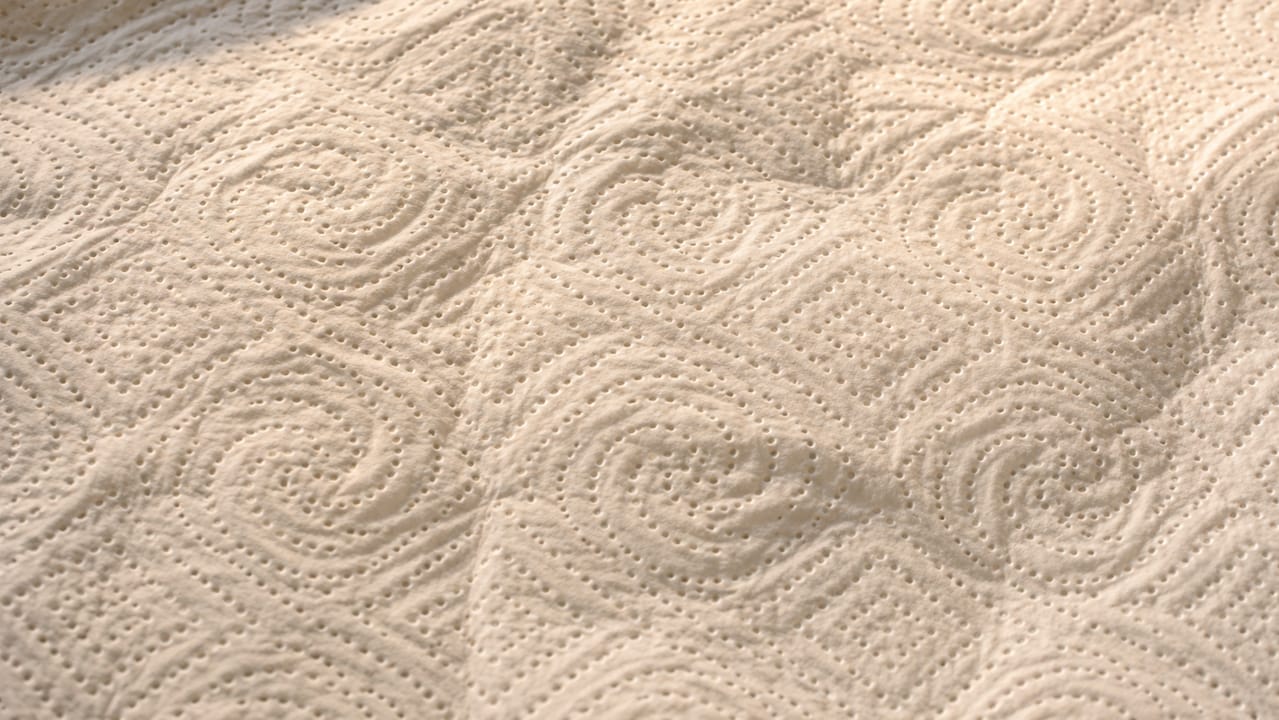
Embossing physically deforms the towel’s surface into a pattern of raised and recessed areas. Those deformations create air pockets and increase the total void volume inside the towel, giving water more space to occupy. Embossing patterns increase surface area and hold water in air pockets, which speeds absorption by maximizing liquid contact with fiber. CNC-precision embossing takes this further. CNC embossing increases absorbency by up to 30% by creating more precisely engineered voids for water retention. That is a significant performance gain from a manufacturing process alone.
Ply count adds a second dimension. A two-ply towel does not simply double the absorbency of a single-ply sheet, but it does increase total capacity and provides a layered structure that holds more water before becoming saturated. The outer ply contacts the spill first, and the inner ply acts as a reservoir. This layered approach is why premium multi-ply towels outperform budget single-ply options on large spills.
Fiber morphology also plays a role that most consumers never consider. Ribbon-shaped fibers provide higher surface area for rapid liquid contact, while round fibers maintain internal porosity for higher total absorption capacity. Manufacturers choose fiber shapes based on whether they are optimizing for speed or volume. A towel designed for quick hand drying in a commercial restroom prioritizes speed. A towel designed for soaking up a large kitchen spill prioritizes total capacity.
| Design factor | Effect on absorbency |
|---|---|
| CNC embossing | Increases void volume, boosts absorbency up to 30% |
| Multi-ply construction | Adds layered capacity, holds more before saturation |
| Ribbon-shaped fibers | Faster initial absorption due to higher surface area |
| Round fibers | Higher total capacity due to internal porosity |
| Controlled compression | Optimizes micro-void space, can increase capacity 10 to 30% |
Pro Tip: When buying paper towels for commercial use, check whether the product specifies embossing type. Towels with micro-embossing patterns generally outperform macro-embossed options for speed, while macro-embossed towels hold more total volume.
Two industry-standard tests dominate paper towel absorbency measurement: AATCC TM79 and the Cobb test. Each measures a different dimension of performance, and knowing the difference helps you interpret product claims accurately.
AATCC TM79 measures absorption speed. A 0.1 mL water drop is placed on the towel surface, and the time for full absorption is recorded. Absorption speed categories classify results as very fast (under 1 second), fast (1 to 10 seconds), moderate (10 to 60 seconds), slow (60 to 200 seconds), and resistant (over 200 seconds). Most quality paper towels fall in the very fast to fast range. This test tells you how quickly a towel reacts to a spill, which matters most for urgent cleanup situations.
The Cobb test measures absorption capacity rather than speed. It calculates how much water a towel absorbs per square meter over a fixed time period. Standard Cobb60 values range from 80 to 200 grams per square meter for standard paper towels. Higher values indicate greater capacity. This test matters more for tasks where you need to soak up a large volume of liquid, not just react quickly to a small spill.
Absorption speed and capacity must be evaluated independently because a towel can excel at one while underperforming on the other. A thin, highly porous towel might absorb a small drop in under a second but saturate immediately on a large spill. A thick, multi-ply towel might take two seconds to start absorbing but hold three times the volume. Matching the test metric to your actual use case is the only way to make a genuinely informed purchase.
Commercial brands show a water absorption range of approximately 14 mL to 50 mL depending on brand, ply count, and test conditions. That is a more than threefold difference between the weakest and strongest performers. Premium multi-ply towels consistently land at the higher end of that range, while budget single-ply options cluster near the bottom.
Bamboo-based paper towels occupy an interesting position in this comparison. Bamboo fibers have natural micro and nanopores that create capillary channels for rapid liquid transport and efficient absorption. Bamboo towels outperform standard synthetic fibers on initial water ingress, meaning they start absorbing faster. They also carry sustainability credentials that wood-pulp towels cannot match, making them a strong choice for eco-conscious homes and commercial spaces. If you want to explore the full picture on bamboo towel performance, the differences in fiber structure are worth understanding before you buy.
Absorbency results from synergy between cellulose fiber chemistry, capillary action, and product design, not any single factor. This means a towel with excellent fiber quality but poor embossing will underperform compared to a well-engineered mid-grade product. For consumers, this translates to a practical rule: do not judge a paper towel by thickness alone.
Getting the most from any paper towel comes down to technique and realistic expectations. A few adjustments to how you use towels can meaningfully reduce waste while improving cleanup results.
Pro Tip: To test paper towel absorbency at home, pour exactly 30 mL of water onto a flat surface and use one sheet to absorb it. Count how many seconds it takes and whether the sheet holds all the water without tearing. Repeat with competing brands to get a direct comparison.
Paper towels absorb water through capillary action in cellulose fiber networks, and performance is determined by fiber chemistry, embossing design, ply count, and manufacturing precision working together.
| Point | Details |
|---|---|
| Capillary action drives absorption | Water moves through microscopic fiber pores via hydrogen bonding, not chemical reaction. |
| Embossing boosts performance | CNC embossing increases absorbency by up to 30% by engineering void space into the towel. |
| Speed and capacity are separate metrics | AATCC TM79 measures speed; the Cobb test measures volume. Match the metric to your task. |
| Bamboo fibers absorb faster initially | Natural nanopores in bamboo create rapid capillary channels, outperforming synthetic fibers on first contact. |
| Thickness does not equal absorbency | Porosity and fiber arrangement determine performance more than how thick a towel feels. |
I used to grab whatever paper towels were on sale and assume they were all roughly the same. It took reading through fiber morphology research to realize how wrong that assumption was. The gap between a 14 mL towel and a 50 mL towel is not a minor difference. In a busy restaurant kitchen or a school cafeteria, that gap shows up as doubled towel consumption and doubled waste.
What surprised me most was how much embossing matters. Two towels made from identical cellulose can perform completely differently based on their surface pattern alone. Once you understand that, you stop buying on price per sheet and start thinking about performance per task. A premium towel that handles a spill in one sheet costs less than three budget sheets that leave the counter still wet.
The sustainability angle also reframes the conversation. Bamboo towels absorb faster on initial contact, which means fewer sheets per cleanup. Fewer sheets means less waste. The science and the eco-conscious choice point in the same direction, which is not always the case with green products. If you are managing a commercial space and want to reduce both costs and environmental impact, understanding sustainable paper towel options is genuinely worth your time.
My honest advice: run your own test before committing to a bulk order. Thirty milliliters of water, one sheet, a stopwatch. You will learn more in two minutes than any marketing claim will ever tell you.
— Cozee
If this breakdown has you rethinking your current paper towel setup, you are not alone. Choosing the right towel is only half the equation. How you store and dispense them affects how efficiently they get used, especially in commercial settings like restaurants, coffee shops, and senior living centers.

Cozee-bay’s blog covers everything from choosing absorbent paper towels to comparing commercial dispenser options that reduce waste and keep high-traffic spaces organized. If you are outfitting a commercial space or simply want a cleaner, more sustainable home setup, Cozee-bay’s bamboo paper towel dispensers are built to complement high-performance towels with the kind of craftsmanship and eco-conscious design that makes a real difference day to day. Free shipping within the contiguous U.S. and a money-back guarantee make it easy to try without risk.
Paper towels absorb water quickly because their cellulose fibers are hydrophilic and their embossed structure creates a large network of microscopic pores. Capillary action draws water into those pores almost instantly, especially in towels rated very fast under AATCC TM79 testing.
Absorbing water is a physical change. The cellulose fibers attract and trap water molecules without forming any new chemical compounds, and the water releases completely when the towel is squeezed.
Bamboo paper towels absorb faster on initial contact because bamboo fibers contain natural micro and nanopores that create efficient capillary channels. They outperform standard synthetic fibers on absorption speed, though total capacity depends on ply count and embossing design.
Pour a measured amount of water, around 30 mL, onto a flat surface and use one sheet to absorb it. Time how long it takes and check whether the sheet holds all the liquid without tearing. Repeat with other brands for a direct side-by-side comparison.
Yes. Folding a paper towel into multiple layers increases the fiber surface area in contact with liquid and adds void space for water to occupy. A sheet folded into quarters absorbs more water than the same sheet used flat.
Comments will be approved before showing up.