Your Cart is Empty


TL;DR:
- Bamboo underwear offers superior moisture-wicking, skin comfort, and genuine sustainability benefits. Its antibacterial properties depend on processing, so third-party verification is essential for proven effects. Proper care and transparent sourcing ensure you maximize its advantages, making it a smart choice for eco-conscious wearers.
If you have been eyeing bamboo underwear on store shelves and wondering whether it lives up to the claims, you are not alone. The benefits of bamboo underwear go well beyond softness, touching on genuine health advantages and meaningful sustainability gains. Most consumers lump it in with every other “green” clothing trend and move on. That is a mistake. Bamboo viscose, the industry term for the fabric made by processing bamboo cellulose into fiber, offers a combination of moisture management, skin comfort, and low environmental impact that is hard to match with conventional materials.
| Point | Details |
|---|---|
| Superior moisture control | Bamboo viscose pulls moisture away from skin significantly faster than cotton, reducing irritation and bacterial growth. |
| Skin-friendly construction | Flat seams and tagless design matter as much as fiber choice for preventing irritation and sensitivity. |
| Antibacterial benefits need context | Lab results show promise, but finished garment performance depends on processing and should be third-party verified. |
| Bamboo is genuinely sustainable | Fast growth, minimal water use, and a lower carbon footprint make bamboo a responsible fiber choice. |
| Certifications are your best guide | Third-party chemical safety certifications and traceable sourcing separate quality bamboo underwear from marketing claims. |
Let’s start where most people feel the difference first. Put on a pair of bamboo viscose underwear during a long workday or a workout, and the fabric does something cotton rarely does well. It pulls moisture away from your skin and distributes it across the fabric surface so it evaporates faster.
Dermatologists point out that moisture-wicking reduces irritation by keeping the groin area drier, lowering the risk of vaginal itching, redness, and bacterial or fungal overgrowth. The mechanism is straightforward. Stagnant sweat trapped against your skin creates the warm, damp environment that bacteria and fungi need to thrive. Remove the moisture and you remove the problem.
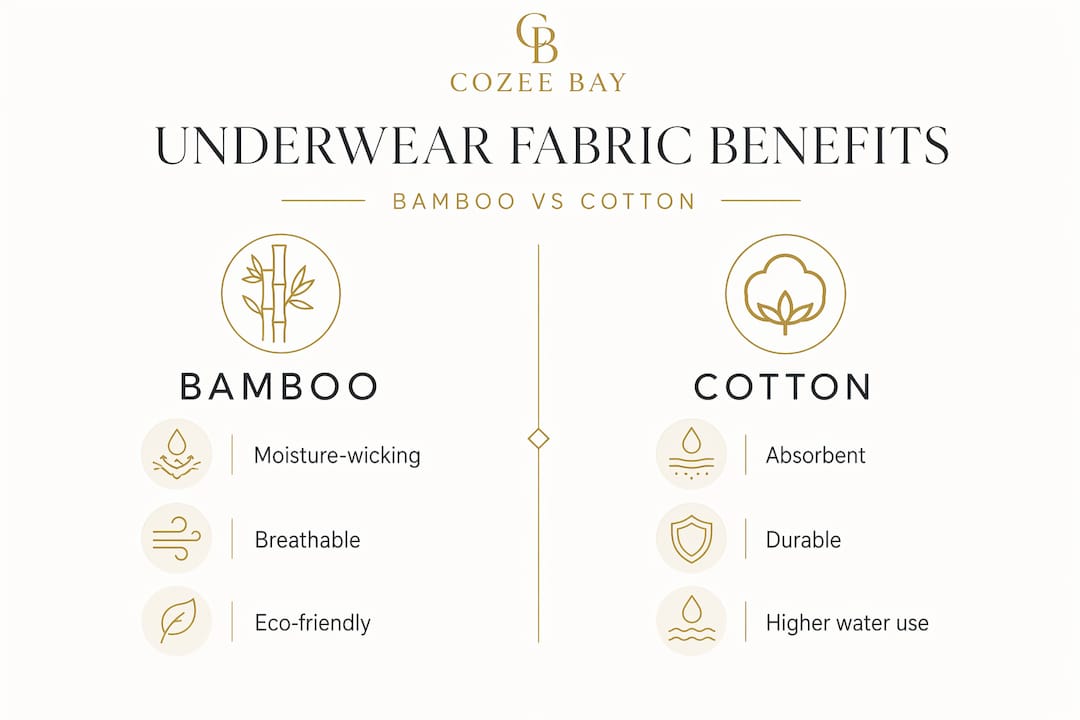
Here is where bamboo pulls ahead of cotton with a real measurable gap. Bamboo viscose wicks 3 to 4 times faster than cotton and absorbs up to 70% more moisture before it even starts to feel damp. For everyday wear, that gap is the difference between feeling fresh at noon and feeling uncomfortable by 10 a.m.
Beyond moisture, the softness of bamboo underwear comes from the fine microfibres produced during viscose processing. Those fibres are naturally round and smooth at the tip, which means they lay against your skin without the scratchy ends that shorter cotton fibres leave behind. For anyone with sensitive skin or eczema, that distinction is significant.
Key health advantages at a glance:
Pro Tip: When shopping for breathable underwear options, check whether the garment uses a moisture-wicking weave structure, not just a bamboo blend. A thick, tightly woven bamboo blend can trap heat just as effectively as cotton if the construction is not designed for airflow.
This is where bamboo underwear gets more complicated, and where you deserve a straight answer. Bamboo contains a natural antimicrobial agent called “Bamboo Kun,” a bio-agent present in the living plant that has shown measurable antibacterial effects. The science shows that untreated bamboo viscose reduces bacteria by 70 to 80% compared to cotton in controlled lab tests.
Here is the important nuance: those results come from lab-controlled fabric samples, not from the finished underwear you pull out of packaging. Processing bamboo into viscose involves chemical treatments that can reduce or eliminate Bamboo Kun’s natural properties. Whether the finished garment still delivers meaningful antibacterial benefits depends entirely on how it was processed and whether the brand has tested the final product independently.
Before trusting a brand’s antibacterial claims, look for third-party lab test results on the specific finished product, not just on raw bamboo fabric. Verification of antibacterial claims requires testing on the exact fabric finish and its durability through multiple laundering cycles.
Responsible brands publish these results. If a brand’s website only lists “bamboo has natural antibacterial properties” without referencing specific product testing, treat that as a marketing claim rather than a proven benefit.
That said, even if finished bamboo underwear delivers only partial antimicrobial effects, the real-world benefit, less odor buildup and fewer irritation episodes, still shows up for most wearers. That outcome is largely driven by moisture management anyway, which bamboo delivers consistently regardless of antibacterial claims.
If health benefits are the reason you try bamboo underwear, sustainability is often the reason you stick with it. Bamboo is a fast-growing, low-water, pesticide-free crop that actively improves the soil it grows in, making it one of the most regenerative raw materials available to the textile industry.

Compare that to conventional cotton. Cotton is one of the most water-intensive crops on earth and accounts for a significant share of global agricultural pesticide use. Bamboo, by contrast, regenerates after harvesting without replanting, can grow up to three feet per day under the right conditions, and sequesters carbon while it grows.
Life-cycle assessment data backs this up. Studies on bamboo-based structural materials show a carbon footprint of around 1.67 kg CO2 equivalent per kilogram of product. While that figure applies to engineered bamboo materials, it illustrates the low-impact baseline that bamboo provides as a raw material.
| Factor | Bamboo | Conventional cotton | Synthetic fabrics |
|---|---|---|---|
| Water use | Very low | Very high | Low to moderate |
| Pesticide need | None | High | None |
| Carbon footprint | Low | Moderate to high | High (petrochemical) |
| Biodegradability | Yes | Yes | No |
| Soil health impact | Positive | Neutral to negative | N/A |
The story does not end at the field. How bamboo viscose is processed matters enormously. The closed-loop Lyocell method recovers and reuses processing solvents, making it far cleaner than conventional viscose production. Certified production processes and traceable sourcing are what separate genuinely eco-friendly underwear from fast fashion products that simply use bamboo as a marketing label.
EU textile circularity initiatives like the CISUTAC project are now developing fiber-to-fiber recycling pathways for cellulosic materials, which includes bamboo-derived fabrics. That means the bamboo underwear you buy today could eventually feed back into the textile supply chain instead of ending up in a landfill.
Pro Tip: Look for OEKO-TEX or FSC certifications on bamboo clothing labels. These verify that the product meets chemical safety and responsible sourcing standards, not just that bamboo was used somewhere in the process. For deeper context on what makes bamboo sourcing responsible, the Cozee-bay guide on bamboo supply chain practices breaks down exactly what to look for.
It helps to see the comparison plainly. Bamboo viscose does not win on every metric, and knowing where it excels versus where it falls short helps you make a smarter purchase.
Here is where bamboo genuinely leads:
Where cotton still competes: durability. Bamboo viscose can pill and break down faster than high-quality cotton if washed at high temperatures or dried on high heat. Cotton also has a longer track record with a more predictable range of quality. Synthetics beat both on durability and fast-drying speed, but lose badly on comfort, breathability, and environmental impact.
The variable no one talks about enough: garment construction. Fabric blends and poor fit can completely cancel out bamboo’s moisture management advantages. A badly fitted pair of bamboo underwear will trap moisture just as effectively as cotton. Seam placement, waistband elasticity, and cut all interact with the fabric’s performance in real-world wear.
Pro Tip: When reading bamboo underwear reviews, pay attention to comments about fit and seam comfort, not just softness. Those details tell you far more about how the garment will actually perform than the fiber percentage on the label.
Getting the benefits you paid for means being selective at purchase and consistent in care.
I have worked with bamboo products long enough to spot the gap between what brands promise and what wearers actually experience. What I have found is that the fabric itself is genuinely impressive. The softness, the moisture management, the eco credentials at the raw material level, it all holds up when you trace it carefully.
What does not always hold up is the finished product. Too many brands slap a “bamboo” label on a loosely blended garment with standard synthetic stitching, standard tight seams, and no independent testing. The bamboo fabric advantages get buried by poor construction decisions, and the consumer blames the material when the real culprit is the garment design.
My honest advice: do not buy bamboo underwear from a brand that cannot tell you where the bamboo comes from, how it was processed, and what certifications apply to the finished product. That transparency is not a luxury ask. It is the basic standard for any brand claiming sustainable clothing benefits. The Cozee-bay eco-conscious buyer’s guide to bamboo fabric covers this in practical terms, and I’d encourage anyone making this switch to read it before buying.
One more thing: your daily wear habits matter. Bamboo underwear works best as part of a wider approach to skin health and sustainable consumption. One well-made pair you wash properly and wear for two years beats three cheaply made pairs you cycle through in six months, both for your skin and for the planet.
— Cozee
At Cozee-bay, we believe every bamboo product in your home and wardrobe should meet the same standard: traceable sourcing, verified quality, and honest communication about what the material delivers.

Our commitment to bamboo goes well beyond surface claims. We look for certified processing, responsible supply chains, and real performance data before recommending any bamboo-based product to our customers. If you are ready to make the switch to genuinely eco-friendly underwear and want to know exactly what you are buying, explore our bamboo product collection with free shipping across the contiguous U.S. and a money-back guarantee. You can also browse our guide to choosing bamboo products for a clear framework to apply before your next purchase.
Bamboo underwear primarily benefits skin health through superior moisture-wicking, which keeps the area drier and reduces the risk of irritation, bacterial growth, and fungal conditions. The soft, hypoallergenic fibers also reduce friction for sensitive skin.
Bamboo fabric shows 70 to 80% bacterial reduction in lab tests compared to cotton, but those results apply to untreated viscose fabric. Finished garment performance depends on processing, so look for third-party certified products rather than relying on general claims.
Bamboo viscose wicks moisture 3 to 4 times faster than cotton and absorbs significantly more before feeling damp, making it more comfortable during active or long days. Cotton may edge ahead on long-term durability if bamboo is not cared for properly.
Wash bamboo underwear in cold water on a gentle cycle and air dry instead of using a tumble dryer. Heat degrades bamboo viscose faster than any other factor and shortens the garment’s lifespan considerably.
Look for OEKO-TEX Standard 100 certification, which confirms freedom from harmful chemicals, and FSC or equivalent certifications for responsible bamboo sourcing. These two together confirm both product safety and supply chain integrity.
Comments will be approved before showing up.