Your Cart is Empty


TL;DR:
- Wooden bathroom accessories are water-resistant and made from durable woods like teak, cedar, and Hinoki cypress. Properly sourced and finished, they are eco-friendly, long-lasting, and help create a warm, spa-like atmosphere. Regular maintenance and safety features are essential for preserving their appearance, stability, and safe use.
Wooden bathroom accessories are water-resistant, functional decor items crafted from naturally durable woods like teak, fir, cedar, and Hinoki cypress. They bring warmth and texture to a bathroom that no plastic or chrome piece can replicate. Beyond looks, they support an eco-friendly lifestyle when sourced from responsibly managed forests, ideally certified by the Forest Stewardship Council (FSC). Whether you’re refreshing a rental or redesigning your master bath, natural wood bath decor delivers both style and substance in one material.
Not all woods handle moisture equally. The best choices for bathroom use contain natural oils that resist moisture and mold without heavy chemical treatment. That built-in protection is what separates a piece that lasts a decade from one that warps within a year.
Here are the top wood species and finish options worth knowing:
Pro Tip: When shopping for wooden shower accessories, check the product description for the specific wood species and finish type. A piece labeled simply “natural wood” without those details may be made from a low-density wood with no moisture protection.
Good maintenance is what separates a wooden piece that looks great for years from one that cracks and discolors by the second winter. The care routine is simple, but skipping it has real consequences.
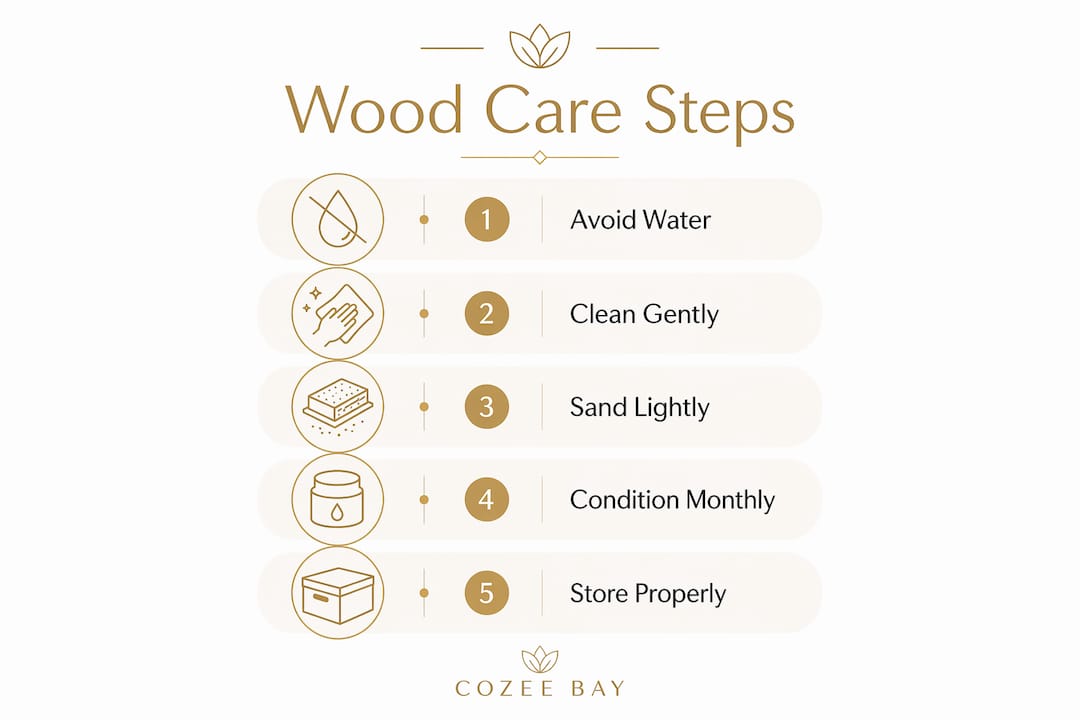
Follow these steps to keep your wood bath decor in top condition:
The most common maintenance mistake is leaving wooden accessories sitting in standing water. A bath caddy resting in a wet tub overnight will show damage within weeks. Lift it, dry it, and set it somewhere with airflow. That one habit alone extends the life of most pieces by years.
Pro Tip: If your wooden piece starts to look dull or feels rough to the touch, lightly sand it with 220-grit sandpaper, wipe away the dust, and apply a fresh coat of conditioning oil. It takes about 15 minutes and restores the piece to near-new condition.
For more guidance on keeping natural wood pieces in great shape, Cozee-bay’s guide on maintaining bamboo products covers overlapping care principles that apply directly to bathroom wood accessories.
A beautiful wooden towel rack that tips over or a bath mat that slides underfoot creates real hazards. Safety features in wood bathroom accessories are not optional extras. They are the difference between a piece you trust and one you regret buying.
Here are the key safety features to check before purchasing:
Pro Tip: Before placing a freestanding rack in your bathroom, test its stability by gently pushing the top with one hand. If it rocks more than a few millimeters, add a wall anchor or choose a wider-base model.
Wood works best as part of a layered design, not as the only material in the room. Combining wooden accessories with glass and stone adds visual depth and prevents a one-dimensional look in bathroom decor. The goal is contrast and balance.
Design trends like Japandi, which blends Japanese minimalism with Scandinavian warmth, use wood as a grounding element against cooler surfaces. Designers use wood to create warm focal points and a spa-like atmosphere in modern bathroom trends. A teak bath mat on a stone tile floor, a cedar shelf against a white subway tile wall, or a wooden soap dish next to a glass rinse cup all follow this principle.
Here is a quick reference for pairing wood with other materials:
| Material pairing | Effect | Best use |
|---|---|---|
| Wood + textured glass | Softens hard lines, adds depth | Soap dispensers, candle holders |
| Wood + stone or ceramic | Earthy, grounded, spa-like | Bath mats, trays, countertop pieces |
| Wood + white tile | Clean contrast, Scandinavian feel | Shelves, toilet paper holders |
| Wood + linen or cotton | Warm, layered, organic | Towel racks paired with textured towels |
The key rule is to let wood serve as a warmth zone. Hard, reflective surfaces like glass, chrome, and tile dominate most bathrooms. Wood interrupts that coldness and gives the eye a place to rest. Pair it with glass and stoneware accessories for a balanced, spa-inspired look that feels intentional rather than accidental.
For ideas on eco-friendly bamboo accessories that pair well with wood decor, Cozee-bay’s blog covers specific product combinations worth considering.
Wooden bathroom accessories last longest when you choose the right wood species, apply protective finishes, and commit to a simple monthly care routine.
| Point | Details |
|---|---|
| Choose moisture-resistant wood | Teak, cedar, and Hinoki cypress contain natural oils that resist mold and warping. |
| Match finish to wood type | Use food-safe linseed oil for natural woods; waterproof varnish for fir and pine. |
| Maintain monthly | Wipe after each use and condition with wood wax or oil once a month. |
| Prioritize safety features | Look for non-slip feet, anti-toppling hardware, and rounded edges before buying. |
| Layer wood with other materials | Pair wood with glass, stone, or linen to create a balanced, spa-like bathroom. |
I have worked with a lot of bathroom materials over the years, and wood is the one that consistently surprises people. Homeowners expect it to be high-maintenance. They assume it will warp, crack, or look tired within a season. The reality is that a well-chosen teak or cedar piece, cared for properly, outlasts most plastic and chrome alternatives by a wide margin.
The mistake I see most often is buying wood accessories based on looks alone, without checking the species or finish. A beautiful piece made from an untreated softwood in a steamy bathroom is a short-term investment. Spend a little more on teak or Hinoki, and you are buying something that holds up and holds its character.
The other thing worth saying: wood does not need to dominate a bathroom to make an impact. One teak bath mat, a cedar shelf, and a wooden soap dish are enough to shift the entire feel of a space. You do not need to redecorate. You just need a few well-placed pieces that bring warmth to an otherwise cold room.
Custom handcrafted pieces add another layer of appeal, but go in with realistic expectations. Custom wooden pieces can vary in appearance up to 10% from online images due to natural wood variation. That variation is not a flaw. It is what makes each piece genuinely one of a kind.
— Cozee
Cozee-bay specializes in eco-friendly, handcrafted bamboo and wood products built for real home use. The collection includes pieces designed for both style and function, with free shipping across the contiguous U.S. and a money-back guarantee that takes the risk out of trying something new.

If you are ready to bring natural warmth into your bathroom without sacrificing quality or your values, Cozee-bay’s sustainable bathroom accessories are worth a look. Each piece reflects the same commitment to craftsmanship and eco-conscious materials that makes wood the right choice for a bathroom you actually enjoy spending time in. You can also check out Cozee-bay’s guide on stylish toilet paper holders for more ideas on completing your wood-accented bathroom setup.
Teak is the best wood for bathroom accessories because its natural oils resist water, mold, and decay without heavy chemical treatment. Hinoki cypress and cedar are strong alternatives for lower-humidity areas.
Condition wooden bathroom accessories with wood wax or oil once a month. Regular conditioning preserves the finish, prevents drying and cracking, and extends the life of the piece significantly.
Yes, teak bath mats with non-slip rubber feet are designed for shower and wet floor use. Lift and dry the mat after each use to prevent mold from forming underneath.
Measure your tub’s interior width before purchasing a bathtub board or caddy. Proper measurement of the tub is necessary to confirm the board rests securely without slipping.
Wooden bathroom accessories are eco-friendly when made from FSC-certified or sustainably sourced wood. Bamboo-based alternatives, like those from Cozee-bay, offer a fast-renewing material that reduces pressure on old-growth forests.
Comments will be approved before showing up.