Your Cart is Empty


TL;DR:
- Bamboo bathroom accessories are sustainable, biodegradable products that replace plastic with natural materials that grow quickly. Proper moisture management and regular vinegar cleaning are essential for preventing mold and ensuring longevity. Choosing between pure bamboo and composite options depends on specific bathroom environments and environmental priorities.
Bamboo bathroom accessories are natural, renewable bathroom products that replace plastic and synthetic materials with a material that grows back in three to five years, requires no replanting, and biodegrades at end of life. Whether you are a homeowner redesigning your space or a renter who cannot put a single screw in the wall, these accessories deliver real style and function without the environmental guilt. Brands like Wenko and Moonstone have proven that bamboo works beautifully alongside mineral composites and resin blends, giving you options that look polished and last through daily humidity. The category covers everything from a bamboo shower caddy to bath mats, toothbrush holders, and soap dispensers, making it one of the most complete sustainable bathroom accessory systems available today.
The term “bamboo bathroom accessories” covers a broader product range than most people expect. The category includes towel holders, toothbrush holders, soap dispensers, shower caddies, bath mats, toilet brush sets, and countertop organizers. Each product type serves a distinct functional role while contributing to a cohesive, natural bathroom aesthetic.
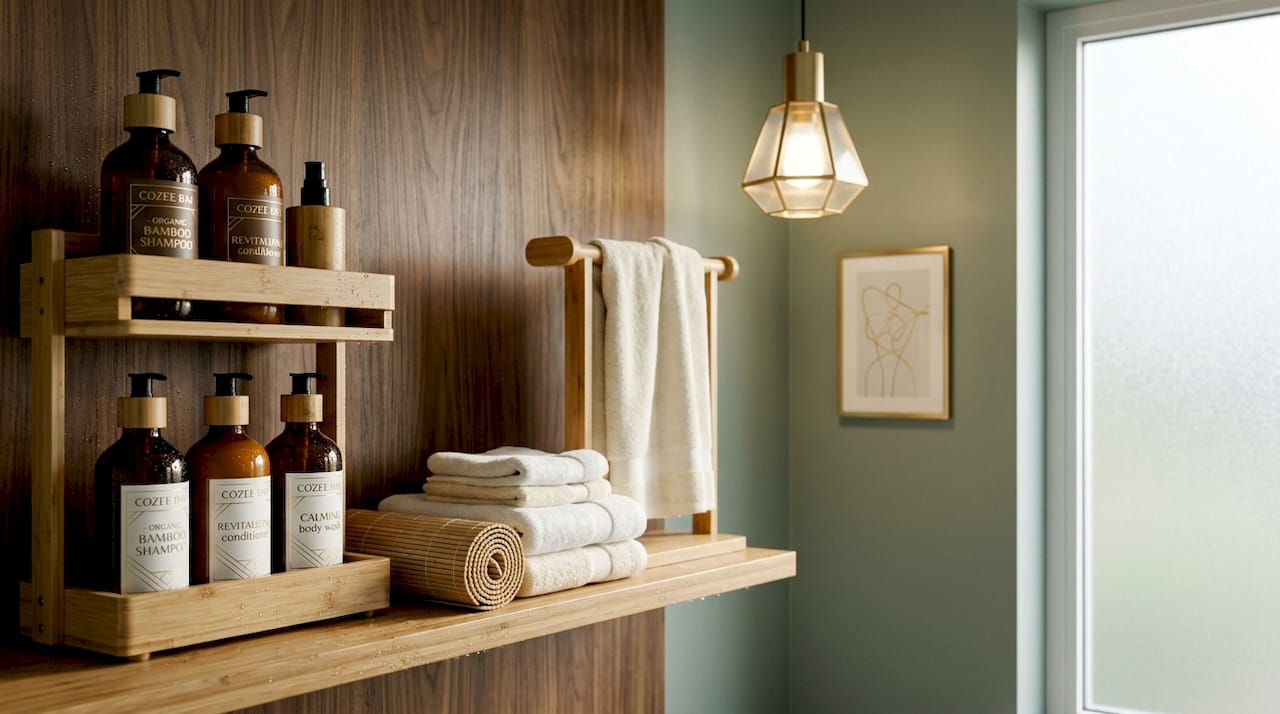
Not every product labeled “bamboo” is made from solid bamboo stalk. Material composition varies widely: Moonstone’s accessory set, for example, combines resin granules including marble and quartz with bamboo to create a product that is more durable and visually distinctive than pure bamboo alone. This matters because it affects both the eco-credentials and the care requirements of what you buy.
Here is a breakdown of the most common types and their primary uses:
| Product | Primary material | Best use |
|---|---|---|
| Towel holder | Solid bamboo or bamboo composite | Hanging towels without wall damage |
| Toothbrush holder | Bamboo fiber or solid bamboo | Countertop or wall-mounted storage |
| Shower caddy | Bamboo slats with metal fittings | In-shower organization |
| Bath mat | Slatted bamboo or bamboo fiber | Post-shower floor coverage |
| Soap dispenser | Bamboo cap with glass or ceramic body | Liquid soap or lotion storage |
The variety means you can build a fully coordinated natural bathroom storage system without mixing materials that clash visually or perform inconsistently.
Choosing the right pieces comes down to four factors: installation method, true bamboo content, moisture resistance, and style compatibility. Get these right and your accessories will look great and hold up for years.
Installation method is the first decision, especially for renters. No-drill bamboo hardware like over-door towel holders lets you add storage without touching the walls. Wenko’s bamboo over-door towel holder, for instance, fits doors up to 4 cm deep, holds up to five items, and uses scratch guards to protect the door surface. That kind of solution is a genuine win for renters who want eco-friendly bathroom decor without risking their security deposit.
True bamboo content is worth verifying before you buy. Some products use a bamboo finish over MDF or plastic cores, which undermines the sustainability argument entirely. Look for product descriptions that specify solid bamboo, bamboo fiber composite, or bamboo with named secondary materials like borosilicate glass or stainless steel. Avoid vague terms like “bamboo-inspired” or “bamboo-look.”
Here are the key selection criteria to run through before purchasing:
Pro Tip: Before buying a bamboo shower caddy or bath mat, check whether the product description specifies a waterproof sealant or finish. Unsealed bamboo in a wet shower environment will absorb water daily, which shortens its lifespan significantly and increases mold risk.
Bamboo’s porous structure absorbs water, and without proper drying, that moisture creates the exact conditions mold and biofilm need to grow. This is not a defect in the material. It is a moisture management problem, and it is entirely preventable with the right routine.
The most common mistake people make is storing bamboo accessories in closed cabinets before they are fully dry. Closed damp storage traps humidity and accelerates mold growth even though bamboo has natural antimicrobial properties when dry. The fix is simple: keep your accessories in open, ventilated positions whenever possible.
Follow these steps for weekly deep cleaning:
Bamboo accessory failures most often occur at joints and crevices where residual moisture lingers longest. Weekly deep cleaning beats daily surface wiping every time because it reaches those hidden spots.
Bath mats need special attention. The backing of bamboo fiber bath mats traps moisture even after 24 hours of air exposure, which means the top surface can feel dry while the underside is still damp. Rotating mat placement every 48 hours and hanging the mat vertically between uses prevents delamination and mold from forming underneath.
Pro Tip: Treat bamboo bath mat care as an airflow problem, not just a cleaning problem. A mat that dries completely between uses will last years longer than one that sits flat on a wet floor every day.
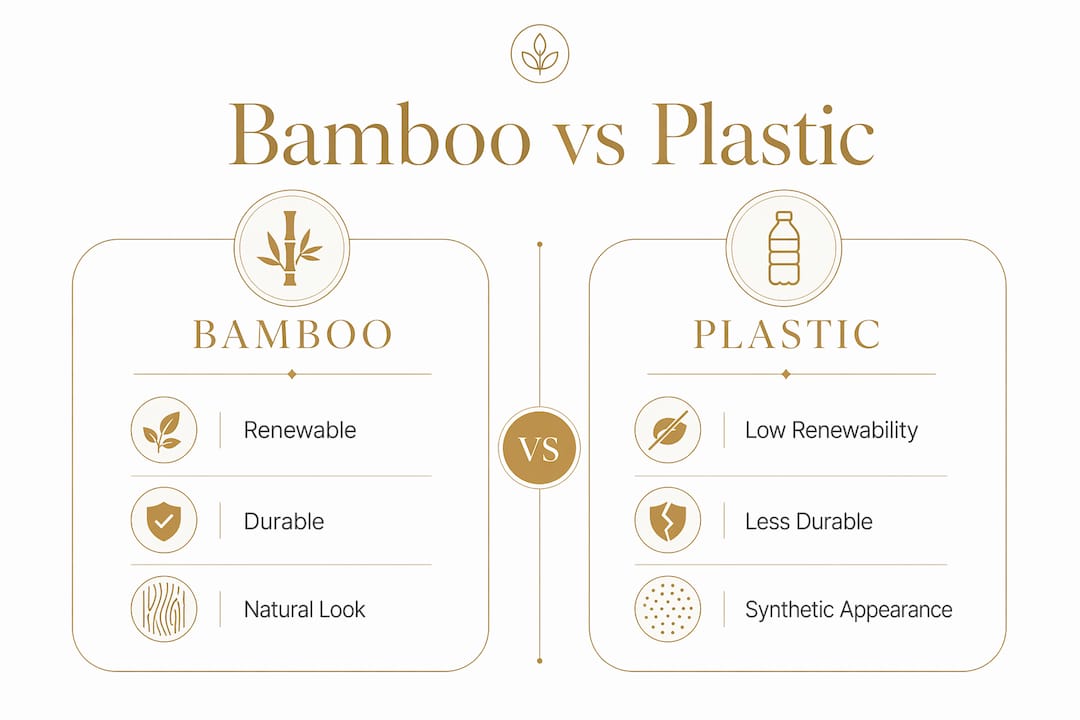
Bamboo is a fast-growing, renewable resource with a lower environmental footprint than plastic or synthetic alternatives. It reaches harvest maturity in three to five years compared to decades for hardwood, and it biodegrades at end of life rather than persisting in landfill for centuries.
The practical benefits match the environmental ones. Solid bamboo is naturally harder than most softwoods, which means a well-maintained bamboo towel holder or soap dispenser will outlast a comparable plastic version. The warm, natural grain also ages better visually. Plastic yellows and scratches; bamboo develops a subtle patina that most people find more attractive over time.
| Factor | Pure bamboo | Bamboo composite | Plastic |
|---|---|---|---|
| Renewability | High | Medium | Low |
| Biodegradability | High | Low to medium | Very low |
| Moisture resistance | Medium (needs sealing) | High | Very high |
| Aesthetic longevity | High (patinas well) | High | Low (yellows, scratches) |
| Eco-credentials | Strong | Moderate | Weak |
The tradeoff with composite bamboo products like Moonstone’s resin-blend sets is worth understanding. You gain durability and moisture resistance, but the resin component reduces biodegradability. For a shower caddy or bath mat that lives in constant humidity, a composite or sealed bamboo product is the smarter practical choice. For countertop accessories like a toothbrush holder or soap dispenser in a drier position, pure bamboo delivers the strongest sustainability advantages with minimal tradeoff.
The longevity of bamboo in bathrooms depends more on how you manage moisture than on the material’s inherent properties. A pure bamboo toothbrush holder maintained with weekly vinegar cleaning and upright drying will outlast a neglected composite one every time.
Bamboo bathroom accessories outperform plastic alternatives in sustainability and aesthetics, but their lifespan depends entirely on consistent moisture management and smart product selection.
| Point | Details |
|---|---|
| Verify material content | Check for solid bamboo or named composites; avoid vague “bamboo-look” labeling. |
| Prioritize no-drill options | Over-door towel holders like Wenko’s protect rental walls and require zero installation tools. |
| Weekly vinegar cleaning | A five-to-ten minute diluted vinegar soak prevents mold at joints and crevices better than daily wiping. |
| Dry upright, never flat | Closed or flat storage traps humidity and accelerates mold even in naturally antimicrobial bamboo. |
| Match product to position | Use sealed or composite bamboo in wet zones; pure bamboo works best in drier countertop spots. |
I have been using bamboo bathroom accessories for years, and the single biggest lesson is this: most people who give up on bamboo do so because of mold, and almost every one of those cases was a drying problem, not a product problem.
My favorite pieces are a slatted bamboo bath mat and a wall-mounted bamboo toothbrush holder. The mat gets hung vertically on a towel hook every single day after use. The toothbrush holder gets a vinegar rinse every Sunday. Neither has shown a single spot of mold. That routine takes about three minutes a week total, which is a reasonable trade for accessories that look genuinely beautiful and carry real eco-friendly design credentials.
For renters specifically, I cannot recommend over-door solutions enough. The anxiety of wanting a styled bathroom without drilling into walls is real, and no-drill bamboo hardware solves it completely. You get the aesthetic, you keep your deposit, and you take everything with you when you move.
The one thing I would push back on is the idea that composite bamboo products are somehow less worthy. If a resin-blended set holds up better in your specific shower environment and you maintain it for ten years instead of replacing a pure bamboo version every two, the net environmental outcome is better. Buy for your actual conditions, not for the purest-sounding label.
— Cozee
If you are ready to swap out the plastic clutter for something that actually looks good and does right by the planet, Cozee-bay has you covered.

Cozee-bay specializes in handcrafted bamboo products built for real home use, with a focus on quality materials, clean design, and lasting durability. Every piece ships free within the contiguous U.S. and comes backed by a money-back guarantee, so there is no risk in trying. Whether you are starting with a single bamboo toothbrush holder or outfitting your entire bathroom with coordinated sustainable bathroom accessories, the Cozee-bay catalog gives you options that work for both style and function. Browse the full collection and find the pieces that fit your space.
Bamboo bathroom accessories are made from solid bamboo stalk, bamboo fiber composites, or blends that combine bamboo with materials like resin, glass, or stainless steel. Always check the product description for specific material content to confirm eco-credentials and care requirements.
Yes. No-drill options like over-door towel holders attach without screws or wall damage, making them ideal for renters. Wenko’s bamboo over-door holder, for example, fits doors up to 4 cm deep and holds up to five towels with no installation tools required.
Rinse accessories weekly with a diluted vinegar solution, shake out excess water from crevices, and dry upright in a ventilated area. Avoid storing bamboo in closed cabinets while still damp, as trapped humidity accelerates mold growth even in naturally antimicrobial bamboo.
With proper moisture management, solid bamboo accessories last several years. Longevity depends more on drying habits and weekly cleaning than on the material itself. Composite bamboo products with resin blends typically offer greater moisture resistance and may last longer in high-humidity shower environments.
Bamboo is renewable, biodegradable, and reaches harvest maturity in three to five years, making it significantly more eco-friendly than plastic. Pure bamboo products carry the strongest environmental credentials, while composite blends offer durability tradeoffs that may still result in a better net environmental outcome than frequently replaced plastic alternatives.
Comments will be approved before showing up.