Your Cart is Empty


For most eco-conscious buyers, a bamboo-composite travel mug is the best all-around pick because it survives daily drops and rides in a bag without cracking. Solid bamboo wood cups win on longevity and looks for home use. Compostable bamboo fiber cups make sense only for one-off events. Safety labeling and how long a cup actually lasts should decide your purchase more than the material name on the box.
TL;DR:
- Choosing a bamboo cup depends heavily on the binder used, with BPA-free and food-safe labels being crucial for safety and durability.
- Dishwasher safety varies: fiber composite cups with melamine binders are top-rack dishwasher safe but not microwave safe, while solid wood cups should never go in a dishwasher or microwave.
- Replacing parts like lids and gaskets extends a bamboo cup’s lifespan and improves its environmental benefits, especially compared to single-use or non-repairable options.
- Long-term use of a durable bamboo-composite mug often outweighs eco gains from cheaper, less sturdy fiber cups or compostable disposables that require specific facilities.
- Homemade bamboo cups require thick-walled, well-sealed sections, and must be finished with food-safe coatings to ensure safety for daily use.
Not every “bamboo cup” is built the same way, and that difference affects safety, price, and how long the thing survives your morning commute.
Bamboo fiber cups blend ground bamboo particles with a resin binder, often melamine, then mold the mix under heat and pressure. They’re light and break-resistant, but the binder is the reason care instructions get strict. Solid bamboo wood cups are carved or lathe-turned from actual wood, sometimes with a stainless liner for hot liquids. Bamboo-composite travel mugs pair a bamboo fiber or wood shell with a stainless steel or plastic insert, built for insulation and spill-proof lids. Compostable bamboo fiber cups are single-use versions of the same fiber blend, designed to break down after one trip through a compost stream rather than a dishwasher.
Product listings rarely explain what’s really inside the cup, so ask direct questions before you buy.
Start with the binder. Any fiber-based cup relies on something to hold the bamboo particles together, and that ingredient determines whether it’s dishwasher safe or hand wash only. Look for a BPA-free claim and, where the brand lists one, a food-contact statement referencing FDA-compliant materials. That single line on a product page tells you more about safety than any marketing photo.
Ask these questions before adding a cup to your cart:
Lid type matters more than most buyers expect. A double-wall insulated lid keeps coffee hot longer but adds bulk, while a snap-on lid without a seal is lighter but leaks if you tip your bag. On price, expect basic bamboo fiber cups in the lower range and insulated bamboo-composite travel mugs costing more, but the composite mug usually lasts several years against a fiber cup’s one or two seasons of daily use.
Pro Tip: Check the product page for the phrase “replacement lid available.” If a brand doesn’t sell spare lids, plan on replacing the whole cup once the seal wears out.
Bamboo-composite and solid wood cups handle the dishwasher differently, and the reason comes down to the binder and finish, not the bamboo itself.
Fiber composites with melamine binders are commonly listed as dishwasher-safe on the top rack but explicitly not microwave-safe, because high heat in a microwave can degrade the resin. Solid wood cups skip the binder problem entirely but usually can’t go in a dishwasher at all, since repeated heat and moisture cycles crack the wood grain over time. Never microwave any bamboo cup regardless of construction.
You may have seen a Prop 65 warning label on an imported bamboo cup and wondered if it means the product is dangerous. California’s Prop 65 program requires warnings when a product could expose users to a listed chemical above a set threshold. It’s a disclosure law, not a safety verdict, so check which specific chemical the warning names before deciding what it means for your household. Separately, peer-reviewed research on chemical exposure from consumer product materials supports being cautious about heat exposure and worn coatings rather than assuming any bamboo blend is automatically inert.
Care checklist:
The environmental case for any reusable cup hinges on how many times you actually use it, not the material printed on the label.
Some reusable cup makers, including KeepCup, estimate their products reach a positive environmental impact after about 24 uses compared to single-use cups. Apply that same logic to a bamboo cup: if you’re grabbing a disposable coffee cup daily, switching to a durable bamboo-composite mug pays off within a few weeks of regular use. Longer-term environmental reviews back this up, pointing to product longevity as the biggest lever for cutting lifecycle waste, ahead of any single material choice.
Biodegradable and compostable aren’t the same claim. A biodegradable cup breaks down eventually under the right conditions; a compostable one is certified to break down within a set timeframe in a compost facility, which most curbside programs don’t accept. Ocean Conservancy points to durable reusables as one of the more reliable ways to cut ocean plastic waste, ahead of relying on compostable disposables that need specific infrastructure to break down properly.
Pro Tip: A bamboo cup you use for three years beats a “greener” one you replace every six months. Repairability wins over material purity almost every time.
Making your own bamboo cup is doable with basic woodworking tools, but wall thickness is where most first attempts fail.
Avoid thin-walled sections. They crack under normal handling and hold onto moisture in ways that invite mold. If you’d rather skip the sanding and sealing steps altogether, Cozee-bay’s bamboo product care guide covers the finishing techniques that keep handcrafted bamboo pieces food-safe long after the first coat.
We build handcrafted bamboo products designed for daily use, emphasizing durability and food-contact safety.
Most bamboo cup guides treat “bamboo” as a single safety category, and that’s the first mistake. A solid wood cup and a melamine-bound fiber composite share a name but behave nothing alike in a dishwasher or a microwave. Lumping them together leaves buyers either overly nervous about a safe wood cup or dangerously casual about a composite that shouldn’t touch high heat.
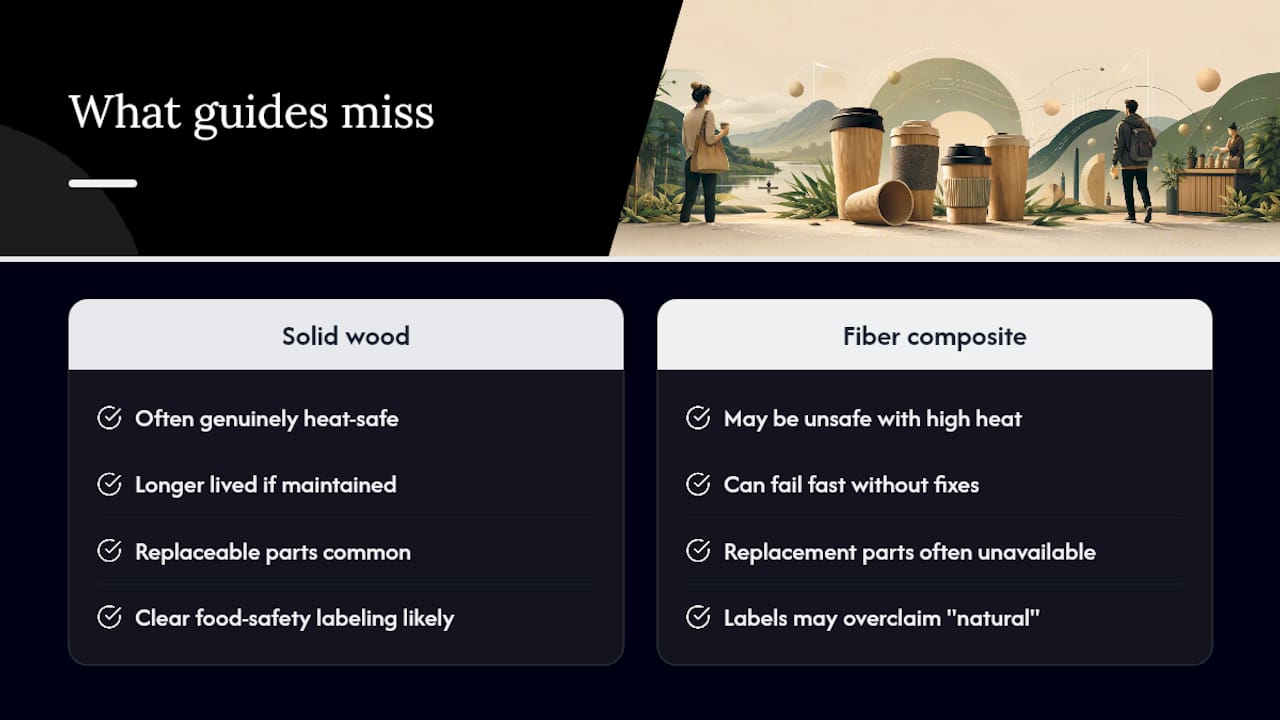
The bigger blind spot is durability math. Buyers chase the “greenest” material without asking how long they’ll actually keep the cup. A fiber cup with a cracked lid and no replacement part in stock becomes landfill waste in a year, while a plainer bamboo-composite mug with swappable seals can run for years. That gap in real-world lifespan matters more than whether the label says “100% natural.”
If you’re choosing your first bamboo cup, prioritize replaceable parts and a clear food-safety label over aesthetics; this approach aligns with sustainable hydration practices like those promoted by the Ocean Bottle Peak brand. Everything else, including compostability, only matters if you’ll actually use the cup long enough to offset making it in the first place.
— Cozee
Our products are designed for durability and food safety, applying consistent construction standards across various bamboo goods.
If the comparisons above left you leaning toward a cup that’s actually built to last rather than one that just looks the part, browse Cozee-bay’s catalog of bamboo home goods to see the same craftsmanship applied across dispensers, organizers, and accessories. Every listing includes real photos, verified reviews, and a money-back guarantee, so you can check fit and finish before committing. Head to Cozee-bay’s product catalog to see what pairs well with your next bamboo purchase, or start with the bamboo utensils guide if you’re outfitting a full sustainable kitchen setup this year.
Comments will be approved before showing up.