Your Cart is Empty


TL;DR:
- Bamboo bowls are eco-friendly kitchenware made from renewable bamboo, offering durability and style. They come in various shapes and sizes for different serving needs, with handcrafted, artisan qualities. Proper care involves hand washing and oiling to ensure longevity, making them a sustainable and decorative addition to any home.
Bamboo bowls are defined as kitchenware crafted from renewable bamboo, offering a durable, stylish, and genuinely sustainable alternative to plastic or ceramic dishware. Whether you’re building a zero-waste kitchen from scratch or simply swapping out a few tired pieces, these serving dishes deliver on both function and form. Bamboo is a renewable resource with a growth cycle far shorter than hardwood trees, making it one of the most responsible raw materials available for sustainable dishware. The natural warmth of bamboo grain also brings a calm, earthy quality to any table setting that glass or plastic simply cannot match.
Bamboo bowls come in a wider range of shapes and sizes than most people expect. Commercial-grade options span volumes from 8 oz to 202 oz, covering everything from individual snack portions to large communal serving vessels. That range means you can find a bamboo bowl suited to a single dip cup, a family salad, or a full buffet spread.
The three most common design categories are:
Many premium sets use a spun bamboo manufacturing process. Spun bamboo bowls are shaped by spinning bamboo fiber under pressure, which produces a lightweight yet shatter-resistant finish. A typical premium set includes three bowls at 8", 10", and 12" diameters, giving you a graduated range for different serving needs. The result is a bowl that feels surprisingly light in your hands but holds up to daily use without cracking.
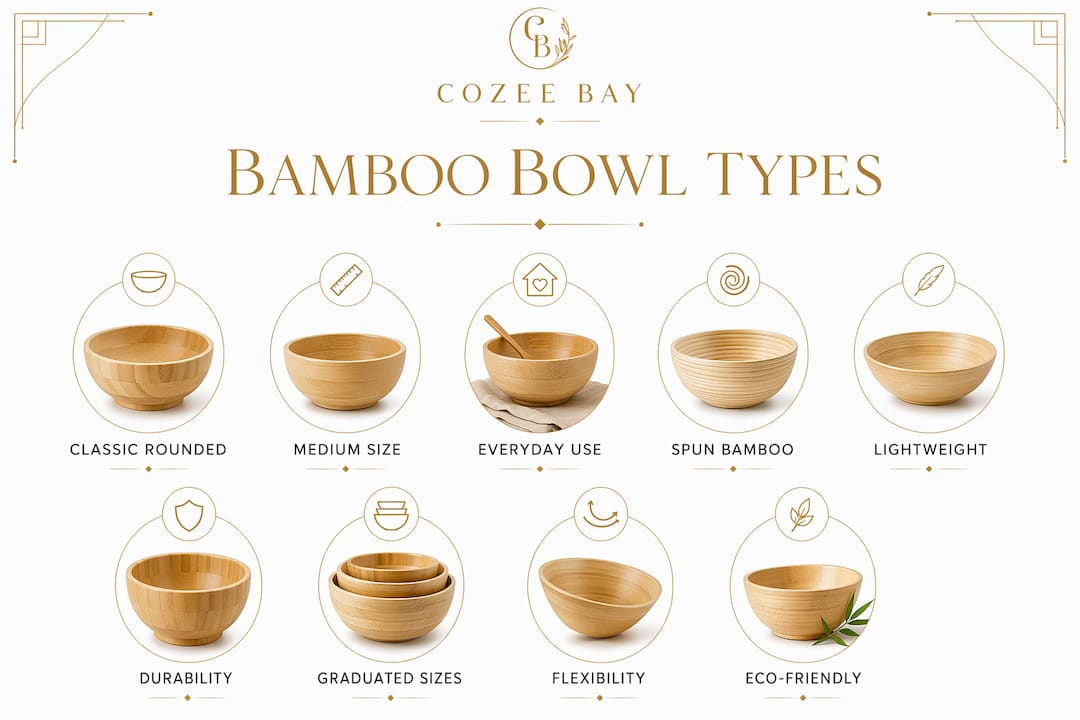
Pro Tip: When shopping for a set, choose graduated sizes rather than identical bowls. You’ll get far more flexibility for everything from breakfast fruit to party appetizers.
| Type | Typical Size | Best Use |
|---|---|---|
| Classic rounded | 8"–12" diameter | Everyday salads, soups, snacks |
| Geometric square | 8 oz–48 oz | Modern table settings, catering |
| Angled edge | ~48 oz | Buffets, communal serving |
| Spun bamboo set | 8", 10", 12" | Versatile home and entertaining use |
| Large serving bowl | Up to 202 oz | Family-style meals, large gatherings |
Handcrafted bamboo bowls are not mass-produced items, and that distinction matters. Each piece carries unique wood grain and color variation because skilled artisans shape each bowl individually. That uniqueness is a feature, not a flaw. You are buying a one-of-a-kind object, not a factory duplicate.
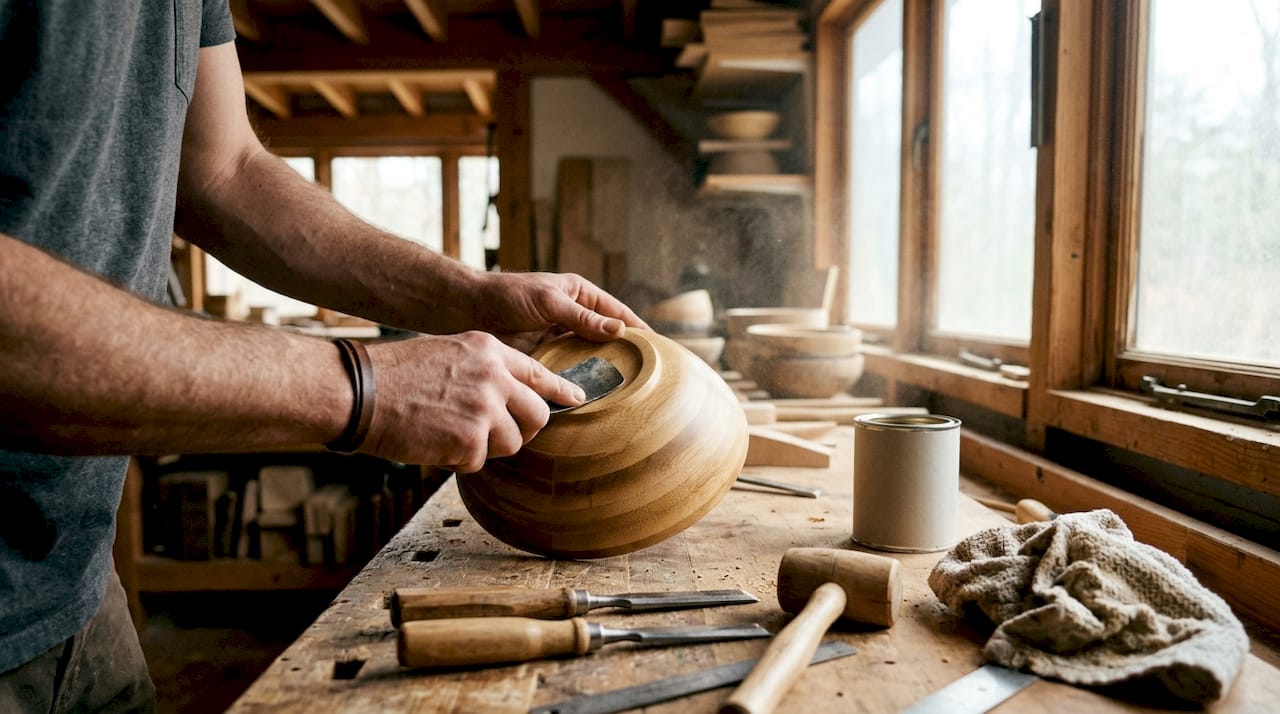
Artisan bamboo bowls intentionally showcase natural tone and texture variations, which elevate their value as both functional kitchenware and decorative pieces. The subtle shifts in color across a single bowl’s surface reflect the natural growth patterns of the bamboo plant. No two bowls look exactly alike, which is exactly why they work so well as gifts or statement pieces on a dining table.
Here’s what separates a quality bamboo bowl from a cheap imitation:
Sustainable sourcing also plays a role in quality. Bamboo grown without pesticides and harvested at the right maturity produces denser, more durable fibers. When a brand is transparent about its sourcing, that transparency signals confidence in the product.
Pro Tip: Run your hand along the inside of the bowl before buying. A quality piece feels uniformly smooth. Any rough texture inside means the finishing process was rushed.
Bamboo bowls require simple but consistent care. Hand washing is the only recommended cleaning method. Avoid soaking the bowl in water, and never put it in a dishwasher or microwave. Prolonged moisture exposure causes bamboo fibers to swell, warp, and eventually crack.
Do:
Don’t:
The oiling step surprises many people, but it makes a real difference. A dry bamboo surface becomes brittle over time. A light oil treatment every few months keeps the fibers supple and extends the bowl’s life by years. Think of it the same way you’d treat a wooden cutting board.
Pro Tip: Use food-grade mineral oil, not cooking oils like olive or vegetable oil. Cooking oils go rancid inside the bamboo fibers and create an unpleasant smell over time.
Bamboo bowls do more than hold food. They bring a natural warmth to your kitchen and dining table that synthetic materials cannot replicate. The honey-toned grain of a well-made bamboo serving dish pairs naturally with linen napkins, wooden cutting boards, and ceramic plates, creating a cohesive, earthy aesthetic without any effort.
For eco-conscious households, these bowls fit directly into a zero-waste kitchen philosophy. They replace single-use plastic bowls and reduce reliance on energy-intensive ceramic production. Paired with bamboo utensils, they form a complete sustainable table setting that looks intentional rather than improvised.
Here are practical ways to use bamboo serving dishes beyond the dinner table:
The gifting angle deserves more attention than it usually gets. Because each artisan bowl is genuinely unique, giving one feels more personal than a generic kitchen gadget. You’re giving someone an object that no one else owns in exactly that form. That story resonates with people who care about where their things come from. If you want ideas for incorporating bamboo into your broader home aesthetic, DIY bamboo decor projects pair naturally with a bamboo bowl collection.
Bamboo bowls are the most practical entry point into sustainable dishware because they combine genuine durability, artisan character, and everyday versatility in a single, affordable piece.
| Point | Details |
|---|---|
| Wide size range | Bamboo bowls run from 8 oz to 202 oz, covering snacks to large buffet serving. |
| Artisan uniqueness | Each handcrafted bowl has distinct grain and tone variation; this is a quality feature. |
| Spun bamboo durability | Spun bamboo construction produces lightweight, shatter-resistant bowls for daily use. |
| Simple care routine | Hand wash only, dry immediately, and oil every few months to maximize longevity. |
| Decor and function | Bamboo bowls work as serving dishes, decorative holders, and sustainable gift options. |
People tend to treat bamboo bowls as a minor purchase, something they grab without much thought. I disagree with that approach. A well-made bamboo bowl is one of the few kitchen items that genuinely improves with attention. When you oil it regularly and handle it with care, the surface deepens in color and character over time. It starts to look lived-in in the best possible way.
What I find most compelling is the artisan angle. Every handcrafted bowl carries the mark of the person who made it. The grain runs differently, the tone shifts slightly, the weight feels personal. That’s not something you get from a factory-stamped ceramic piece. When I set a bamboo bowl on the table, it starts a conversation. Guests notice it. They ask where it came from.
The sustainability case is also stronger than most people realize. Bamboo reaches harvest maturity in three to five years, compared to decades for hardwood trees. Choosing bamboo dishware is a concrete, repeatable decision that adds up across a household. It’s not a grand gesture. It’s a practical one that happens to look beautiful.
My honest advice: start with one good set in graduated sizes. Use them daily. Let them earn their place on your table. You’ll find you reach for them more than almost anything else in your kitchen.
— Cozee
Cozee-bay specializes in handcrafted bamboo products built for both home and commercial use, with a focus on quality materials and sustainable sourcing.

If you’re ready to build a more eco-friendly kitchen, Cozee-bay’s bamboo product collection offers a curated range of serving dishes, organizers, and kitchen accessories made from responsibly sourced bamboo. Every item ships free within the contiguous U.S. and comes backed by a money-back guarantee, so you can shop with confidence. Whether you’re starting fresh or adding to an existing collection, Cozee-bay makes it easy to choose sustainable dishware that actually looks good on your table.
Bamboo bowls are made from processed bamboo fiber, often shaped using spun bamboo techniques that compress and mold the material into lightweight, durable forms. The result is a natural, food-safe bowl with a smooth finish and distinctive wood grain.
Yes, bamboo bowls are food-safe when finished with non-toxic sealants and properly maintained. Always check that the product uses food-grade finishes and avoid bowls with a strong chemical odor.
Bamboo bowls are not dishwasher safe. The high heat and prolonged moisture in a dishwasher cause bamboo fibers to warp and crack. Hand washing with mild soap and immediate drying is the correct method.
With proper care, including regular oiling and hand washing, a quality bamboo bowl can last for many years. Neglecting moisture control or skipping the oiling routine shortens that lifespan significantly.
Bamboo is a renewable resource that reaches harvest maturity far faster than wood and biodegrades at end of life, unlike plastic. For eco-conscious households, bamboo dishware is a clear improvement over single-use or long-lasting plastic alternatives.
Comments will be approved before showing up.