Your Cart is Empty


For the greenest celebration, put reuse first and let compostable pieces fill the gaps. Fabric bunting, potted plants, and reusable lanterns should carry most of the visual load, while certified compostable accents like ecofetti, seed-paper banners, and bagasse tableware handle the disposable moments. That combination cuts waste without cutting the fun.
TL;DR:
- Reusable decorations like fabric bunting, cloth napkins, and solar lanterns significantly reduce waste through long-term use, often lasting for years.
- Certified compostable items such as ecofetti, seed-paper banners, and bagasse tableware break down within roughly 90 to 180 days in industrial composting facilities, unlike non-certified biodegradable products.
- Recycling paper decorations can be challenging due to contaminants like glitter and foil, and many recycled paper products are unsuitable for food contact, making avoidance preferable.
- DIY reusable projects, including fabric bunting and seed-paper banners, are easy to create and can be stored flat for multiple events, saving money and reducing disposable waste.
- Prioritize the “keep forever” category of decorations and confirm local composting capabilities before purchasing compostable items to avoid ending up with waste in landfills.
You don’t need a pinboard full of ideas. You need a short list that works, organized by how long each piece sticks around.
Keep forever (buy once, use for years):
Compostable accents (for the disposable moments you can’t avoid):
Natural and edible decor (zero packaging required):
Swap these out entirely: latex balloons, plastic tablecloths, and anything coated in non-recyclable glitter. Balloons especially have no good end-of-life story. Bunting, garlands, and paper lanterns do the same visual job and survive the trip back to the closet.
“Biodegradable” is not a regulated term, and that’s the trap. A product can call itself biodegradable and still take years to break down under normal conditions. Certified compostable is the standard that actually means something: items carrying that certification are engineered to break down in industrial composting facilities within roughly 90 to 180 days, not in your backyard bin.
90 to 180 days is the industrial composting window for certified compostable party goods. Without that certification, “biodegradable” tells you nothing about timing.
Recycling has its own rules, and paper decorations get rejected more often than people realize. Cardboard and paper are recyclable only when they’re free of glitter, foil, metal charms, felt, ribbon, or tape. Any of those contaminants can get a whole batch of recycling sent to landfill. Tissue paper is its own problem: the fibers are too short to recycle at all, so reuse is the better move there.
When you’re shopping, look for bagasse (sugarcane fiber), palm leaf, FSC-certified paper, and natural fabrics as explained in Sustainable Comfort: Why We Choose Organic and Recycled Materials. Compostable plastics like PLA are fine only when your local facility actually accepts them, so check before you buy a case of “compostable” cups.
You don’t need craft skills, just an afternoon and some materials you probably already have.
Storage matters more than people think. Fold fabric bunting along the same creases every time, keep paper items flat in a folder away from moisture, and launder cloth napkins before boxing them so they don’t develop mildew smells by next summer.
Pro Tip: Label a bin “party decor” and toss every reusable piece back in immediately after cleanup, still folded the same way. Future you will not want to reinvent this system at 11 p.m. before the next event.
A few label checks separate genuinely sustainable party supplies from marketing dressed up in green packaging.
Red flag phrases to watch for: “eco-friendly,” “green,” or “natural” with no certification attached anywhere on the packaging. Those words carry zero legal weight on their own.
Getting the party started green is one thing. Getting the waste sorted correctly afterward is where most good intentions fall apart.
Cozee-bay builds its handcrafted bamboo products around the same reuse-first logic that makes a party low-waste: durable materials that replace disposables. A bamboo paper towel dispenser or drawer organizer isn’t a party decoration, but it does the same job as swapping balloons for bunting: it takes something you’d normally throw away and makes it something you use for years.
If you’re setting up a drink station or snack table for a gathering, a bamboo paper towel dispenser cuts down on the loose paper towel waste that tends to pile up fast at any event. For more reuse-minded projects, Cozee-bay’s blog covers bamboo home decor you can build yourself and creative ways to repurpose toilet paper rolls into decor pieces instead of recycling bin filler.
Not necessarily, and the math depends entirely on how many times you reuse what you buy. A roll of latex balloons and plastic streamers might cost less upfront than fabric bunting, but that bunting gets reused at every birthday, holiday, and backyard barbecue going forward. Balloons get one use and a trip to the trash.
Compostable disposables, on the other hand, usually cost more per unit than plastic equivalents. Bagasse plates and palm-leaf bowls run higher than a stack of plastic ones at a discount store. If your event needs disposable serving pieces, that’s where the eco-friendly premium actually shows up.
The smartest budget move splits the difference: spend a bit more once on reusable centerpieces like bunting, lanterns, and cloth napkins, and reserve your compostable spending for the few genuinely single-use items, plates, cups, ecofetti, that can’t be reused anyway. Potted plants and fruit centerpieces are often the cheapest line item in the whole plan, since they double as favors or dessert instead of getting thrown out. Thrift stores and fabric scraps handle the DIY bunting and garlands for close to nothing. Over three or four events, a reuse-heavy setup almost always comes out cheaper than restocking disposable decor every single time.
They tend to improve it, honestly. Fabric bunting, potted greenery, and natural wood accents read as more intentional than a wall of mylar balloons, and they adapt to almost any theme without looking like a compromise.
A rustic or garden-themed party practically demands natural decor: dried flowers, herb centerpieces, and palm-leaf serving pieces fit the aesthetic better than plastic ever could. A modern minimalist party benefits from the same restraint: fewer, better-made pieces (a handful of reusable lanterns, one strong bunting color) instead of a cluttered mix of throwaway items. Even a kids’ birthday party works, since ecofetti and seed-paper banners give you the same celebratory burst without the cleanup nightmare of traditional glitter confetti.
The ambiance shift comes from texture and permanence. Reusable decor tends to look more finished because it’s built to be looked at more than once, unlike disposable plastic that’s manufactured for a single afternoon. Natural centerpieces also do double duty as functional elements, herbs guests can cook with, fruit guests can eat, which gives a party a lived-in warmth that matching plastic tableware rarely achieves.
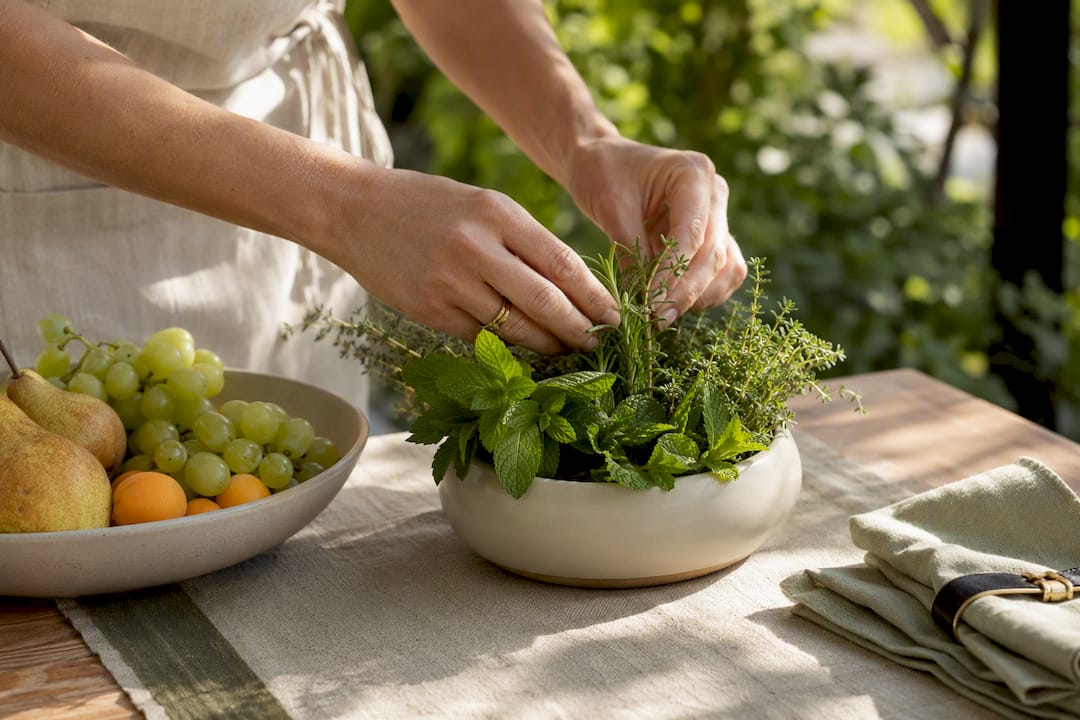
Mostly yes, with a few checks worth making before setup. Bagasse and palm-leaf serving pieces are food-safe and commonly marketed as microwave and oven safe, but always confirm that on the packaging rather than assuming it applies to every brand.
Recycled paper products carry a small risk worth knowing about: recycled paper can retain trace inks or coatings from its previous life, so it’s not the best choice for anything touching food directly. Stick to virgin food-grade paper or bagasse for plates and bowls, and save recycled paper for banners, garlands, and decor that never meets a plate.
Around small children, watch for choking hazards more than chemical ones. Seed paper, ecofetti, and small natural elements like dried flower petals are generally fine, but tiny seeds or bark pieces can pose a risk for toddlers who put things in their mouths. Dried or fresh botanicals should also be checked against common allergies, ragweed relatives and certain pollens can trigger reactions in sensitive guests. Foraged branches or wood pieces should be inspected for splinters or insects before they come indoors. None of this rules out natural decor. It just means a quick once-over before display, the same way you’d check any centerpiece near a buffet table.
Most advice on this topic treats compostable disposables as the finish line. It isn’t. Reuse is the stronger lever, and the research backs that up: a piece of bunting used at twenty parties beats twenty single-use compostable banners on any honest lifecycle comparison, even though the compostable version feels greener in the moment.
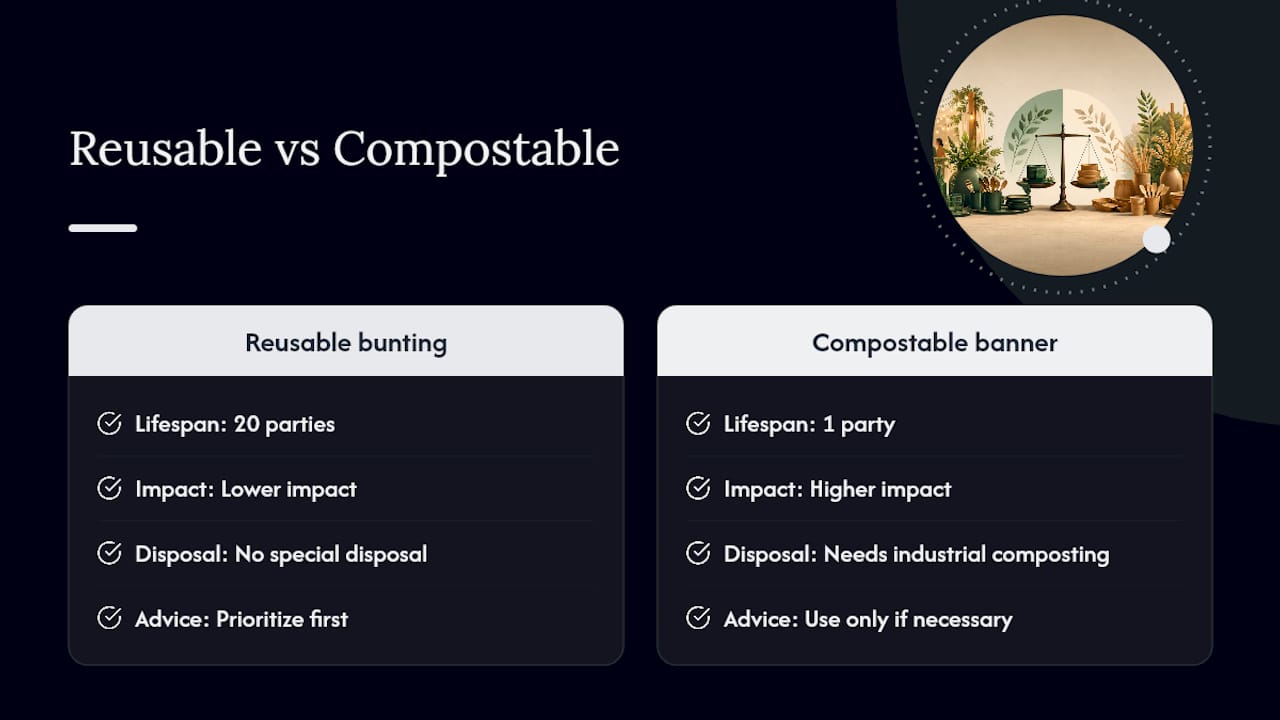
The conventional advice also glosses over disposal logistics, and that’s where good intentions fail in practice. A “compostable” plate thrown in a regular trash can do nothing but sit in a landfill for decades, same as plastic. The certification only matters if an industrial composting facility exists nearby and actually receives the material. That’s a five-minute check most party planners skip entirely.
If you take one thing from this guide, prioritize the “keep forever” category first: bunting, lanterns, cloth napkins, reusable pom-poms. Add compostable accents only for the handful of items that genuinely can’t be reused, and confirm your city’s composting program before you buy a single bagasse plate. Everything else is optimization on the margins.
— Cozee
Comments will be approved before showing up.