Your Cart is Empty


Finding safe and sustainable ways to care for bamboo can feel challenging for American property owners who value both style and environmental responsibility. Prioritizing eco-friendly cleaning supplies is key to preserving the natural beauty and durability of bamboo surfaces. This guide highlights how simple choices like plant-based solutions and mindful surface preparation contribute to protecting your investment while supporting a greener approach to everyday cleaning.
| Essential Insight | Explanation |
|---|---|
| 1. Use Eco-Friendly Cleaning Supplies | Prioritize gentle, non-toxic cleaners like mild soaps and vinegar to protect bamboo’s surface. |
| 2. Prepare Surfaces Before Cleaning | Thoroughly remove dust and debris to ensure effective and gentle cleaning. |
| 3. Dry Bamboo Properly After Cleaning | Immediately dry bamboo to prevent moisture damage that can lead to mold and warping. |
| 4. Inspect and Restore Finish | Apply mineral oil post-cleaning to maintain bamboo’s natural luster and protect its integrity. |
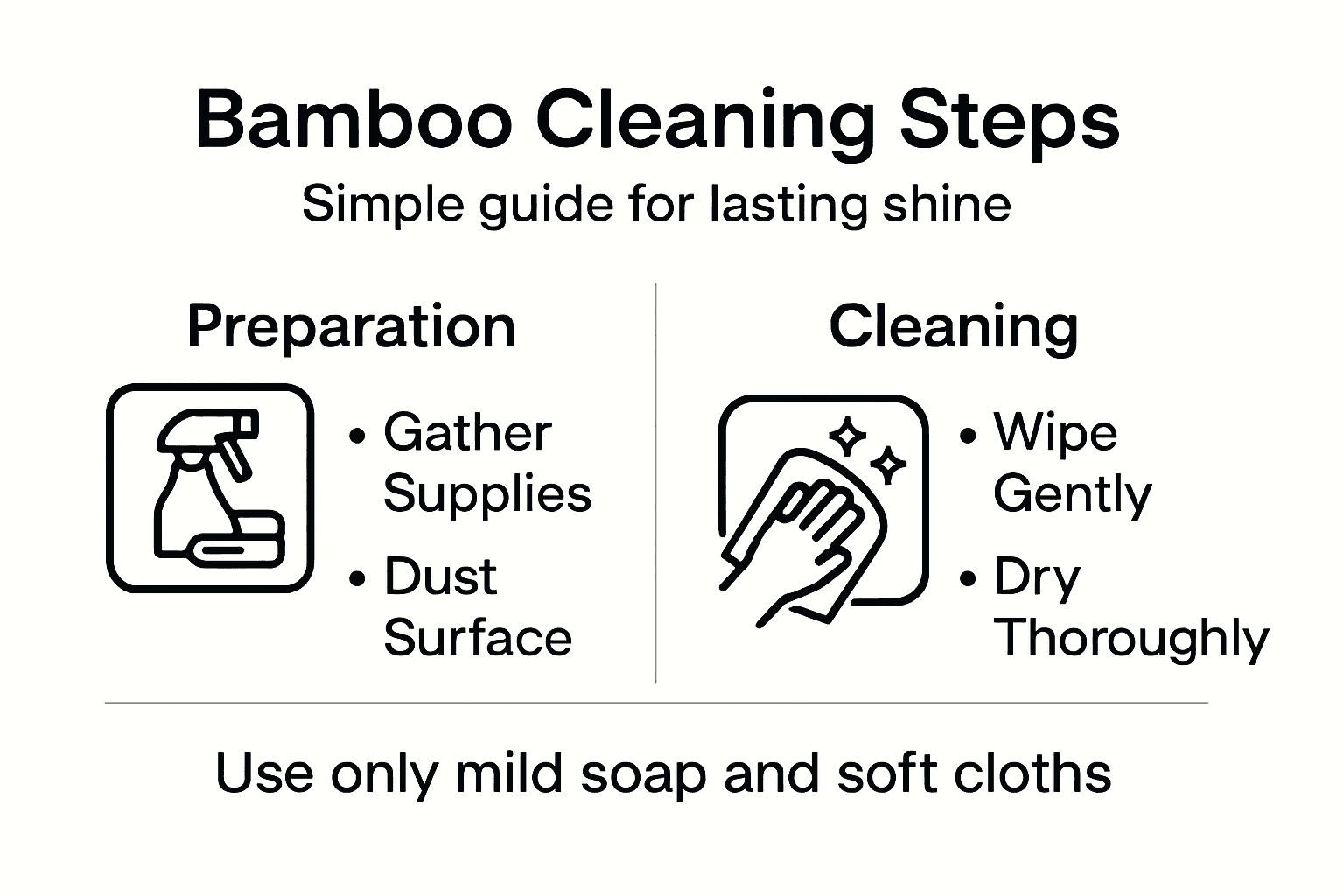
Preparing the right cleaning supplies is crucial for maintaining your bamboo products and preserving their natural beauty. By carefully selecting eco-friendly tools and solutions, you’ll ensure a thorough and safe cleaning process that protects your investment.
To effectively clean bamboo, gather these essential supplies:
When selecting cleaning agents, prioritize gentle, non-toxic options that won’t damage bamboo’s delicate surface. Eco-friendly preservation techniques recommend using organic solutions that prevent damage while maintaining the material’s integrity.
Avoid harsh chemical cleaners that can strip bamboo’s natural oils or cause discoloration. Instead, focus on mild, natural cleaning methods that protect the wood’s cellular structure and appearance. Borax and boric acid solutions can be effective for deeper cleaning and preventing potential insect damage.
Here’s a summary comparing eco-friendly and conventional cleaning approaches for bamboo:
| Approach | Typical Cleaning Agents | Surface Protection | Environmental Impact |
|---|---|---|---|
| Eco-friendly | pH-neutral soaps, vinegar | Preserves natural oils | Safe, biodegradable |
| Conventional chemical-based | Strong detergents, bleach | May strip wood oils | Harmful, polluting |
| Eco-friendly insect prevention | Borax or boric acid solutions | Gentle on fibers | Low toxicity |
| Conventional insect prevention | Pesticide solutions | Can damage bamboo | Unsafe for environment |
Bamboo requires gentle care - think of cleaning it like you would delicate silk, not a rough workshop tool.
Pro Tip: Always test any new cleaning solution on a small, inconspicuous area of your bamboo item first to ensure it doesn’t cause unexpected discoloration or damage.
Before diving into the actual cleaning process, properly preparing your bamboo surfaces is crucial for maintaining their integrity and ensuring an effective cleaning result. This step involves carefully removing surface dirt and creating an optimal foundation for thorough yet gentle cleaning.
Start by inspecting your bamboo item for any visible debris or accumulated dust. Use a soft dry microfiber cloth to gently remove loose particles without scratching the surface. Pay special attention to corners and detailed areas where dirt tends to accumulate. Surface preparation techniques recommend carefully eliminating potential contaminants before applying any cleaning solution.
Your bamboo surface preparation should include these key steps:
When dealing with stubborn dirt or mild stains, create a gentle pre-treatment solution using warm water and a tiny amount of mild dish soap. Avoid saturating the bamboo surface, as excess moisture can damage the natural wood fibers. Gently dab or lightly wipe the surface, being careful not to scrub aggressively.
Bamboo is a delicate natural material that requires mindful handling - treat it with the same care you would a fine piece of art.
Pro Tip: Always test your pre-cleaning approach on a small, hidden area of the bamboo item to ensure the method won’t cause unexpected discoloration or damage.
Cleaning bamboo requires a delicate touch and carefully selected solutions that preserve its natural beauty and structural integrity. Your goal is to remove dirt and potential contaminants without compromising the material’s unique characteristics or causing unnecessary damage.
Eco-friendly cleaning techniques emphasize using natural, mild solutions that protect bamboo’s inherent qualities. Create a gentle cleaning solution by mixing:
When cleaning, follow these critical guidelines:
Special attention is crucial when dealing with intricate bamboo surfaces or items with detailed craftsmanship. For stubborn spots, create a paste using baking soda and water, applying it sparingly and wiping gently to prevent scratching or discoloration.
Treat bamboo like a delicate instrument - with respect, care, and precision.
Pro Tip: Always test your cleaning solution on a small, inconspicuous area first to ensure it doesn’t cause unexpected changes to the bamboo’s color or texture.
Properly drying bamboo is a critical step that determines the long-term durability and aesthetic quality of your bamboo items. After cleaning, you must remove moisture quickly and carefully to prevent potential damage from prolonged wetness.

Bamboo preservation techniques emphasize the importance of controlled moisture removal to prevent fungal growth and structural degradation. Your drying process should focus on minimal moisture and maximum air circulation.
Follow these strategic drying steps:
When drying intricate bamboo items, consider using a low-speed fan to enhance air circulation without creating harsh direct airflow. Angle the fan to provide gentle, consistent air movement that helps moisture evaporate quickly and evenly.
Moisture is bamboo’s silent destroyer - treat drying as a critical preservation technique, not just a final step.
Pro Tip: If possible, dry bamboo items horizontally to prevent water from pooling or dripping, which could cause uneven moisture distribution.
After cleaning and drying your bamboo item, the final crucial step is a comprehensive inspection and restoration that ensures its long-term beauty and durability. This process goes beyond surface cleaning to protect and rejuvenate the bamboo’s inherent qualities.
Eco-friendly preservation techniques recommend a systematic approach to post-cleaning restoration that maintains bamboo’s natural resilience and aesthetic appeal.
Conduct a detailed inspection using these key steps:
To restore the bamboo’s natural finish, apply a thin layer of food-grade mineral oil or specialized bamboo conditioning oil. Use a soft, clean cloth to gently buff the surface, working in smooth, consistent strokes that follow the grain of the bamboo. This process helps seal the wood, protect against moisture, and enhance its natural luster.
Your bamboo item is more than just an object - it’s a living material that requires thoughtful, attentive care.
Pro Tip: Always store bamboo items in a cool, dry environment with consistent humidity to prevent future damage and maintain their pristine condition.
The following table outlines the impact of each cleaning and maintenance step on bamboo durability:
| Step | Main Purpose | Long-Term Impact |
|---|---|---|
| Gather supplies | Choose safe cleaning tools | Prevents surface damage |
| Prepare surfaces | Remove debris gently | Maintains appearance |
| Clean with safe solutions | Use mild, eco-friendly agents | Protects cellular structure |
| Dry thoroughly | Control moisture exposure | Prevents mold & warping |
| Inspect & restore finish | Condition and check integrity | Extends item lifespan |
Maintaining the natural beauty of bamboo requires gentle cleaning and proper care to avoid damage and prolong its durability. If you found yourself looking for step-by-step guidance on bamboo cleaning techniques like choosing safe solutions and thorough drying, then you understand how important it is to treat bamboo with caution and attention. At Cozee Bay, we specialize in premium bamboo products crafted with care and eco-friendly materials designed to last in both home and commercial spaces.

Discover our collection of Bamboo Paper Towel Dispenser- A Sleek Look Home or Office that combines style with sustainable design. Complement your bamboo items with our Paper Towel Dispensers - Accessories | Cozee Bay® to maintain flawless function. For all your organizing needs, explore the innovative solutions at https://cozee-bay.com that emphasize durability and eco-conscious craftsmanship. Take care of your bamboo investment now by choosing products made to shine longer with proper care and lasting elegance.
Gather essential supplies, including soft microfiber cloths, mild dish soap, warm water, white vinegar, a soft-bristled brush, clean dry towels, and mineral oil. Prioritize eco-friendly and non-toxic options to preserve your bamboo’s beauty.
Begin by inspecting your bamboo item for dust and debris. Use a soft dry microfiber cloth to gently remove any loose particles before applying any cleaning solution.
To clean bamboo safely, mix one cup of warm water with two drops of mild dish soap and one tablespoon of white vinegar. Use a soft microfiber cloth, wring out excess liquid, and gently wipe the bamboo surface without scrubbing aggressively.
After cleaning, use a clean, lint-free microfiber towel to gently pat the bamboo surfaces and remove excess water. Allow the bamboo to air dry in a well-ventilated area, avoiding direct sunlight or heat sources, to prevent moisture-related damage.
Check the bamboo for any remaining moisture, scratches, or discoloration. Apply a thin layer of food-grade mineral oil or specialized bamboo conditioning oil, buffing the surface gently with a soft cloth to enhance its natural luster and protect it.
Bamboo is a natural material that can be sensitive to harsh treatment. By treating it with care—like you would with a fine piece of art—you help maintain its integrity and beauty, ensuring a longer lifespan for your bamboo items.
Comments will be approved before showing up.