Your Cart is Empty


Nearly 13 billion pounds of paper towels are used by american households and businesses each year, making them a major source of daily waste. For many, cutting back on paper towels feels nearly impossible, but rethinking this habit opens the door to simple sustainable changes. By understanding your usage and choosing practical alternatives, you can lower your environmental footprint while saving money and reducing clutter.
| Key Insight | Explanation |
|---|---|
| 1. Track paper towel usage | Log how many paper towels are used weekly and their contexts to identify waste areas. |
| 2. Switch to reusable options | Replace disposable towels with cloth alternatives like microfiber or cotton for sustainability. |
| 3. Organize towel storage | Set up easy-access storage for clean towels to encourage regular use of sustainable alternatives. |
| 4. Develop eco-friendly habits | Integrate reusable towels into daily tasks and create consistent washing routines to promote sustainability. |
| 5. Monitor progress regularly | Use a tracking system to evaluate paper towel consumption and adjust strategies for continuous improvement. |
Before diving into sustainable solutions, you need to understand your current paper towel consumption patterns. This assessment will help you identify waste areas and develop targeted reduction strategies. Start by tracking how many paper towels your household or workspace uses in a typical week.
To conduct a comprehensive assessment, begin by gathering some basic data. Place a small notepad near your paper towel dispenser and log each time someone uses a towel. Note the context of use such as hand drying, cleaning spills, or kitchen tasks. You might be surprised to discover that multiple unnecessary uses occur throughout the day. Consider categorizing uses into essential and non-essential groups to understand waste patterns.
A practical tip: Weigh your weekly paper towel waste or count the number of rolls used. This tangible measurement provides a clear baseline for tracking future improvements. Pro tip from sustainable office practices: Post small reminder signs near dispensers to encourage mindful usage and spark conservation awareness among family members or colleagues.
Once you have your baseline data, you are ready to move on to exploring targeted reduction strategies that will minimize your paper towel consumption and support a more sustainable space.
Reducing paper towel waste starts with exploring sustainable alternatives that can effectively replace traditional disposable towels. Your goal is to find solutions that are both environmentally responsible and practical for your specific needs.
Consider transitioning to reusable cloth materials that can handle multiple cleaning tasks. Microfiber towels, cotton cloths, and bamboo fiber towels offer excellent absorbency and durability. These alternatives can be washed and reused multiple times, dramatically reducing your overall waste. Some options include dedicated kitchen towels, washable cleaning rags, and high-quality cloth napkins that can replace single-use paper products.

For situations requiring disposable options, look into compostable or biodegradable alternatives made from sustainable materials like recycled cotton or agricultural waste fibers. Eco-friendly paper products derived from sugarcane fibers or bamboo provide excellent environmental benefits without sacrificing performance. Keep a small supply of these sustainable disposables for scenarios where reusable cloths might not be practical, such as handling particularly messy or unsanitary spills.
By strategically replacing traditional paper towels with these eco-conscious alternatives, you will significantly reduce waste and move closer to a more sustainable household or workspace.
Transitioning to sustainable paper towel alternatives requires strategic planning for convenient access and organized storage. Your goal is to create a system that makes eco friendly options as easy to use as traditional paper towels.
Cloth towel storage solutions can dramatically improve your sustainable habits by making reusable options readily available. Install wall mounted racks or hooks near key areas like the kitchen sink, bathroom, and cleaning stations. Use designated baskets or compartments to separate clean and used towels, ensuring a streamlined system. Consider color coding or labeling different towels for specific purposes such as kitchen spills, hand drying, or general cleaning to prevent cross contamination.
Pro tip: Place multiple strategically located dispensers or storage containers throughout your space to increase the likelihood of using reusable alternatives. For instance, keep a small basket of clean microfiber towels near the kitchen counter and another in the bathroom. This approach reduces the friction of switching to sustainable options by making them incredibly convenient and accessible.
With your new storage and dispenser system in place, you are now ready to implement and maintain your eco friendly paper towel replacement strategy.
Reducing paper towel waste requires more than just switching products it demands a comprehensive approach to transforming your daily habits and mindset toward sustainability. Your ultimate goal is to create a lifestyle that naturally minimizes waste and promotes eco conscious choices.
Sustainable paper towel alternatives can revolutionize how you approach cleaning and everyday tasks. Start by replacing traditional disposable towels with reusable options like cotton napkins, microfiber cloths, and washable rags. Invest in high quality materials that can withstand multiple wash cycles and maintain their absorbency. Designate specific cloths for different purposes such as kitchen spills, bathroom cleaning, and general household maintenance to prevent cross contamination.
To make sustainable practices stick, integrate eco friendly substitutions throughout your daily routine. Consider keeping a small basket of clean towels in high traffic areas and a separate container for used cloths. Develop a consistent washing routine that keeps your reusable alternatives clean and ready for use. Pro tip: Purchase enough towels to ensure you always have clean options available while others are being washed.
By systematically replacing disposable products with reusable alternatives, you are not just reducing waste but creating a more intentional and environmentally responsible household ecosystem.
Transitioning to sustainable paper towel practices is an ongoing journey that requires consistent monitoring and adaptation. Your goal is to develop a systematic approach to measuring and improving your waste reduction efforts.
Track your paper towel consumption by establishing a simple tracking system. Start by weighing or counting your paper towel usage before and after implementing sustainable alternatives. Create a spreadsheet or use a dedicated notebook to record weekly consumption, noting the number of rolls used or total weight of paper towel waste. This quantitative approach will help you visualize your progress and identify areas for further improvement.
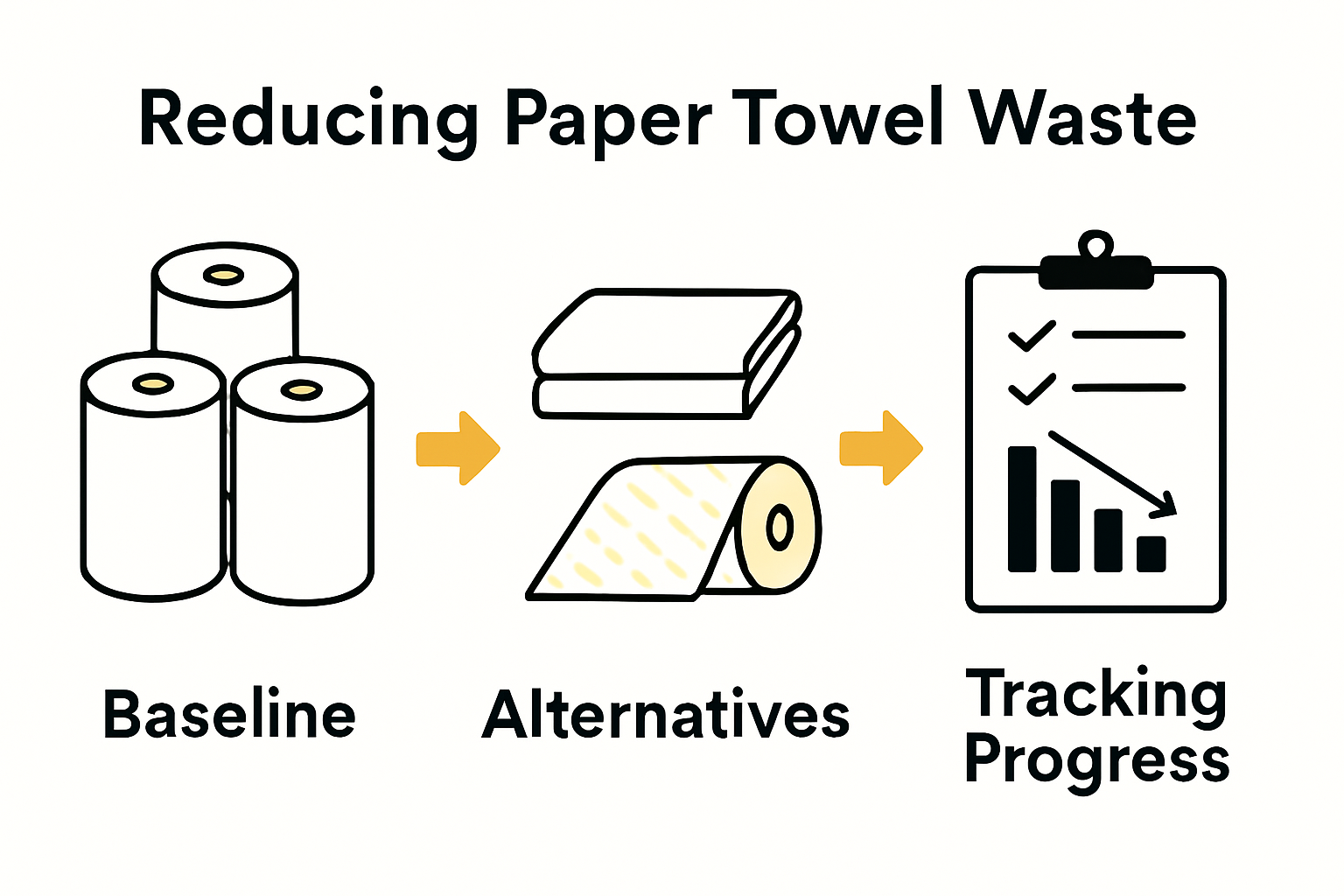
Sustainable transition methods suggest conducting monthly reviews of your new practices. Assess the effectiveness of your reusable alternatives by evaluating factors such as convenience, cleaning efficiency, and overall household satisfaction. Be prepared to make adjustments to your system. Pro tip: Set realistic goals and celebrate small victories. For instance, aim to reduce paper towel usage by 25% in the first three months, then gradually increase your target as you become more comfortable with sustainable alternatives.
By maintaining a flexible and data driven approach, you will continue to refine your sustainable practices and make meaningful progress in reducing paper towel waste.
If you are committed to reducing paper towel waste and creating a more sustainable space you will appreciate how thoughtful design and eco-friendly materials make a difference. The article highlights common challenges like tracking waste and replacing disposable towels with sustainable alternatives. Addressing these goals calls for practical and beautiful solutions that encourage mindful habits and simplify everyday use.
Discover the perfect way to support your sustainable lifestyle with the Bamboo Paper Towel Dispenser- A Sleek Look Home or Office. Crafted from premium bamboo wood these dispensers offer durability and elegance while promoting eco-conscious living. Make your reusable towels more accessible and attractive with a product designed to fit naturally into your environment.

Ready to transform your approach to paper towel usage Explore the full range including the Cozee Bay Paper Towel Dispenser with Adapter and Top Lid for added functionality. Complement your choice with essential Paper Towel Dispensers - Accessories | Cozee Bay® to keep everything efficient and stylish. Take action now to reduce waste while enhancing your space Visit https://cozee-bay.com and embrace sustainability with quality that lasts.
Start by tracking how many paper towels are used in your household or workspace over a typical week. Log each use in a notebook and categorize them to identify areas where you can reduce consumption.
Consider using reusable cloth materials like microfiber towels, cotton cloths, or bamboo fiber towels. These can be washed and reused multiple times, significantly reducing your waste over time.
Set up designated storage solutions such as wall-mounted racks or baskets near key areas like kitchens and bathrooms. Organize clean and used towels separately to create a streamlined system that encourages easy access and reduces confusion.
Establish a simple tracking system by weighing or counting your paper towel usage weekly. Create a spreadsheet or use a notebook to record your consumption and review your progress monthly to identify areas for improvement.
Integrate reusable towels into your daily routine by placing them in high-traffic areas and setting a washing schedule. Having a consistent supply and easy access can help you reduce reliance on disposable options by up to 25% within the first few months.
Post reminder signs near paper towel dispensers to encourage mindful usage among family members or colleagues. Engaging everyone in discussions about the benefits of sustainability can foster a shared commitment to reduce paper towel waste.
Comments will be approved before showing up.