Your Cart is Empty


TL;DR:
- Most households waste around $182 annually on disposable paper towels, a cost that skyrockets with commercial use. Reusable paper towels made from materials like cotton, bamboo, microfiber, or cellulose serve as practical, eco-friendly substitutes that enhance hygiene and save money over time. Proper laundering routines and strategic product choices enable long-term sustainability and significant reduction in paper towel waste.
Most people don’t realize they throw away roughly $182 worth of disposable paper towels every single year, and that’s just one household. Multiply that across a commercial property or restaurant, and the waste becomes genuinely staggering. Reusable paper towels offer a practical, stylish fix that cuts costs, reduces landfill load, and still handles every mess you throw at them. This article walks you through what they’re made of, which materials perform best for which tasks, how to keep them hygienic, and how to pick the right option for your home or commercial space.
| Point | Details |
|---|---|
| Material matters | Choosing the right reusable paper towel material depends on the cleaning task and desired texture. |
| Cost benefits build over time | Reusable towels have higher upfront costs but save money long-term with proper use and laundering. |
| Laundering is critical | Consistent and proper washing maintains hygiene and extends the towels’ lifespan. |
| Not one size fits all | Different towel types serve best for specific tasks like wiping, scrubbing, or dusting. |
| Innovation is ongoing | New biodegradable reusable towels reduce microplastics and improve environmental impact. |
If you’ve ever grabbed a roll of paper towels, used one sheet, and tossed it straight in the trash, you already understand the problem. Reusable paper towels are washable cloth substitutes that look, feel, and perform much like disposables, except you wash and reuse them dozens or even hundreds of times before replacing them.
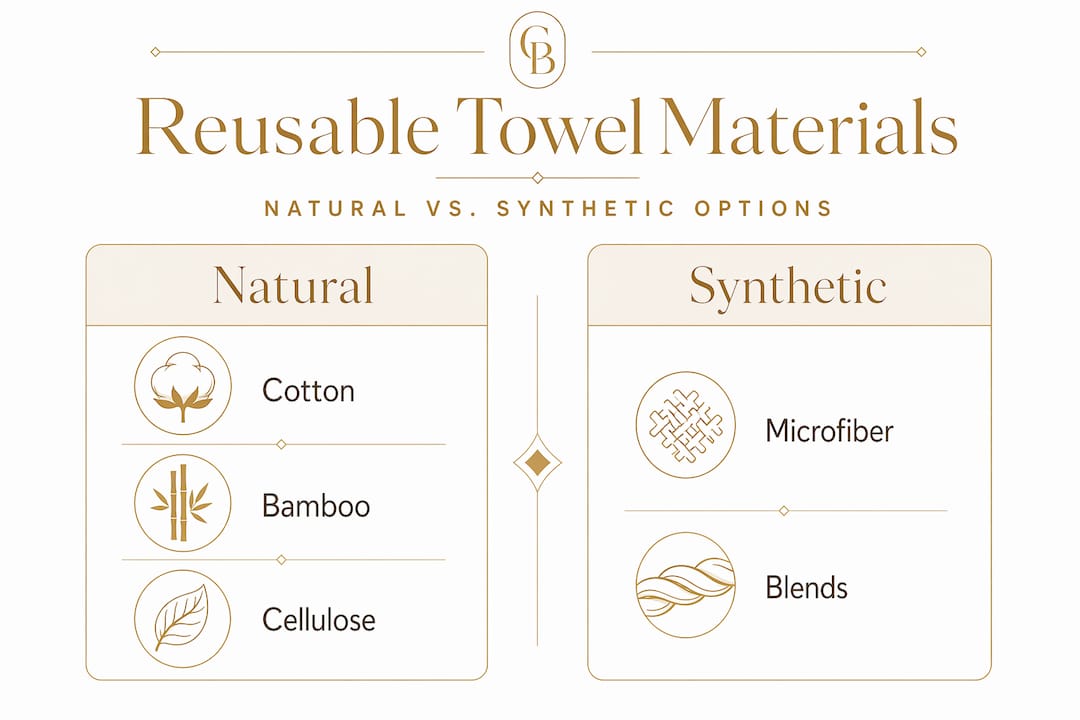
Reusable paper towels, often called unpaper towels, use materials like cotton flannel, bamboo fiber, microfiber, or cellulose blends to replicate the absorbency and versatility of disposable sheets. Many come on rolls that fit standard paper towel holders, making the switch genuinely painless. Others come as flat stacks or folded sets. The format really comes down to personal preference.
Here’s a quick look at the most common material types and what makes each one distinct:
Understanding the best fabric for reusable towels before you buy saves you from returning a product that works fine, just not for what you had in mind. A microfiber towel is not the right pick for soaking up a full glass of water. A cellulose dishcloth is not what you want for wiping down a mirror. Knowing the difference upfront makes the whole experience far better. With a clear understanding of what reusable paper towels are, let’s explore how their material types influence performance and usability.
Choosing a material is where most buyers get stuck, usually because they assume “eco-friendly” is a single category. It’s not. Each material has real strengths and real limitations, and picking the wrong one for your primary cleaning task will have you reaching for the disposables again within a week.
Cotton and bamboo feel more like traditional paper towels, while cellulose-based Swedish dishcloths behave more like sponges. That distinction matters enormously for how you actually use them day to day. And Good Housekeeping testing emphasizes selecting reusable towels based on cleaning outcomes, absorbency, and spill cleaning ability rather than just “green” marketing.
Here’s a side-by-side breakdown:
| Material | Best for | Drying speed | Durability | Feel |
|---|---|---|---|---|
| Cotton flannel | General wiping, spills | Moderate | High | Soft, familiar |
| Bamboo fiber | Kitchen, antibacterial needs | Fast | High | Smooth, slightly silky |
| Microfiber | Glass, dusting, surfaces | Very fast | High | Tight, lint-free |
| Cellulose blend | Heavy spills, scrubbing | Slow | Moderate | Sponge-like, firm |
A few practical points worth knowing before you decide:
You can read more about eco-friendly home products to see how reusable towels fit into a broader sustainable cleaning routine.
Pro Tip: If you manage a commercial space such as a restaurant or coffee shop, bamboo fiber sustainable cleaning cloths are a smart starting point. They’re naturally odor-resistant, durable through frequent laundering, and have a clean, professional appearance that holds up well in customer-facing areas.
Understanding these material differences sets the stage for evaluating cost and hygiene considerations crucial for daily and commercial use.
One of the most common reasons people don’t switch is the upfront cost. It’s a fair concern. But the math changes quickly once you run the numbers over a few months.

A 12-towel roll costs about $30 (roughly $2.50 per towel), compared to $16 per pack of disposable paper towels that a typical household burns through every two weeks. Within a few months, reusable cloth paper towels pay for themselves. For a commercial property buying disposables in bulk, the savings scale significantly.
Here’s what a simple payback comparison looks like:
| Scenario | Disposables (annual) | Reusable (annual) | Estimated savings |
|---|---|---|---|
| Single household | ~$416 | ~$30 to $60 | ~$356 |
| Small restaurant | ~$1,200+ | ~$150 to $300 | ~$900+ |
| Office or school | ~$800+ | ~$100 to $200 | ~$600+ |
That said, reusable towels require a consistent laundering routine. Without it, cost savings and hygiene benefits can disappear fast. A damp towel left balled up on a counter for two days is not hygienic, regardless of how eco-friendly the material is.
Here’s a practical hygiene workflow that actually holds up over time:
“Swedish dishcloths can last longer than six months, sometimes replacing 15 to 17 rolls of paper towels in practical use.”
Building a sustainable paper towel workflow doesn’t need to be complicated. Even a small labeled bin near your sink can be the system that makes the difference between success and a drawer full of forgotten cloth towels. Explore more specific tips on how to reduce paper towel waste as you build out your routine.
Pro Tip: For commercial spaces, designate a clearly labeled laundry bin in the kitchen or supply room. Assign a staff member to run towel loads twice a week. This small step prevents the buildup that causes hygiene problems and makes the whole system easy to maintain.
With cost and hygiene understood, comparing styles and selecting suitable options can help tailor solutions for each unique environment.
With several material options in front of you, the final call comes down to matching the towel to the task and the setting. Consumers and property managers should consider absorbency, texture, drying time, durability, and biodegradability to pick the best towel for each cleaning task. One size rarely fits all.
Different tasks benefit from different towel types: microfiber for glass and dusting, cellulose for spills, cotton or bamboo for general kitchen wiping. A well-stocked kitchen or commercial cleaning station typically uses two or three types in rotation rather than one.
Here’s a quick decision guide by use case:
| Use case | Recommended material | Why it works |
|---|---|---|
| Everyday kitchen wiping | Cotton or bamboo | Soft, absorbent, familiar feel |
| Glass and mirrors | Microfiber | Streak-free, lint-free |
| Heavy spills and scrubbing | Cellulose (Swedish dishcloth) | Sponge-like absorption |
| Restaurant or café setting | Bamboo fiber | Durable, odor-resistant, professional |
| Dusting furniture | Microfiber | Attracts and holds dust without sprays |
| Pet accidents | Cotton (patterned) | Hides stains, handles larger volumes |
A few additional things to keep in mind as you choose:
Explore tailored tips for an eco-friendly restaurant towel setup or a side-by-side commercial dispenser comparison to find a full system that works for your property. Let’s look ahead at emerging innovations shaping the future of reusable paper towels.
Pro Tip: Buy a small starter set of two to three different materials before committing to a large order. Using them for two weeks in real conditions tells you far more than any product description will.
The best reusable towels available today are already a strong upgrade from disposables. But the next generation is genuinely exciting, especially if microplastic pollution is on your radar.
CJ Biomaterials and Yuhan-Kimberly launched the world’s first biodegradable and reusable nonwoven paper towel made with amorphous PHA combined with cellulose, eliminating persistent microplastics. PHA (polyhydroxyalkanoate) is a biopolymer derived from plant-based sources that breaks down fully in natural environments, unlike traditional synthetic fibers used in most microfiber towels.
Here’s why this matters for the broader reusable towel conversation:
“The combination of biodegradability and reusability in one product marks a real shift in what sustainable cleaning cloths can actually deliver.”
For property managers who already track sustainability metrics or report environmental impact, this category of product deserves a close watch. Keep an eye on fabric innovations as this space continues to move fast. Having explored the landscape and future of reusable paper towels, let’s reflect on what this all means for eco-conscious cleaning.
Here’s what most reusable paper towel guides skim past: the product is only half the solution. The other half is the system you build around it.
Good Housekeeping advises selecting reusable paper towels based on tested cleaning outcomes rather than green marketing terms. That’s sound advice, but it still focuses purely on the product. What actually separates people who successfully switch from those who give up after three weeks is the laundering habit. Proper laundering routine is critical and often underestimated; without it, hygiene and cost benefits diminish rapidly.
We’d also push back on the idea that you need to go all-in immediately. A gradual transition works far better in practice, especially in commercial settings where staff buy-in matters. Start with kitchen counters and general surface wiping. Keep a small stash of disposables for high-risk messes if that makes the team more comfortable. Over a month or two, you’ll naturally discover which disposable uses you can actually replace and which ones you’d prefer to keep.
There’s also a mindset gap that nobody talks about. Disposable towels feel clean because they’re brand new. Reusable ones feel “less clean” to many people even right out of the dryer, purely because of the association with previous use. Addressing this with your household or staff directly, and explaining the hygiene workflow clearly, removes most of the resistance. Building a sustainable paper towel workflow that your whole household or team can follow consistently is what turns a product purchase into a genuine habit change.
Reusable towels are not a perfect total replacement for every situation. They’re a significant, practical reduction. And that’s exactly the framing that leads to long-term success rather than guilt-driven abandonment.
Ready to stop throwing money and paper in the trash every week? At Cozee Bay, we offer eco-friendly, high-quality reusable paper towels and handcrafted bamboo products built for real daily use, whether that’s in your kitchen at home or across a busy commercial property.

Our products are designed with both style and practicality in mind, so you’re not choosing between a tidy countertop and a clear conscience. Whether you’re outfitting a restaurant, a senior living center, or your own home kitchen, our eco-friendly paper towel setup guides and resources help you build a system that actually sticks. Explore our blog for deep dives on the best fabric for reusable towels, dispenser pairings, and workflow tips. Free shipping within the contiguous U.S. and a money-back guarantee mean there’s very little reason not to give it a real try.
Reusable paper towels, especially Swedish dishcloths, can last six months or longer and replace up to 15 to 17 rolls of disposable paper towels with proper use and regular washing.
Cotton and bamboo feel most like paper towels and handle general kitchen wiping well, while microfiber is better for glass and surfaces, and cellulose-based Swedish dishcloths tackle heavier scrubbing tasks.
Machine wash with regular laundry in cold or warm water every two to three days, avoid bleach unless the manufacturer specifies otherwise, and air dry or tumble dry on low to maintain absorbency and prevent odor buildup.
Yes. New PHA-cellulose towels are washable and reusable before fully composting at end of life, eliminating the persistent microplastic problem associated with standard synthetic microfiber towels.
Most users cut disposable use significantly but keep a small stash for specific high-risk messes. A realistic target is reducing disposable consumption by 70 to 90 percent, not necessarily eliminating it entirely.
Comments will be approved before showing up.