Your Cart is Empty


TL;DR:
- Toilet paper varies in size, ply, and fiber source, affecting comfort, durability, and plumbing safety. Choosing eco-friendly options like bamboo or recycled fiber with proper certifications can reduce environmental impact and improve septic compatibility. Calculating cost per inch helps find better value, especially when selecting rolls that fit your holder and plumbing needs.
Toilet paper is a soft tissue paper product designed for personal hygiene after defecation and urination, engineered to balance comfort, strength, and safe dissolution in plumbing systems. Most people grab whatever is on sale without realizing that roll dimensions, ply count, fiber source, and septic compatibility all affect daily comfort and long-term costs. Getting these details right means fewer plumbing headaches, less environmental guilt, and more money staying in your pocket. This guide covers everything you need to make a genuinely informed choice, from standard roll dimensions to sustainability certifications.
A standard roll measures 4 to 4.5 inches wide, 4 to 5 inches in outer diameter, weighs between 85 and 196 grams, and contains roughly 200 to 500 sheets depending on ply. That range exists because manufacturers vary sheet thickness and count while keeping the width consistent. Width consistency is the key design detail: the 4.5-inch width standard ensures compatibility with nearly all residential holders, even as mega and jumbo rolls push outer diameters well beyond the traditional 4-inch mark.
The inner core is just as important as the outer dimensions. Core diameter runs 1.5 to 1.75 inches to fit wall-mounted dispensers and specialty holders. A roll with a core outside that range will jam, spin poorly, or refuse to seat properly. This is worth checking when you buy rolls in bulk or switch to a new brand.
| Dimension | Standard Range | Notes |
|---|---|---|
| Roll width | 4 to 4.5 inches | Fits nearly all residential holders |
| Outer diameter | 4 to 5 inches | Larger for mega and jumbo rolls |
| Sheet count | 200 to 500 sheets | Varies by ply and brand |
| Inner core diameter | 1.5 to 1.75 inches | Critical for dispenser compatibility |
| Weight per roll | 85 to 196 grams | Heavier rolls typically have more sheets |
Mega rolls and jumbo rolls use the same 4.5-inch width but have a noticeably larger outer diameter. That larger diameter can cause problems with older wall-mounted holders that have a fixed spindle gap. If you use a standing toilet paper holder, you generally get more flexibility with oversized rolls since there is no fixed enclosure limiting the diameter.
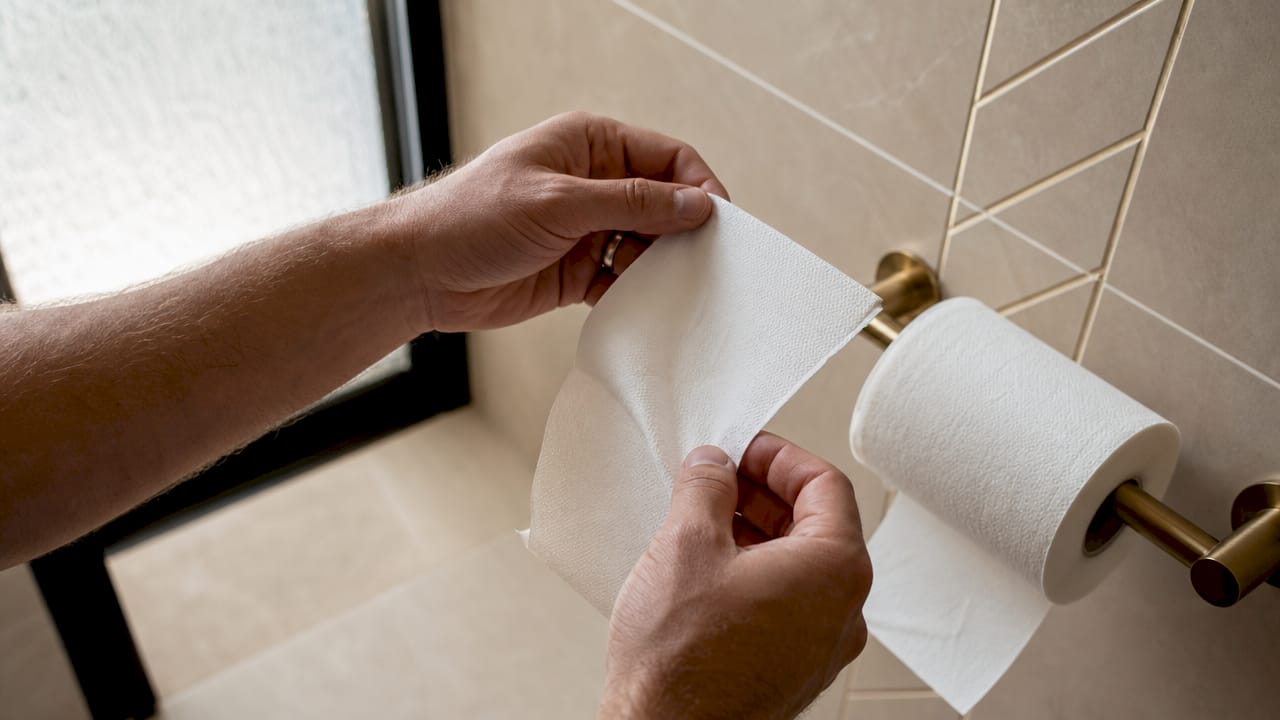
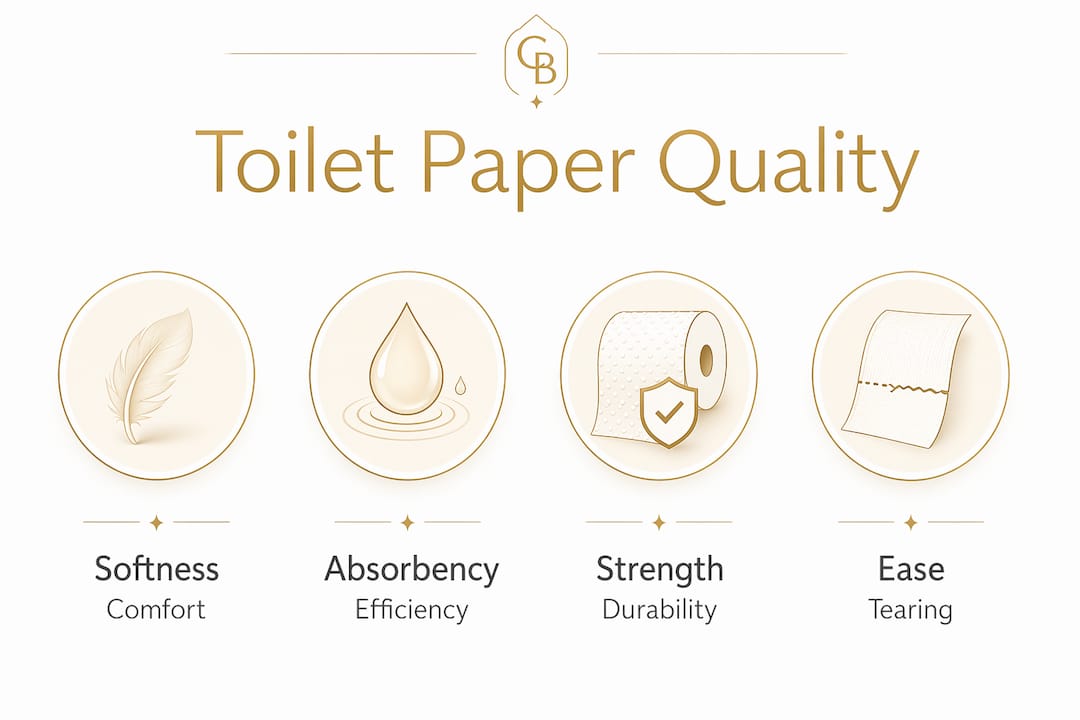
Quality in bathroom tissue comes down to four measurable attributes: softness, absorbency, strength, and ease of tearing. The Good Housekeeping Institute tests over 30 types on all four metrics, which confirms that no single attribute tells the whole story. A product can feel luxuriously soft but tear unevenly or dissolve too slowly for safe flushing.
Ply count is the most visible quality signal, but it is also the most misunderstood. Two-ply rolls bond two thinner sheets together, creating a product that is softer and more absorbent than single-ply without being dramatically thicker. Single-ply rolls are thinner and dissolve faster, which makes them a better fit for high-traffic commercial bathrooms and septic systems. Three-ply products deliver maximum softness but carry the highest risk of slow dissolution.
Here is what to look for when assessing quality at the shelf:
Pro Tip: If you have sensitive skin, look for bathroom tissue labeled “fragrance-free” and “hypoallergenic.” Added fragrances and lotions can cause irritation, especially for people with eczema or skin sensitivities.
Sustainable bathroom tissue starts with fiber source. Post-consumer recycled fiber is one of the highest-impact eco choices a consumer can make, since paper is among the easiest materials to recycle. Bamboo fiber is the other leading alternative. Bamboo grows rapidly without pesticides, requires no replanting, and produces a tissue that is naturally soft and strong. Both options reduce pressure on old-growth forests, which are a primary source of virgin pulp in conventional products.
Certifications cut through the marketing noise. Look for these labels when shopping for eco-friendly toilet paper brands:
Packaging is an overlooked part of the sustainability equation. A roll made from recycled fiber but wrapped in plastic film still contributes to landfill waste. Choosing products with biodegradable or paper-based wrappers closes that loop. Buying in bulk also reduces per-unit packaging waste, and bulk toilet paper supplies typically cost less per roll.
Pro Tip: Bamboo tissue is naturally septic-safe because bamboo fibers break down quickly in water. If you are switching to eco-friendly options and have a septic system, bamboo is a strong starting point.
Septic-safe bathroom tissue is defined by one core property: it dissolves quickly after flushing. Some ultra-thick options fail to break down even after 5 minutes of high-speed agitation in testing. That failure translates directly into clogged pipes, backed-up septic tanks, and expensive plumber visits.
The thickness trap catches a lot of consumers. Ultra-plush, three-ply products feel premium in the hand but behave poorly in pipes. Thickness and softness do not predict dissolution speed. A well-made two-ply bamboo or recycled-fiber roll can be both comfortable and fast-dissolving. For green plumbing solutions that protect older or sensitive systems, the tissue choice matters as much as the hardware.
Watch for these signals when selecting a septic-safe product:
Flushable wipes are a separate category and carry their own risks. Even wipes labeled “flushable” dissolve far more slowly than tissue and are a leading cause of sewer blockages. Stick to certified septic-safe tissue and skip the wipes if you have an older plumbing system.
Sheet count is a misleading metric. A roll with 500 sheets of thin single-ply tissue delivers less actual paper than a roll with 300 sheets of thick two-ply. The only reliable way to compare value is the cost per inch formula, which divides the total package price by the total length of paper across all rolls.
Here is how to run the calculation:
| Roll Type | Typical Sheet Count | Typical Total Length | Best Use Case |
|---|---|---|---|
| Standard roll | 200 to 300 sheets | Shorter total length | Small households, occasional use |
| Mega roll | 300 to 500 sheets | Longer total length | Families, frequent use |
| Jumbo roll | 500+ sheets | Longest total length | Commercial or high-traffic settings |
Consumers who compare by total length rather than roll count consistently find better value. A 12-pack of mega rolls often delivers more paper than a 24-pack of standard rolls at the same price. Toilet paper subscription services can add further savings by locking in a per-roll price and eliminating last-minute convenience store runs at inflated prices.
Choosing bathroom tissue well means matching roll dimensions to your holder, selecting fiber and ply for both comfort and dissolution speed, and using cost-per-inch math to find true value.
| Point | Details |
|---|---|
| Standard dimensions matter | Roll width of 4 to 4.5 inches and core diameter of 1.5 to 1.75 inches ensure holder compatibility. |
| Ply affects more than softness | Two-ply balances comfort and dissolution; ultra-thick three-ply can clog septic systems. |
| Certifications verify eco claims | Look for FSC, Green Seal, or Rainforest Alliance labels to confirm sustainable sourcing. |
| Cost per inch beats sheet count | Divide package price by total paper length to find the real value across different roll sizes. |
| Septic safety requires testing | Some ultra-plush products fail dissolution tests; choose certified septic-safe or bamboo tissue. |
I have spent a lot of time thinking about what makes a genuinely good roll of toilet paper, and the honest answer surprises most people: the best choice is rarely the most expensive or the thickest option on the shelf. Thickness is the biggest misconception I see. Shoppers equate ultra-plush with quality, but a three-ply product that clogs your pipes every six months is not a quality product. It is an expensive problem dressed up in soft packaging.
The sustainability angle is where I see the most consumer confusion. People assume eco-friendly tissue means scratchy, thin, and unpleasant. That was true a decade ago. Bamboo tissue today matches or beats conventional two-ply on softness while dissolving faster and coming wrapped in paper instead of plastic. The eco-friendly holder you pair it with also matters more than people realize. A holder that fits your roll’s outer diameter and core size makes every roll easier to use and less wasteful.
My practical advice: run the cost-per-inch math once on your current brand, then run it on a bamboo or recycled-fiber alternative. The price gap is smaller than you expect, and the environmental and plumbing benefits are real. Stop buying on autopilot. Your bathroom, your pipes, and your wallet will all be better for it.
— Cozee
Cozee-bay focuses on eco-conscious home products, and that extends to helping you find tissue that fits your holder, your plumbing, and your values.

Cozee-bay carries bamboo and recycled-fiber tissue options sized to standard 4.5-inch width specifications, so you never have to guess about holder fit. The collection includes rolls compatible with both wall-mounted dispensers and freestanding holders, along with bamboo toilet paper holders that complement sustainable tissue choices beautifully. Free shipping applies across the contiguous U.S., and every purchase comes backed by a money-back guarantee. Browse the full selection at Cozee-bay.com and find the combination of quality, sustainability, and fit that works for your home.
The standard width is 4 to 4.5 inches, a consistent design specification that ensures compatibility with nearly all residential wall-mounted and freestanding holders.
Single-ply dissolves faster and carries lower clog risk, but a well-made two-ply bamboo or recycled-fiber product also dissolves quickly and is generally safe for most septic systems.
Look for FSC, Green Seal, or Rainforest Alliance certifications on the packaging, and check that the product uses post-consumer recycled fiber or bamboo with plastic-free wrapping.
Cost per inch is the package price divided by the total length of paper across all rolls. It gives you a true value comparison that sheet count alone cannot provide.
Mega rolls keep the standard 4.5-inch width but have a larger outer diameter. They fit most freestanding holders but may not fit older wall-mounted holders with a fixed spindle gap.
Comments will be approved before showing up.