Your Cart is Empty


Bathroom clutter complicates your daily routine and generates unnecessary waste that harms the environment. A sustainable decluttering approach helps you organize efficiently while reducing plastic consumption and supporting eco-friendly living. This article provides a practical checklist to transform your bathroom into a functional, clutter-free space using sustainable products and responsible disposal methods. You’ll discover how to sort items by category, choose eco-friendly alternatives, and maintain organization in shared spaces. Whether you’re tackling a single bathroom or managing multiple users, these strategies will help you create a cleaner, greener space that aligns with your environmental values.
| Point | Details |
|---|---|
| Category sorting | Decluttering by category boosts decision-making effectiveness by 30% |
| Strategic starting point | Beginning with your most-used bathroom increases consistency by 20% |
| Checklist benefits | Using a systematic checklist expands storage by 25% and cuts unnecessary purchases by 20% |
| Plastic reduction | Switching to eco-friendly products can reduce plastic waste by up to 80% |
| Essential focus | Keeping only daily essentials improves both functionality and visual clarity |
Define a clear vision for your bathroom’s look, feel, and function before you start removing items. This vision guides every decision you make during the decluttering process and helps you stay focused on your sustainability goals. Without this clarity, you’ll struggle to determine which items truly serve your needs and which simply take up valuable space.
Sort your bathroom items into three distinct categories: daily use, weekly or monthly use, and shared-use products. Decluttering by category helps visualize total items aiding choices with a 30% increase in discards. This systematic approach prevents overwhelm and ensures you evaluate each item based on actual usage rather than emotional attachment or perceived future need.
Focus on identifying what you actually need rather than what you should discard. This positive framing reduces decision fatigue and makes the process feel less restrictive. Ask yourself when you last used each item and whether it serves a current purpose in your routine. Items that haven’t been touched in six months rarely deserve space in your bathroom.
Plan for responsible disposal by creating four designated areas: trash, recycling, donation, and items requiring special disposal. Many bathroom products contain materials that shouldn’t enter landfills, so research your local recycling programs and hazardous waste collection options. Consider exploring eco friendly home product checklist resources to guide sustainable replacement choices.
Start decluttering with your most frequently used bathroom to boost motivation and build momentum. Success in this high-traffic space creates visible results that encourage you to tackle additional areas. The immediate improvement in your daily routine reinforces the value of sustainable decluttering practices.
Pro Tip: Visualize your ideal sustainable bathroom by creating a simple sketch or mood board showing the clean surfaces and organized storage you want to achieve. Set small, manageable goals like decluttering one drawer per day to increase consistent progress without feeling overwhelmed by the entire project.
Daily use items form the foundation of your bathroom essentials and deserve priority placement in accessible storage. These include toothbrushes, soap, lotion, deodorant, and towels that you reach for every morning and evening. Prioritize eco-friendly versions of these products to maximize your environmental impact, since you’ll replace them most frequently throughout the year.
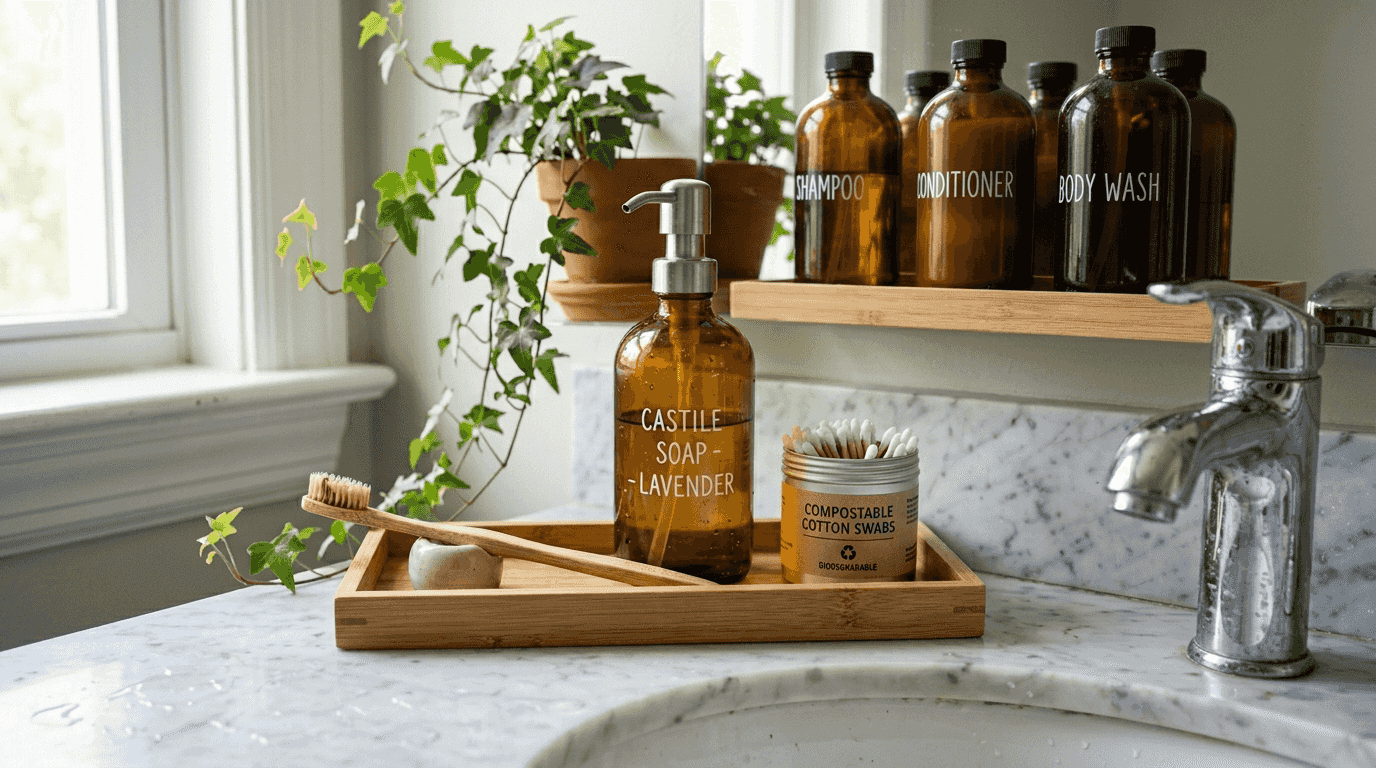
Weekly or monthly items like razors, nail clippers, hair styling products, and cleaning supplies require less accessible storage but still deserve evaluation. Swap conventional versions for reusable or biodegradable alternatives whenever possible. Switching to sustainable bathroom essentials decreases plastic consumption by up to 80%, creating significant environmental benefits over time.
Discard expired, unused, or duplicate products immediately to clear space and reduce waste. Check expiration dates on medications, sunscreens, and cosmetics, as these lose effectiveness and can cause skin irritation. Donate unopened, unexpired products to local shelters or community organizations rather than throwing them away.
Follow this systematic checklist to categorize and assess all bathroom items:
| Product Type | Conventional Option | Sustainable Alternative | Lifespan Benefit | Waste Reduction |
|---|---|---|---|---|
| Toothbrush | Plastic handle | Bamboo handle | Biodegradable | Eliminates plastic waste |
| Soap dispenser | Single-use plastic | Refillable glass or bamboo | Years vs months | Reduces container waste by 90% |
| Razors | Disposable plastic | Safety razor with replaceable blades | Lifetime vs weeks | Cuts plastic waste by 95% |
| Cleaning supplies | Chemical spray bottles | Concentrated refills in reusable bottles | Reusable bottle lasts years | Reduces packaging by 80% |
| Cotton products | Conventional cotton rounds | Reusable bamboo or organic cotton pads | Washable for years | Eliminates disposable waste |
Pro Tip: Use refillable soap dispensers and bamboo toothbrushes to minimize plastic waste long-term. These simple swaps require minimal effort but create substantial environmental benefits, especially when you consider that the average person uses over 300 toothbrushes in their lifetime. Explore options at retailers offering eco-friendly bathroom essentials to find quality sustainable products.
Consider the individual needs of multiple users when creating your organizational system. Each person requires different products and has unique routines, so assign personal storage spaces or bins to prevent items from mixing together. This separation reduces conflicts, prevents overbuying duplicate products, and helps everyone maintain responsibility for their own items.
Create an organizational system that separates daily essentials from less frequently used supplies. Store everyday items at eye level or in easily accessible drawers, while reserving higher shelves or back cabinets for occasional-use products. This hierarchy ensures smooth morning routines and prevents clutter from accumulating on surfaces.
Clear countertops completely except for hand soap to maximize functional space and reduce visual noise. Every item left on the counter collects dust, requires cleaning around, and contributes to a cluttered appearance. Limiting surface items to absolute essentials creates a spa-like atmosphere and makes cleaning significantly faster.
| Approach | Countertop Clutter | Minimal Essentials |
|---|---|---|
| Items visible | 10-15+ products | 1-2 items maximum |
| Cleaning time | 15-20 minutes | 5 minutes |
| Visual impact | Chaotic, overwhelming | Calm, spacious |
| Hygiene | Dust accumulation around items | Easy to sanitize surfaces |
| Functionality | Reduced usable space | Maximum counter space |
Pro Tip: Label storage containers with each family member’s name to help everyone maintain organization consistently. Clear labels eliminate confusion about where items belong and make it easier for children to participate in keeping the bathroom tidy. Use waterproof labels or a label maker to ensure markings withstand bathroom humidity.
Encourage reuse and refill approaches to reduce bathroom waste further. Purchase products in bulk or concentrated forms that you can dilute and transfer to smaller reusable containers. Decluttering bathrooms reduces waste by up to 30% and promotes sustainability, creating measurable environmental benefits beyond just visual improvement. Implementing storage organization ideas eco friendly homes can help you maintain these systems long-term.
Designate specific zones within shared bathrooms for different activities or users. Create a grooming zone near the mirror, a bathing zone near the shower or tub, and a hygiene zone near the toilet. This zoning approach prevents items from migrating across the bathroom and makes it easier for multiple people to use the space simultaneously during busy mornings.
Transforming your bathroom into a clutter-free, sustainable space becomes easier when you have access to quality eco-friendly products. Cozee Bay offers a curated range of sustainable bathroom products that complement your decluttering efforts while reducing environmental impact. Their handcrafted bamboo storage solutions help you maintain organization without relying on plastic containers that contribute to landfill waste.

Their eco-friendly essentials combine functionality with environmental responsibility, helping you reduce plastic consumption while enhancing your bathroom’s style and efficiency. From bamboo organizers to sustainable storage systems, each product supports your goal of creating a cleaner, greener home. Explore eco-friendly bathroom essentials to discover options that align with your values and space requirements. You’ll also find smart storage ideas for eco-friendly homes that help you maintain your newly organized bathroom for years to come.
Use the checklist every three to six months or whenever you notice clutter building up again. Regular decluttering sessions prevent accumulation and make each session faster than the initial deep clean. For multi-person bathrooms, involve all household members in quarterly reviews to keep clutter minimal and ensure everyone maintains their assigned storage areas.
Switch to bamboo toothbrushes instead of plastic ones to eliminate hundreds of plastic toothbrushes from landfills over your lifetime. Replace disposable soap bottles with refillable dispensers made from glass or sustainable materials. Try natural or biodegradable cleaning supplies that come in concentrated forms you can dilute at home, reducing packaging waste by up to 80%.
Assign personal storage bins or shelves for each user to prevent product mixing and reduce duplicate purchases. Label containers clearly with names or color coding to avoid confusion and help everyone maintain organization. Choose reusable containers made from bamboo, glass, or recycled materials to minimize waste while creating a cohesive, organized appearance.
Recycle containers whenever your local program accepts them, rinsing them first to prevent contamination. Donate unopened, unexpired products to homeless shelters, women’s shelters, or community organizations that accept personal care items. Avoid adding to landfills by choosing reusable alternatives for items you currently buy as single-use products, such as switching from disposable cotton rounds to washable bamboo pads.
Establish a one-in, one-out rule where you discard or donate an old product whenever you bring home a new one. Clear countertops daily by returning items to their designated storage spots after use. Schedule brief monthly maintenance sessions to catch clutter before it accumulates, making these quick reviews part of your regular cleaning routine rather than waiting for overwhelming buildup.
Comments will be approved before showing up.