Your Cart is Empty


TL;DR:
- Decluttering and using eco-friendly, adjustable organizers create a functional, sustainable utensil drawer.
- Materials like bamboo and recycled plastic balance eco-friendliness with style and adaptability.
- Regular maintenance and mindset shifts ensure long-term, effortless kitchen organization.
Reaching into your utensil drawer and pulling out a tangled mess of spatulas, whisks, and mystery gadgets is enough to ruin anyone’s cooking mood. If that sounds familiar, you’re far from alone. A cluttered utensil drawer slows you down, adds unnecessary stress, and makes your kitchen feel chaotic even when everything else is tidy. The good news? With a little prep, the right eco-friendly organizers, and a practical system, you can transform that drawer into a calm, functional space you’ll actually enjoy using every day. This guide walks you through every step, from clearing out the clutter to choosing sustainable materials and keeping things neat for the long haul.
| Point | Details |
|---|---|
| Declutter first | Always empty and sort your utensils before adding any organizers or dividers. |
| Use eco-friendly dividers | Adjustable bamboo or recycled plastic organizers offer sustainable and flexible solutions. |
| Customize for daily tasks | Keep your most-used tools upfront—use hybrid drawer and countertop solutions for best access. |
| Maintain regularly | A quick monthly reset helps keep your kitchen drawer organized and clutter-free long term. |
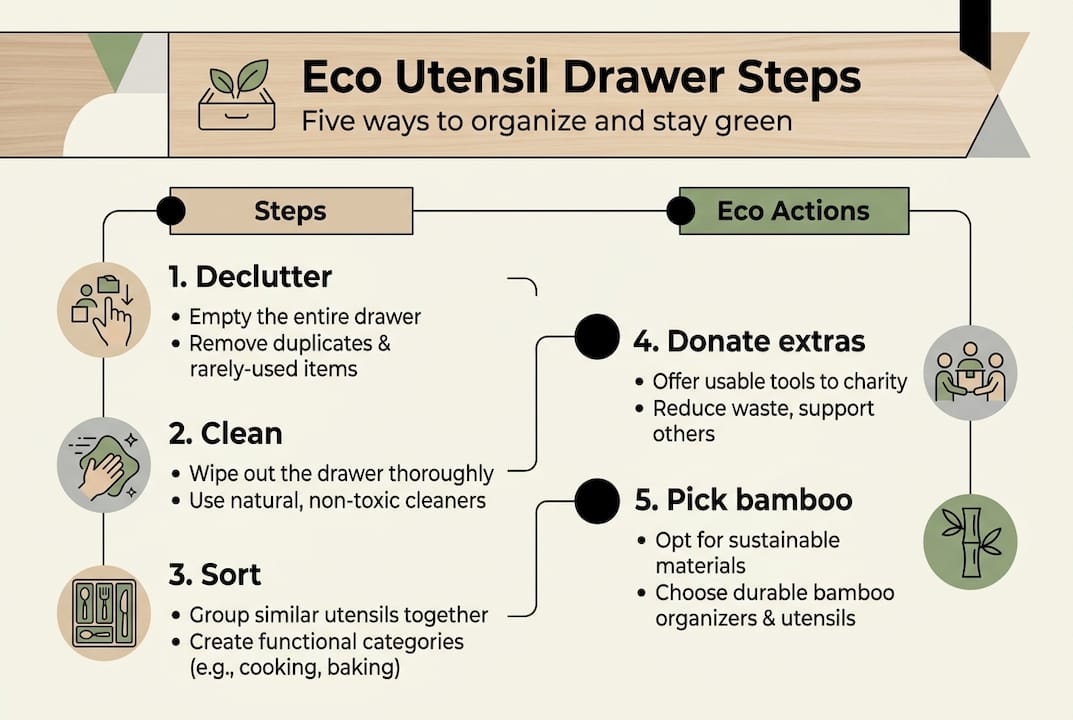
Before you buy a single organizer or rearrange anything, you need to start with a clean slate. Pull everything out of the drawer completely. Yes, everything. Lay it all out on your counter so you can actually see what you’re working with.
Once it’s all out, sort each item into one of four categories:
As you sort, evaluate each utensil for regular use, duplicates, and potential replacement with multi-tools to declutter effectively. A single good pair of kitchen shears, for example, can replace three single-use gadgets. Fewer items means less clutter and a more sustainable kitchen overall.
| Category | Action | Eco-friendly tip |
|---|---|---|
| Duplicates | Donate or gift | Extend the item’s life cycle |
| Broken tools | Discard responsibly | Check local recycling programs |
| Single-use gadgets | Replace with multi-tools | Reduces waste and drawer bulk |
| Rarely used items | Relocate or store elsewhere | Frees prime drawer real estate |
While the drawer is empty, wipe the interior clean. A quick wipe-down removes crumbs, grease, and grime that accumulate over time. For a deeper refresh, check out these kitchen deep cleaning steps to make sure your drawer is truly ready for a fresh start.
Pro Tip: If you’re unsure whether to keep a tool, ask yourself: “Did I use this in the last three months?” If the answer is no, it probably doesn’t belong in your prime utensil drawer. For more ideas on practical steps for stylish spaces, we’ve got you covered.
Once you’ve decluttered and cleaned, it’s time to find organizers that fit your needs and values. The material you choose matters, both for the planet and for how your kitchen looks and feels.
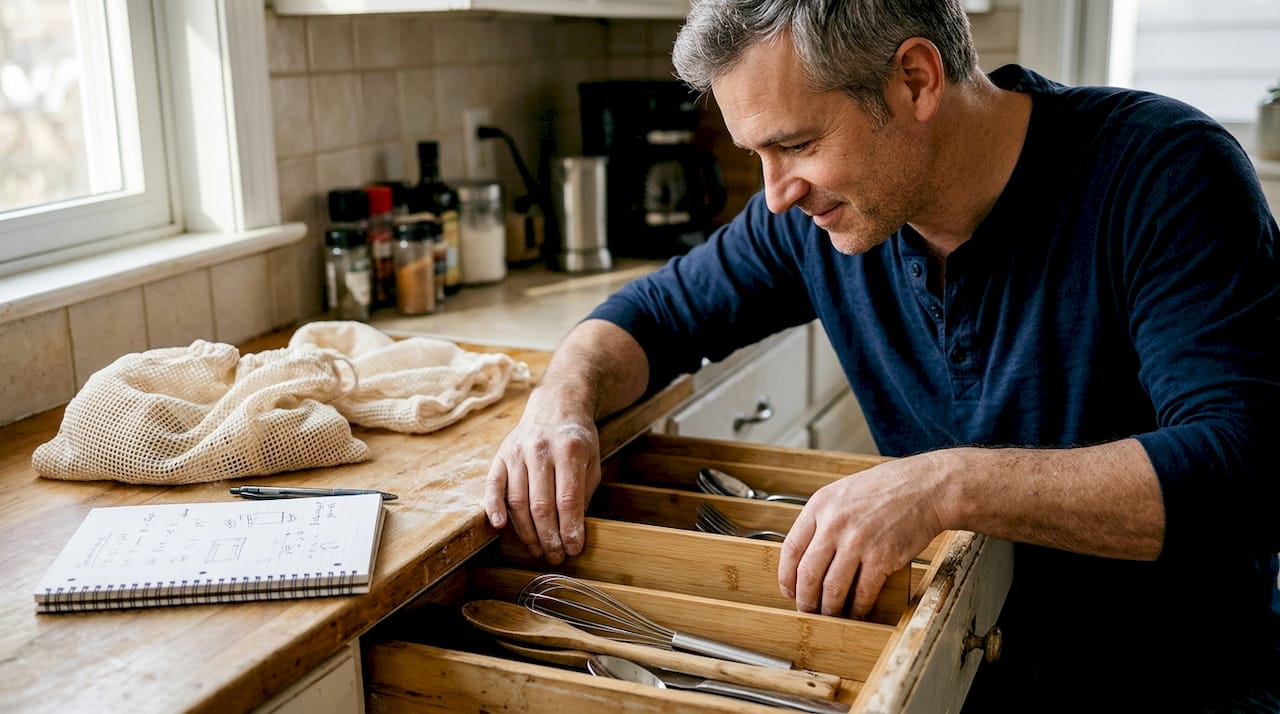
Bamboo is one of the best choices for drawer organizers. It’s a fast-growing, renewable resource that doesn’t require pesticides, and it looks warm and natural in any kitchen. Adjustable bamboo drawer dividers create flexible sections, placing frequently used items at the front for easy access. Recycled plastic organizers are another solid eco-friendly option, especially if you prefer a more modern, minimalist look.
Here’s a quick comparison to help you decide:
| Material | Eco-friendliness | Best for | Style |
|---|---|---|---|
| Bamboo | High (renewable) | Warm, natural kitchens | Natural wood tones |
| Recycled plastic | Medium (repurposed) | Modern, minimalist spaces | White or transparent |
| Untreated wood | High | Rustic or farmhouse kitchens | Matte, earthy tones |
| Standard plastic | Low | Budget-focused buyers | Varies |
When choosing a system, consider these options:
When shopping, look for third-party certifications like FSC (Forest Stewardship Council) for wood products, or labels indicating recycled content for plastic options. These small details confirm you’re making a genuinely eco-conscious purchase. Explore bamboo organizer ideas for visual inspiration before you buy.
Pro Tip: Measure your drawer’s interior dimensions before ordering any organizer. Width, depth, and height all matter, especially if you plan to organize deep drawers sustainably with stackable systems.
With the right dividers on hand, you can now put everything in its optimal place. Follow these steps for a setup that makes cooking faster and more enjoyable.
“Most users only need 20% of their gadgets on a daily basis.” Pairing your drawer with a countertop crock for high-use items is a practical way to split the workload between storage and accessibility.
The core method is simple: declutter first, then categorize and use adjustable dividers for frictionless access, refining periodically rather than overhauling. This approach saves time and keeps frustration low. For more on achieving faster access and less waste, check out our dedicated guide. You can also browse best drawer organizers to compare top-rated options before committing.
For those with challenging drawer layouts, try these advanced organization approaches. Not every kitchen comes with perfectly sized drawers, and that’s okay.
Deep drawers are the trickiest because items get buried. The fix is to go vertical. Use tiered or stackable bamboo trays to create layers, so you can see and reach everything without shuffling through a pile. Pro organizers recommend mixing divider types for irregular utensil shapes, and expandable organizers are consistently rated top for versatility.
Here are some targeted solutions by drawer type:
| Drawer type | Best organizer | Eco-friendly pick |
|---|---|---|
| Deep | Stackable bamboo trays | FSC-certified bamboo system |
| Narrow | Slotted slim tray | Recycled plastic slim insert |
| Wide | Adjustable dividers | Expandable bamboo dividers |
| Mixed shapes | Hybrid tray and container | Repurposed small containers |
Pro Tip: When your needs change (and they will), choose organizers you can repurpose elsewhere in the home. A bamboo tray that once held spatulas works just as well in a bathroom drawer or office desk. Learn more about organizing cabinets and drawers sustainably to get the most from every piece you buy. You can also explore different drawer organizer types to find the best match for your specific setup.
Once organized, your final focus is on lasting results and easy maintenance. The truth is, even the best-organized drawer will drift back toward chaos if you don’t give it a little attention over time.
Here’s a simple maintenance routine to keep things running smoothly:
Pro Tip: Keep a small donation bin in a nearby cabinet. When you come across a duplicate or rarely used tool during cooking, drop it in the bin right away instead of putting it back in the drawer. For more clutter-free kitchen ideas, we’ve rounded up strategies that work for all kitchen sizes. These kitchen cleaning tips can also help you maintain a consistently fresh and functional space.
Here’s something most organization guides won’t tell you: the drawer reset is the easy part. What actually keeps a kitchen calm and functional over time is the mindset you bring to it every single day.
True sustainable kitchen organization isn’t about buying the prettiest bamboo tray or achieving a magazine-worthy photo. It’s about choosing pieces you genuinely love and will keep for years, not just whatever trend is popular right now. It’s about being willing to reassess your system when your cooking habits shift, rather than forcing old habits into a new layout.
We believe the kitchens that stay organized longest are the ones where the owner has stopped treating organization as a one-time project. Instead, they treat it as an ongoing, evolving practice. A drawer that works beautifully for your Tuesday pasta night should also adapt when you go through a weekend baking phase. That adaptability is what real sustainability looks like. Style and eco-values don’t have to compete. When you choose quality materials and layouts you love, keeping things tidy stops feeling like a chore and starts feeling like a natural extension of how you cook and live.
If this guide has you ready to finally tackle that utensil drawer, we’d love to help you take the next step. At Cozee Bay, we specialize in handcrafted bamboo organizers designed to make your kitchen both beautiful and functional, without compromising on sustainability.

Whether you’re looking for adjustable dividers, stackable trays, or a complete drawer overhaul, our collection is built with real kitchens in mind. Browse our bamboo organizer inspiration to find styles that match your space and values. We offer free shipping within the contiguous U.S. and stand behind every product with a satisfaction guarantee. Your calmest, most organized kitchen is closer than you think.
Mix container types and use expandable dividers to create custom spaces for each utensil shape. Expandable organizers are consistently rated top for versatility when dealing with irregular tools.
Review drawer contents monthly, remove unused items, and adjust dividers as your needs change. Regular resets help maintain order with far less effort than a full overhaul.
Bamboo is a renewable material and a more sustainable option than plastic, but always check for low-VOC finishes and third-party certifications. Adjustable bamboo dividers also offer the flexibility to adapt as your kitchen needs evolve.
Drawers suit limited counter space well, while a crock provides faster visual access, and the best solution often combines both. Martha Stewart favors crocks for high-use items, trading enclosure for speed and style.
Comments will be approved before showing up.