Your Cart is Empty


A sustainable gift is something that gives real joy to the recipient while keeping its environmental and social footprint as small as possible, from the materials it’s made of to what happens to it when its life is over. That’s the whole definition. Everything else is just the practical part: figuring out how to spot one when you’re standing in a store, scrolling a website, or wrapping something at midnight before a birthday party.
Here’s what you can act on right now:
A few quick examples of what this looks like in practice:
Pro Tip: If you’re stuck between two gifts, ask which one still has a purpose in five years. That single question eliminates most bad options fast.
A sustainable gift minimizes environmental and social impact across its full lifecycle, from materials and manufacturing to end-of-life disposal, while still genuinely delighting the person who receives it.
| Point | Details |
|---|---|
| Definition comes first | A sustainable gift balances low environmental impact with genuine value to the recipient, judged across its full lifecycle. |
| Holiday waste is measurable | U.S. trash volume rises substantially between Thanksgiving and New Year’s, adding a significant amount of extra waste weekly. |
| Durability beats disposability | A repairable, long-lasting item almost always has a lower cumulative footprint than several cheap replacements. |
| Certifications cut through greenwashing | Look for FSC, GOTS, Fair Trade, OEKO-TEX, or B Corp instead of trusting vague words like “eco-friendly.” |
| Durable bamboo goods deliver | Cozee-bay’s handcrafted bamboo paper towel dispensers replace disposable plastic holders with a renewable, refillable, long-lasting alternative. |
The definition above is simple, but the reasoning behind it gets urgent fast once you look at the numbers. Americans throw away roughly 25% more trash between Thanksgiving and New Year’s than during the rest of the year, adding about 1 million extra tons of waste to the system every week of that stretch. That’s not just wrapping paper. It’s the packaging, the shipping materials, the returns, and eventually the gifts themselves once they break or go out of style.
Every physical gift carries three separate environmental costs: the resources used to produce it, the emissions from shipping it to a warehouse and then to a doorstep, and whatever happens to it once it’s discarded. A plastic gadget that lasts a year and heads to a landfill has a very different footprint than a bamboo tool that gets used daily for a decade. This is why choosing sustainable gift options isn’t just a feel-good gesture. It changes the actual math on waste and emissions.
A few things drive that math more than people realize:
This is the exact reasoning that should guide what you buy: favor items that are durable, sourced closer to home, or that skip the physical object altogether in favor of an experience. Once you see the seasonal waste numbers, the case for rethinking gift-giving stops being abstract.
“Sustainable gift” isn’t one type of product. It’s a set of categories, each with its own logic for why it qualifies. Knowing these categories makes shopping faster because you can match the occasion and budget to the right type instead of guessing.
Experiences. Concert tickets, cooking classes, spa days, or a weekend hiking trip produce no manufacturing waste and no landfill future. Budget range: roughly $ to $$$, depending on how elaborate you get. According to guidance from Sustainability UMD’s gifting guide, choosing experiences over goods is one of the simplest ways to cut a gift’s footprint to nearly zero.
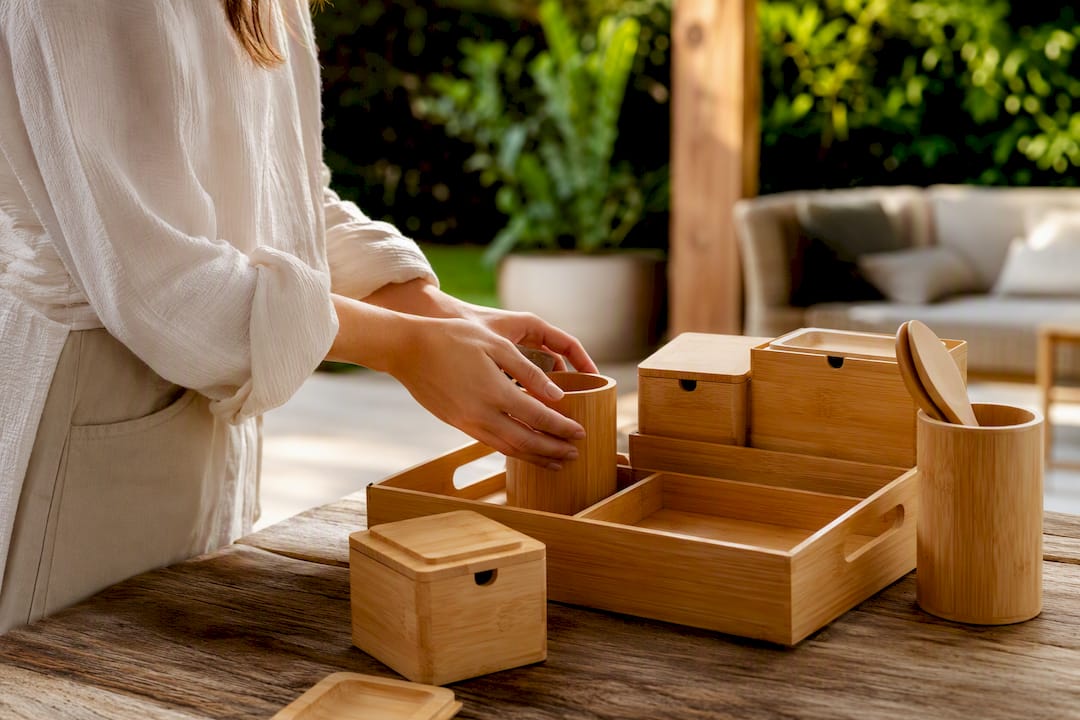
Durable household goods. Items built to survive years of daily use, not months. This is where materials matter most. A bamboo paper towel dispenser from Cozee-bay is a clean example: it’s made from a fast-growing renewable material, it’s built to be refilled and reused indefinitely, and it replaces a category of plastic holders that typically end up cracked and discarded within a year or two. Budget range: $$ to $$$.
Consumables. Coffee, tea, artisan soap, or specialty foods, ideally packaged with minimal plastic. These work well as low-commitment, budget-friendly gifts. Budget range: $ to $$.
Secondhand and vintage finds. A pre-loved item avoids the manufacturing footprint entirely. Vintage jewelry, refurbished electronics, or thrifted clothing all fall here. Budget range: $ to $$, occasionally higher for specialty vintage pieces.
Donations made in someone’s name. A contribution to a cause the recipient cares about, or a tree-planting or carbon-removal gift, sidesteps physical production altogether. As Sustainability Victoria points out, a donation can be the single most sustainable option because it avoids the resources needed to make a new item in the first place. Budget range: flexible, from $10 to $100 or more.
DIY and upcycled gifts. Homemade preserves in a repurposed jar, a hand-knit scarf, or refurbished furniture. These carry a personal touch that store-bought items rarely match. Budget range: often under $25 in materials.
Plant and tree gifts. A potted herb start, a propagated houseplant cutting, or a fruit tree sapling. Living gifts grow in value over time instead of degrading. Budget range: $ to $$.
Subscriptions. A magazine, a seed-of-the-month box, or a streaming service gift card. These avoid one-time packaging waste tied to a single physical product, though it’s worth checking what gets shipped monthly. Budget range: $$ to $$$ depending on length.
An experience or donation tends to beat a physical item when the recipient already has plenty of belongings, when you’re shopping for someone hard to buy for, or when the occasion doesn’t call for something to unwrap. A physical gift makes more sense when durability and daily use are the point, which is exactly the case for household tools people reach for every day.
Good intentions don’t automatically produce a good gift. You need a system, because greenwashing is everywhere and vague language on a product page is designed to sound better than it is.
Run through this before you buy:
Certifications help cut through the noise, but only if you know what they actually mean:
As SWITTS’ guide on eco-friendly gifts notes, recycled materials and organic fibers backed by these certifications are far more meaningful indicators than a product simply calling itself “green.”
Watch for red flags that signal greenwashing rather than substance:
On price: paying more usually makes sense when you’re buying something durable and repairable that will be used for years, since the cost gets spread across a much longer lifespan. Lower-cost consumables are perfectly fine when the item is inherently short-lived anyway, like specialty tea or handmade soap. The problem isn’t spending less. It’s spending on something disposable and being told it’s sustainable anyway.
Before you check out, ask the seller (or look for the answer on the product page): What is this made of? Is there a warranty? Do you offer repairs or a take-back program? Where is it manufactured? If a company can’t answer at least two of those, that tells you something.
Once you know the categories and the checklist, the actual shopping gets a lot faster. Here’s a practical breakdown organized by who you’re buying for and what you’re willing to spend.
For the new homeowner, durable household goods win almost every time. A bamboo dispenser, a set of drawer organizers, or a wrap and foil dispenser solves a real daily annoyance while lasting years, unlike plastic organizers that crack within months. If you want more ideas in this lane, Cozee-bay’s guide to sustainable home decor has practical suggestions beyond dispensers.
For the gardener, plant gifts and seed collections are the obvious fit, and they scale from a $10 seed packet to a $100 fruit tree sapling.
For the host or hostess, consumables like local honey or a package-free candle strike the right note without becoming clutter.
For the zero-waste newbie, start small: reusable produce bags, a bar soap set, or a subscription to a package-free goods delivery service. These are low-commitment ways to introduce someone to the habit without overwhelming them with a full kitchen overhaul.
For kids, wooden toys, secondhand books, or a membership to a local museum or zoo tend to outperform plastic toys that break within a season.
The gift itself can check every box on sustainability and still get undone by the wrapping. Many common wrapping papers, especially anything metallic or glittered, aren’t recyclable, according to guidance from the City of Raleigh’s holiday waste reduction tips.
Better options:
On shipping: consolidate orders into a single package rather than several small ones, choose standard shipping instead of expedited when you can, and pick local pickup if it’s an option. All three cut down on the emissions tied to transportation.
Pro Tip: If you’re gifting an experience or donation, print a simple voucher or handwrite a card, then wrap it in a reusable cloth bag. It gives the gift a physical moment of unwrapping, which research on gift-giving suggests matters a lot for how the recipient receives it, even when there’s no object underneath.
Skip metallic paper, glitter-covered anything, and plastic tape. None of it recycles, and it often contaminates the recyclable materials it’s stuck to.
Not every retailer claiming to be “eco” deserves your money. A few reliable channels tend to hold up better than a generic search:
Before you commit to a purchase, run through this quick checklist:
If you’re shopping for an experience gift, plan around booking windows. Cooking classes and workshops often need two to three weeks’ lead time to guarantee a spot, while e-gift cards and digital donation certificates can typically be delivered same-day, which makes them a solid backup for last-minute occasions.
A useful way to think about any gift is its “material biography,” a term used to describe tracking a product from raw material origin through processing and all the way to what happens when it’s discarded, as explained by Sustainability Directory’s definition of sustainable gifting. This matters because surface-level cues like a rustic look or a “natural” label tell you almost nothing about the actual footprint.
A few heuristics make this practical without requiring a formal lifecycle assessment:
Circle back to that seasonal waste figure: 1 million extra tons of trash a week during the holiday season. A single-use paper towel roll contributes to that pile every time it’s used and tossed. A durable bamboo dispenser, built to be refilled for years, simply doesn’t generate that same recurring waste stream. That’s lifecycle thinking in action, not theory.
A product’s real environmental story is written in three places: where its materials came from, how much processing they went through, and what happens to it after use. Anything else is just packaging for the story.
For readers who want to go deeper on this framework, the sources listed further down cover certifications, wrapping guidance, and the lifecycle primer in more detail.
The best sustainable gifts don’t stop at the wrapping paper. They pull the recipient into the habit with you. A cooking class built around seasonal, local produce teaches something the recipient can keep using long after the gift is opened. A tree-planting donation made together, where you both track the project’s progress online, turns a one-time gesture into an ongoing shared interest.
Consider gifting an experience that has an environmental education angle built in: a guided nature hike, a beekeeping workshop, a composting class, or a membership to a local botanical garden. These work especially well for people who are curious about sustainability but haven’t found an easy entry point.
Another option is gifting something you’ll use together. A shared subscription to a seed-of-the-month box, a joint volunteer day at a local cleanup, or even a matching set of reusable items for two households can turn sustainability into a habit instead of a one-off purchase. The goal isn’t to lecture anyone about their carbon footprint. It’s to make the sustainable choice the fun, obvious one, so it sticks without anyone feeling like homework was assigned along with their birthday present.
At Cozee-bay, we spend our days thinking about bamboo, of all things, and what a strange but useful place that turns out to be to think from. Every dispenser and organizer we design has to answer the same questions this guide walks through: is the material renewable, will it actually last, and can it be repaired instead of replaced? Our bamboo paper towel dispensers reflect that thinking directly. They’re built to be refilled for years, not swapped out every season, and the packaging avoids the excess plastic that undercuts so many “eco” products on the market. If you’re weighing whether a household gift lives up to its sustainability claims, that’s exactly the standard we hold our own products to. Check the details, ask the questions, and let the answers guide the purchase.
If everything in this guide sounds right but you still need an actual gift to buy, Cozee-bay solves the exact problem the “durable household goods” category describes: a handcrafted bamboo item that replaces something disposable and sticks around for years instead of months. Our bamboo paper towel dispensers are compatible with multiple towel fold types and brands, so the gift works in almost any kitchen without a learning curve, and they’ve found homes everywhere from restaurants and coffee shops to senior living centers.

Beyond dispensers, browse our food bag organizers, wrap and foil dispensers, and drawer organizers if you want to build out a full sustainable kitchen or pantry gift. Every piece is handcrafted from natural bamboo, and shipping is free within the contiguous U.S., backed by a money-back guarantee if it doesn’t fit the recipient’s space or style. If you’re shopping for a housewarming gift, a holiday present, or something for a colleague who’s trying to cut down on kitchen waste, browse the Cozee-bay catalog and pick a piece that’s built to outlast the wrapping paper it came in.
What is a sustainable gift, in simple terms? A sustainable gift is one that minimizes environmental and social harm across its entire lifecycle, from raw material to disposal, while still being genuinely useful or meaningful to the person receiving it.
What makes a gift sustainable versus just “eco-friendly” marketing? Real sustainability shows up in specifics: named materials, verifiable certifications, clear end-of-life options, and evidence of durability. Marketing language without any of that backing is usually greenwashing.
Are experience gifts always more sustainable than physical items? Often, yes, since they skip manufacturing and packaging waste entirely. But a genuinely durable physical item, like a bamboo dispenser built to last for years, can offer strong long-term value too, especially for practical household needs.
What’s a good sustainable gift under $50? Reusable produce bags, a donation to a reforestation project, a cooking class gift card, or a package-free soap set all fit comfortably under $50 while checking the sustainability boxes.
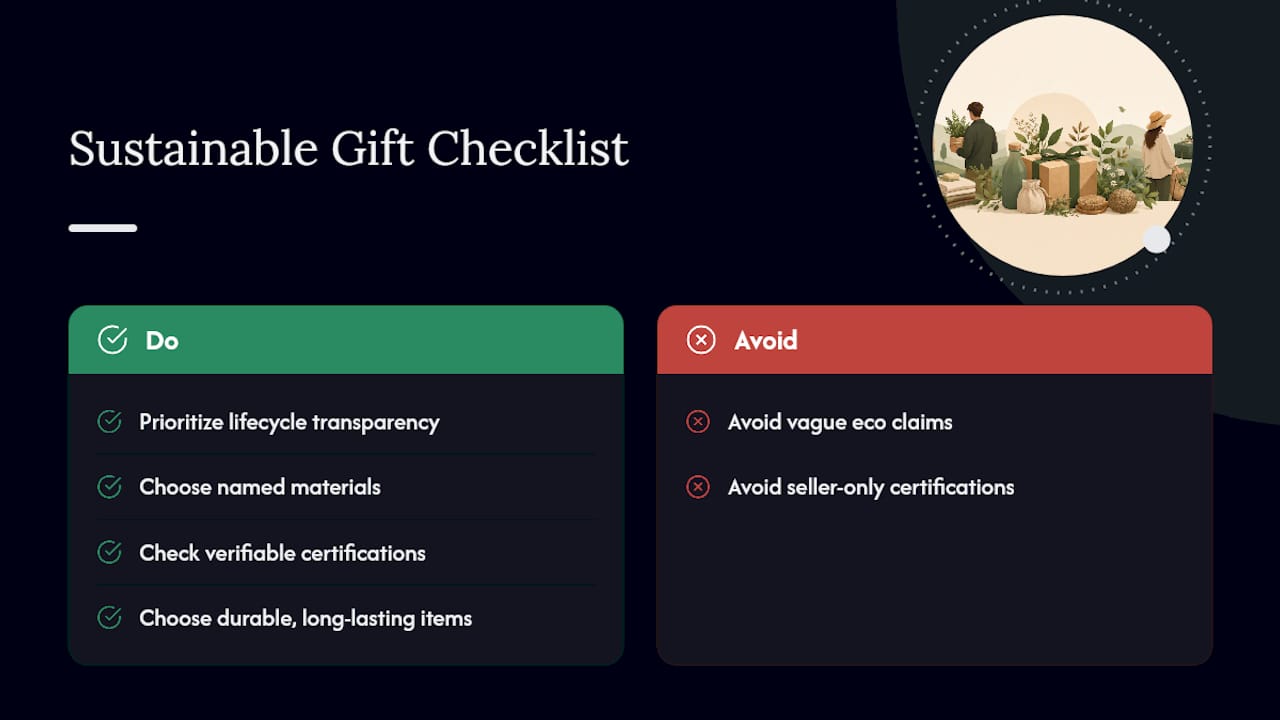
How can I tell if a certification on a product is legitimate? Look for recognized names like FSC, GOTS, Fair Trade, OEKO-TEX, and B Corp. If a “certification” only appears on the seller’s own packaging with no independent verification, treat it with skepticism.
Comments will be approved before showing up.