Your Cart is Empty


TL;DR:
- Reusable produce bags made from polyester mesh or organic cotton improve freshness and reduce plastic waste during shopping. Choosing the right size, mesh gauge, and closure type enhances convenience and maintains produce quality. Proper care extends their lifespan, making them eco-friendly and cost-effective alternatives.
Reusable produce bags are specially designed bags made to replace disposable plastic bags during grocery shopping, offering breathability and sustainability for fresh produce storage. Unlike the flimsy single-use plastic bags piled at the end of every grocery aisle, these bags are built to last, made primarily from polyester mesh and organic cotton. They keep your fruits and vegetables fresher longer, cut down on plastic waste, and often include tare weight tags so you pay only for your produce at checkout. If you have been reaching for those plastic bags out of habit, this guide will give you every reason to make the switch.
The two most common materials for reusable produce bags are polyester mesh and organic cotton. Each has a distinct set of strengths, and choosing between them depends on what matters most to you.
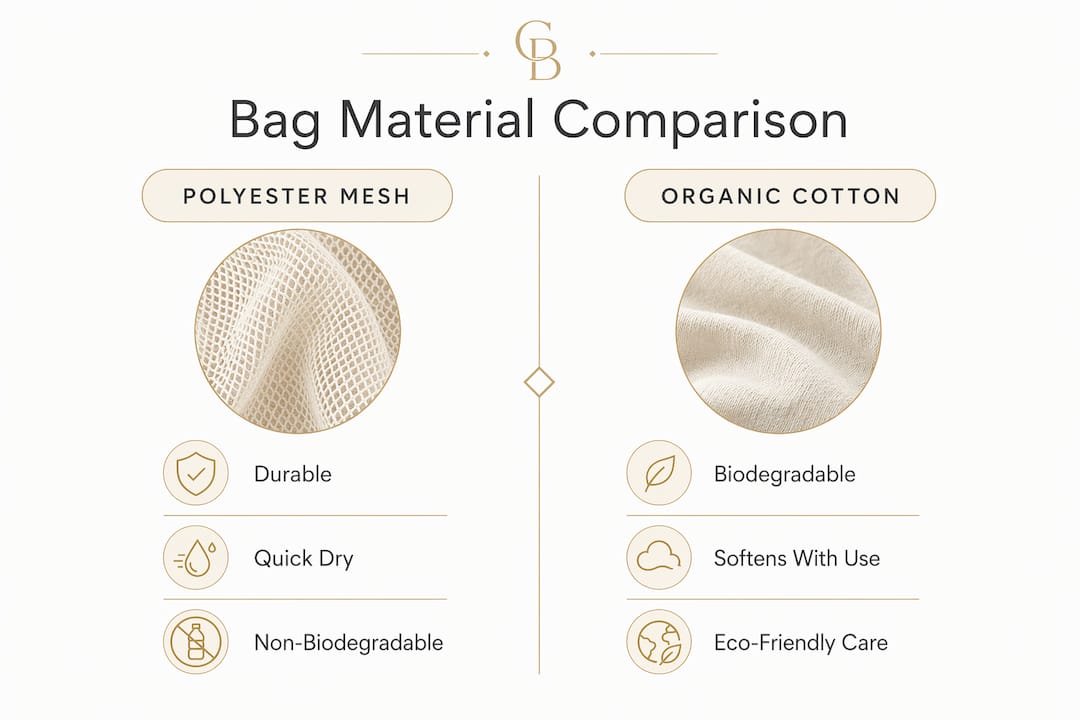
Polyester mesh bags are lightweight, durable, and quick-drying. They hold up well through dozens of wash cycles, resist tearing, and dry fast enough to toss back in your shopping bag before your next trip. Organic cotton bags, on the other hand, offer a fully biodegradable, plastic-free alternative that breaks down naturally at the end of its life. Cotton mesh is breathable and gentle on delicate produce like peaches or plums.
The environmental footprint of each material differs in one key way. Polyester is durable but not biodegradable, meaning it will outlast you in a landfill if it ever gets thrown away. Organic cotton decomposes, but it requires more water and land to produce. Neither is perfect, but both are dramatically better than single-use plastic.
| Feature | Polyester mesh | Organic cotton |
|---|---|---|
| Biodegradable | No | Yes |
| Dries quickly | Yes | Slower |
| Durability | Very high | High |
| Softens with use | Minimal | Yes, after washes |
| Best for | Heavy or wet produce | Delicate or dry produce |
Care instructions differ slightly between the two. Both are machine washable on mild settings, but organic cotton bags benefit from air drying to preserve their fibers. Avoid bleach and fabric softeners for either material, as both can degrade the weave over time.
Pro Tip: If reducing plastic in landfills is your top priority, choose organic cotton. If you need bags that dry fast and handle rough use, polyester mesh is the better call.
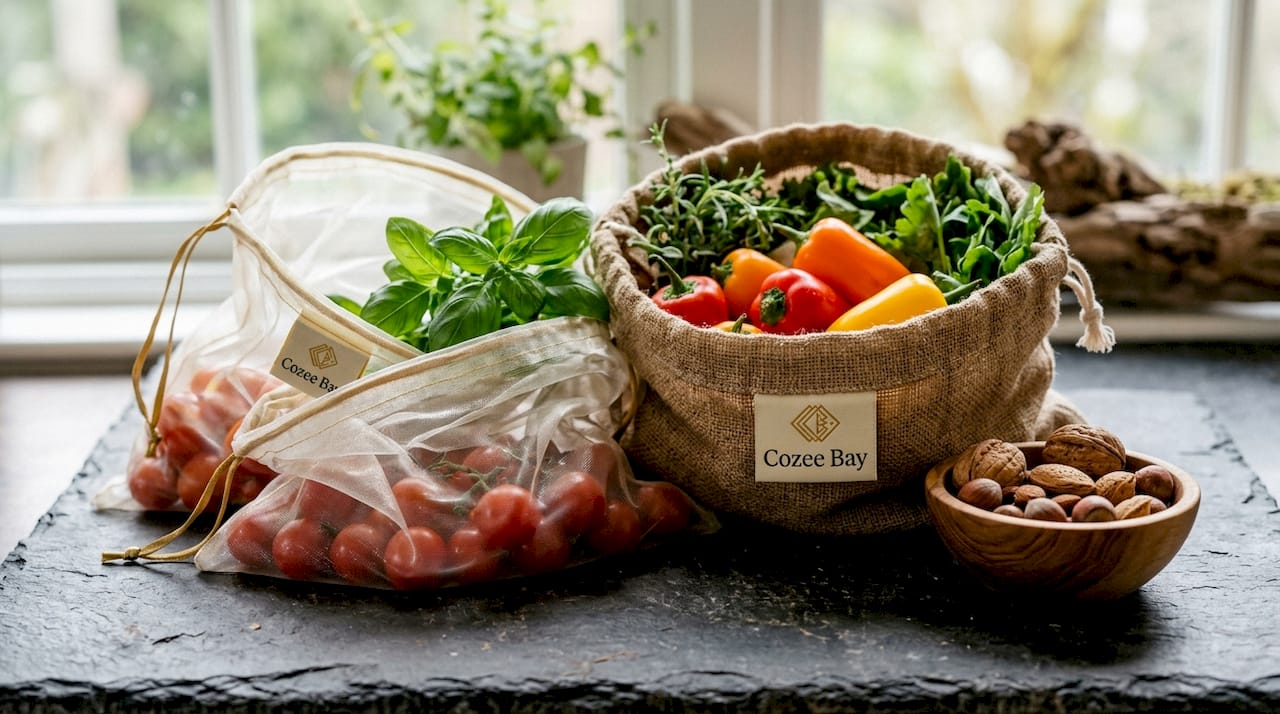
Mesh bags support air circulation, which reduces moisture buildup and slows spoilage. That open-weave design is the single biggest advantage over sealed plastic bags, which trap ethylene gas and moisture, accelerating rot.
Produce that benefits most from breathable storage includes:
Drawstring closures add another layer of practicality. Drawstrings keep produce contained during shopping and transport, preventing loose items from rolling around your cart or scattering across the checkout belt. That small design detail makes a real difference on a busy shopping day.
The breathability benefit extends beyond the store. When you get home, you can place the bag directly in your fridge or pantry without transferring produce to another container. The mesh continues to allow airflow, so your vegetables stay crisp for longer without any extra effort on your part.
Pro Tip: Store herbs like cilantro or parsley in a mesh bag in the fridge. The airflow keeps them from getting slimy far faster than a sealed plastic bag would.
Choosing the right bag comes down to three factors: size, mesh gauge, and closure type. Getting these right means less frustration at the store and better freshness at home.
Match size to produce volume. Small bags work well for garlic cloves, cherry tomatoes, or shallots. Medium bags handle apples, pears, and bell peppers. Large bags are best for bulky items like broccoli, cabbage, or a bunch of bananas. Carrying a set with all three sizes covers nearly every shopping scenario.
Choose fine mesh for small items. Fine gauge mesh prevents small produce from slipping through the weave. Garlic cloves, grapes, and cherry tomatoes will fall right through a coarse mesh bag. Fine mesh holds them securely while still allowing airflow.
Use larger mesh for bulkier produce. Apples, oranges, and onions do not need fine mesh. A larger weave gives them more airflow and makes the bag lighter overall.
Look for tare weight tags. Tare weight tags let cashiers subtract the bag’s weight at checkout so you pay only for your produce. Without this tag, you may be charged for the bag fabric itself, which adds up over time. This feature is a small detail that saves real money.
Pick drawstring closures for convenience. Drawstrings are the most practical closure for grocery shopping. They cinch tight to keep produce in place and loosen quickly when you need to grab something. Twist-tie or open-top designs work too, but drawstrings offer the best balance of security and ease.
Good care habits keep your bags clean, hygienic, and functional for years. A few simple rules make all the difference.
Organic cotton bags soften and become more pliable after multiple washes. That is a good sign, not a sign of wear. The softening makes them easier to open, fill, and cinch, so they actually get better with use.
Reusable produce bags made from polyester mesh or organic cotton outperform single-use plastic on freshness, cost, and environmental impact when chosen and cared for correctly.
| Point | Details |
|---|---|
| Material choice matters | Polyester mesh dries fast and lasts longer; organic cotton is biodegradable and softens with use. |
| Breathability preserves freshness | Open-weave mesh reduces moisture and ethylene buildup, keeping produce crisp longer than plastic. |
| Tare weight tags save money | These tags let cashiers subtract the bag weight so you pay only for your produce at checkout. |
| Match mesh gauge to produce size | Fine mesh holds small items like garlic; larger mesh suits bulky produce like apples or onions. |
| Simple care extends bag life | Gentle washing, no bleach, and air drying keep bags clean and functional for years. |
When I first started using reusable mesh bags, I expected the transition to feel like a chore. It did not. The part that surprised me most was how much longer my produce stayed fresh. Spinach that used to go limp by day three was still crisp on day five. That alone made the habit stick faster than any environmental guilt ever could.
The one thing most people overlook is the tare weight tag. Shoppers grab a bag, fill it up, and head to checkout without realizing they might be paying for the bag’s weight along with their produce. Bags with printed tare tags solve this quietly and completely. It is a small feature that signals a well-made product.
My other honest observation: bag selection matters more than most guides admit. A coarse mesh bag filled with garlic cloves is a disaster waiting to happen. Spending five minutes matching your bag set to your typical shopping list saves a lot of frustration. Start with a mixed set of small, medium, and large bags, and you will cover nearly every trip without thinking twice.
If you are building a more eco-friendly kitchen routine, reusable produce bags are one of the easiest first steps. They cost little, last long, and pay back in fresher food and less plastic guilt every single week.
— Cozee
Switching to reusable bags is one piece of a larger shift toward a more organized, waste-free kitchen. Cozee-bay carries a range of eco-conscious products built to support that shift, from food bag organizers to wrap and foil dispensers that keep your kitchen tidy and plastic-light.

Whether you are just starting to cut down on single-use plastics or you are already deep into a zero-waste routine, Cozee-bay’s sustainable kitchen products are designed with the same values you bring to the grocery store. Quality materials, practical design, and a commitment to lasting use over disposable convenience. Browse the full collection and find the pieces that fit your kitchen and your habits.
Reusable produce bags are made primarily from polyester mesh or organic cotton mesh. Both materials are washable, breathable, and designed to replace single-use plastic bags at the grocery store.
Yes. The open-weave mesh allows air to circulate around produce, reducing moisture buildup and slowing spoilage compared to sealed plastic bags.
A tare weight tag lists the bag’s empty weight so cashiers can subtract it at checkout. This means you pay only for your produce, not the bag fabric.
Machine wash on a gentle cycle with mild detergent, or hand wash. Avoid bleach and fabric softeners, and air dry or tumble dry on low heat to preserve the fabric.
Use small bags for garlic, grapes, and cherry tomatoes; medium bags for apples and bell peppers; and large bags for broccoli, onions, or bunches of bananas. A mixed set covers most shopping trips.
Comments will be approved before showing up.