Your Cart is Empty

In this guide, “sustainable fabrics” refers to bamboo-based structural materials used for durable home and commercial goods — solid bamboo, strand-woven boards, laminated bamboo panels — not apparel textiles. If you’ve been searching for eco-friendly material choices for products like paper-towel dispensers, organizers, or countertop accessories, you’re in the right place.
Quick takeaway: Bamboo is a genuinely greener choice when the product discloses its adhesive type, carries an FSC or EPD certification, and is designed for dry or low-humidity use. The red flag to watch for? Any product labeled simply “bamboo” with no resin or finish disclosure — that vagueness often hides processing steps that offset the material’s natural advantages, as INBAR’s lifecycle research confirms.
Three credibility signals worth knowing upfront:
Bamboo is genuinely lower-impact than most alternatives when the adhesive is disclosed, an EPD or FSC certification is present, and the product is matched to the right humidity conditions.
| Point | Details |
|---|---|
| Material type determines impact | Solid and plybamboo carry lighter processing footprints than strand-woven; always confirm the form. |
| Adhesive disclosure is non-negotiable | Resin type and percentage reveal more about environmental cost than any “eco” label. |
| Certifications to prioritize | FSC covers sourcing; EPD covers full lifecycle impact — both together give the clearest picture. |
| Match material to environment | Bamboo suits dry and low-humidity settings; high-moisture areas may need a denser hardwood alternative. |
| Cozee-bay for verified bamboo goods | Cozee-bay’s handcrafted bamboo dispensers and organizers include material and finish details for informed comparison. |
Not all bamboo products are made the same way, and the material form determines durability, processing intensity, and how well the product holds up in your kitchen or break room.
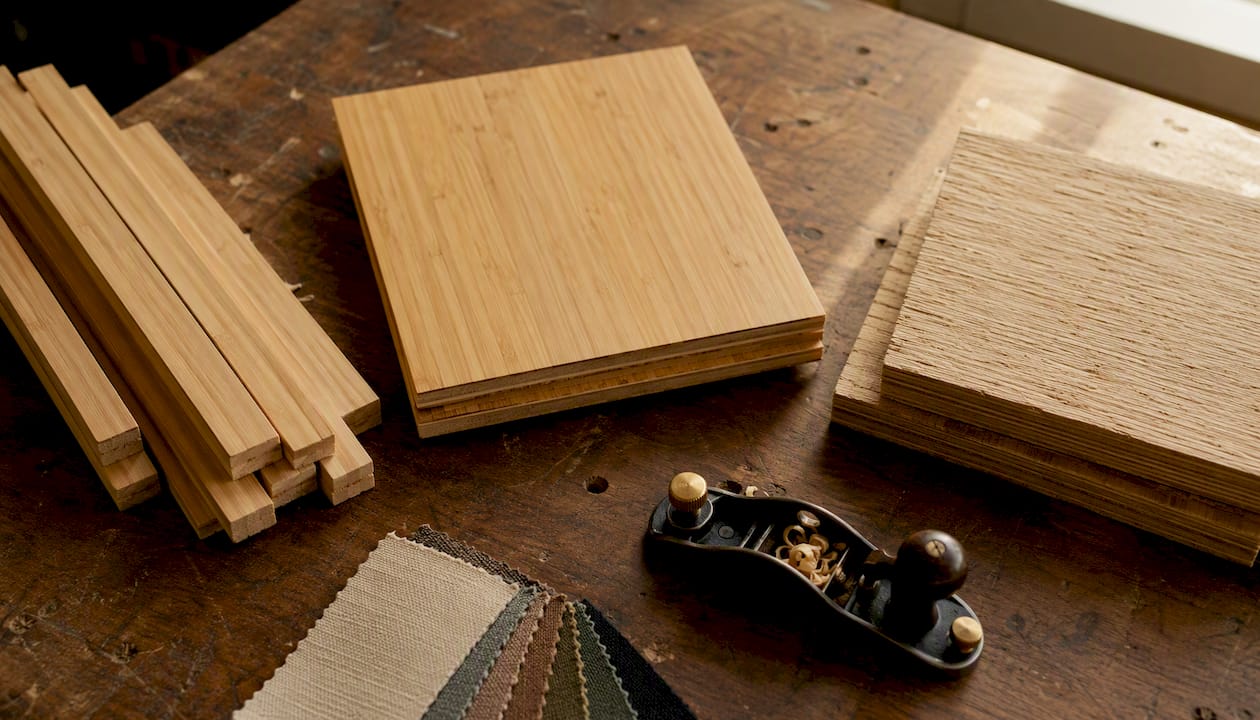
| Material Type | How It’s Made | Common Uses | Key Consideration |
|---|---|---|---|
| Solid/strip bamboo | Cut and planed culm sections | Organizers, small dispensers | Lowest processing; check for VOC-free adhesive |
| Plybamboo | Cross-laminated bamboo strips | Panels, drawer inserts | Glue layer count matters for off-gassing |
| Strand-woven | Shredded fibers compressed with resin | Countertops, heavy-use dispensers | Higher resin content; ask for resin percentage |
| Laminated/engineered panels | Layered strips bonded under heat | Shelving, commercial organizers | Thermal modification reduces but doesn’t eliminate adhesive impact |
Solid and strip bamboo carry the lightest processing footprint. Strand-woven bamboo is noticeably denser and harder, which makes it attractive for high-traffic commercial settings, but the resin used in compression raises the environmental cost. Laminated panels sit in the middle. For paper-towel dispensers and drawer organizers, solid or plybamboo construction usually offers the best balance of sustainability and function. You can see examples of bamboo product categories that illustrate how each material type translates into everyday goods.
Pro Tip: When a product page says “bamboo wood” without specifying the form, ask whether it’s solid, ply, or strand-woven. That single answer tells you more about processing intensity than any “eco” badge.
Bamboo’s biggest environmental advantage is at the growth stage. Peer-reviewed research shows managed bamboo forests sequester substantially more CO2 than many hardwood forests, functioning as effective carbon sinks. That growth-stage benefit is real, but it doesn’t automatically carry through to the finished product on your counter.
Statistic to know: INBAR’s LCA analysis found that bamboo flooring, panels, and beams can achieve carbon-neutral or even carbon-negative outcomes — but only under specific production and end-of-life assumptions, including responsible adhesive use and energy recovery at disposal.
The MOSO/TU Delft LCA adds important nuance: optimized production parameters can push industrial bamboo materials into negative carbon-footprint territory, but resin content and thermal processing are the two variables most likely to push that number back up. In plain terms, a well-made bamboo organizer from a disclosed-adhesive manufacturer can outperform most alternatives. A poorly disclosed strand-woven product shipped halfway around the world may not.
Earth911’s consumer reporting makes the transport point clearly: long import distances can erode the carbon benefits bamboo earns at the farm. Sourcing transparency — knowing where the bamboo was harvested and processed — matters as much as the material itself. The full picture of bamboo’s lifecycle from growth to end use is worth understanding before you buy.
Pro Tip: Ask the manufacturer for an EPD or LCA summary. A credible one will specify the system boundary (cradle-to-gate vs. cradle-to-grave) and list resin content. If neither exists, treat the “eco” claim as unverified.
The growth stage is clean. Manufacturing is where things get complicated. Here’s where the biggest impacts occur:
Questions to ask your supplier before buying in volume:
Investigative reporting on bamboo sustainability warns that vague “bamboo” labeling can mask chemically intensive processing. Closed-loop manufacturing and specific certifications are the clearest way to avoid that trap.
Bamboo is hygroscopic, meaning it absorbs and releases moisture with changes in humidity. In a dry climate or a well-ventilated kitchen, that’s rarely a problem. In a steamy restaurant kitchen or a bathroom with poor airflow, it can cause swelling, warping, or glue-bond failure over time.
Common failure modes to watch for:
Maintenance steps that genuinely extend product life:
Cozee-bay’s bamboo product maintenance guide walks through these steps in detail, including oiling schedules suited to both home and commercial use.
Pro Tip: For facility managers in high-humidity areas (commercial kitchens, senior living centers, coffee shops), specify products with a moisture-barrier finish and confirm the finish is food-safe before ordering in volume.
Not every “eco” label on a bamboo product means the same thing. Here’s what to look for and what each actually verifies:
Manufacturer disclosures to request alongside certifications:
Pro Tip: “Sustainably sourced” with no linked certificate is marketing language, not a verifiable claim. A short transport distance from a certified forest to a local processor can matter more than a certificate from a distant, uncertified supply chain. Sourcing transparency on ethically harvested bamboo is a good starting point for understanding what to ask.
Use this checklist whether you’re buying one organizer for your home office or specifying fifty dispensers for a facility.
Must-ask specs:
Red flags:
For commercial procurement (volume buyers):
Walk through a real example: a bamboo paper-towel dispenser for a coffee shop counter. You’d want to confirm it’s solid or plybamboo (not strand-woven with undisclosed resin), that the finish is food-safe and moisture-resistant, and that the adhesive is disclosed. A product that checks those boxes will hold up through daily wipe-downs and last long enough to justify its environmental cost.
Choosing a bamboo dispenser with a disclosed food-safe finish and FSC-certified sourcing gives you a product that’s genuinely lower-impact than a plastic alternative — not just on paper, but across its full service life in a commercial setting.
Cozee-bay’s bamboo paper-towel dispensers are designed for exactly these environments: restaurants, schools, senior living centers, and coffee shops where durability and hygiene matter as much as sustainability. The brand’s product pages include material and finish details, which is the kind of disclosure the buyer checklist above asks for.
Pro Tip: For high-use commercial areas, ask specifically whether the dispenser’s finish is rated for repeated cleaning with commercial-grade mild disinfectants. A food-safe oil finish works well at home; a harder lacquer or wax finish often holds up better in a restaurant setting.
The sustainability conversation around bamboo tends to focus on what happens at the farm. That’s the easy part to market. What actually determines whether your purchase is genuinely lower-impact is what happens between the farm and your counter: the adhesives, the processing energy, the shipping distance, and how long the product lasts before it needs replacing.
A bamboo organizer that lasts eight years with proper care beats a “certified sustainable” one that warps in two. Ask for the EPD, check the adhesive disclosure, and match the material type to your humidity conditions. Those three steps do more for your actual environmental footprint than any label.
If you’ve worked through the buyer checklist and want to see what disclosed-material, handcrafted bamboo products actually look like in practice, Cozee-bay is a practical place to start. The brand’s bamboo paper-towel dispensers and organizers are built for real commercial and home use, with free shipping across the contiguous U.S. and a money-back guarantee that takes the risk out of trying something new.
Browse the full catalog at Cozee-bay, compare material and finish details against the checklist above, and reach out with any spec questions before you order. That’s exactly the kind of informed purchase this guide is designed to help you make.
These are the primary reports and resources cited throughout this guide:
Comments will be approved before showing up.