Your Cart is Empty


Biodegradable means a material breaks down naturally through the action of microorganisms like bacteria and fungi, returning to water, carbon dioxide, and organic matter rather than lingering as waste. Here are 20 common biodegradable examples you’ll find in almost any household:
Decomposition times swing wildly depending on the material and its environment, from a couple of weeks for lettuce leaves to several years for a leather boot. Where you throw something away matters just as much as what it’s made of.
Biodegradable materials break down through microbial action, but the timeframe depends entirely on the material’s structure and the disposal environment it ends up in.
| Point | Details |
|---|---|
| Know your 20 examples | Food scraps, paper, wood, bamboo, and natural fibers all biodegrade, but on wildly different timelines. |
| Match disposal to material | Home compost handles food scraps and paper; PLA bioplastics and thick rubber usually need industrial facilities. |
| Read labels critically | “Biodegradable” alone doesn’t guarantee fast or clean breakdown; look for a recognized compostability certification. |
| Avoid landfill for organics | Landfills trap organic waste anaerobically, generating methane instead of clean decomposition. |
| Favor durable materials | Long-lasting natural materials like bamboo reduce total waste more than swapping one disposable for another. |
Knowing the name of an item is one thing. Knowing whether it belongs in your backyard bin, your municipal green cart, or nowhere near a landfill is what actually changes your habits. Here’s the breakdown for all 20, organized from the everyday kitchen items you already handle to the tougher, woodier materials that take patience.
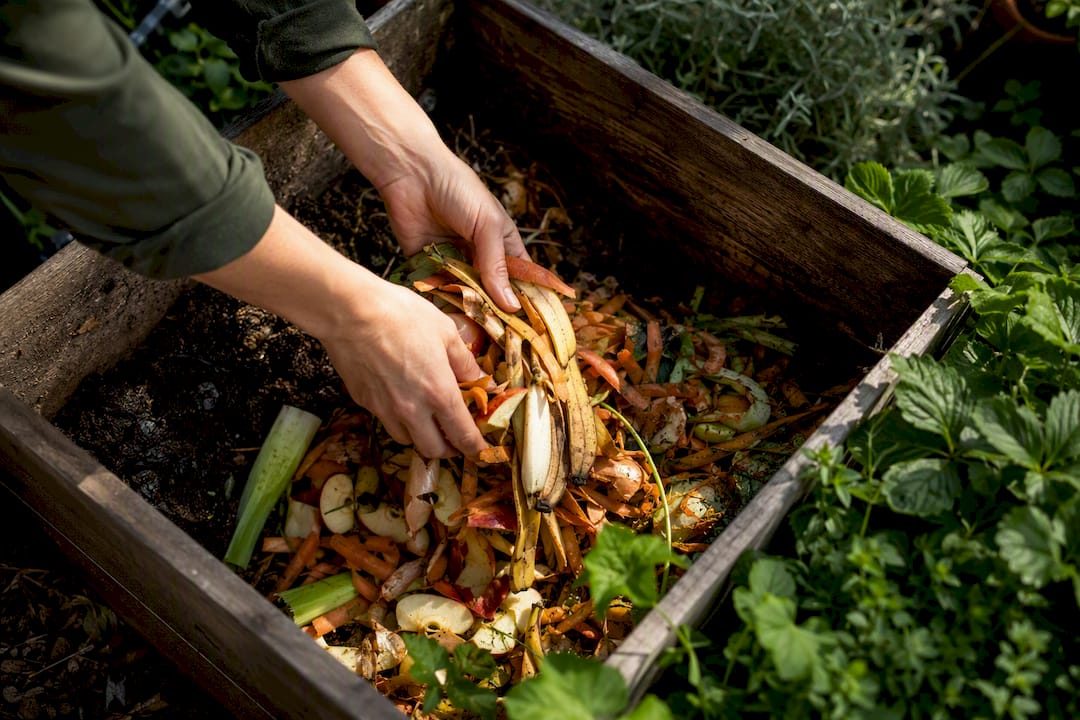
Fruit and vegetable scraps break down fast because they’re mostly water and simple sugars that microbes devour almost immediately. Apple cores, carrot peels, and banana skins typically vanish into compost within two weeks to three months, depending on size and how often you turn the pile. These are the easiest home-compost win on this whole list.
Coffee grounds are nitrogen-rich and already broken into fine particles, so they decompose in roughly one to three months in an active compost bin. They also happen to be a favorite of earthworms, which speeds things along further.
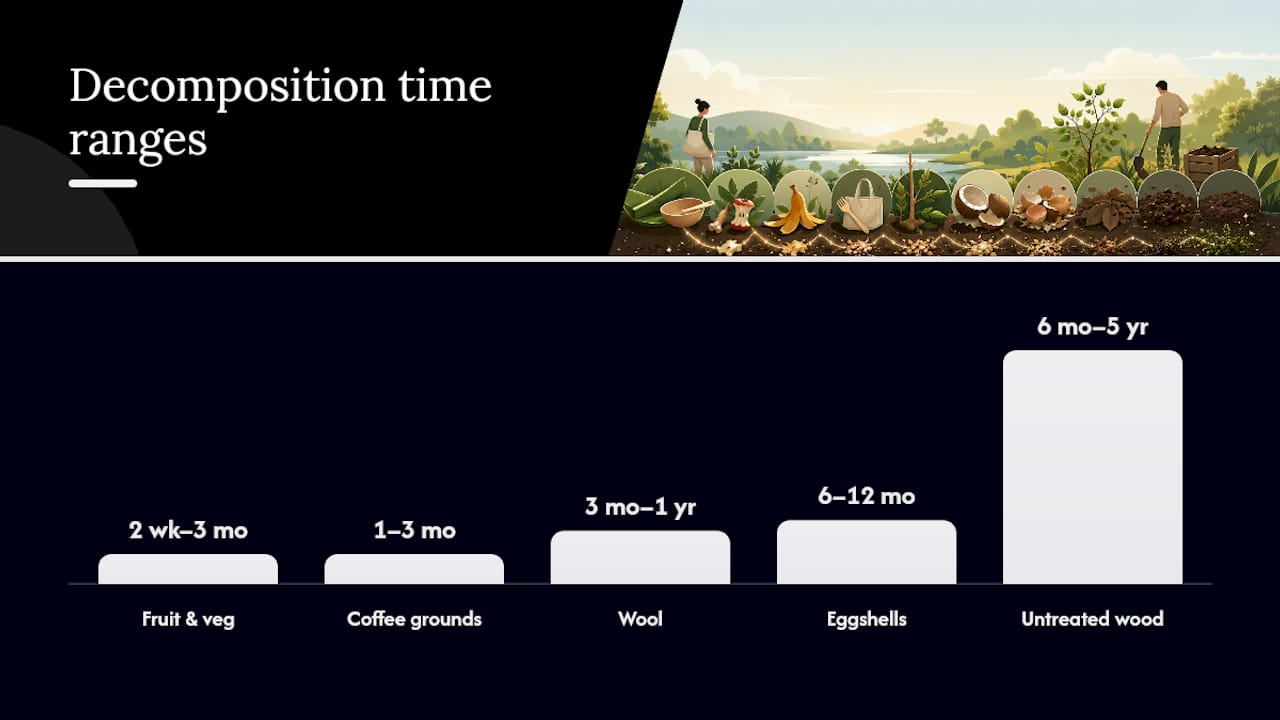
Eggshells are mostly calcium carbonate, a mineral that doesn’t feed microbes the way sugars do, so they take longer, often six months to a year to fully break down. Crushing them first cuts that time significantly and adds calcium to your soil.
Tea bags made from paper decompose in a similar window to coffee grounds, about one to three months, but check the bag first. Many mainstream brands quietly use a thin polypropylene mesh to seal the bag, which does not biodegrade and needs to be picked out before composting.
Paper decomposes in two to twelve weeks under decent composting conditions, since it’s just processed plant cellulose that fungi break down readily. Glossy, coated, or heavily inked paper takes longer and is better sent to municipal recycling.
Cardboard follows a similar timeline to paper, generally landing in the two to twelve week range once shredded and mixed with moisture. Whole, unbroken boxes slow this down considerably because there’s less surface area for microbes to work on.
Cotton fabric, being pure plant fiber, breaks down in about one to five months in compost or soil. A cotton T-shirt with synthetic thread or printed dye will decompose more slowly and unevenly than a plain, undyed piece.
Wool takes a bit longer than cotton, often three months to a year, because the protein structure (keratin) resists microbial attack more than plant cellulose does. Wool actually releases nitrogen as it breaks down, making it a decent slow-release compost booster.
Silk is another protein fiber and decomposes on a similar timeline to wool, generally within a year under normal soil conditions. Because most silk items involve dyes or blended fabrics, pure silk scraps are rare in a typical kitchen compost bin.
Untreated wood decomposes over a wide range, six months to five years, depending on thickness, wood type, and moisture exposure. A thin twig disappears fast; a fence post takes years.
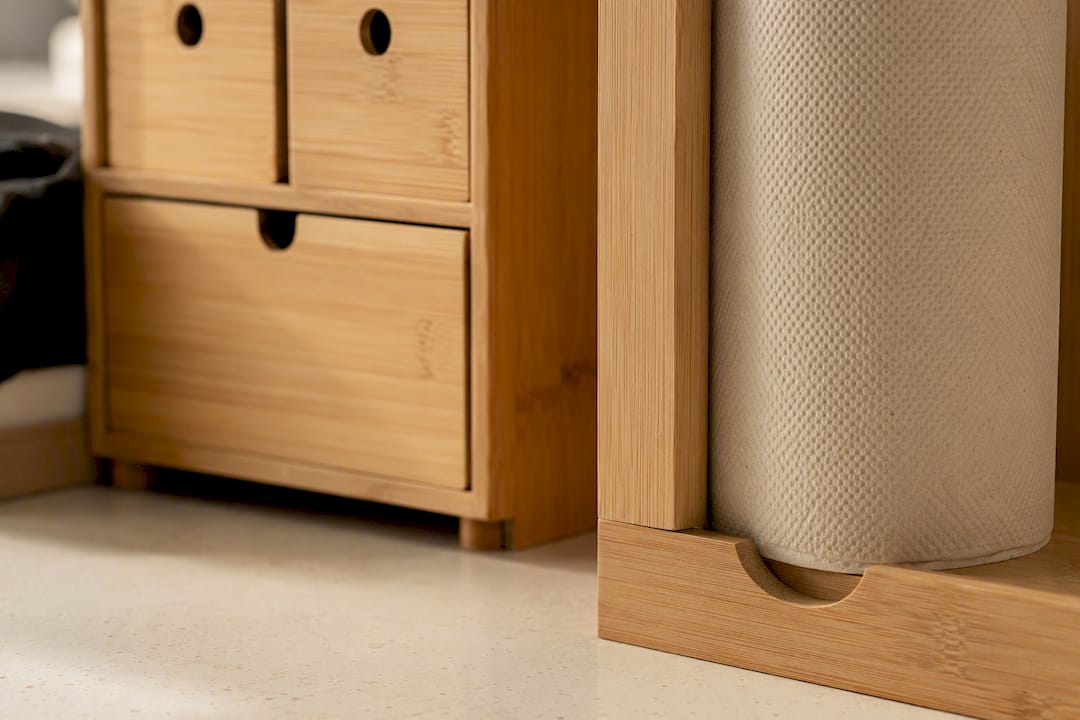
Bamboo biodegrades on a timeline similar to other untreated woods, generally one to three years for smaller pieces, because it’s a fast-growing grass with high cellulose content. This is also exactly why bamboo makes sense in durable household products (paper towel dispensers, organizers, drawer dividers) that are built to last years, not decompose in weeks. Reusable bamboo goods reduce waste by avoiding disposal altogether; you can see how that logic plays out across bamboo home organization products designed to replace single-use alternatives.
Bagasse, the fibrous pulp left over from crushing sugarcane, breaks down in about two to six months and is increasingly used for compostable plates and takeout containers. It typically needs the humidity and microbial activity of active composting rather than sitting dry in a bin.
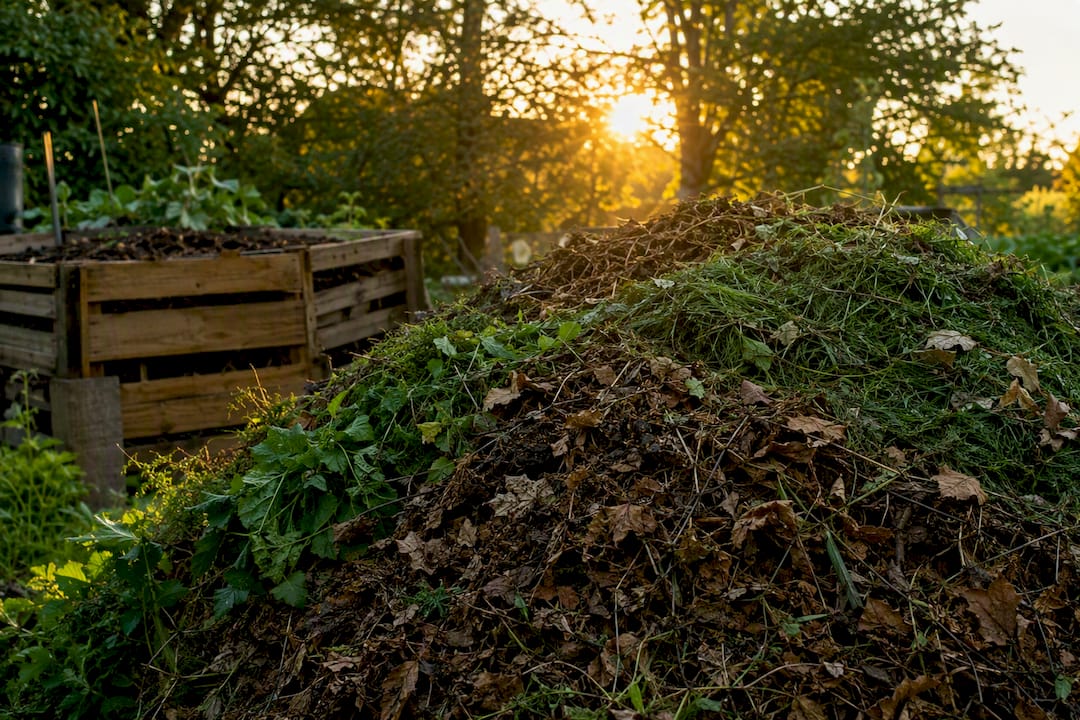
Leaves and grass clippings are yard waste staples, decomposing in two weeks to three months. Dry leaves (“browns”) break down slower than fresh grass clippings (“greens”), which is exactly why compost recipes ask you to mix the two.
Animal manure decomposes in about two to six months when composted properly, and it’s rich enough in nitrogen that it’s often used to jump start a sluggish compost pile. Raw manure should always be composted before it touches edible garden beds, since pathogens need time and heat to die off.
Coconut shells are dense and fibrous, so they take one to two years to break down fully, longer if left whole. Shredding or chipping them first speeds up the process considerably.
Natural rubber, meaning pure latex tapped from rubber trees, biodegrades over one to five years depending on thickness and whether it’s been vulcanized. Thick natural rubber items generally need industrial composting conditions rather than a backyard pile to break down at any reasonable pace.
Untreated leather falls in the same range Britannica cites for wood and leather generally, six months to five years. Tanned or chemically treated leather (the kind in most shoes and belts) decomposes far slower and shouldn’t go anywhere near home compost.
Nut shells, like walnut or pistachio, take around six months to two years because of their hard, woody structure. They’re better shredded or used sparingly, since whole shells can take up space without breaking down for a long stretch.
Cork, harvested from cork oak bark, decomposes in about one to two years. It’s slow but steady, and unlike synthetic wine stoppers, it never leaves microplastic residue behind.
Decomposition Snapshot: Yard waste breaks down in 2 weeks to 3 months, paper in 2 to 12 weeks, and wood or leather can take anywhere from 6 months to 5 years depending on moisture, heat, and how the material was treated.
Starch-based bioplastics like PLA are the outlier on this list. They’re technically biodegradable, but most only break down within a reasonable window under industrial composting temperatures, not in a backyard bin. Toss a PLA cup in your home pile and it may sit there for years, looking exactly like it did the day you put it in.
Biodegradation is the natural process of microorganisms consuming organic material and converting it into water, carbon dioxide, and biomass. Composting is a related but distinct process: it’s a managed version of biodegradation, where you control oxygen, moisture, and temperature to speed things up dramatically compared to leaving material to decompose on its own.
A handful of variables determine whether something breaks down in weeks or years:
This is exactly why landfills are such poor environments for biodegradable waste. Compacted trash has almost no oxygen, so organic material breaks down anaerobically and releases methane, a greenhouse gas more potent than carbon dioxide over a 20-year span.
Pro Tip: If your compost pile smells like rotten eggs, it’s usually anaerobic. Turn it to add oxygen and mix in dry “brown” material like shredded paper or dead leaves to balance the moisture.
Not everything on the list above belongs in your backyard bin, and getting that distinction right saves you a lot of frustration. Here’s what works, what to skip, and how to keep the whole system running smoothly.
The formula for a healthy pile comes down to balance: roughly equal parts nitrogen-rich “greens” (food scraps, grass) and carbon-rich “browns” (dry leaves, paper, cardboard), kept about as damp as a wrung-out sponge. Turn it every week or two to keep oxygen flowing.
Pro Tip: If your pile isn’t heating up or breaking down, it usually needs more nitrogen (add fresh scraps or grass clippings) or more moisture. If it’s soggy and smells, add dry browns and turn it.
If you want a deeper, step-by-step walkthrough, this practical home composting guide covers troubleshooting scenarios in more detail than a quick checklist can.
The word “biodegradable” on packaging tells you almost nothing about how fast something will actually break down, or under what conditions. Technically, given enough time, almost any organic material biodegrades eventually. The real question is whether it happens in your backyard bin within a season, or only inside an industrial facility running at sustained high heat.
This is where certification standards matter more than the label itself. In the European Union, a material generally has to hit around 90% mineralization within six months under controlled test conditions to make certain official compostability claims. That’s a genuinely tough bar, and it’s exactly why a product stamped “biodegradable” might sit in your compost pile looking unchanged for years.
A few things worth keeping in mind before you trust a package claim:
When in doubt, the safest move is disposing of uncertain items through municipal organics collection or a certified industrial facility rather than guessing.
Cozee-bay builds bamboo home goods, paper towel dispensers, drawer organizers, food bag holders, because bamboo is one of the few materials that manages to be both fast-growing and genuinely durable. That dual nature is exactly why understanding biodegradability matters to us:
For a closer look at how this plays out in practice, our guide on how renewable bamboo transforms home goods walks through the material’s full lifecycle.
Biodegradable describes any material that microorganisms, bacteria, fungi, and other decomposers, can break down into natural substances like water, carbon dioxide, and organic biomass. The key word is “natural process.” No machinery, no chemical treatment plant required, just microbes doing what they’ve done for billions of years.
This puts biodegradable materials in a different category from compostable ones, which is a common point of confusion. Compostable materials are always biodegradable, but they’re biodegradable under a specific, managed set of conditions (adequate heat, oxygen, and moisture) usually within a defined and tested timeframe. Oxo-degradable materials are different again: these are typically conventional plastics with additives that cause them to fragment into smaller pieces faster, but fragmenting isn’t the same as fully breaking down into natural components, and oxo-degradable products often leave behind microplastic residue rather than genuinely biodegrading.
Understanding this distinction changes how you shop and how you dispose of things. A product labeled biodegradable might take years in the wrong environment; a product labeled compostable, under the right certification, is bound to a tested standard. “Non-biodegradable,” by contrast, describes materials like most conventional plastics, glass, and metals that resist microbial breakdown almost entirely, sometimes for centuries.
The research here points to a simple truth that most “biodegradable” content skips over: the label tells you almost nothing useful on its own. What matters is the specific material, the specific disposal environment, and whether you’re realistically going to route that item to the right place. A banana peel and a PLA cup are both “biodegradable,” but treating them the same way is exactly how well-intentioned composters end up with a pile full of intact plastic years later.
Where conventional advice falls short is stopping at “just compost more.” That’s fine for food scraps, weaker for anything synthetic wearing a green label. The better first move, in our view, is reducing how much disposable material enters your home at all. A durable bamboo organizer that lasts a decade beats a dozen biodegradable replacements bought one after another. Composting is a good habit. Not needing to compost in the first place is a better one.
Comments will be approved before showing up.