Your Cart is Empty


The most effective relaxing bath combines a warm (not hot) soak, magnesium salt, dim lighting, and mindful breathing in the first few minutes to settle your nervous system. Soak for 20 to 30 minutes, timed 60 to 90 minutes before bed, and you’ll step out ready to sleep instead of wired from the heat.
TL;DR:
- Using warm water and magnesium salt in a bath for 20 to 30 minutes, timed 60 to 90 minutes before sleep, optimizes relaxation and sleep signals.
- Incorporating mindful breathing, such as four- to six-second exhales, enhances the calming effect by stimulating the vagus nerve during the first minutes of soaking.
- Setting up your bath with eco-friendly accessories like bamboo trays and reusing water for plants can reduce environmental impact while maintaining consistency.
- Elements like dim lighting, herbal infusions, and skin-supporting oils or diffuser scents boost the bath’s calming quality without requiring extensive equipment.
- Safety measures, including testing water temperature and limiting soak time to 30 minutes, prevent dizziness and dehydration, ensuring a safe, restful experience.
You don’t need a spa membership or a cabinet full of products to feel the difference between a rushed rinse and a bath that actually resets you. What you need is a short list of ideas you can grab from depending on how much time and energy you have. Some nights call for the five-minute version. Others deserve the full ritual.
Quick fixes (10 minutes or less to set up):
Full rituals (when you have 30+ minutes):
Skin-focused additions: Gentle, fragrance-light bath oils support the skin barrier while you soak, and they matter more than most people realize because hot water can strip natural oils. A few drops of a calming essential oil in a diffuser on the bathroom counter scents the room without putting concentrated oil directly on your skin, which is the safer approach compared to dropping oil straight into the tub.
Micro-routines that tie it together: Start with five slow breaths the moment you settle into the water. Follow with a 30-second visualization: picture tension leaving your shoulders with each exhale. Keep a glass of water and a small snack like crackers or fruit nearby so you’re not stepping out light-headed and hungry.
Water temperature makes or breaks a relaxing bath. Aim for warm water, roughly the temperature of a comfortable shower, not scalding. Test it on your wrist or forearm before you get in. Water that’s too hot can spike your heart rate and leave you dizzy when you stand, while water that’s too cool won’t trigger the muscle relaxation you’re after.
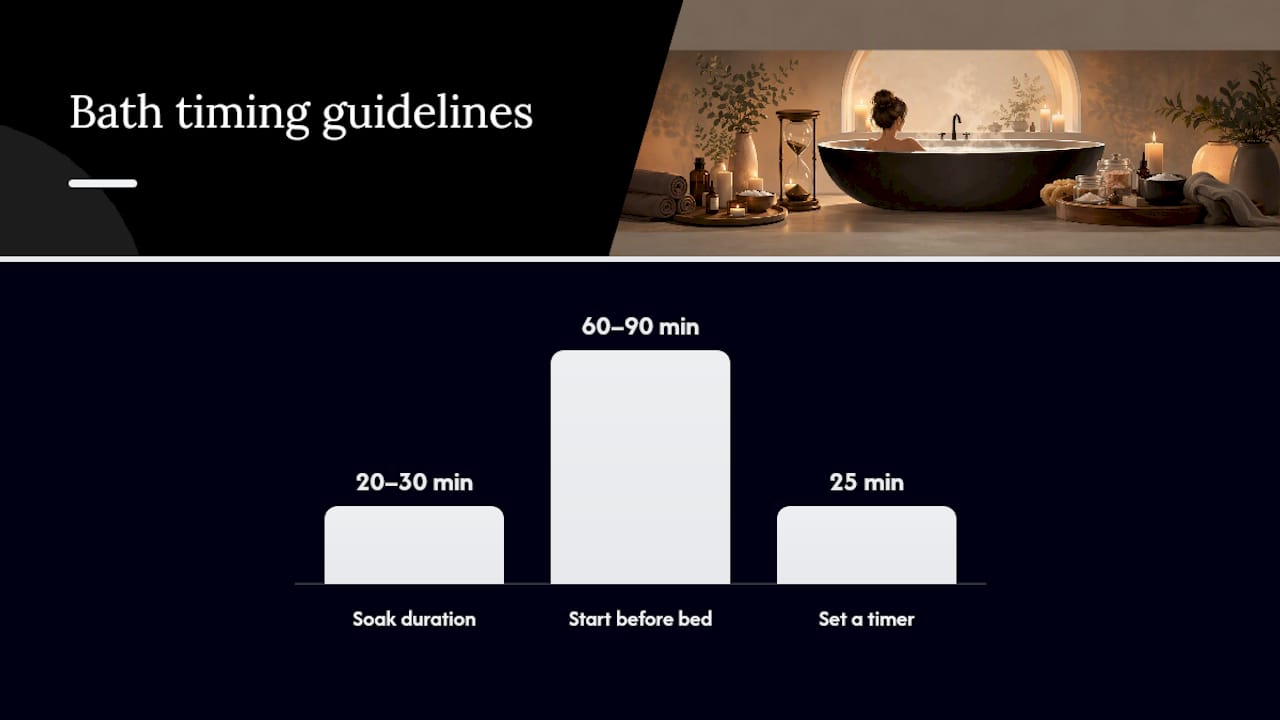
Soak for 20 to 30 minutes. That window is long enough for warm water to shift your body toward relaxation and support better sleep, but short enough to avoid the pruney, over-soaked feeling that undercuts the whole point. Timing matters as much as duration: starting your bath 60 to 90 minutes before bed gives your body temperature time to drop afterward, which is part of what signals sleep.
Prep checklist, in order:
Pro Tip: Warm your towel and set your skincare on the counter before you fill the tub. Staging everything in advance removes the annoying “wait, where’s the moisturizer” moment that snaps you right out of relaxation mode.
You don’t need to guess at ratios. Here are three combinations that work, with the caveats that matter.
Why magnesium keeps showing up in bath advice: warm water plus a mineral soak is one of the more consistently recommended combinations for easing physical tension after a stressful day.
The first five to ten minutes of your bath function as a transition window, and how you spend them shapes the rest of the soak. Try this sequence once you’re settled: inhale through your nose for a count of four, hold for one to two seconds, then exhale slowly through your mouth for six to eight counts. Repeat five to ten times.
The longer exhale is the part that matters most. It stimulates the vagus nerve, which helps shift your body out of fight-or-flight and into actual rest, and pairing that breathing window with the first minutes of a soak produces a stronger relaxation response than either one alone.
Mindful bathing differs from a regular soak in one key way: it asks you to actually notice the water instead of scrolling through it. Focus on temperature against your skin, the sound of dripping water, the sensation of your muscles loosening.
Pro Tip: If you feel light-headed at any point, stop the breathing exercise, sit still, and consider adding a little cooler water. Dizziness is your body telling you to ease off, not push through.
Hot water raises your heart rate and can trigger dizziness, so keep the temperature warm rather than scalding, and always test it before you sit down. Cap your soak at 30 minutes. Anything past 40 stretches into diminishing returns and can leave you dehydrated.
Not every relaxing soak needs to look the same, and rotating types keeps the ritual from feeling stale. An aromatherapy bath leans on scent, using a diffuser or a light oil blend to calm the nervous system through smell alone, which works well on nights when you want minimal cleanup. A herbal bath, built around a steeped sachet of lavender, chamomile, or calendula, adds a gentler, more traditional feel and pairs naturally with a slower pace. A mineral bath, centered on Epsom or other magnesium salts, is the one to reach for after a physically demanding day when your muscles need more than just warmth.
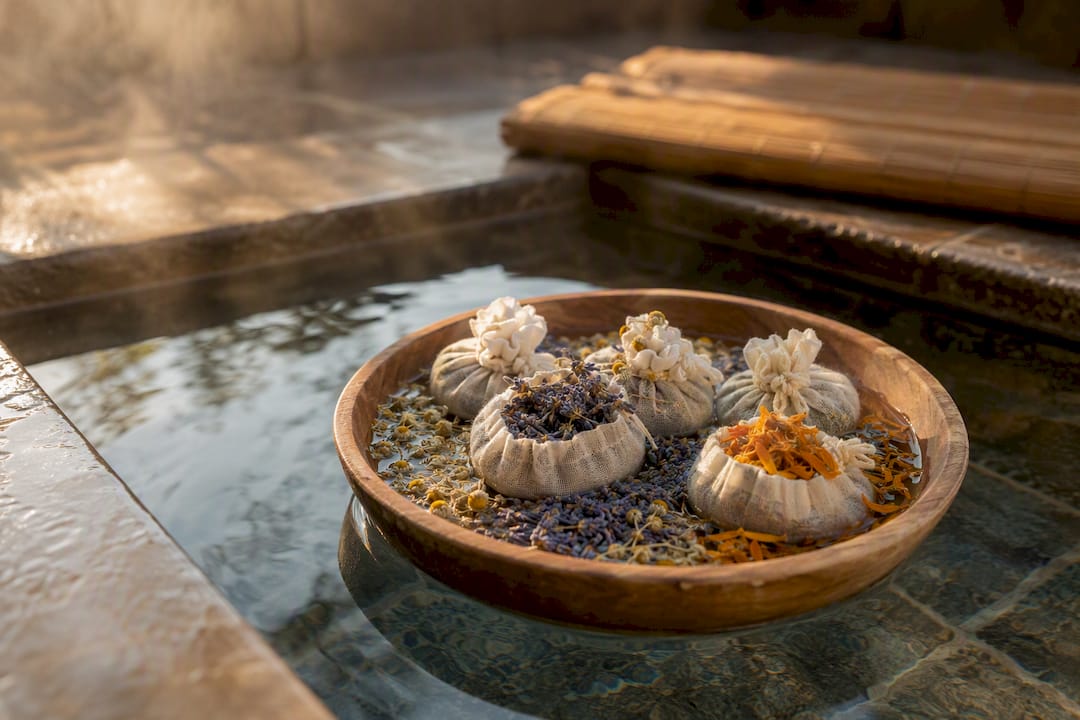
You can also blend categories: a mineral base with a light herbal sachet floating alongside it gives you both the muscle-relaxing benefit and the calming scent in one soak. Think of these types less as separate categories and more as building blocks. Swap them based on mood, season, or how your body feels that particular evening. A humid bathroom is also a good spot for calming visuals. Adding humidity-safe art or simple styling touches near the tub gives your eyes somewhere pleasant to land while you soak, which matters more than people expect once the lights are dim and there’s nothing else to look at.
A bath doesn’t have to work alone. Pairing it with other relaxation techniques compounds the effect rather than competing with it. Light stretching before you get in, particularly for your neck, shoulders, and lower back, loosens tight muscles so the warm water has less work to do once you’re submerged. Five minutes of simple forward folds or shoulder rolls beforehand makes the soak itself feel deeper.
Meditation fits naturally into the tub itself. The breathing sequence from earlier doubles as a meditation anchor. Once your five to ten breaths are done, you can shift into a short body scan, mentally checking in with your feet, then knees, then shoulders, noticing where tension sits and letting the warm water work on it.
If you’re someone who likes a longer, more immersive setup, some people extend the idea outdoors entirely, treating a spa or soaking feature as part of a backyard retreat rather than confining relaxation to the bathroom. That’s a bigger commitment than a nightly ritual, but it points to the same principle: combining warm water with intentional stillness, whether that’s breathing, stretching, or meditation, does more than either practice alone. The order matters less than consistency. Stretch first if your body’s tight, meditate first if your mind’s the noisier problem tonight.
A full bathtub typically uses more water than a short shower, so it’s worth being intentional rather than running a bath out of habit every night. Filling the tub only as high as you need, rather than to the brim, cuts water use without cutting the experience. Turning off the tap while the water’s still filling to test the temperature (rather than running it continuously) saves a surprising amount over a week of nightly baths.
Choosing accessories that last also reduces environmental impact over time. Durable, sustainably sourced materials like bamboo hold up to bathroom humidity far better than plastic alternatives that crack, discolor, and end up replaced every year or two. A bamboo bath mat or wooden tray isn’t just a styling choice. It’s a smaller footprint every time you reach for it instead of a disposable version.
Reusing bathwater for houseplants (once it’s cooled and free of heavy fragrance products) is a small habit some people adopt to offset the extra water a bath uses compared to a shower. None of this requires perfection. Small swaps, like choosing eco-friendly bathroom essentials over disposable ones, add up across a year of nightly rituals in a way a single big gesture never does.
The bath that actually helps you isn’t the elaborate one you do twice a year. It’s the simple one you can repeat without thinking. Keep a small kit near the tub, salt, a sachet, your oil, so friction never talks you out of it. Cozee-bay leans into that idea with sustainable bathroom accessories built to make the routine easier, not fussier.
— Cozee
Cozee-bay makes the nightly version of this ritual easier to keep up than buying disposable plastic organizers you’ll replace every year. A bamboo tray keeps your salts, candle, and book within arm’s reach so you’re not dripping across the bathroom mid-soak.

A non-slip bamboo bath mat handles the safety side of stepping out with wet feet, and a wooden caddy keeps everything from oils to your phone off the wet tub edge. These aren’t disposable plastic pieces destined for a landfill in a year. They’re built from natural bamboo to handle bathroom humidity for the long run, which matters if you’re planning to actually repeat this ritual rather than do it once and forget where you put everything. Browse Cozee-bay’s bathroom accessories to build a kit that lives permanently by your tub, so the only decision left on a stressful night is which recipe to try.
Comments will be approved before showing up.