Your Cart is Empty


Urban property managers increasingly grapple with sourcing restroom materials that balance style, functionality, and environmental responsibility. As demand for sustainable options rises, bamboo stands out for its remarkable regenerative qualities and low ecological impact. This article uncovers the multi-stage bamboo supply chain, offering valuable insights for those interested in eco-friendly restroom solutions that meet both aesthetic and ethical standards in metropolitan buildings worldwide.
| Point | Details |
|---|---|
| Sustainable Supply Chain | The bamboo supply chain emphasizes ecological regeneration and requires specialized knowledge at each stage for effective management. |
| Importance of Certification | Global certification systems ensure responsible production and protect environmental and social dimensions within the bamboo industry. |
| Traceability Challenges | Fragmented ownership and weak infrastructure complicate the verification of sustainable practices, necessitating enhanced tracking systems. |
| Economic Opportunities | Bamboo offers significant sustainability advantages; however, producers must navigate challenges related to market volatility and infrastructure costs. |
The bamboo supply chain is a complex, multi-stage process that transforms raw plant materials into sustainable commercial products. Unlike traditional timber harvesting, bamboo production emphasizes ecological regeneration and efficient resource management. Sustainable farming practices play a crucial role in creating a responsible and dynamic agricultural ecosystem.
The typical bamboo supply chain involves several interconnected stages:
Each stage requires specialized knowledge and precision. Farmers must understand complex growth cycles, ensuring they harvest mature stalks without disrupting the plant’s regenerative capacity. Processing centers transform raw bamboo through advanced treatment methods, removing moisture and preparing materials for manufacturing.
Here’s a summary comparing bamboo supply chain stages and the expertise required at each:
| Supply Chain Stage | Required Expertise | Key Business Impact |
|---|---|---|
| Cultivation | Botany, soil management | Ensures sustainable growth, long-term yield |
| Transportation | Logistics, handling | Minimizes damage and cost, supports timely delivery |
| Processing/Treatment | Material science, chemistry | Improves durability, expands product applications |
| Manufacturing | Engineering, design | Enables value-added products for diverse markets |
| Distribution | Marketing, global trade | Maximizes reach, drives revenue and brand trust |
Bamboo’s supply chain reflects a holistic approach to industrial production, prioritizing human wellbeing and ecological sustainability.
Manufacturers increasingly recognize bamboo’s potential across multiple industries, from construction to consumer goods. However, current industrialization remains limited, signaling significant opportunities for innovation and investment in global bamboo supply networks.
Pro tip: Research local bamboo suppliers who demonstrate transparent, sustainable harvesting practices to ensure your commercial procurement supports responsible agricultural systems.
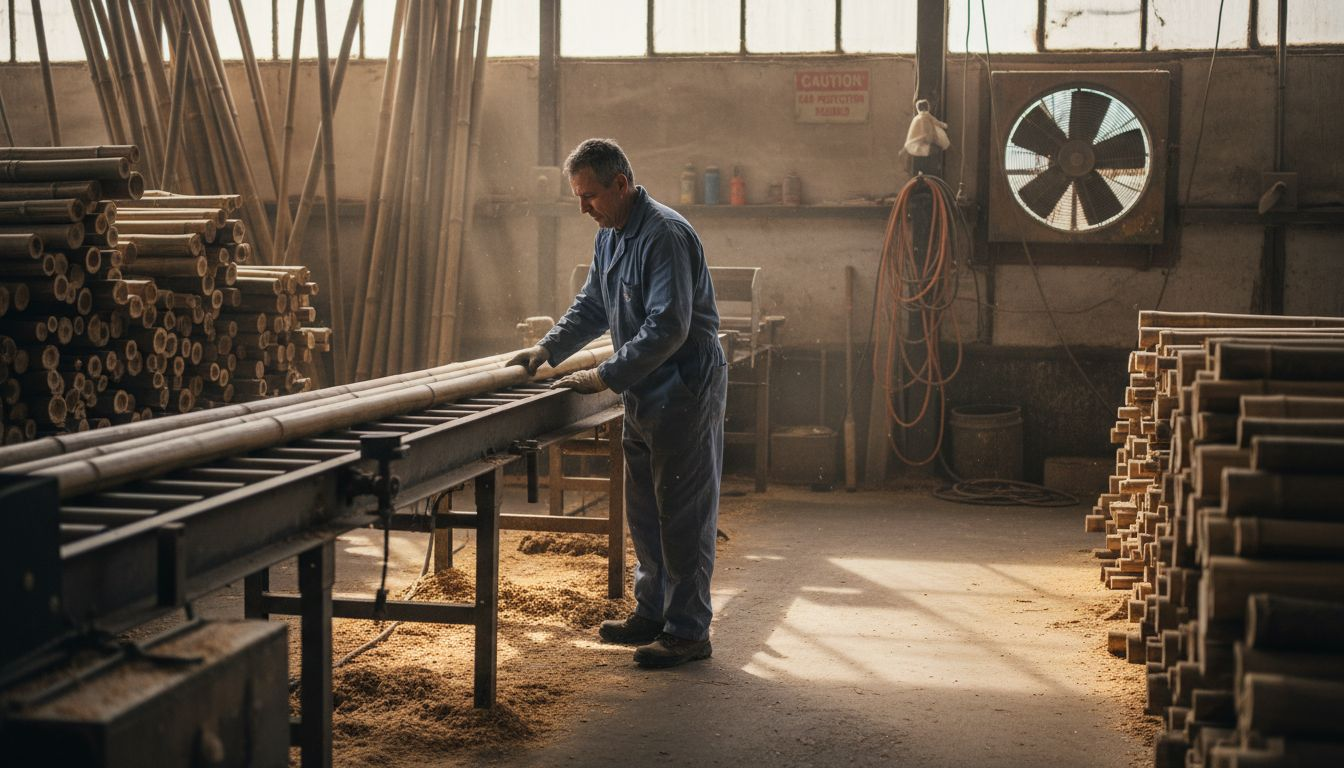
The journey of bamboo from agricultural landscape to final commercial product involves a sophisticated and carefully orchestrated sequence of stages. Bamboo value chain complexities reveal intricate processes that transform this versatile plant into diverse products across multiple industries.
The key stages of bamboo production include:
Each stage demands specialized expertise and precise coordination. Smallholder farmers play a critical role in managing plantation health, ensuring mature stalks are harvested without compromising the ecosystem’s regenerative potential. Advanced processing techniques, including boiling and chemical preservative applications, transform raw bamboo into durable materials suitable for furniture, textiles, and construction components.
Successful bamboo supply chains integrate environmental stewardship with sophisticated logistical management.
Manufacturers must navigate complex challenges, balancing ecological sustainability with industrial efficiency. The transformation from raw plant material to finished product requires significant technical knowledge, investment in processing infrastructure, and understanding of global market dynamics.
Pro tip: Develop strong relationships with local bamboo producers who demonstrate transparent sustainability practices to ensure consistent, high-quality raw material supply.
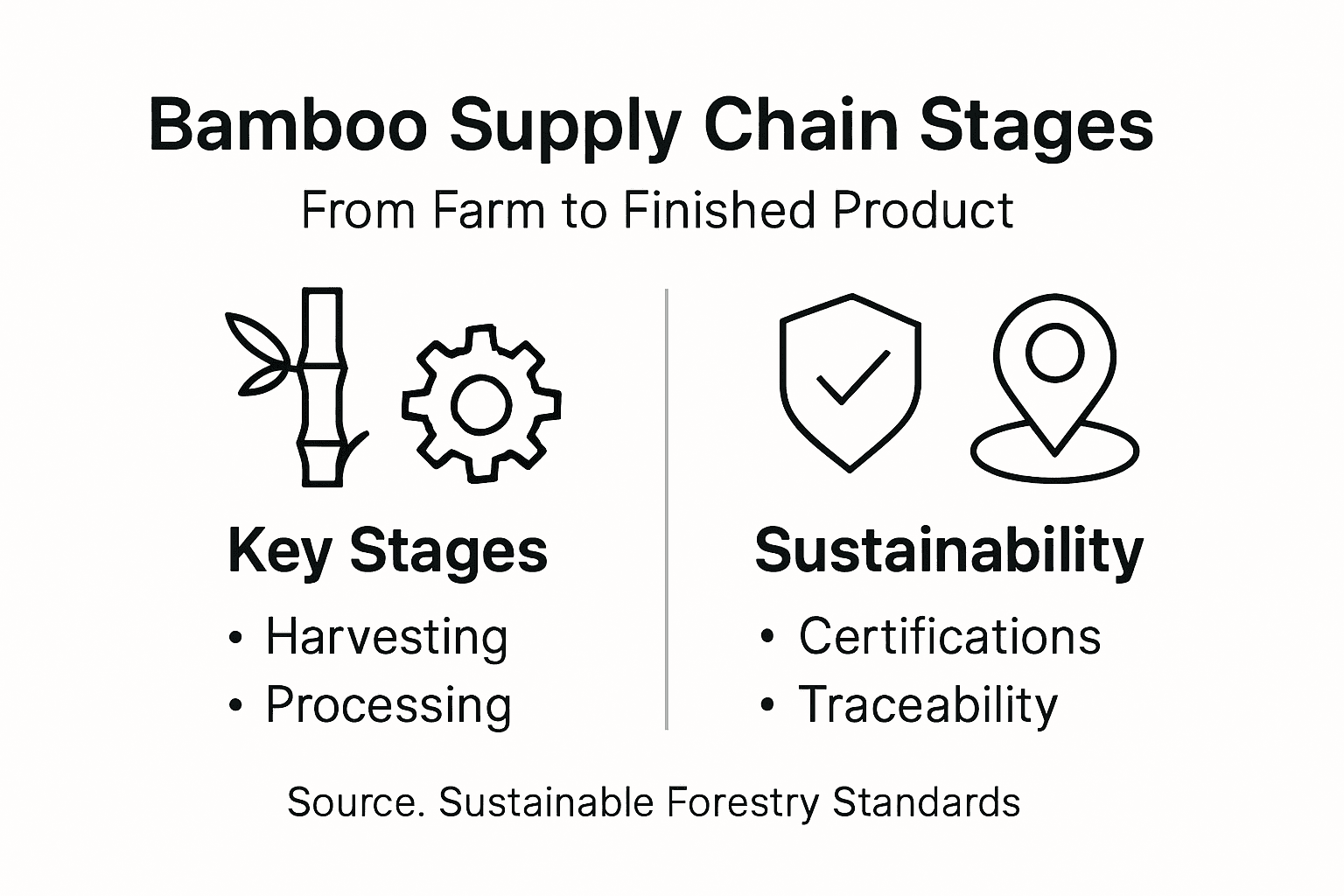
Sustainability in the bamboo industry goes far beyond simple environmental considerations. Global certification frameworks establish critical guidelines that ensure responsible production, environmental protection, and social equity throughout the bamboo supply chain.
Key sustainability standards encompass multiple critical dimensions:
Certification systems like the Forest Stewardship Council (FSC) play a pivotal role in validating sustainable bamboo production. These standards require comprehensive assessments of environmental and social impacts, ensuring that bamboo harvesting maintains ecological integrity while supporting local communities’ economic interests.
Certification transforms bamboo from a simple raw material into a symbol of responsible global production.
The most robust sustainability standards integrate complex metrics that evaluate environmental preservation, worker welfare, and long-term ecological balance. Manufacturers and producers must demonstrate ongoing commitment to these principles, proving that their bamboo products contribute positively to global sustainability goals.
Pro tip: Request third-party certification documentation when sourcing bamboo products to verify genuine sustainability commitments.
The bamboo supply chain confronts significant hurdles in establishing transparent and compliant production networks. Traceability challenges emerge from complex ownership structures and fragmented production systems that complicate verification of sustainable practices.
Key challenges in bamboo supply chain traceability include:
The informal nature of many bamboo production regions creates substantial barriers to comprehensive compliance monitoring. Small-scale farmers often lack the resources to implement sophisticated tracking mechanisms, making it difficult to validate sustainable harvesting practices and environmental standards.
Effective traceability requires transforming fragmented production networks into integrated, transparent systems.
Governance challenges compound these issues, with weak regulatory frameworks and inconsistent enforcement creating significant risks of non-compliance. Manufacturers must invest heavily in developing robust verification processes that can bridge the gap between local production realities and global sustainability expectations.
Pro tip: Develop comprehensive digital tracking systems that document each stage of bamboo production to enhance supply chain transparency and compliance.
Bamboo presents a complex landscape of economic opportunities and potential challenges for commercial producers and consumers. Economic advantages and material risks reveal a nuanced perspective on bamboo’s role in sustainable supply chains.
Key comparative factors include:
The economic calculus of bamboo production involves carefully weighing multiple variables. While bamboo offers substantial sustainability advantages, manufacturers must navigate challenges including quality variability, transportation expenses, and the need for specialized processing infrastructure.
Bamboo’s potential as a sustainable material is balanced by the complexity of its supply chain management.
Compared to alternatives like engineered wood or synthetic composites, bamboo demonstrates compelling advantages in renewability and ecological impact. However, successful implementation requires strategic investment in supply chain development, technological adaptation, and robust quality control mechanisms.
The following comparison highlights bamboo versus traditional alternatives:
| Factor | Bamboo | Engineered Wood | Synthetic Composites |
|---|---|---|---|
| Renewability | Rapid regrowth, annual harvest | Slower, multi-decade cycle | Not renewable |
| Carbon Footprint | Low, often negative | Moderate | High, fossil-fuel based |
| Infrastructure Cost | Moderate, growing | Well-established | High for new processes |
| Product Versatility | Furniture, textiles, building | Construction, furniture | Wide but less natural feel |
| Sustainability Certification | Increasing but varied | Widely available | Limited, rarely relevant |
Pro tip: Conduct comprehensive cost-benefit analyses that account for long-term sustainability benefits, not just immediate production expenses.
Understanding the complex bamboo supply chain highlights the importance of choosing products that honor sustainable cultivation, transparent sourcing, and responsible manufacturing. If you value eco-conscious choices that prioritize renewability, traceability, and quality craftsmanship, Cozee Bay offers an ideal solution. Our Bamboo Paper Towel Dispenser- A Sleek Look Home or Office embodies these principles with sustainable materials and thoughtful design for both residential and commercial environments.

Choose Cozee Bay today to actively support ethical bamboo production while enhancing your space with durable, stylish accessories. Explore the full range including Paper Towel Dispensers - Accessories | Cozee Bay® and Cozee Bay Food Bag Storage Organizers - Integrated Version. Visit https://cozee-bay.com now and make your everyday use a meaningful step toward a healthier planet.
The key stages in the bamboo supply chain include resource ownership, harvesting, transportation, processing, manufacturing, and marketing/distribution. Each stage requires specialized expertise to ensure sustainability and product quality.
Bamboo cultivation employs sustainable farming techniques that protect young shoots while allowing the harvest of mature stalks, thereby maintaining ecological balance and encouraging regeneration.
Important certifications for sustainable bamboo production include the Forest Stewardship Council (FSC) and other global certification frameworks that ensure responsible practices, environmental protection, and social equity throughout the bamboo supply chain.
The bamboo supply chain faces challenges such as fragmented ownership, weak infrastructure, regulatory inconsistencies, and difficulties in traceability, all of which can hinder compliance and sustainability efforts.
Comments will be approved before showing up.