Your Cart is Empty


A large bamboo cutting board makes sense if you regularly prep for a crowd, carve whole turkeys or roasts, or build charcuterie spreads that need real surface area. Before anything else, measure your counter and your sink: an oversized board that overhangs your counter or won’t fit under your faucet becomes a storage headache fast. Bamboo’s hardness is a genuine trade-off. It resists nicks and stains better than most woods, but that same density dulls knife edges a bit faster, so plan on more frequent sharpening and a committed oiling routine.
TL;DR:
- Choose a large bamboo board that measures around 20 to 30 inches in length and consider its weight, which can range from 6 to 13 pounds for stability.
- Prioritize boards with deep, well-placed juice grooves and reversible surfaces to handle raw meat carving and serving needs effectively.
- Regularly oil and thoroughly dry the board after each use to prevent warping and cracking, especially given its size and density.
- Verify that the board’s construction uses laminated planks and a quality finish to ensure long-term resistance to warping and damage.
- Confirm the board’s dimensions fit your counter space and sink clearance, and maintain a consistent oiling routine to maximize lifespan.
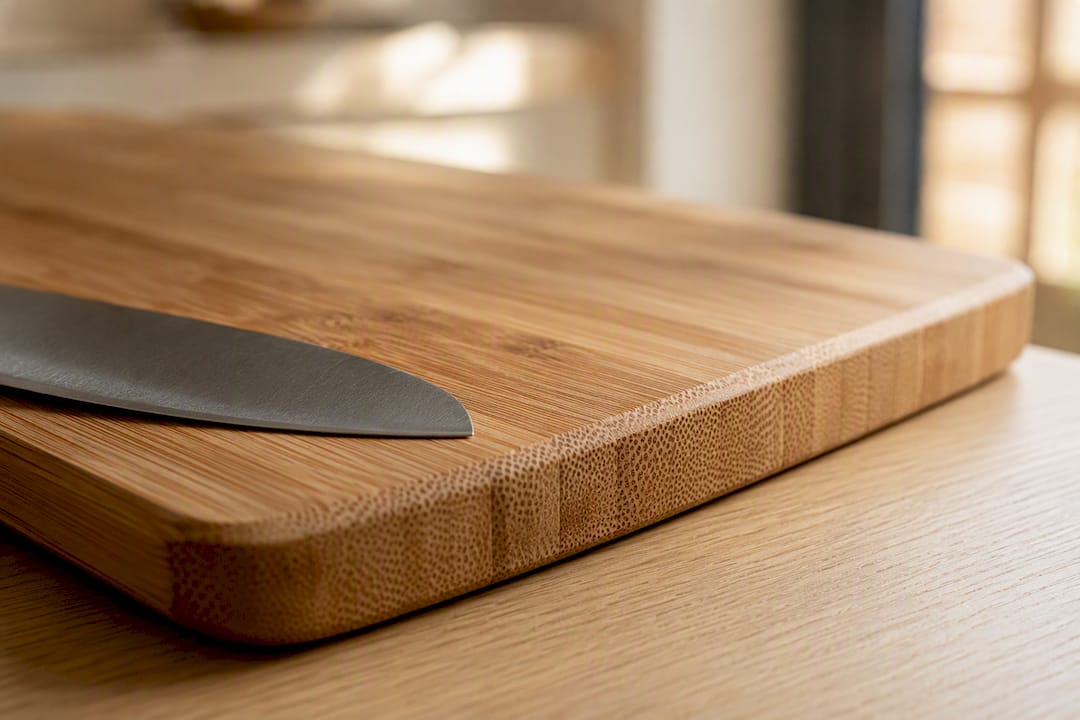
Bamboo earns its reputation as a cutting-board material through sheer density. It’s harder than maple, which most home cooks associate with quality butcher blocks, and that hardness translates directly into resistance against deep knife gouges over years of chopping. Sellers frequently market bamboo as naturally antimicrobial, and while the material’s own density does make it less hospitable to bacteria than some porous woods, that claim doesn’t replace washing and drying it properly after every use.
Pro Tip: Don’t take “antimicrobial” as a license to skip hand washing. Treat it as a helpful head start, not a substitute for soap and water.
Here’s the honest trade-off list:
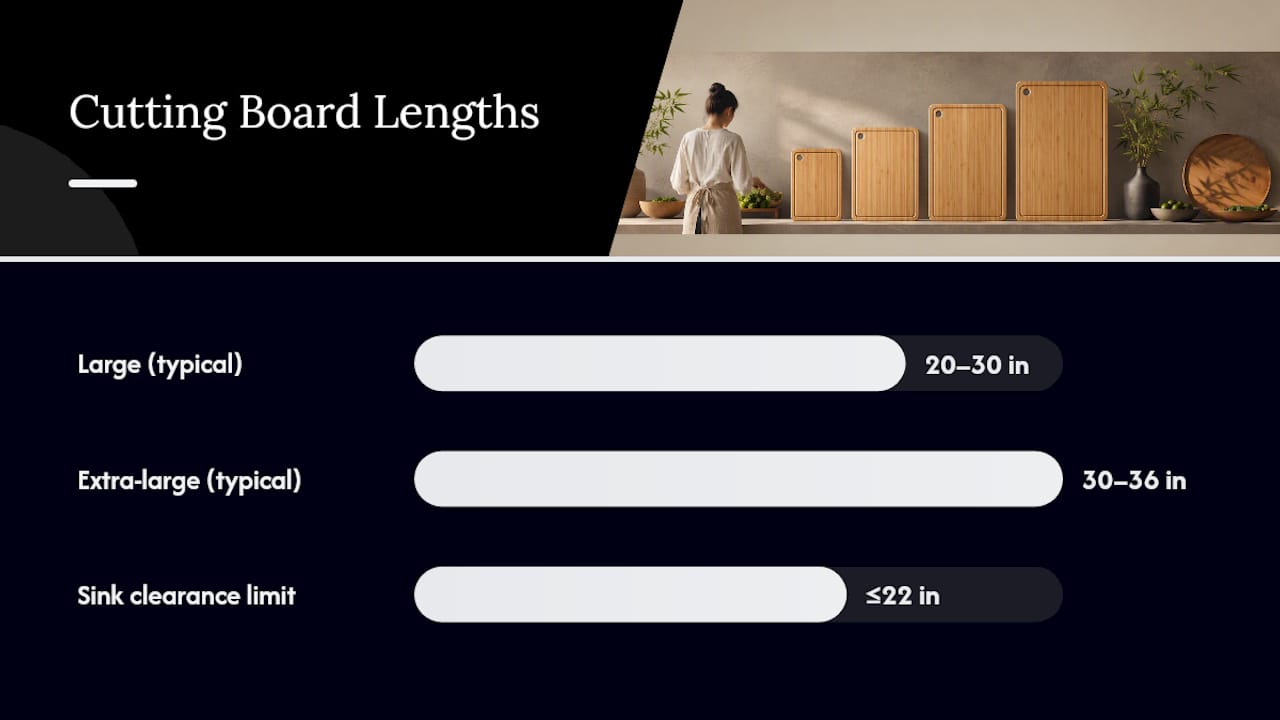
Sizing gets confusing fast because sellers use “large” and “extra-large” loosely. As a practical guide, large boards typically run 20 to 30 inches on the long edge, while extra-large models stretch from 30 up to 36 inches, often built specifically for big-batch prep. One popular 36 by 24 inch reversible model features a heavy-duty 1.5 inch profile with juice grooves on both faces, aimed squarely at whole-brisket and multi-turkey households.
Weight climbs with size, and it climbs faster than most shoppers expect. A 30 by 20 inch bamboo board can weigh close to 13 pounds, and boards in the 24 to 36 inch range commonly land between 6 and 13 pounds depending on thickness. Thicker boards feel more stable under a heavy knife stroke, but that stability comes at the cost of extra weight you’ll be lifting into and out of the sink.
Before buying, run through this quick space checklist:
Bigger boards live or die on a handful of design details that smaller boards can get away without. Here’s what to prioritize, in order:
Oversized bamboo boards need a routine that respects both their size and their material. Skip the dishwasher entirely. Follow these steps after each use:
If your board is too big for your sink, pro kitchens handle it differently: scrape solids into a bin first, scrub with a long-handled brush and mild soap, rinse with a hose attachment or a narrow-spout pitcher, then stand it on edge to dry. Oiling one face at a time keeps the board flat while it dries, since uneven moisture is what causes warping and cracking in the first place.
A few warning signs mean it’s time to resurface or retire the board:
For a deeper walkthrough of oiling schedules and drying technique, Cozee-bay’s guide on maintaining bamboo products naturally covers the specifics step by step, and the bamboo cleaning checklist is worth bookmarking if your board doesn’t fit your sink.
Cozee-bay builds handcrafted bamboo products with commercial durability in mind, not just residential countertops. That distinction matters when you’re sizing up a board meant to survive years of heavy use.
Bamboo pieces built for restaurants, catering kitchens, and senior living facilities get handled differently than a board that sits in a home kitchen drawer most of the week. They’re wiped down constantly, moved between prep stations, and expected to hold their shape through repeated wet and dry cycles without warping.
That’s the same standard worth applying to a home purchase: a board built to survive commercial rotation will outlast one designed only for occasional weekend use. For the specific oiling and drying steps that keep a board flat under that kind of demand, Cozee-bay’s product-care blog posts walk through the routine in more depth.
— Cozee
True bamboo allergies are rare, and bamboo itself isn’t a common allergen the way tree nuts or shellfish are. Most reported sensitivities trace back to something added during manufacturing rather than the bamboo fiber itself. Cheaper boards sometimes use adhesives or coatings containing formaldehyde-based resins to bond bamboo strips together, and it’s that glue, not the bamboo, that can trigger skin irritation or respiratory sensitivity in people who are chemically sensitive.
The finish matters too. Boards treated with low-quality mineral oil substitutes or synthetic lacquers can cause contact reactions on hands, especially if the board isn’t sealed with a food-safe oil that’s fully cured before first use. If you have known sensitivities to wood dust or adhesives, look for boards that specify food-grade, formaldehyde-free glue and a finish made from mineral oil or plant-based waxes rather than unnamed “protective coatings.”
For most people, the bigger practical concern isn’t allergy but bacterial buildup in knife grooves that aren’t cleaned and dried properly, which can cause skin irritation that gets mistaken for a bamboo sensitivity. If you notice redness or itching after handling a board, check whether it’s fully cured, then rule out the glue or finish before assuming it’s the bamboo. Anyone with a diagnosed wood or latex allergy should ask the manufacturer directly about adhesive composition before buying.
Match the board’s footprint and weight to your actual kitchen and your actual routine, not the biggest one on the shelf. Two features decide whether you’ll love it or regret it: a snug counter fit and solid construction with a quality finish. Commit to oiling it monthly or you’ll shorten its life regardless of how well it was built.
| Decision factor | What to check | Why it matters |
|---|---|---|
| Footprint | Counter length vs. board dimensions | Prevents overhang and tipping |
| Weight | 6 to 13 lbs range for large boards | Affects daily handling and cleaning |
| Construction | Laminated plank vs. thin glued strips | Determines warp resistance |
| Maintenance | Monthly oiling commitment | Prevents cracking and odor buildup |
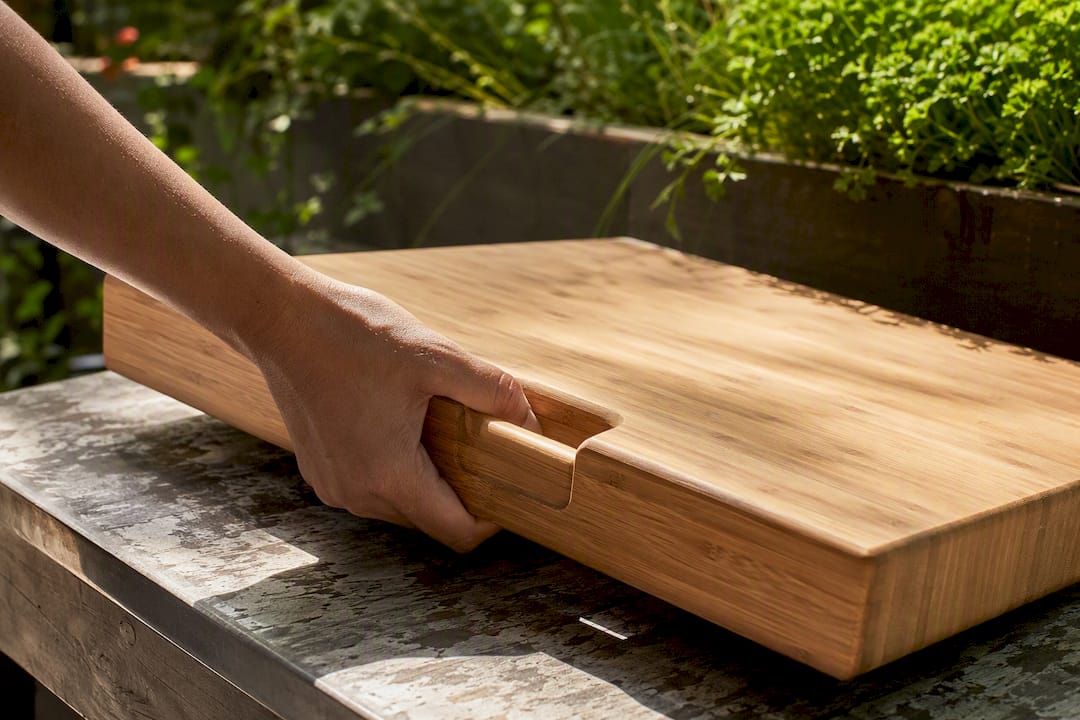
A 30 inch bamboo board doesn’t get tucked away between uses. It lives on the counter, full stop, because lifting it in and out of a cabinet daily gets old fast. The real test comes on cleanup day: hauling a wet 12 pound board to a sink that’s two inches too narrow teaches you to appreciate a good handle cutout. For the actual step-by-step routine that keeps a board like this flat and crack-free, Cozee-bay’s care guides are worth a look before the first wash.
Cozee-bay approaches bamboo the way a large board demands: handcrafted construction, a food-safe organic oil finish, and sizing built for real prep work rather than decorative use. If the sourcing and care details above convinced you that fit and finish quality matter more than just picking the biggest board on a shelf, that’s exactly where Cozee-bay’s bamboo board selection starts.

Every board ships with free shipping across the contiguous U.S. and a money-back guarantee, so sizing up to an extra-large board doesn’t feel like a gamble. Once it arrives, the maintenance routine covered above pairs directly with Cozee-bay’s own care instructions, so you’re not guessing at oiling schedules months down the line. Browse the current lineup at Cozee-bay and pick the dimensions that actually match your counter, not just the ones that look impressive in a product photo.
Comments will be approved before showing up.