Your Cart is Empty


For most kitchens, the best overall pick is an end-grain maple board like the Jones Cutting Board 20 x 14 x 1.5 Inch Maple End Grain, because it’s gentle on knives and can be resurfaced for decades of use. If you’re doing heavy chopping or butchering, go bigger with The Boardsmith Maple end-grain butcher block. On a budget, or if you want dishwasher-safe convenience for raw meat, the OXO Good Grips Carving and Cutting Board does the job without fuss. For a bamboo option that balances durability, style, and a smaller footprint, a handcrafted board from Cozee-bay covers daily prep beautifully.
The USDA’s Food Safety and Inspection Service notes that both wood and plastic boards can be safely sanitized with a standard bleach solution recommended by USDA, which is the standard every pick below needs to meet. Your final choice really comes down to three things: what your knives need, how you clean, and how much wear you expect the surface to take.
TL;DR:
- Use a hardwood end-grain board for knife care, but keep a separate plastic board for raw meat to prevent cross-contamination.
- Regularly sanitize with a USDA-recommended bleach solution and oil wood or bamboo boards every few weeks to maintain their quality.
- Bamboo boards from brands like Cozee-bay provide a sustainable, durable, and low-maintenance alternative to traditional hardwoods.
- Discard any board that develops deep grooves, warping, or persistent odors to avoid bacterial buildup.
- Choose a larger, thicker board for heavy chopping and consider slip-resistant features like rubber feet for safety during use.
Once you know your category (wood, bamboo, or plastic), the differences between specific models get a lot more concrete. Here’s how the seven boards worth your attention stack up against each other.
| Model | Material | Knife-Friendliness | Maintenance | Durability / Resurfacing | Best For | Price Range |
|---|---|---|---|---|---|---|
| John Boos Block | Maple, cherry, walnut hardwood | Very good | Hand wash, regular oiling | Excellent, resurfaceable | Serious home cooks and pros | $$$ |
| Jones Cutting Board 20 x 14 x 1.5 Inch Maple End Grain | Maple, end-grain | Excellent | Hand wash, regular oiling | Excellent, resurfaceable | Knife care priority | $$$ |
| The Boardsmith Maple end-grain butcher block | Maple, end-grain | Excellent | Hand wash, regular oiling | Excellent, resurfaceable | Entertaining, heavy chopping | $$$$ |
| Ironwood Gourmet Square Charleston | Maple, end-grain | Very good | Hand wash, occasional oiling | Good, resurfaceable | Presentation plus everyday use | $$ |
| OXO Good Grips Carving and Cutting Board | Composite/plastic | Fair | Dishwasher-safe | Fair, not resurfaceable | Raw meat, low-maintenance prep | $ |
| Tenryo Hi-Soft cutting board | Rubber-like composite | Excellent | Hand wash recommended | Good, self-healing surface | Chefs protecting knife edges | $$$ |
| The Boardsmith Maple End Grain Butcher Cutting Board | Maple, end-grain | Excellent | Hand wash, regular oiling | Excellent, resurfaceable | Long-term daily workhorse | $$$ |
A few things jump out once you see them side by side. The maple end-grain boards, Jones and both Boardsmith models, sit at the top for knife care because end grain lets the wood fibers absorb the blade’s edge instead of resisting it. That’s also why end-grain construction is considered the most forgiving option for heavy knife work, and why it can be sanded down and resurfaced instead of thrown out.
The OXO board earns its spot for a different reason entirely: it’s dishwasher-safe, which none of the wood boards can claim without risk. The Tenryo Hi-Soft splits the difference, a rubber-like surface that protects blades almost as well as end-grain wood but hand-washes like a composite. None of these boards should go in the dishwasher if they’re laminated wood or bamboo. Dishwasher-safe: OXO only. Oil required: John Boos Block, both Jones/Boardsmith models, Ironwood Gourmet. Resurfaceable: all wood end-grain options, not the OXO or Tenryo.
No single material wins across every category, and that’s the trap most buying guides fall into. Each one trades knife care for hygiene, or durability for weight, and picking the right one means matching the trade-off to how you actually cook.
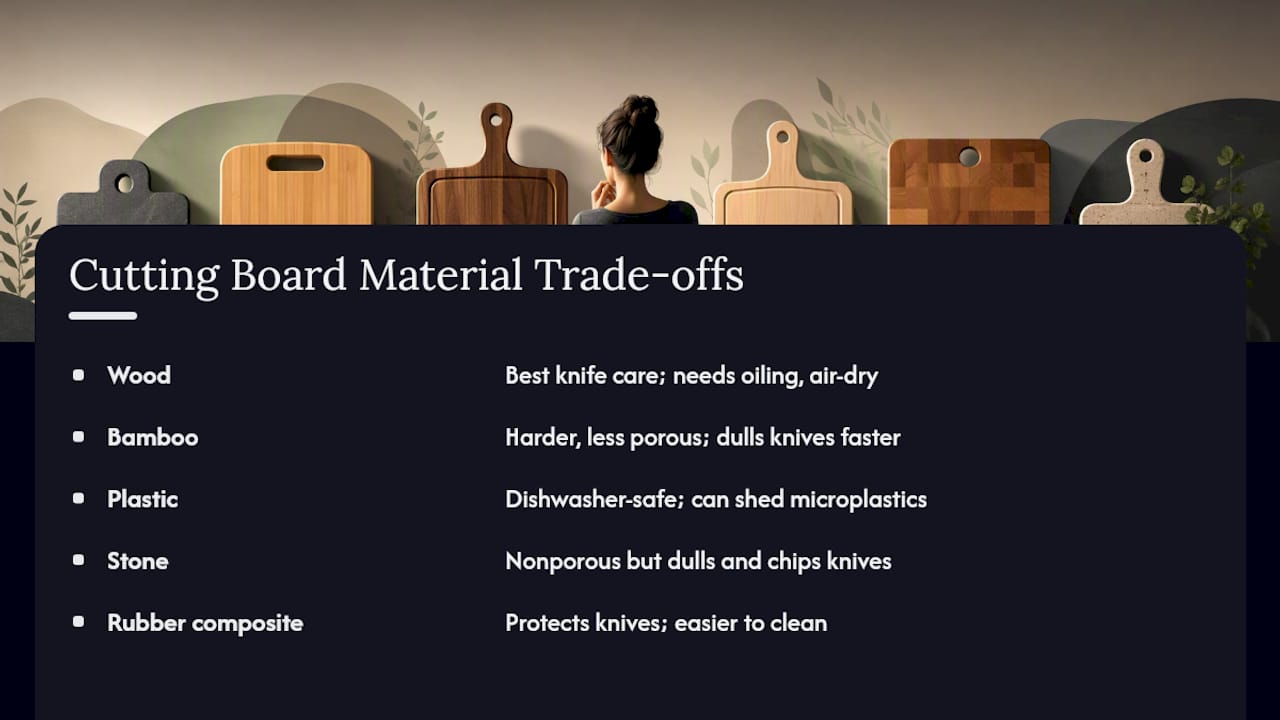
Wood (maple, cherry, walnut) is the gold standard for knife longevity. It’s naturally forgiving on blade edges and, done right, self-heals small nicks over time. The catch is upkeep: wood needs regular oiling, can’t go in the dishwasher, and takes longer to dry than composite materials.
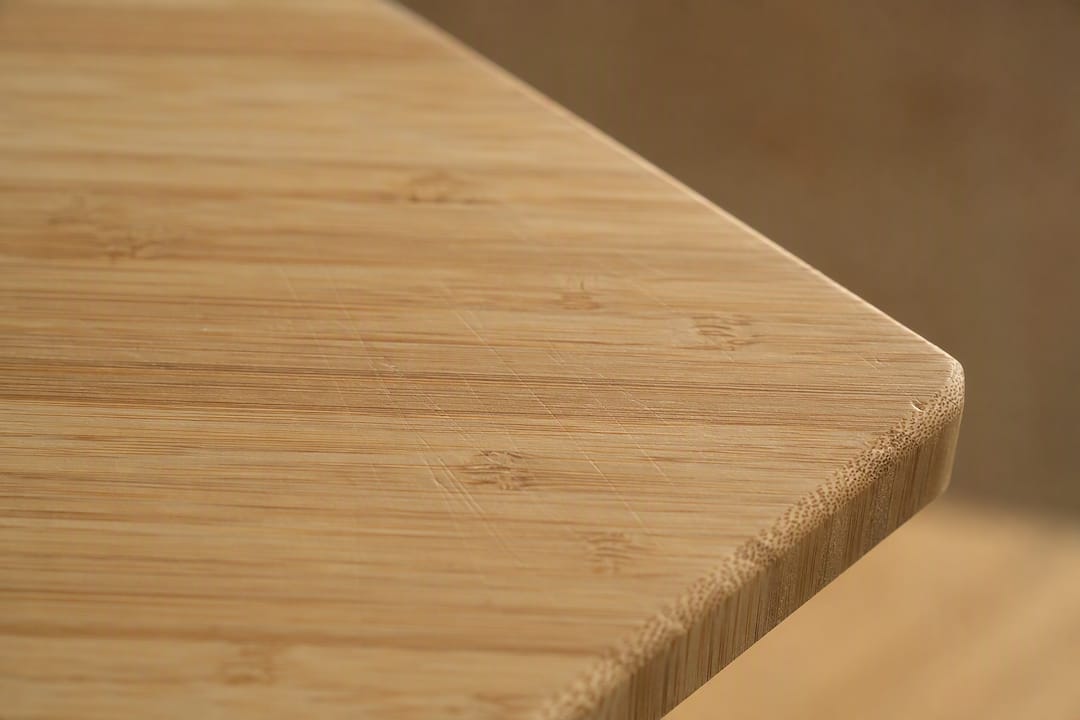
Bamboo splits the difference in an interesting way. It’s harder and less porous than many hardwoods, so it resists scarring and absorbs less moisture, a real advantage for anyone worried about bacteria working into surface grooves. The trade-off is that bamboo’s extra hardness dulls knife edges a touch faster than a softer wood like maple.
Plastic and HDPE boards win on convenience. Toss them in the dishwasher, sanitize with bleach, done. But cheap plastic wears down fast, and aging, heavily scored plastic boards can shed microplastic fragments into your food. Replace them the moment the surface looks chewed up.
Rubber composite (like the Tenryo Hi-Soft) protects knives almost as well as wood while staying easier to clean.
Glass, marble, and stainless steel are nonporous and easy to wipe down, but they chip and dull knives fast, and can be genuinely hazardous for chopping. Save them for serving cheese and charcuterie, not breaking down a chicken.
Matching the board to your kitchen habits matters more than chasing a brand name. Work through this checklist before you buy:
Pro Tip: Keep two boards in rotation, a hardwood or bamboo board for produce and a dishwasher-safe plastic one dedicated only to raw meat. It’s the simplest way to cut cross-contamination risk without changing how you cook.
Cleaning routines separate a board that lasts ten years from one that cracks and warps in two.
Bamboo earns its reputation honestly. Its hardness and low porosity, documented by University of Maine Cooperative Extension, mean less moisture absorption and better scar resistance than many traditional hardwoods, without the slow-growing footprint of a hardwood tree.
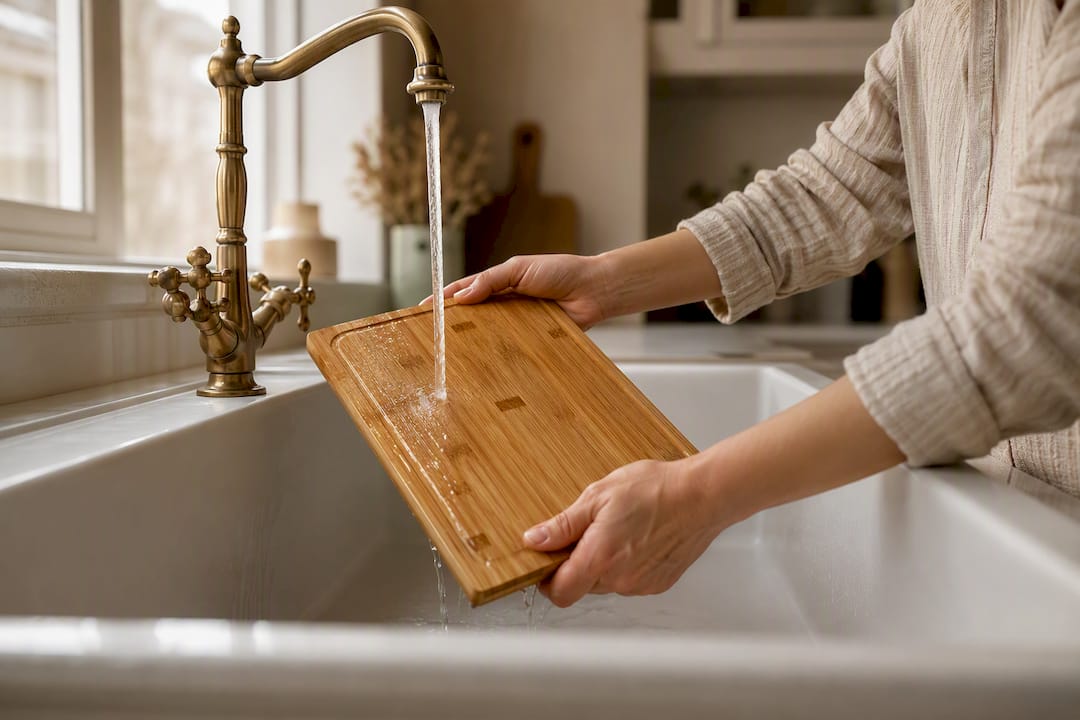
Cozee-bay builds its handcrafted bamboo boards around that same durability, backed by a money-back guarantee and free shipping across the contiguous U.S. Condition a bamboo board every few weeks with food-grade mineral oil, and skip the dishwasher entirely to avoid splitting the seams.
It does, and the math is straightforward once you look past the marketing. Bamboo regenerates in three to five years, compared to decades for hardwood trees like maple or walnut, making it one of the fastest-renewing materials you can put on a countertop. It also requires no pesticides to grow at scale and can thrive without irrigation in many regions.
Plastic boards sit on the other end of the spectrum. They’re made from petroleum-based polymers that don’t biodegrade, and once a board gets scored and pitted, it typically heads straight to a landfill rather than getting a second life. Add in the microplastic shedding that happens as plastic ages, and the environmental cost compounds over the life of the product.
Wood boards land in the middle. Hardwood forestry can be sustainable when it’s sourced responsibly, but growth cycles run long, and a lot of commercial hardwood harvesting isn’t certified or traceable back to a responsible source. Bamboo sidesteps that problem by growing back fast enough to keep pace with demand.
None of this means plastic has no place in your kitchen. It’s still the most practical choice for raw meat prep specifically because it’s dishwasher-safe and easy to sanitize thoroughly. But for the board you’ll use every single day, choosing a renewable material like bamboo or responsibly sourced wood cuts your kitchen’s footprint without asking you to give up performance.
Most buying guides treat cutting boards like a single decision. They’re not. You’re really making two separate calls: what protects your knives, and what keeps your food safe. Conflating the two is where most people go wrong, buying one gorgeous end-grain board and expecting it to handle raw chicken the same way a plastic board would.
The conventional advice to “just buy the nicest wood board you can afford” undersells the dual-board strategy that working kitchens rely on. A single premium board, no matter how well-built, can’t be your only board if you cook meat regularly. You need something dishwasher-safe in rotation too.
What I’d prioritize first, before thickness or brand: the material’s fit with your actual habits. If you’re not going to oil a board every few weeks, don’t buy end-grain maple, you’ll ruin it faster than a budget composite board would wear out. Bamboo splits that difference nicely, forgiving enough for people who forget maintenance, still durable enough to outlast a plastic board’s usable life.
— Cozee
If you’ve read this far, you already know the trade-offs: wood needs upkeep, plastic wears out and sheds microplastics, and bamboo sits in a sweet spot most buyers don’t realize exists until they’ve owned one. Cozee-bay builds exactly that sweet spot into every board it makes, hand-crafted from bamboo that’s harder and less porous than traditional hardwoods, so it resists scarring without demanding the same babying a maple end-grain block needs.

Every Cozee-bay bamboo board ships free across the contiguous U.S. and comes backed by a money-back guarantee, so you’re not gambling on a material you haven’t tried before. It’s a genuinely practical middle ground: sturdy enough for daily chopping, renewable enough to feel good about, and easier to maintain than a premium hardwood block. If you want the durability of wood with a lighter environmental footprint, check out Cozee-bay’s bamboo collection and pick the size that fits your counter.
The right cutting board matches your material to your actual habits: wood and bamboo protect knives but need oiling, while plastic sanitizes easily but wears out faster.
| Point | Details |
|---|---|
| Match material to habit | Choose end-grain wood for knife care, plastic for low-maintenance raw meat prep. |
| Run two boards | Keep a wood or bamboo board for produce and a dishwasher-safe plastic board for meat. |
| Sanitize correctly | Use a standard bleach solution recommended by USDA on wood and plastic boards alike. |
| Watch for warning signs | Replace boards with deep grooves, warping, or lingering odors right away. |
| Consider bamboo for sustainability | Cozee-bay’s handcrafted bamboo boards offer durability, low moisture absorption, and a faster-renewing material than hardwood. |
Comments will be approved before showing up.