Your Cart is Empty


TL;DR:
- A bamboo board offers a sustainable, antibacterial, and knife-friendly surface for food prep and presentation. Proper maintenance, including hand washing and monthly oiling, extends its lifespan and prevents warping. Reversible end-grain models with drainage features provide versatile and durable options for various kitchen tasks.
A bamboo board is a kitchen cutting and serving surface made from one of the world’s fastest-growing renewable plants, offering durability, natural antibacterial properties, and a warm aesthetic that works equally well for food prep and elegant presentation. Unlike plastic boards, bamboo does not leach microplastics into your food. Unlike heavy hardwood, it stays light, affordable, and gentle on your knife edges. If you have been searching for a kitchen upgrade that checks the sustainability box without sacrificing style or function, a bamboo cutting board or serving platter is the answer worth your attention.
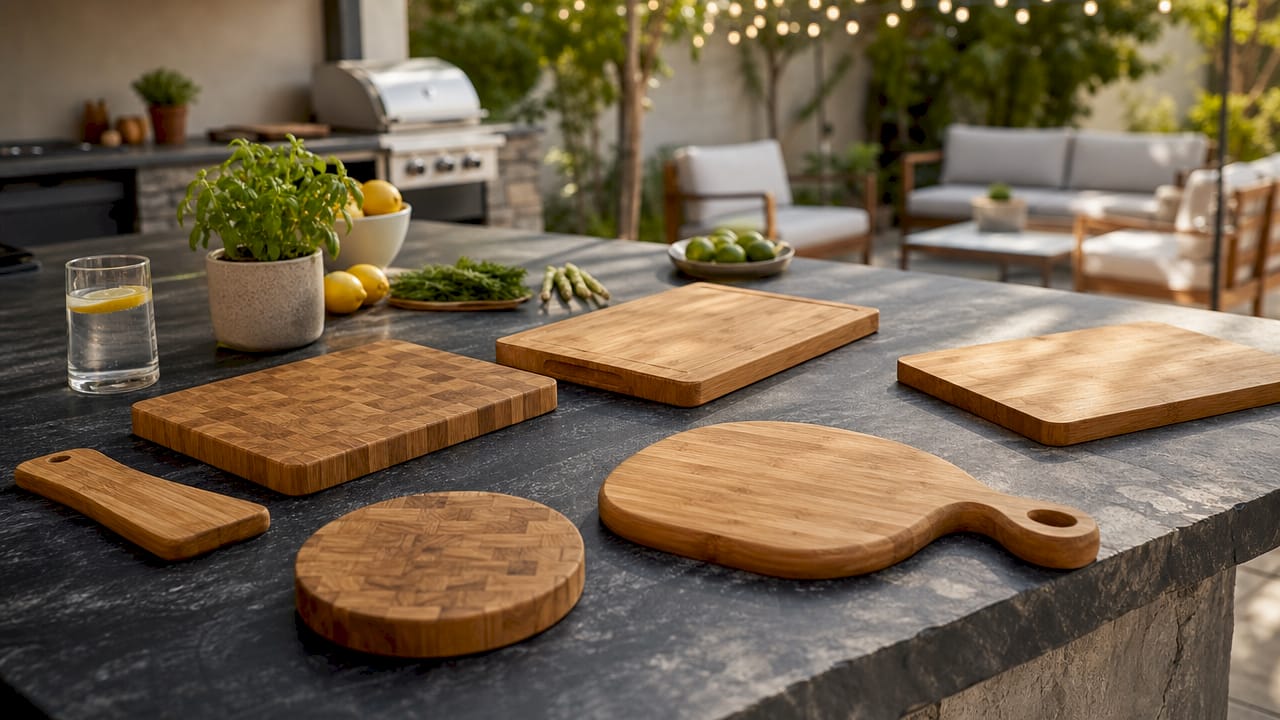
Bamboo boards deliver a combination of practical and environmental advantages that few other kitchen surfaces can match. Bamboo is a grass, not a tree, and it reaches harvestable maturity in three to five years compared to decades for hardwood. That fast growth cycle makes it one of the most renewable kitchen materials available to home cooks today.
Here is what sets bamboo apart from plastic and hardwood boards:
Pro Tip: A $15 basic bamboo board prevents microplastic leaching just as effectively as a $100 premium option. Spend your kitchen budget on quality ingredients, not an overpriced board.
Not all bamboo boards are built the same way, and the construction method directly affects how long your board lasts and how well it treats your knives.
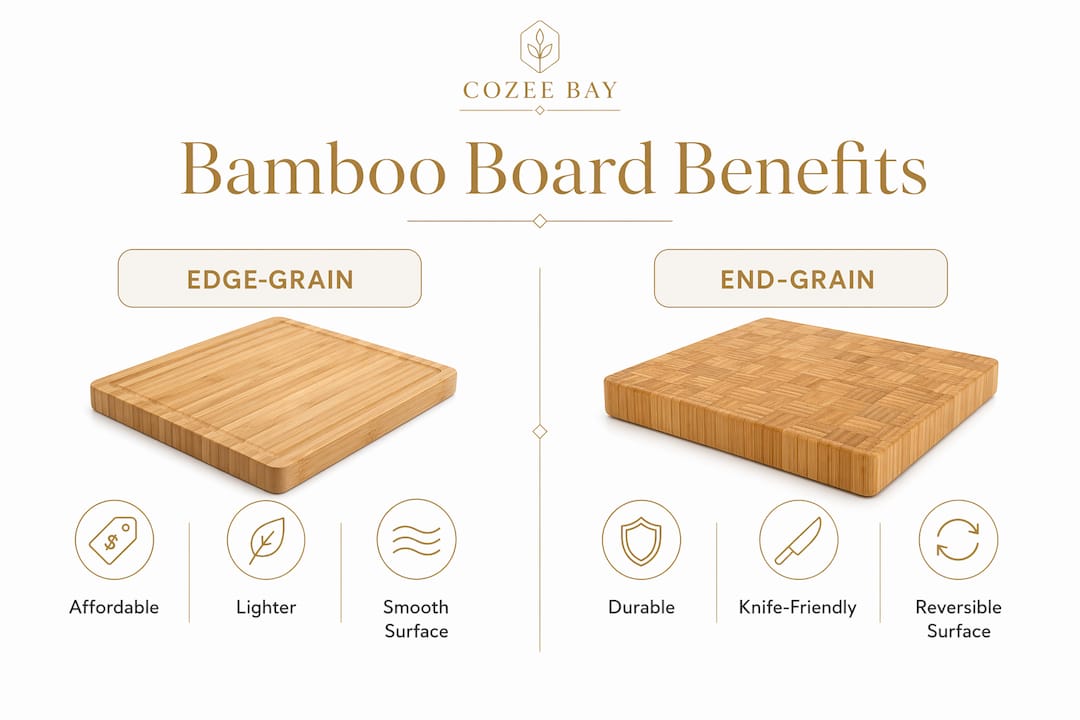
Edge-grain boards are the most common type. The bamboo fibers run horizontally along the cutting surface, creating a smooth, flat face that is easy to clean and relatively affordable. End-grain boards are constructed with the fibers standing vertically, so your knife blade slides between the fibers rather than across them. End-grain bamboo boards provide a self-healing surface that closes back up after each cut, which preserves knife edges better and extends the board’s life. End-grain options are typically thicker, heavier, and priced higher, but they reward the investment with superior durability.
Thickness matters more than most home cooks realize. A board thinner than three-quarters of an inch warps more easily when it gets wet. For heavy chopping tasks, look for boards at least one inch thick. Size depends on your counter space and typical tasks: a 12-by-18-inch board handles most prep work comfortably, while a smaller 8-by-10-inch board works well as a dedicated cheese or snack board.
| Feature | What it does |
|---|---|
| Juice grooves | Channels liquid away from the counter during meat carving or fruit prep |
| Built-in handles | Makes carrying a loaded serving board safe and easy |
| Reversible surfaces | One side for prep, one side for serving, doubling the board’s usefulness |
| Carbonized finish | Heat treatment that improves moisture resistance and structural stability |
Boards with juice grooves, handles, and reversible surfaces add convenience without adding much cost. If you plan to use your board as a bamboo serving platter for charcuterie or cheese, a reversible design with a clean, smooth side is the most practical choice.
Pro Tip: If you want one board that does everything, choose a reversible end-grain option with juice grooves. It handles raw meat prep on one side and doubles as a polished serving surface on the other.
Proper care is the single biggest factor in how long your board lasts. A well-maintained bamboo board can serve you for several years. A neglected one warps, cracks, and splits within months.
Follow these steps every time you use your board:
For a deeper look at keeping all your bamboo kitchen items in top shape, Cozee-bay’s guide on bamboo product care covers oiling schedules, stain removal, and seasonal maintenance in detail.
Bamboo boards handle a wider range of kitchen tasks than most home cooks expect. The surface is firm enough for heavy chopping and fine enough for delicate slicing. Here is where a quality bamboo kitchen board truly shines:
One detail worth checking before you serve food directly on any board: high-end bamboo serving boards comply with FDA and EU food safety standards on lacquers and finishes. If your board has a lacquered or painted surface, verify that the finish is food-safe before placing unwrapped food directly on it. Unfinished or food-grade oil-treated bamboo boards carry no such concern.
Bamboo utensils and boards work together as a cohesive, sustainable kitchen set that looks intentional rather than thrown together.
A bamboo board is the most practical eco-friendly upgrade a home cook can make, combining knife safety, natural antibacterial properties, and serving versatility at an accessible price point.
| Point | Details |
|---|---|
| Bamboo is genuinely sustainable | Bamboo matures in 3–5 years, making it far more renewable than hardwood alternatives. |
| End-grain construction lasts longer | Vertical fiber orientation creates a self-healing surface that protects knife edges better than edge-grain. |
| Hand washing is non-negotiable | Dishwashers and soaking cause warping and splitting; always wash by hand and dry upright. |
| Monthly oiling extends board life | Food-grade mineral oil prevents cracking and keeps the surface hygienic for years of use. |
| Verify food-safe finishes for serving | Check that lacquered boards meet FDA or EU standards before placing unwrapped food directly on the surface. |
I have used plastic boards, heavy maple blocks, and glass cutting surfaces over the years. Glass ruins knife edges in one session. Plastic develops grooves that trap bacteria no matter how hard you scrub. Heavy hardwood blocks are beautiful but exhausting to move and expensive to replace when they crack.
Bamboo won me over because it solves all three problems without creating new ones. The weight is manageable. The price is honest. The surface stays cleaner than plastic and gentler on knives than glass or dense hardwood. The one mistake I see home cooks make repeatedly is leaving their board flat and wet after washing. That single habit is responsible for most of the warped, split boards I have seen. Stand it upright, let it breathe, and oil it once a month. That is genuinely all it takes.
My other strong opinion: do not buy a bamboo board for cheese and then use it for raw chicken without a dedicated second board. Keep one board for raw proteins and one for produce and serving. Two affordable bamboo boards cost less than one premium hardwood block, and the separation keeps your kitchen safer.
— Cozee
If you are ready to upgrade your kitchen with boards that are built to last and look great doing it, Cozee-bay carries a curated selection of eco-friendly bamboo kitchen products crafted from sustainably sourced materials.

Cozee-bay’s bamboo products are designed with home cooks and eco-conscious consumers in mind, combining quality craftsmanship with a clean, natural aesthetic that works in any kitchen. Free shipping is available within the contiguous U.S., and every purchase is backed by a money-back guarantee. Visit Cozee-bay’s full collection to find the right board for your prep work, your serving table, and your sustainable kitchen goals.
A bamboo board is used for food preparation tasks like chopping, slicing, and carving, as well as serving food directly at the table as a platter for cheese, charcuterie, or bread.
Bamboo boards are naturally antibacterial, do not leach microplastics, and are gentler on knife edges than plastic boards, making them a safer and more durable choice for most home cooks.
Never soak your board or put it in the dishwasher. Wash it by hand, dry it upright so both sides air out evenly, and apply food-grade mineral oil monthly to maintain the wood’s structure.
Edge-grain boards have fibers running horizontally and are lighter and more affordable. End-grain boards have fibers standing vertically, creating a self-healing surface that is more durable and easier on knife blades.
Unfinished or food-grade oil-treated bamboo boards are fully food-safe. If a board has a lacquer or decorative finish, verify that it meets FDA or EU food contact standards before placing unwrapped food directly on the surface.
Comments will be approved before showing up.