Your Cart is Empty


Finding everyday products that are both durable and truly sustainable can feel challenging for even the most committed eco-conscious homeowner or property manager. When you choose bamboo, you are investing in more than just a sturdy paper towel dispenser. Bamboo product longevity means not only lasting function but also less landfill waste and a lower environmental impact over time. Thanks to its rapid renewal rate and impressive mechanical strength, bamboo delivers performance that supports greener choices in American homes and businesses.
| Point | Details |
|---|---|
| Bamboo Longevity Matters | Bamboo durability impacts environmental, economic, and social systems, making it a sustainable choice compared to plastics. |
| Factors Affecting Durability | Key factors include mechanical strength, treatment methods, and environmental conditions that influence the product’s lifespan. |
| Care Extends Lifespan | Proper maintenance can significantly prolong the life of bamboo products, preventing common issues such as moisture damage. |
| Quality Over Price | Not all bamboo products are equal; investing in well-treated items ensures better durability and longevity compared to cheaper alternatives. |
When you think about longevity, you probably picture something that just lasts a long time. With bamboo products, the meaning runs deeper. Bamboo product longevity refers to how long a bamboo item remains functional and retains its intended performance characteristics through regular use. But here’s where it gets interesting: longevity isn’t just about the product itself. It’s about the ripple effect that durability creates across environmental, economic, and social systems. Research shows that bamboo’s lifespan and renewal rate are critical factors when evaluating the environmental effects of bamboo products as substitutes for plastic. A paper towel dispenser that lasts five years instead of one represents far more than just avoiding one trip to the store. It means five years of reduced landfill waste, fewer manufacturing emissions, and less plastic consumption.
The durability of bamboo products depends on three interconnected factors. First, there’s mechanical strength, which refers to how well the material withstands daily stress and handling. Bamboo naturally has impressive strength properties comparable to hardwood, making it ideal for items like paper towel dispensers that endure constant use in restaurants, offices, and homes. Second, treatment and finishing determine whether the bamboo can resist moisture, temperature changes, and wear. A well treated bamboo dispenser maintains its appearance and function through years of humidity in kitchens and bathrooms. Third, environmental factors such as storage conditions and usage patterns affect how long the product performs. Understanding that bamboo’s longevity affects social, economic, and environmental sustainability helps explain why durability matters so much more than surface level considerations.
For homeowners and property managers, this translates into real value. When you purchase a durable bamboo product, you’re not simply buying something that works longer. You’re making a choice that reduces your environmental footprint over time. A single long lasting bamboo paper towel dispenser prevents the need for multiple disposable or plastic alternatives throughout its lifespan. You can also explore why bamboo lasts longer in everyday use to understand the specific material advantages that make bamboo an investment in sustainability. Think of longevity as an investment where the returns accrue in reduced waste, lower replacement costs, and the quiet satisfaction of knowing your choice supports forest regeneration rather than plastic pollution.
Pro tip: When evaluating a bamboo product’s durability, ask the seller about treatment methods and expected lifespan in typical use conditions, then calculate the true cost per year of ownership to see how longevity creates real savings compared to cheaper alternatives.
Bamboo durability isn’t a mystery. It comes down to specific, measurable factors that determine whether your bamboo paper towel dispenser will last three years or ten. Understanding these factors helps you make smarter purchasing decisions and care for your products properly. The durability of bamboo depends on species selection, growth conditions, age at harvest, and treatment methods. Each of these plays a role in how well your bamboo product performs through years of daily use. When manufacturers select the right bamboo species and harvest at optimal maturity, they’re already building the foundation for longevity. Different bamboo varieties have different density levels and natural resistance properties, which affects their ability to withstand stress and environmental exposure.
Treatment and finishing represent perhaps the most critical variables you can control. Bamboo treatment modifications improve mechanical properties and resistance to environmental factors, which directly impacts longevity. When bamboo is properly treated using either natural or chemical processes, it becomes significantly more resistant to moisture, temperature fluctuations, and wear. A well treated bamboo dispenser won’t warp in a humid kitchen or crack when exposed to seasonal temperature changes. The treatment process fills the bamboo’s porous structure and creates a protective barrier against the elements. This is why you’ll notice quality bamboo products maintain their appearance and function after years of use, while poorly treated alternatives deteriorate quickly. Growth conditions also matter tremendously. Bamboo grown in optimal soil conditions with proper water access and climate develops stronger cellular structure than bamboo grown in stressed conditions. Age at harvest determines the density of the material. Mature bamboo harvested at the right stage has superior strength compared to younger culms.
For homeowners and property managers, this knowledge translates into practical choices. When evaluating bamboo products, look for manufacturers who specify their treatment methods and source information about bamboo species used. Products like bamboo paper towel dispensers with proper care steps maintain their durability when you understand how treatment affects performance. Ask questions about whether the bamboo has been kiln dried, what protective finishes have been applied, and whether the manufacturer offers guidance on maintenance. A dispenser treated with natural oils requires different care than one with polyurethane coating. The investment in understanding these factors pays off because it helps you select products built to last, avoiding cheaper alternatives that skip proper treatment and fail within months.
Pro tip: When purchasing bamboo products, request the specific bamboo species name and ask about the treatment process used, then compare products from manufacturers willing to provide this information versus those that don’t.
When you’re choosing between bamboo, traditional wood, and plastic for your home or commercial space, durability often feels like the deciding factor. The reality is more nuanced than a simple comparison of lifespan numbers. Bamboo occupies a middle ground, offering distinct advantages and trade-offs compared to both wood and plastic. Traditional hardwoods like oak and maple can last 20, 30, or even 50 years with proper care, making them appear like the more durable choice. Plastic products vary wildly in quality and typically last anywhere from 3 to 10 years before degrading or breaking. Bamboo typically falls somewhere in between, usually lasting 5 to 15 years depending on treatment and use conditions. But here’s what matters for your decision: longevity is only part of the sustainability equation. A hardwood product that lasts 40 years but comes from slow growing trees that require decades to replace tells a different story than a bamboo product lasting 10 years from a resource that regenerates in 3 to 5 years.
The mechanical performance comparison reveals something interesting. Bamboo fiber reinforced composites show mechanical properties comparable to or exceeding some plastics and woods, offering biodegradability and renewability that traditional materials cannot match. When bamboo is properly treated and finished, it resists moisture and temperature changes nearly as well as treated hardwood. Plastic products might seem more durable because they resist moisture, but they degrade through UV exposure and chemical breakdown over time. A plastic paper towel dispenser in a sunny kitchen window will become brittle and discolored within years, while a properly treated bamboo dispenser maintains its appearance and function. The key difference is that bamboo products can be repaired, refinished, or upcycled at the end of their life. A plastic dispenser becomes waste. A wooden one might last longer but requires old growth forests. A bamboo one balances durability with genuine sustainability.
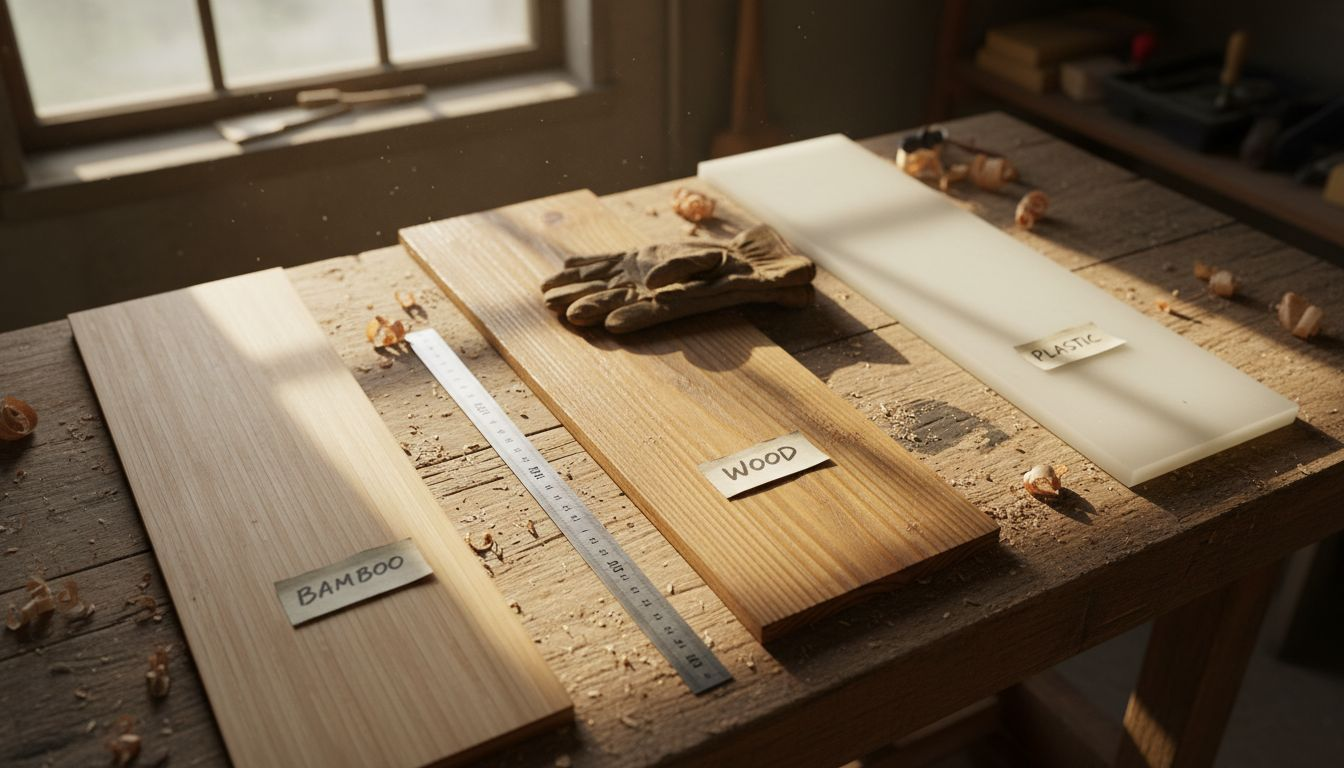
Life cycle assessments paint the full picture. Bamboo products offer shorter lifespan than treated wood but superior renewability and lower environmental impact, making them viable sustainable substitutes in applications currently dominated by plastics and wood. For homeowners and property managers, this means choosing bamboo isn’t about settling for less durability. It’s about recognizing that your paper towel dispenser, drawer organizer, or trash bag holder doesn’t need to last a lifetime. When choosing bamboo over plastic for your home, you’re selecting a product that performs as well as plastic while avoiding decades of landfill persistence. You’re making the environmentally responsible choice that aligns with modern sustainability values, even if it requires replacement sooner than some hardwood alternatives. The math works out when you account for the entire environmental cost, not just years of use.
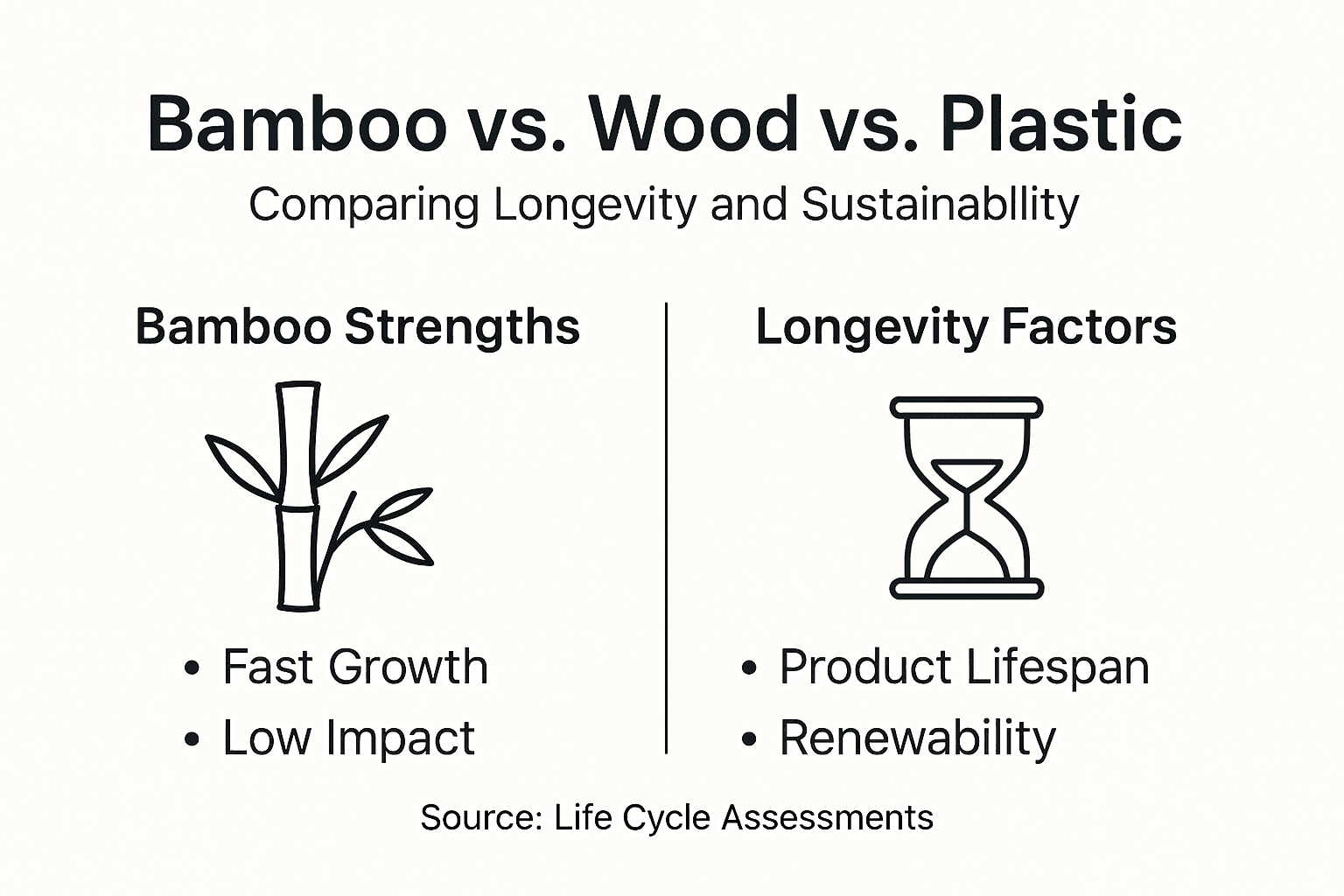
Here’s a quick comparison of material longevity and sustainability for home products:
| Material Type | Typical Lifespan | Renewability Rate | End-of-Life Impact |
|---|---|---|---|
| Bamboo | 5-15 years | Regenerates in 3-5 years | Biodegradable, upcyclable |
| Hardwood | 20-50 years | Replenishes in 30+ years | Can be recycled, slow regeneration |
| Plastic | 3-10 years | Not renewable | Long-term landfill waste |
Pro tip: Calculate the true cost per year of ownership and compare the environmental impact across all three materials, not just initial price or expected lifespan, to see why bamboo often wins on overall sustainability value.
Here’s a truth that catches many people off guard: a quality bamboo product can fail early due to neglect, or it can outlast expectations through simple care. Proper maintenance is the difference between a bamboo paper towel dispenser lasting five years and lasting twelve. You can buy the most durably treated bamboo on the market, but if you ignore basic care, environmental factors will find their way in. Moisture seeping into untreated joints. UV rays fading and weakening the finish. Dust and debris accumulating in crevices. Each of these sounds minor, but compounded over months and years, they become the reason your dispenser warps, discolors, or develops structural weakness. The good news is that preventing this damage requires far less effort than you might expect.
Moisture is the primary enemy of bamboo longevity. Proper care and maintenance including protection from moisture, pests, and UV radiation critically extend bamboo product life. Keeping your dispenser away from direct water splash and ensuring proper air circulation prevents the wood fibers from absorbing excess water. In a kitchen or bathroom, this means positioning your dispenser where it won’t be constantly exposed to steam or splashing. Wipe spills immediately rather than letting them sit. In commercial settings like restaurants or coffee shops, this becomes even more critical due to higher humidity and frequency of exposure. Periodic treatment and protective coatings maintain the structural integrity that treatment provided at the factory. Many manufacturers recommend reapplying protective finish annually or every 18 months, depending on use intensity. Maintenance practices such as drying, seasoning, and protective coatings enhance longevity by preventing biological decay and environmental damage. Think of this like an oil change for your dispenser. A small investment in preventive upkeep now saves thousands in premature replacement later.
UV radiation slowly breaks down bamboo’s cellular structure and fades protective finishes. Keep your bamboo products away from south-facing windows where direct sunlight streams in for hours daily. If your bamboo dispenser must be in a sunny location, consider using a protective finish specifically formulated for UV resistance, or move the item to a shaded spot during peak sun hours. Pests like insects and fungi thrive in warm, moist environments. Ensure proper ventilation around your bamboo products, especially in bathrooms and kitchens where humidity lingers. Store bamboo items in dry areas with moderate temperature control. For property managers overseeing multiple locations, establishing a simple quarterly inspection routine catches problems before they become serious. Check for warping, discoloration, or soft spots that indicate moisture damage. This preventive approach means your bamboo products remain functional longer, reinforcing the sustainability benefits that made you choose bamboo in the first place.
Here is a useful summary of essential care steps and their impact on bamboo product durability:
| Maintenance Step | Recommended Frequency | Benefit to Longevity | Risk if Ignored |
|---|---|---|---|
| Wipe spills | Immediately | Prevents moisture damage | Warping and mold risk |
| Apply finish | Annually/18 months | Maintains moisture resistance | Surface cracks, early decay |
| Avoid direct sunlight | Daily | Reduces UV damage | Fading, structural weakening |
| Inspect for pests | Quarterly | Early problem detection | Infestation, rapid deterioration |
Pro tip: Create a simple maintenance calendar reminding you to clean your bamboo dispenser monthly and reapply protective finish annually, which doubles the product’s functional lifespan compared to products that receive no care.
Misinformation about bamboo durability circulates more often than you’d expect. You’ll hear friends mention that bamboo falls apart quickly, or that it’s only suitable for temporary use. These beliefs stem from outdated information and limited experience with poorly treated bamboo products. The truth is far more encouraging: bamboo can match or exceed the lifespan of traditional hardwood when properly treated and maintained. This misconception has cost countless consumers millions of dollars by steering them toward expensive hardwood alternatives or cheap plastic substitutes. Understanding the reality of bamboo longevity helps you make decisions based on facts rather than assumptions.
The most persistent myth is that bamboo decays rapidly and deteriorates faster than wood. This idea likely originated from encounters with low-quality, untreated bamboo products that lacked proper finishing or protective coatings. Untreated bamboo does absorb moisture and become vulnerable to pest damage, just like untreated hardwood. But here’s the critical point: bamboo’s lifespan can match or exceed wood with adequate treatment, challenging the outdated view that bamboo is inherently weaker or less durable. A properly treated bamboo paper towel dispenser in your kitchen performs as well as a treated hardwood one. Both resist moisture when sealed correctly. Both withstand daily use and temperature fluctuations. The difference is that bamboo achieves this performance while being a renewable resource that regenerates in years rather than decades. Another related myth suggests bamboo is unsuitable for long-term use, implying it belongs only in temporary installations. This misunderstanding ignores the thousands of bamboo structures in Asia that have stood for centuries, proving that bamboo can outlast its users when constructed properly.
A third myth claims all bamboo products are equally durable. This overlooks the massive variation in quality, treatment methods, and manufacturing standards across the industry. A $15 bamboo dispenser from an unknown seller has nothing in common with a high-quality, professionally treated bamboo dispenser from a manufacturer focused on durability. Cheap products cut corners on treatment, use fast-growing, low-density bamboo, and skip protective finishes. Premium products invest in proper species selection, treatment protocols, and quality control. The difference in lifespan between these two can be 3 years versus 12 years. Understanding the bamboo product lifecycle from growth to disposal reveals why some products last so much longer than others. Quality matters tremendously. Don’t let a bad experience with a cheap product poison your perception of bamboo as a material.
The final myth worth addressing is that bamboo requires special, complicated care that most people won’t maintain. The reality is simpler. Bamboo requires the same basic care as any wood product: keep it dry, protect it from intense UV exposure, and periodically refresh protective finishes. These aren’t exotic requirements. They’re common sense maintenance that adds years to any wood-based product’s life. You’re not committing to a complicated regimen. You’re making small, easy choices that compound into meaningful durability gains.
Pro tip: When evaluating any bamboo product, ignore marketing claims and instead ask for evidence of the treatment methods used and the expected lifespan in typical use conditions, which separates quality products from marketing hype.
Choosing the right bamboo product means understanding longevity and how durability impacts sustainability. If you want to reduce waste and invest in eco-friendly materials that perform well under daily use, exploring our Bamboo Paper Towel Dispenser- A Sleek Look Home or Office collection is a great place to start. These dispensers are crafted with careful treatment processes to resist moisture and environmental wear ensuring years of reliable use for your home or commercial space.

Make the switch to sustainable bamboo now and experience the benefits of functional innovation paired with responsible environmental impact. Learn more about proper care and find accessories that extend your product’s life at Paper Towel Dispensers - Accessories | Cozee Bay®. Visit Cozee Bay today to choose eco-conscious bamboo products designed for real-world durability and timeless style.
The longevity of bamboo products is influenced by species selection, growth conditions, age at harvest, and treatment methods. Properly treated bamboo can resist moisture and temperature fluctuations, enhancing its lifespan.
Bamboo typically lasts between 5 to 15 years, depending on treatment and usage, placing it between hardwood, which can last 20-50 years, and plastic, which usually lasts 3-10 years. However, bamboo is more sustainable due to its renewability compared to these materials.
To extend the life of bamboo products, keep them away from direct moisture, apply protective finishes regularly, avoid prolonged UV exposure, and inspect them for pests quarterly to prevent damage and decay.
No, not all bamboo products are equally durable. The quality and treatment methods vary significantly among manufacturers, affecting the product’s lifespan. High-quality, properly treated bamboo can outperform low-cost, untreated alternatives.
Comments will be approved before showing up.