Your Cart is Empty


TL;DR:
- Eco-friendly napkins like bamboo and recycled paper enhance table aesthetics and sustainability.
- Basic and advanced folds can elevate everyday meals and special occasions sustainably.
- Proper selection, folding, and storage reduce waste and promote mindful dining.
There is nothing quite like sitting down to a dinner table that feels flat and forgettable, every meal served with a plain square of napkin tossed to the side like an afterthought. If your table settings have been leaving guests unimpressed, you are not alone. The good news is that a few smart folds and the right eco-friendly napkins can transform an ordinary meal into something that actually feels special. In this guide, we walk you through choosing sustainable materials, mastering basic and advanced folding techniques, and making sure your choices genuinely support the planet, not just your aesthetic.
| Point | Details |
|---|---|
| Choose eco napkins | Opt for bamboo or recycled paper napkins to reduce environmental impact. |
| Master basic folds | Simple techniques like the rectangle or triangle enhance everyday table settings. |
| Elevate special occasions | Advanced folding methods add elegance and joy to holidays and parties. |
| Verify sustainability | Always check napkins for eco-certifications and proper material before folding. |
| Troubleshoot folds | Use thicker napkins and flat storage to prevent limp or messy designs. |
With the importance of stylish and earth-friendly dining set, let’s start by assembling quality eco napkins and tools. Your napkin choice matters more than you might think. The material you pick affects not just how your folds look, but how long they last and what happens to them after dinner is over.
Types of eco-friendly paper napkins to consider:
As a general rule, eco-friendly napkins reduce overall waste compared to conventional disposables, especially when you choose options made from rapidly renewable resources like bamboo. Learning more about bamboo paper towels can help you understand why bamboo outperforms traditional wood-pulp paper in nearly every sustainability measure.
Comparison table: Napkin types at a glance
| Napkin type | Fold quality | Sustainability | Best use |
|---|---|---|---|
| Bamboo | Excellent | Very high | Special occasions, restaurants |
| Recycled paper | Good | High | Everyday meals |
| Unbleached paper | Moderate | High | Casual gatherings |
| Conventional paper | Variable | Low | Not recommended |
For tools, keep things simple. A flat, clean surface is your best friend. A ruler helps with symmetry, and slightly damp fingertips can sharpen a crease without soaking the napkin. If you’re setting up for an event, check out tips from an eco-friendly paper napkin setup to plan your station efficiently. You might also find value in pairing your napkins with sustainable paper towel dispensers for a fully cohesive, eco-conscious table station.
Pro Tip: Always choose two-ply or thicker napkins for folding. Thin single-ply napkins tear easily at the creases and lose their shape quickly, especially in humid environments.
Once you have sustainable napkins and tools ready, you can try quick folding techniques for everyday occasions. These three foundational folds are fast, forgiving, and work beautifully for casual family dinners or weekday hosting.
The classic rectangle fold:
The triangle fold:
The pocket fold (great for holding utensils):
As simple folding techniques minimize waste and elevate presentation, even these basic folds add polish without asking you to use more napkins than necessary. If you’re curious how different dispensing methods work alongside folded napkins, exploring paper towel dispenser types gives you useful context for both home and commercial setups.
A quick note on hygiene: Never fold napkins that are damp, used, or have been sitting out exposed to food. Always fold from a clean, dry stack and wash your hands before handling.
One of the most common mistakes people make is over-folding. Too many creases make a napkin look busy and wrinkled rather than sharp. Stick to clean, intentional folds and let the material do the work. If edges are uneven, gently pull the corners apart and re-fold from scratch rather than trying to push the crease into place.

Pro Tip: For a busy dinner party, pre-fold all your napkins the afternoon before and store them flat under a light cloth. They’ll hold their shape beautifully by the time guests arrive.
After mastering basic folding, let’s elevate your skillset for those memorable special occasions. These designs take a few extra minutes but create real impact on a holiday table or a dinner party spread.
The fan fold:
The lotus fold:
The crown fold:
As special event napkin folding enhances atmosphere and demonstrates care for guests, investing a bit of time in these designs sends a clear message that you put thought into every detail. To keep advanced folds sturdy, lightly starch the napkin before folding and avoid handling them too much once shaped. Reviewing a sustainable paper towel workflow can also help you organize your prep process more efficiently when setting up for larger events.
Fold types and ideal occasions:
| Fold style | Occasion | Difficulty | Time needed |
|---|---|---|---|
| Fan | Dinner parties, restaurants | Easy | 2 minutes |
| Lotus | Weddings, holidays | Moderate | 5 minutes |
| Crown | Formal dinners, galas | Moderate | 4 minutes |
| Rectangle | Everyday meals | Very easy | 30 seconds |
Pre-event checklist:
With creative folding skills in hand, it’s important to check your choices’ genuine eco impact and troubleshoot any folding challenges. Not all napkins marketed as “green” actually deliver on that promise, so knowing what to look for keeps your dining habits honest.
Eco indicators to look for on napkin packaging:
Choosing eco-friendly napkin options and proper folding minimizes waste by encouraging you to use only what you need rather than grabbing handfuls of loose napkins. When each napkin is presented as a deliberate, folded piece, guests naturally treat it with more care. They use it fully rather than dabbing once and discarding.
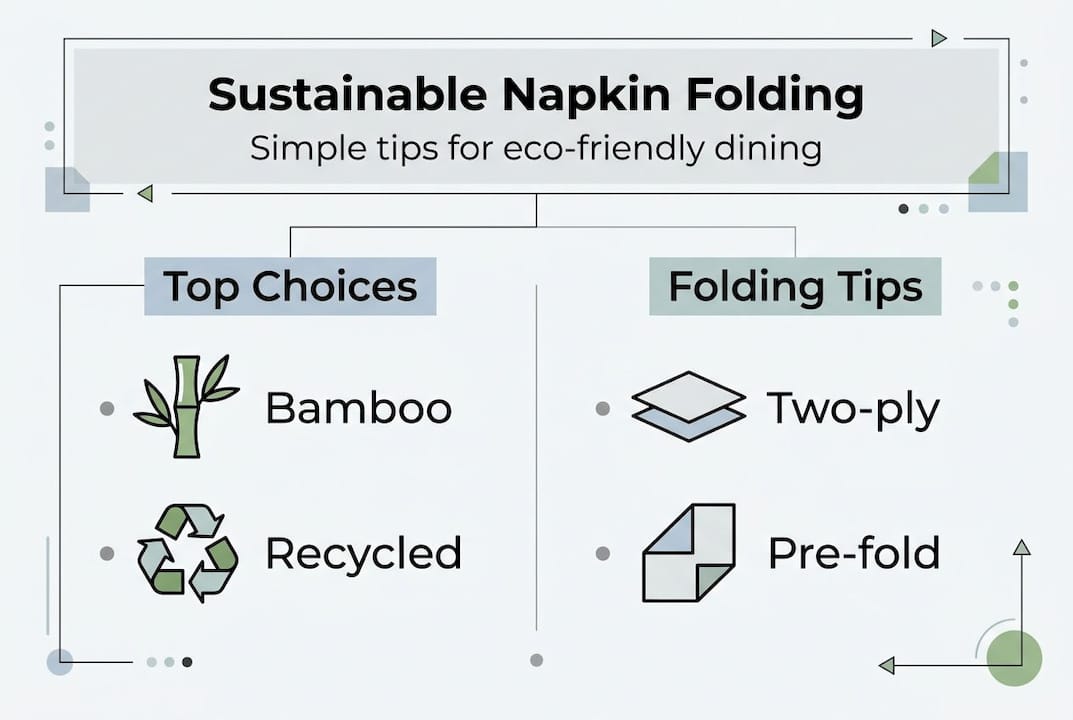
Statistic spotlight: Switching from conventional to recycled or bamboo paper napkins can reduce paper waste by a significant margin over a year, particularly in households that host regularly or run food-oriented businesses.
Troubleshooting common folding problems:
Pro Tip: Store your pre-folded napkins flat inside a shallow tray or on a clean baking sheet covered lightly with a dry kitchen towel. This keeps them crisp and ready to place at the table without any last-minute fuss.
Beyond practical folding tips and troubleshooting, here’s a fresh perspective on creative napkin folding and sustainability. There is a persistent myth that spending extra effort on presentation is somehow wasteful, as if caring about how your table looks must mean throwing resources at it. That thinking gets it backwards.
Folding a napkin carefully is actually one of the most sustainable choices you can make at the dinner table. When you treat each napkin as a small craft, you use fewer of them, you choose better materials, and you inspire the people around you to be more mindful too. It is a quiet form of stewardship that does not require a speech or a lecture.
We believe that real home sustainability, as seen in a practical sustainable paper towel workflow, shows up in the small, consistent choices you make every day. A beautifully folded bamboo napkin at a Tuesday dinner says something meaningful: that you value both the experience and the planet, and you do not think those two things are in conflict. They never were.
If folding eco-friendly napkins has you thinking about the rest of your sustainable dining setup, Cozee Bay has exactly what you need. From bamboo paper towel dispensers to a full range of handcrafted home products, every item is designed to make earth-friendly living feel effortless and beautiful.

Whether you’re outfitting a home kitchen, a coffee shop, or a dining room ready for holiday guests, Cozee Bay eco napkins and sustainable accessories help you pull the whole look together without compromising your values. Browse our full catalog and take the next step toward a table that feels as good as it looks. Free shipping within the contiguous U.S. and a money-back guarantee make it easy to get started today.
Bamboo napkins are sustainable choices that also hold creases beautifully, making them ideal for both everyday and decorative folds. Recycled paper napkins are a close second for eco-conscious households.
Use two-ply or thicker napkins and press each crease firmly before moving to the next step. Thicker napkins produce better folds that stay crisp through an entire meal.
Absolutely. Special occasion napkin folding elevates table settings in a way that guests notice immediately. Lotus and crown folds are especially striking for holidays, weddings, and formal dinners.
Check the packaging for FSC certification and recycled content percentage. Eco-friendly napkins minimize waste most effectively when made from bamboo or high post-consumer recycled fiber, so prioritize those labels when shopping.
Comments will be approved before showing up.