Your Cart is Empty


TL;DR:
- Proper kitchen organization reduces clutter, saves time, and cuts food waste significantly.
- Using sustainable bamboo storage solutions offers durability, aesthetic appeal, and environmental benefits.
- Implementing workflow zones enhances efficiency, making everyday tasks quicker and easier.
If you’ve ever opened a cabinet only to have a cutting board crash onto your foot, or spent ten minutes hunting for the lid that matches your pot, you already know how much kitchen clutter costs you. Not just in frustration, but in real time and real money. An unorganized kitchen quietly drains your energy every single day. The good news is that a smarter system, built around functional zones and sustainable materials like bamboo, can completely change how your kitchen feels and performs. In this guide, you’ll find every step you need to clear the chaos, assign everything a proper home, and keep it that way.
| Point | Details |
|---|---|
| Start with workflow zones | Grouping by prep, cooking, cleaning, and storage makes your kitchen faster and easier to use. |
| Use bamboo for sustainable style | Bamboo organizers combine eco-friendly materials with lasting durability and elegance. |
| Declutter before organizing | Remove all items and sort them before deciding where each group belongs for lasting results. |
| Solve tricky spaces with modular tools | Modular bamboo organizers, pegboards, and lazy Susans tame deep drawers and awkward corners. |
| Efficiency cuts waste and saves money | A well-organized kitchen can reduce food waste by more than a third and save around $1500 per year. |
Now that you know what you can achieve, let’s set the stage with the right gear and strategies. Before you move a single spice jar, take stock of what you’ll need. Having the right tools on hand makes the whole process smoother and keeps you from stopping mid-project to run to the store.
Essential organizational tools to gather:
Not all organizers are created equal, and the material you choose matters more than most people realize. Here’s a quick look at how bamboo stacks up against common alternatives:
| Feature | Bamboo | Plastic | Metal |
|---|---|---|---|
| Eco-friendly | Yes | No | Partially |
| Durability | High | Medium | High |
| Aesthetic appeal | Warm, natural | Varies | Industrial |
| Moisture resistance | Good | Good | Can rust |
| Biodegradable | Yes | No | No |
| Cost over time | Low (lasts longer) | Low upfront | Medium |
As you can see, bamboo organizer types offer a rare combination of sustainability, durability, and visual warmth that plastic simply cannot match. The bamboo organizer benefits go beyond looks too, since bamboo is naturally antimicrobial and holds up well in humid kitchen environments. If you want something that bridges storage and style, a bamboo bread bin storage option is a great example of form meeting function on your countertop.
Before you start placing organizers, prep your space properly:
Pro Tip: Measure twice before buying any organizer. A bamboo insert that’s even half an inch too wide won’t fit, and returning items mid-project kills momentum. Write your measurements on a notepad and bring it with you when shopping. Also, organize kitchen cabinets with workflow zones in mind rather than just matching aesthetics, integrating bamboo for sustainability without sacrificing function.
With your materials prepped, it’s time to tackle the clutter head-on so you can see everything clearly before reassignment. This is the step most people skip or rush, and it’s exactly why their kitchens get messy again within weeks. Real, lasting organization starts with an honest look at what you actually own.
Follow these steps in order:
“An organized kitchen isn’t just tidier. It’s a genuine time and money saver. Organized kitchens save 12.4 minutes per meal prep on average and reduce food waste by 37%, which adds up to roughly $1,500 per household each year.”
Those numbers are hard to ignore. Knowing that a reorganized kitchen can put real money back in your pocket makes the effort feel a lot more worthwhile.
Common mistakes to avoid during decluttering:
The drawer decluttering steps process works best when you treat each drawer or cabinet as its own mini-project. The organize kitchen cabinets methodology is clear: empty completely, sort into keep/donate/toss, then group by function into zones before anything goes back.
Pro Tip: Set a timer for 25 minutes per cabinet or drawer. When the timer goes off, take a five-minute break. This “time-box” approach keeps decision fatigue from setting in and makes the whole process feel manageable rather than overwhelming.
Now that clutter is eliminated, you’ll want a layout that makes every task quicker and more enjoyable. The zone system is the backbone of any kitchen that actually works. Instead of storing things where they happen to fit, you store them where you use them. It sounds simple, but the difference is enormous.
The four core kitchen zones:
| Zone | What belongs here | Ideal cabinet/drawer location |
|---|---|---|
| Prep | Cutting boards, knives, peelers | Near the main countertop |
| Cooking | Pots, pans, spatulas, spices | Near the stove |
| Cleaning | Dish soap, sponges, towels | Under or near the sink |
| Storage | Containers, wraps, bags | Near the fridge or pantry |
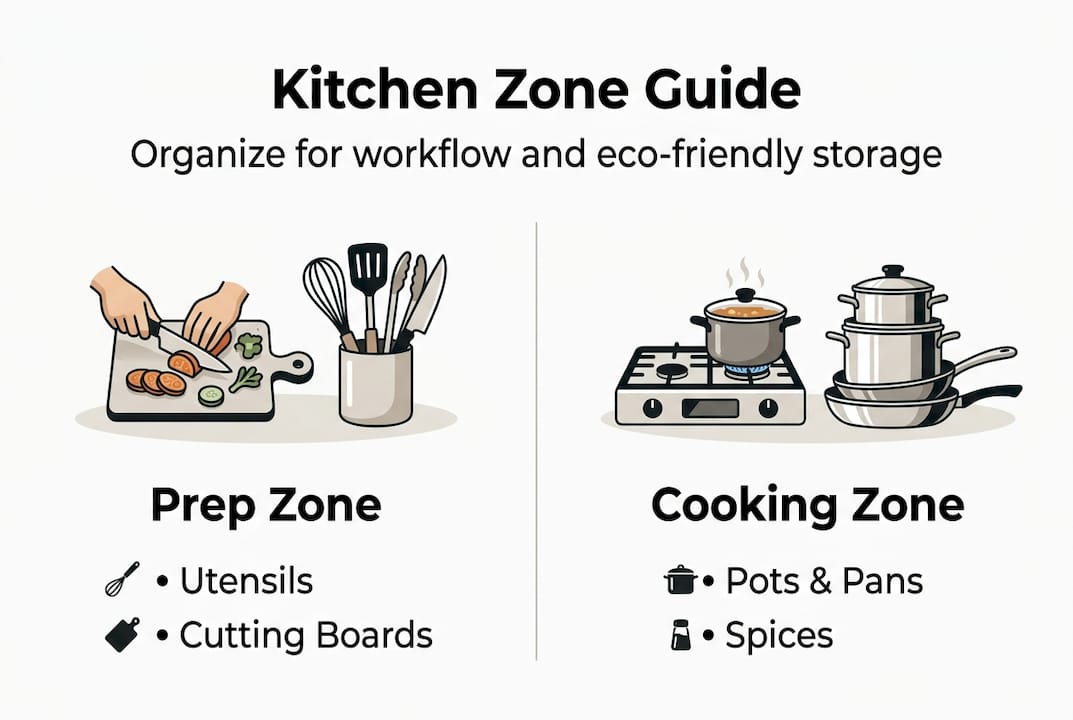
The zone system eliminates back-and-forth trips across the kitchen, making both cooking and cleanup noticeably faster. Once you feel how much smoother meal prep becomes, you’ll wonder why you ever stored your spatulas across the room from the stove.
Placing items for maximum efficiency:
For sink organization, a sink caddy organizer keeps sponges and soap within reach without cluttering the counter. You can also explore efficient kitchen zones for more ideas on making each area of your kitchen pull its full weight.
Pro Tip: Use a riser inside a cabinet to double your vertical storage space instantly. A lazy Susan on a deep shelf means nothing gets lost in the back corner ever again. These two tools alone can transform a frustrating cabinet into one that’s genuinely easy to use.
Even the best kitchen layouts get derailed by awkward storage spots. Here’s how to turn these problems into opportunities. The tricky areas, like deep drawers that swallow small items and corner cabinets that feel like black holes, are actually some of the most valuable storage real estate in your kitchen. You just need the right approach.
Solutions for common problem spots:
For deep drawers specifically, organizing deep drawers works best with pegboards for pots and vertical organizers for larger items, since both methods prevent the dreaded avalanche every time you open the drawer.
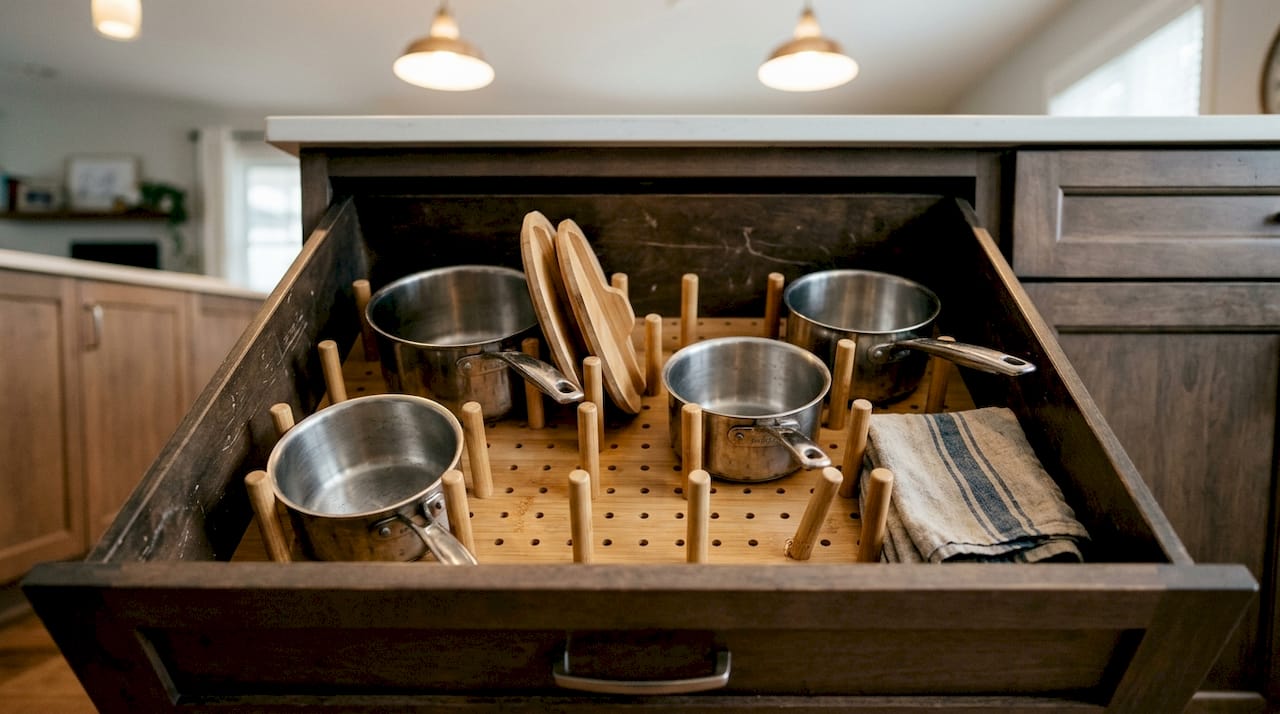
| Challenge | Bamboo solution | Plastic/metal alternative |
|---|---|---|
| Deep drawers | Modular bamboo dividers | Plastic bins (less durable) |
| Corner cabinets | Bamboo lazy Susan tray | Metal turntable (heavier) |
| Junk drawers | Adjustable bamboo grid | Plastic grid (not biodegradable) |
| Narrow spaces | Slim bamboo inserts | Metal inserts (can scratch) |
For shelf adjustability, cabinet shelf support pins let you customize shelf heights so every item fits without wasted space above it. Pairing those with deep drawer solutions and creative bamboo design ideas gives you a fully customized kitchen without a full renovation.
Pro Tip: Use a pegboard mounted inside a deep cabinet door for pots and lids. It keeps them visible, accessible, and off the shelf entirely, freeing up that precious cabinet floor space for bulkier items.
You’ve learned the systems and the tools. Now here’s why the right materials and approach make all the difference in whether your organized kitchen actually stays that way.
Most people treat kitchen organization as a one-time aesthetic project. They buy matching containers, arrange everything beautifully, and then watch it fall apart within a month because the system doesn’t match how they actually cook. Workflow zoning fixes that. When your tools live where you use them, maintaining order becomes almost automatic.
Bamboo is more than a trend. It’s a genuinely practical material that reduces stress and waste for eco-conscious homeowners, especially when you start one cabinet or drawer at a time and measure carefully for a proper fit. Unlike plastic, bamboo ages gracefully and doesn’t leach chemicals near your food. Unlike metal, it won’t scratch your cabinet interiors or feel cold and industrial in a space meant for warmth.
We believe the best kitchen organization isn’t the most elaborate. It’s the one that fits your real life. Start small, understand why bamboo matters as a long-term investment, and build from there. Small, manageable steps lower stress and build habits that actually stick.
When you’re ready to elevate your kitchen, discover bamboo solutions that align with everything you’ve learned. At Cozee Bay, we’ve designed our bamboo organizers with real kitchens in mind, whether you’re tackling a junk drawer, a deep cabinet, or an entire reorganization from scratch.

Our collection covers everything from drawer inserts to wrap and foil dispensers, all crafted from premium bamboo that looks beautiful and lasts for years. Every product ships free within the contiguous U.S. and is backed by our satisfaction guarantee. You can shop bamboo organizers to find the right fit for every corner of your kitchen, or compare bamboo organizers side by side to make the best choice for your space and budget. Your kitchen deserves tools that work as hard as you do.
Empty all cabinets completely, then sort every item into keep, donate, or toss piles before grouping what remains by function into zones. This method gives you a clear picture of what you actually own and prevents clutter from creeping back.
Bamboo organizers are durable, biodegradable, and naturally antimicrobial, making them a smarter long-term choice for both sustainability and style. Integrating bamboo into your workflow zones means you get function and eco-consciousness in one product.
Use a pegboard for pots and vertical dividers for larger items to keep everything upright, visible, and easy to grab without digging. Modular bamboo inserts work especially well for separating smaller items in the same drawer.
Absolutely. An organized kitchen cuts food waste by 37% and saves the average household around $1,500 per year by making it easy to see what you have before buying more. That’s a return on investment that no storage bin can match.
Comments will be approved before showing up.