Your Cart is Empty


For most people, a manual bamboo toothbrush or a refillable handle with replaceable heads is the best eco-friendly toothbrush choice, since a 2022 life-cycle assessment found electric brushes carry a climate footprint roughly an order of magnitude higher. Electric models can outperform manual brushing clinically, according to a 2025 Frontiers review, so the trade-off is real. What follows breaks down the types, the materials, the evidence, and how to actually choose and dispose of one.
TL;DR:
- Refillable toothbrush handles and bamboo manual brushes generally have the lowest environmental impact, with electric models producing about ten times more climate footprint.
- Most bamboo handles are compostable, but nylon bristles and metal staples are not, requiring proper removal before disposal to avoid contamination.
- Bioplastic handles and plant-based bristles may not fully break down in standard composting facilities and could release microplastics during recycling processes.
- Choosing a product with clear disposal instructions, FSC certification, and a focus on replaceable heads offers the best sustainable posting, especially if the handle is durable.
- Replacing toothbrushes every three months and pairing them with other eco-friendly bathroom products maximizes waste reduction and promotes a system of sustainability.
Walk into any green living aisle and you’ll hit four main categories, each with different waste math.
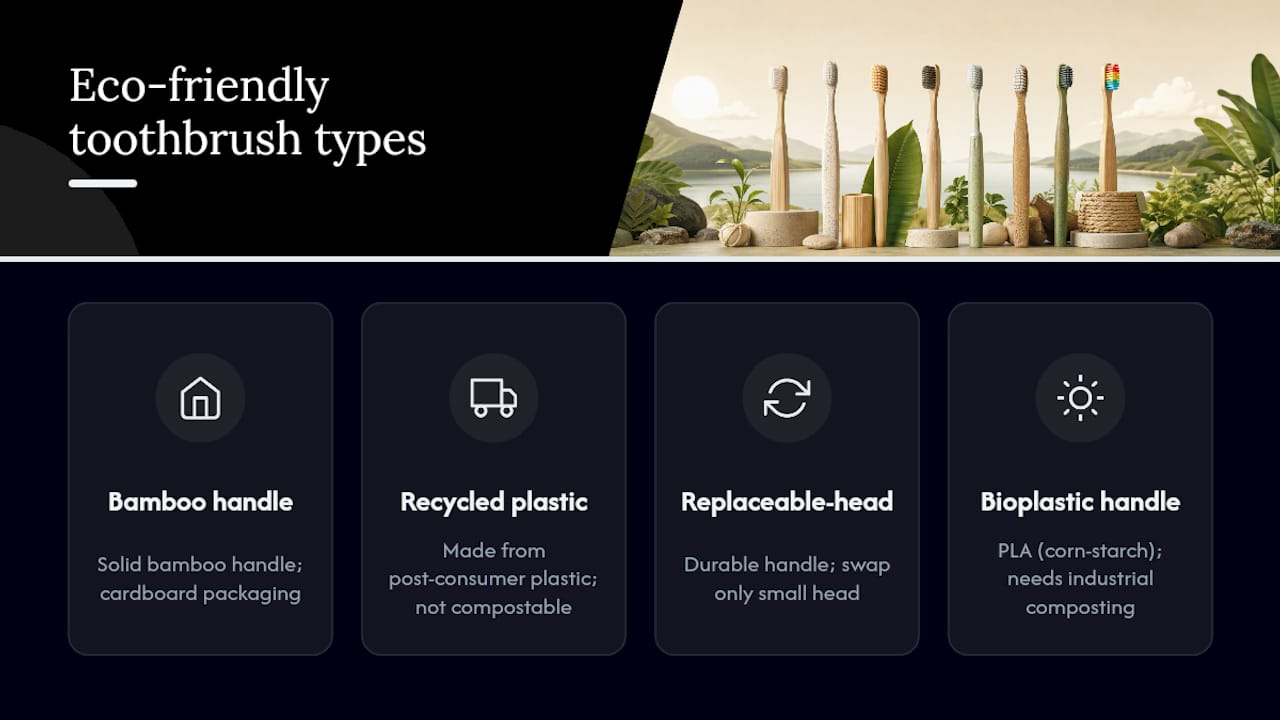
Bamboo-handled manual brushes dominate the space. The handle is solid bamboo, usually finished with a food-safe wax or left raw, and paired with bristles that are either nylon or a plant-based blend. Packaging tends to be cardboard or compostable film instead of the blister plastic that traditional brushes ship in.
Recycled-plastic toothbrushes reuse post-consumer material, often from yogurt tubs or ocean plastic collection programs, molded into a new handle. “Recycled” here describes the input, not the output. These brushes still can’t be composted and usually need a specialty recycling stream at end of life, not your curbside bin.
Replaceable-head systems keep one durable handle (bamboo, aluminum, or recycled plastic) for years while you swap only the small head every few months. This design attacks the waste problem at its root: you’re not throwing away a full handle, battery, or grip every quarter, just a fraction of the material.
Bioplastic and plant-based handles use materials like corn-starch PLA. They look and feel like conventional plastic but are marketed as compostable. In practice, most need industrial composting facilities that break down material at sustained high heat, something your backyard bin usually can’t replicate.
A related detail that matters more than most shoppers realize: refill packaging. A brush that ships its replacement heads in a small paper sleeve rather than shrink-wrapped plastic is doing real work on the lifecycle side, even if the marketing never mentions it.
Here’s the part where “biodegradable” on a package can mislead you. Not every component of an eco-friendly toothbrush actually breaks down, and knowing which pieces do changes how you dispose of the thing.
Certifications help you sort marketing from substance. Look for FSC (Forest Stewardship Council) on bamboo sourcing, and where a brand claims compostability, check for a specific standard reference like ASTM D6400 rather than a vague “eco” badge with no backing.
Pro Tip: Before buying, search the product page for the exact phrase “how to dispose” or “how to recycle.” If a brand can’t tell you what happens to the brush after you’re done with it, that’s a signal the sustainability claim is more marketing than engineering.
The 2022 life-cycle assessment comparing manual and electric toothbrushes is the most-cited number in this category, and for good reason. It found electric toothbrushes generate a climate impact roughly ten times higher than manual bamboo brushes across their lifecycle. That figure covers plastic and metal component manufacturing, the electricity used to charge the device repeatedly over years, and the complexity of disposing of a battery-containing product versus a compostable stick of wood.
The number that anchors this whole category: electric toothbrushes show a climate impact on the order of 10 times greater than manual bamboo brushes, per the 2022 LCA study.
The FDI World Dental Federation frames this within a bigger picture: prevention-focused oral care and sustainable procurement do more to shrink dentistry’s environmental footprint than any single product swap. Fewer cavities mean fewer resource-heavy treatments, fewer dental visits, and less material consumption overall. The 2025 Frontiers review backs this up directly, finding bamboo and bioplastic brushes with removable heads tend to score lower on environmental impact than conventional plastic or electric options.
Travel to dental appointments, supplier procurement choices, and clinic energy use all factor into dentistry’s total footprint, as outlined in broader sustainability in food services operational guidance that illustrates cross-sector approaches to reducing travel and procurement impacts. Your toothbrush choice is one lever among several, but it’s the lever you control every single day.
Skip the marketing copy and check these before you add anything to your cart:
The decision rule is simple once you’ve checked those boxes: choose a replaceable-head system if you want long-term waste reduction and the heads are genuinely accessible near you, or choose a fully compostable design if your municipality or backyard bin can actually process it. One expert framework worth borrowing from sustainability planning generally is the refuse, reduce, reuse, repair, repurpose, rot, recycle hierarchy. It puts durable and refillable products ahead of anything you’ll throw away in three months, no matter how green the marketing sounds.
A bamboo brush that’s cared for properly lasts as long as a plastic one, and disposing of it responsibly takes about thirty seconds of effort.
Replace any toothbrush, sustainable or not, every three months, or sooner once bristles start splaying. The NHS’s guidance on brushing technique is a good reminder that a worn-out brush stops cleaning effectively long before it looks obviously trashed.
Pro Tip: Buy bamboo brushes in a three or four pack instead of one at a time. It cuts packaging waste per brush and means you’re never scrambling to replace a frayed one with whatever’s on the drugstore shelf.
Replaceable-head systems solve the waste problem better than any disposable-handle brush, bamboo included, because the handle material only gets manufactured once and used for years. Recycled-plastic brushes divert existing waste into a new product, but they still end up needing specialty disposal since they’re not compostable.
Electric brushes can be the right call when someone has limited dexterity, orthodontic hardware, or gum disease that responds better to a powered brush’s consistent pressure and timing.
Small bathroom swaps add up, and Many companies focusing on handcrafted bamboo products observe how one sustainable change often leads to another. Someone who switches to a bamboo toothbrush is usually primed to look at what else in the bathroom is quietly generating plastic waste.
Pairing a toothbrush swap with a countertop compost bin, a refillable soap dispenser, or a bamboo drawer organizer for cotton rounds and floss picks turns one good habit into a system. None of these are complicated upgrades. They’re just the next logical step once you’ve already decided plastic doesn’t need to run your bathroom.
— Cozee
A bamboo toothbrush solves one plastic problem. The rest of your bathroom, from paper towel holders to drawer clutter, still has plenty of single-use plastic hiding in it. There are handcrafted bamboo dispensers and organizers designed to replace everyday plastic items, applying the same durable-materials logic that supports using replaceable-head toothbrushes over disposable ones.

If you’ve already swapped your toothbrush and you’re wondering what’s next, start with the bamboo bathroom and kitchen collections to see the full range, or take a closer look at the countertop paper towel dispenser as a single, low-effort upgrade that cuts paper waste the same way a refillable brush cuts plastic waste. These products are handcrafted from natural bamboo, and some are backed by a money-back guarantee, offering a low-risk way to try an eco-friendly swap.
Yes, largely because the handle is compostable and the manufacturing footprint is smaller than injection-molded plastic. The bristles usually still aren’t compostable, so you need to remove them before composting the handle.
Rarely on footprint alone. A 2022 LCA study found electric brushes carry a climate impact roughly ten times higher than manual bamboo brushes, though they can be clinically justified for people with dexterity issues or gum disease.
The bare bamboo handle can compost at home once the bristles and any metal staple are removed. The bristles themselves need general waste disposal or a specialty program, since most home systems can’t break down nylon or plant-based bristle blends.
Bamboo manual brushes are typically priced close to standard drugstore brushes, while replaceable-head systems cost more upfront but less over time since you’re only replacing a small head. Electric brushes remain the most expensive option regardless of sustainability claims.
Check for a named certification like FSC for bamboo sourcing or a specific compostability standard rather than a vague “biodegradable” label. If the product page doesn’t explain exactly how to dispose of the bristles versus the handle, treat the sustainability claim with skepticism.
Comments will be approved before showing up.