Your Cart is Empty


You can clean most of your home with five inexpensive ingredients and a handful of reusable tools. Swap your paper towels for a Swedish dishcloth and your plastic spray bottle for a glass one, and you have already cut real waste. Just skip the vinegar on natural stone counters. It etches marble and granite on contact.
TL;DR:
- Swapping paper towels for Swedish dishcloths and plastic spray bottles for glass ones can significantly reduce household waste and improve sustainability.
- Using a curated set of simple ingredients like vinegar, baking soda, castile soap, hydrogen peroxide, and rubbing alcohol covers most cleaning needs effectively.
- Replacing disposable tools with durable, reusable options, such as wooden brushes and refillable bottles, prevents ongoing plastic waste despite recycling limitations.
- Homemade disinfectants should include hydrogen peroxide or rubbing alcohol, with caution against mixing with vinegar or bleach due to toxic chemical reactions.
- Starting with small, high-impact swaps, like ditching disposable paper towels, encourages gradual adoption of more sustainable cleaning habits.
You do not need a cabinet full of specialty sprays to keep a home clean and sustainable — sometimes booking professionals through Cleanny can be the greenest choice for a thorough job. Most of the difference comes from a handful of habit changes and tool swaps, not from buying more stuff. Here are the moves worth making first.
Pro Tip: Keep a running list of what you have used up. Buying replacements only when something actually runs out, instead of restocking on a schedule, is the fastest way to stop accumulating half-empty bottles under the sink.
A well-stocked kit is smaller than most people expect. Extension-service testing from UAEX and separate recipe testing from Green Planet Cleaning both point to the same short list of ingredients covering nearly every routine job in the house.
Pair those with a Swedish dishcloth, a few cut-up cotton rags, a wooden scrub brush, a coir scrubber for stuck-on food, and two or three amber glass spray bottles with a rubber or silicone boot to keep them from sliding off a counter.
Pro Tip: Label every bottle with the recipe and the date you mixed it. Homemade cleaners without preservatives can lose potency within a couple of weeks, so write it down or you will forget what is actually inside.
Different surfaces need different chemistry, and using the wrong one is where most people accidentally cause damage.
Homemade cleaners are effective, but they have limits, and mixing the wrong pair can be dangerous.
Reducing plastic sounds simple until you look closely at the packaging aisle. Refill pouches market themselves as low-waste, but many are multi-layer laminates that most municipal recycling programs will not accept, according to Plastic Free Everything. Solid bars, tablets, and powders travel with less packaging overall and tend to be the safer low-waste bet. Glass concentrates split the difference: less shipping weight than ready-to-use sprays, and the bottle is infinitely reusable.
Plastic recycling in the United States hovers around an 8.7% recovery rate, which is the real reason reusable tools matter more than recyclable packaging.
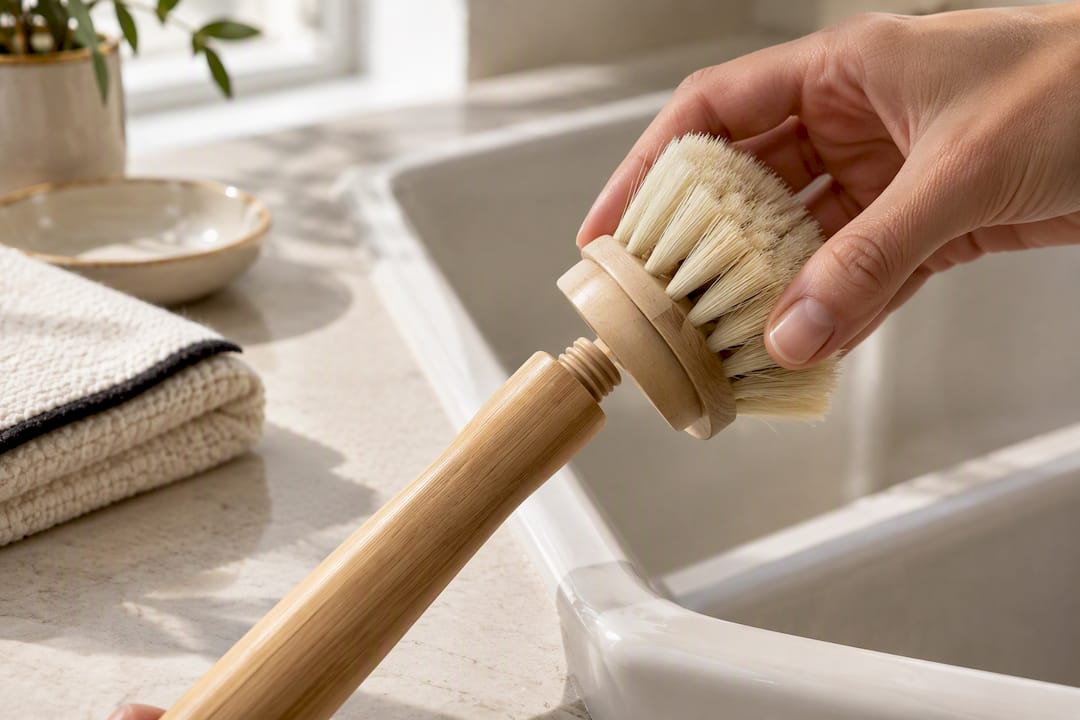
A bamboo dispenser or a wooden brush with a replaceable head is not a novelty. It is the piece that stops a household from buying disposable plastic week after week. For a fuller shopping list, Cozee-bay’s eco-friendly home product checklist rounds out what a low-waste kit needs beyond cleaning ingredients.
Start with one swap, not a full overhaul. Pick the cheapest, highest-impact change, like ditching disposable paper towels, and build from there.
— Cozee
A reusable cloth or a refillable spray bottle only cuts waste if you stop replacing single-use items with more single-use items. That is where a handcrafted bamboo dispenser earns its place. It is built to outlast years of daily use, so a household stops buying disposable paper towel rolls one after another. Cozee-bay’s countertop paper towel dispensers are made from natural bamboo and fit standard and half-sheet rolls, so the swap works with whatever towels you already buy. If your kitchen also needs a home for bags and wraps, the bag organizer with wrap dispenser keeps everything off the counter instead of stuffed in a drawer. Trying one costs nothing but the shelf space, as it comes with customer satisfaction support. Browse the full collection of bamboo dispensers and organizers and pick the piece your kitchen is missing.
The most sustainable approach combines reusable tools, like a Swedish dishcloth and glass spray bottles, with a short list of simple ingredients: vinegar, baking soda, castile soap, hydrogen peroxide, and rubbing alcohol. NPR recommends starting small and treating green cleaning as a spectrum rather than an all-or-nothing switch.
Mix equal parts water and vinegar with a little dish soap for an all-purpose spray, or combine baking soda and castile soap into a paste for scrubbing tubs and grout. Keep vinegar and castile soap in separate bottles, since mixing them causes the soap to break down and leave a film, per Plastic Free Everything.
There is no single best ingredient. Vinegar handles grease and mineral buildup, baking soda scours and deodorizes, and hydrogen peroxide disinfects and whitens when given enough dwell time, according to Branch Basics. Using the right one for each job matters more than picking a single favorite.
Vinegar is not registered by the EPA as a disinfectant, so it will not reliably kill germs on its own. Use 3% hydrogen peroxide or 70% rubbing alcohol on high-touch surfaces, and let peroxide sit for several minutes before wiping it away.
Cozee-bay sells handcrafted bamboo paper towel dispensers, bag organizers, and drawer organizers built to replace disposable, single-use products. Current prices are listed on the product collections page.
Comments will be approved before showing up.