Your Cart is Empty


Bamboo indoor fixtures and organizers offer a warm, sustainable alternative to plastic. When specified correctly, with strand-woven construction and a commercial-grade seal, they hold up in restaurants, schools, offices, and senior living centers, not just at home. The catch: not all bamboo is built the same, so buyers who skip the finish and fire-rating specs end up disappointed by products that were never meant for heavy traffic.
TL;DR:
- Only strand-woven bamboo with proper finishing and fire-rating compliance offers the durability needed for high-traffic commercial applications.
- Suppliers should provide certification for sourcing, detailed finish specs, and documented testing reports on wear and sanitizer resistance.
- Properly sealed bamboo is compostable only if the coating can be removed, and most coated products behave more like mixed materials in regular waste streams.
- Bamboo fixtures perform best in moderate, climate-controlled environments and should be kept away from prolonged sun exposure and excessive humidity fluctuations.
- Daily cleaning must involve hand-wiping with a soft cloth and mild detergent, avoiding dishwashers or prolonged soaking to preserve the finish and prevent damage.
Bamboo reaches harvest maturity in a few years, much faster than hardwoods, which is why it shows up so often in sustainability comparisons against plastic and traditional lumber. A 2023 material review covering two decades of bamboo research confirms the plant’s mechanical strength holds up well against conventional building materials once it’s properly treated, and that treatment step is exactly where quality separates from junk.
There’s also a comfort factor that’s easy to underestimate. Reporting on biophilic design ties natural materials like bamboo to measurable improvements in occupant comfort and reduced perceived stress in workplace settings. That’s not just a marketing angle. A break room with a warm bamboo organizer reads differently to staff and guests than one lined with beige plastic bins.
Here’s what that translates to on the ground:
That last point is where most buyers either save money or lose it. A cheap bamboo product with a thin finish will crack and stain fast. A properly specified one will outlast the plastic bin you were replacing every year.
Sustainability claims are only as good as the paperwork behind them. Ask any bamboo supplier for FSC certification or equivalent sourcing documentation, plus whatever life-cycle screening they’ve done on the raw material before it reaches a factory floor. If a vendor can’t produce that, treat the “eco-friendly” label with some skepticism.
Coatings change the sustainability math more than most buyers realize. Uncoated bamboo composts quickly under normal conditions, but a sealed, finished product is a different story. Supplier guidance suggests sealed bamboo can biodegrade in industrial composting within months to a few years once the coating is stripped away, but that stripping step rarely happens in typical municipal waste streams. In practice, that means a coated bamboo organizer tossed in a regular trash bin behaves more like a mixed-material product than a compostable one.
Quick sustainability checklist for buyers:
Pro Tip: If zero-waste disposal matters to your organization, build the stripping or separation step into your facilities plan now. Waiting until the fixture wears out means scrambling for a disposal partner under time pressure.
Hospitality-focused sourcing guides note that the lifecycle benefits of bamboo only show up when a procurement plan actually includes documented end-of-life handling, not just a green label at checkout.
Not all bamboo is created equal, and this is the single biggest mistake buyers make. Thin bamboo veneer, the kind used in cheap cutting boards and decorative trays, has nowhere near the wear resistance needed for a restaurant service station or a school restroom dispenser. Strand-woven bamboo, made by compressing shredded bamboo fibers under heat and pressure, delivers dramatically higher hardness and wear resistance than veneer construction. Treat strand-woven as the floor, not the ceiling, for any commercial specification.
Three things separate a commercial-grade bamboo fixture from a residential one that will fail fast under heavy use:
Pro Tip: Always ask a vendor for a written test report on sanitizer exposure and wear resistance, not just a verbal assurance. “Commercial-grade” is a phrase anyone can print on a product page.
One operational note that trips up a lot of buyers: even a well-finished bamboo product isn’t dishwasher-safe, and prolonged soaking will eventually degrade the seal no matter how good it is. Supplier testing on sealed, strand-woven products shows they can outperform many plastics in wear and sanitizer resistance, but that performance assumes hand-cleaning, not commercial dish machines.
A little diligence upfront saves you from a costly reorder six months later. Here’s the order to work through when comparing suppliers or product lines:
Homeowners can skip a couple of these steps for low-traffic uses, but anyone buying for a commercial kitchen, a school hallway, or a senior living dining room should treat this checklist as non-negotiable.
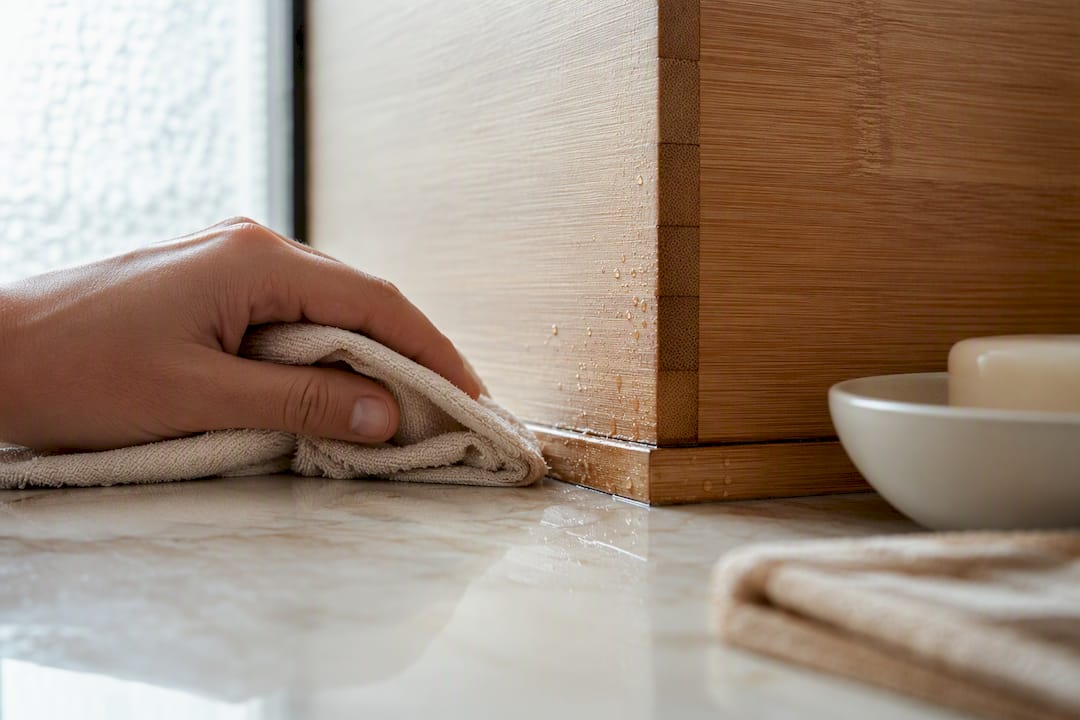
Daily care is simple, but it’s also where most damage happens through carelessness rather than normal wear. Hand-wipe bamboo fixtures with a mild detergent, then dry them completely. Never let water sit on the surface, and never run a bamboo organizer through a dishwasher, since the heat and prolonged moisture will break down even a quality finish over time.
Pro Tip: Train staff on what bamboo can’t handle. A single well-meaning employee running a bamboo dispenser through an industrial dishwasher can undo a year of proper care in one cycle.
Buyer comparisons of bamboo against plastic in foodservice settings note that bamboo is chemically safer for dry and warm food contexts but isn’t fully waterproof, which is exactly why the hand-wash-only rule matters more here than with plastic bins.
Placement matters as much as product quality. Entrances, break rooms, and dining areas are where bamboo’s biophilic appeal does the most work, since these are spaces people linger in and notice. A countertop paper towel dispenser at a coffee shop counter or a wall-mounted organizer in a senior living dining hall both put that warm material front and center where guests actually see it.
Avoid bamboo in constantly wet zones or anywhere it will get run through commercial dishwashing lines. For those spots, a hybrid approach, bamboo accents paired with a metal or stainless core, gives you the look without the failure risk.
Strong placement examples:
Design guidance backs this focused approach: using bamboo selectively in low-moisture, high-visibility areas delivers the aesthetic and wellbeing payoff without creating a maintenance headache.
Bamboo fixtures themselves don’t purify air the way a living plant does, but the material choice still affects indoor air quality in a real way. Low-VOC finishes on properly sealed bamboo release far fewer volatile organic compounds than many plastic or particleboard alternatives, which matters most in enclosed spaces like offices, classrooms, and senior living units where ventilation is limited.
This is a detail that specification sheets often bury but buyers should ask about directly: what’s the VOC rating on the finish, and has it cured fully before installation? A freshly coated bamboo dispenser installed too soon can off-gas noticeably for the first few days, which is a bigger issue in a small breakroom than in an open lobby.
Beyond air chemistry, there’s the wellbeing angle covered earlier. Natural materials in workspaces correlate with reduced perceived stress and better occupant comfort, and that effect compounds when a facility swaps out multiple plastic touchpoints (dispensers, organizers, trash bins) for a consistent natural material palette. Senior living managers in particular report that residents respond well to warmer, more residential-feeling common areas rather than clinical plastic fixtures. It’s a small design choice with an outsized effect on how a space feels to the people who spend all day in it.
None of this replaces proper HVAC or ventilation planning. But choosing low-VOC, well-cured bamboo fixtures over off-gassing plastic alternatives is a reasonable, low-effort way to shave a little chemical load off an indoor environment.
Raw bamboo itself carries a low allergy profile compared to many other woods and synthetic materials, which is part of why it shows up so often in food-adjacent products like dispensers and organizers. The bigger toxicity concern isn’t the bamboo, it’s the finish.
Lower-quality coatings, particularly cheap lacquers, can contain formaldehyde-based resins or high-VOC solvents that continue releasing fumes long after installation. That’s a real risk in poorly ventilated commercial kitchens or small offices, and it’s a bigger deal for the sensitive populations found in schools and senior living facilities. Anyone buying for those environments should ask suppliers directly whether the finish meets low-formaldehyde or low-VOC standards, not just assume “natural material” means “no chemical exposure.”
For most healthy adults and children, a properly finished bamboo product poses no more risk than any other sealed wood fixture. People with specific wood-dust sensitivities from manufacturing or heavy sanding exposure should take standard precautions during installation, but finished, sealed bamboo in everyday use isn’t a common allergen trigger the way certain latex or synthetic foam products can be.
The practical takeaway: the toxicity conversation around bamboo fixtures is really a finish-quality conversation. Buy from suppliers who can document their coating chemistry, and most allergy or off-gassing concerns resolve themselves.
Light exposure doesn’t affect finished bamboo fixtures the way it affects a living houseplant, but it does matter for the wood’s appearance over time. Direct, sustained sunlight can gradually lighten or unevenly fade bamboo’s natural color, similar to what happens with any wood furniture near a south-facing window. For dispensers, organizers, and panels, that means placement near large uncovered windows is a cosmetic consideration, not a functional one.
Humidity control matters more than light. Bamboo fixtures do best in moderate, stable indoor humidity, roughly the same range that’s comfortable for people. Extreme swings, a bone-dry office in winter followed by a humid summer, cause more wood movement than steady conditions do. Kitchens and bathrooms with good ventilation are fine; unventilated basement storage rooms are not ideal for long-term installation.
For commercial buyers, this translates into a simple rule: install bamboo fixtures in the same climate-controlled zones you’d want for any quality furniture, break rooms, dining areas, front offices, and avoid unheated storage areas or spaces with heavy direct sun exposure on the fixture face. Rotating or relocating a piece occasionally, the way you might with a wood cabinet, helps even out any long-term color change.
Bamboo fixtures don’t face living-plant problems like aphids or fungus gnats, but they do have their own wear and failure patterns worth watching for. The most common issue isn’t a pest at all, it’s moisture intrusion at seams and joints where the seal is thinnest. Water that pools around the base of a dispenser or organizer and isn’t wiped away can eventually work into unsealed edges, leading to swelling or discoloration.
Wood-boring insects are a real but rare concern, mostly tied to improperly kiln-dried or undertreated raw bamboo rather than finished, factory-sealed commercial products. This is another reason the sourcing documentation mentioned earlier matters: bamboo that’s gone through proper heat treatment during processing carries essentially no risk of insect infestation once it reaches a finished product.
The more common “disease” for bamboo fixtures is mold or mildew growth in consistently damp, poorly ventilated installations, the same risk any wood surface faces in a humid bathroom or basement. Regular drying after cleaning, discussed earlier in the maintenance section, is the single best prevention step. If you spot dark spotting or a musty smell developing on a bamboo surface, it usually means moisture is getting trapped somewhere the finish isn’t sealing properly, and that’s a signal to inspect the seal rather than a sign the material itself has failed.
Buyers comparing bamboo to alternatives are usually weighing it against plastic, laminate, or stainless steel organizers and dispensers. Each has a different profile.
| Material | Sustainability | Durability (commercial use) | Aesthetic | Maintenance |
|---|---|---|---|---|
| Strand-woven bamboo | High, rapid renewable growth | High, with proper finish and grade | Warm, natural | Hand-wipe, dry, periodic recoat |
| Plastic (ABS/polypropylene) | Low, petroleum-based | Moderate, degrades under heat/sanitizer over time | Utilitarian | Low effort, dishwasher-safe |
| Stainless steel | Moderate, energy-intensive production | Very high | Clinical, cold | Low effort, resists most chemicals |
| Laminate/veneer wood | Moderate | Low to moderate | Decorative | Sensitive to moisture, chips easily |
Plastic wins on dishwasher compatibility and raw impact resistance, but loses on sustainability and long-term aesthetic appeal, and it tends to look worn faster under repeated sanitizer exposure. Stainless steel is nearly indestructible but brings a cold, institutional feel that many restaurants, schools, and senior living facilities are actively trying to move away from in common areas. Basic laminate looks fine on day one but rarely holds up to heavy commercial handling the way strand-woven bamboo does.
The honest comparison: bamboo doesn’t beat every material on every axis. It beats plastic and laminate on sustainability and warmth, and it beats stainless on aesthetic comfort, while asking for more careful handling in return. For most homes and many commercial spaces, that trade favors bamboo. For a wet, high-abuse dish pit, it doesn’t.
Working with restaurants, schools, coffee shops, and senior living facilities on bamboo dispensers and organizers has made one thing clear: the buyers who ask about finish chemistry and fire ratings upfront are the ones who never call back with a complaint. The ones who don’t ask are the ones who assume “bamboo” means the same thing across every product on a shelf, and that assumption is where disappointment starts.
Prioritize the finish and the grade before the price tag every time.
— Cozee
This source offers an alternative to disposable plastic organizers for anyone tired of replacing cracked bins and stained dispensers every year. Our bamboo products are handmade with the strand-woven construction and finish standards this article just walked through, not the thin veneer you’ll find in bargain bins.

Browse our full collection of bamboo dispensers and organizers if you’re outfitting a home kitchen or a full commercial facility. Restaurants, schools, and senior living managers specifying for high-traffic restrooms and break rooms should look at our commercial paper towel dispensers, built with the finish durability commercial spaces demand. Homeowners and light-commercial buyers wanting a countertop option can check our countertop paper towel dispensers for compact spaces.
Product pages typically list compatibility, finish details, and sizing so buyers can confirm fit with their specification checklist before purchase. Purchases may come backed by a money-back guarantee, reducing risk in trying products in a space.
For a deeper technical read on bamboo’s mechanical properties, review the MDPI material engineering study. For hospitality-specific sourcing standards, consult the hospitality-grade specification guide covering finishes and fire-rating expectations.
Yes, for anything in a commercial or high-traffic setting. Strand-woven bamboo offers significantly higher wear resistance than veneer construction, which means fewer replacements over the product’s life.
No, even properly sealed bamboo fixtures aren’t dishwasher-safe. Hand-wash with mild detergent and dry completely, since prolonged heat and moisture will break down the finish over time.
Uncoated bamboo composts relatively quickly, but sealed, finished products need the coating removed first for true industrial composting. Buyers focused on zero-waste goals should ask suppliers about take-back or separation programs before purchase.
Yes, when the finish is low-VOC and properly cured before installation. The bamboo itself carries a low allergy profile; any toxicity concern almost always traces back to a cheap or improperly cured coating rather than the wood.
Ask for the material grade (strand-woven versus veneer), the finish type, and any available test reports on wear and sanitizer resistance. Cozee-bay’s collections list compatibility and finish details on every product page so you can verify specs before ordering.
Comments will be approved before showing up.