Your Cart is Empty


Sorting through kitchen waste can feel endless when trying to live greener while maintaining style at home or in your business. Kitchen trash piles up quickly, yet finding effective ways to cut down on waste matters for both the planet and your peace of mind. Discover how sustainable kitchen habits and smart bamboo swaps help reduce clutter, limit your environmental footprint, and bring lasting beauty to your daily routine.
| Key Insight | Explanation |
|---|---|
| 1. Track Daily Food Waste | Monitor your kitchen waste for a week to identify patterns and sources. |
| 2. Use Bamboo Alternatives | Replace single-use items with eco-friendly bamboo products to reduce waste. |
| 3. Organize Food Storage | Implement strategic storage techniques to extend the shelf life of produce. |
| 4. Compost Kitchen Scraps | Transform food waste into nutrient-rich compost to lower landfill contributions. |
| 5. Monitor Progress Regularly | Keep detailed records of waste reduction efforts to identify areas for improvement. |
Reducing kitchen waste begins with understanding your current consumption and disposal habits. By carefully analyzing how and where waste occurs, you can develop targeted strategies to minimize environmental impact and improve household efficiency.
To conduct a comprehensive waste assessment, follow these strategic steps:
The United Nations Environment Programme highlights that over 1 billion tons of food were wasted globally in 2022, representing approximately 17% of total food available for consumption. This staggering statistic underscores the importance of individual household waste reduction efforts.
Understanding your specific waste patterns is the first critical step toward sustainable kitchen management.
Utilize tools like kitchen waste logs or digital tracking apps to document your waste systematically. Pay special attention to:
By meticulously recording these details, you’ll create a clear picture of your current waste generation and identify immediate improvement opportunities.
The following table highlights common kitchen waste types and ideas for immediate improvement:
| Waste Type | Common Source | Quick Improvement |
|---|---|---|
| Unused produce | Overbuying fruits/veggies | Plan meals, shop smarter |
| Expired packaged goods | Forgotten pantry items | Organize by date, rotate stock |
| Leftovers | Excess cooking | Freeze portions, reuse recipes |
| Packaging materials | Processed food | Buy in bulk, choose minimal packaging |
Pro tip: Keep a small notepad or digital spreadsheet near your kitchen trash area to make waste tracking quick and effortless.
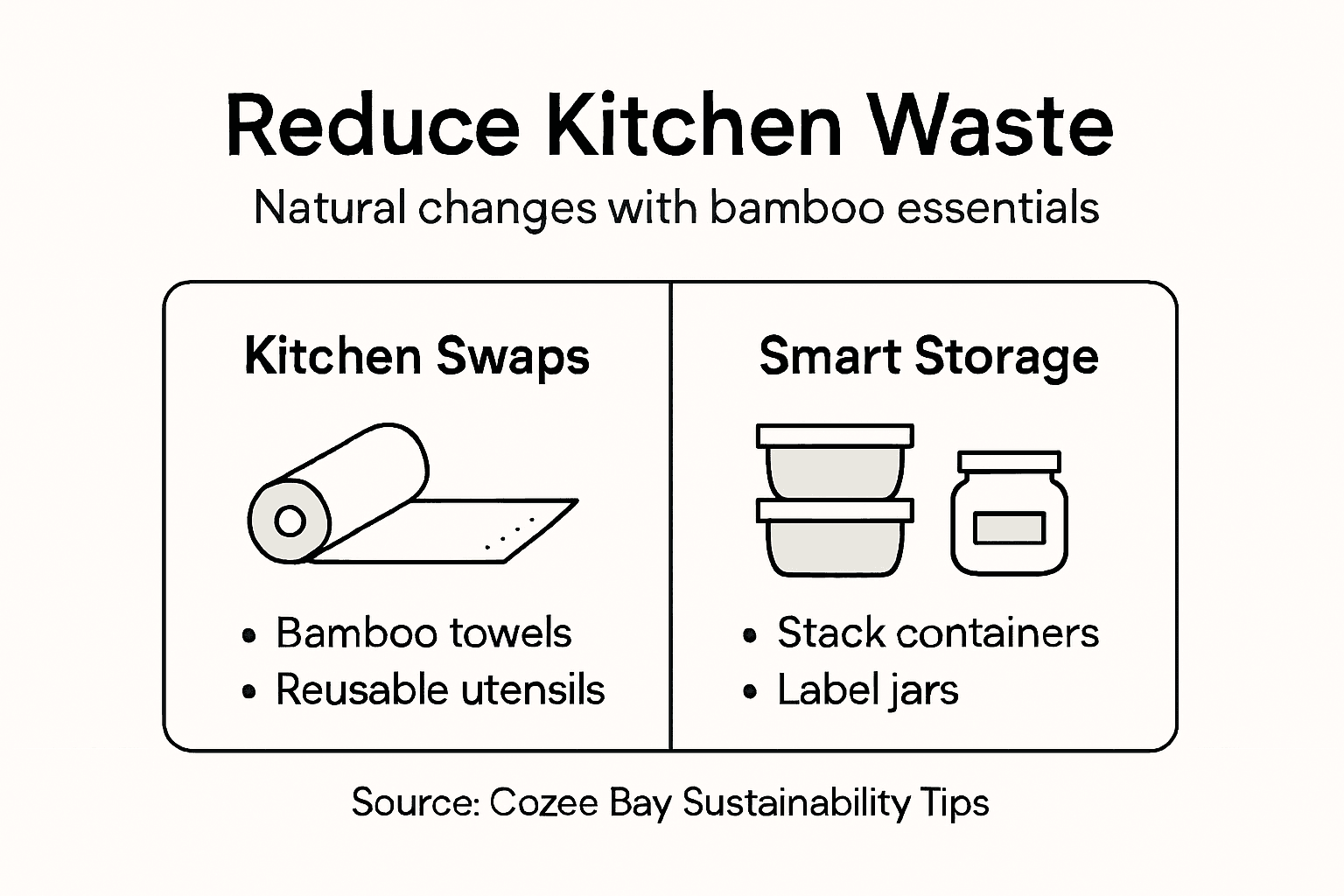
Transitioning to sustainable kitchen solutions involves replacing disposable items with eco-friendly bamboo alternatives that reduce waste and support environmental conservation. By strategically selecting reusable products, you can significantly minimize your household’s ecological footprint.
Consider replacing traditional single-use items with sustainable bamboo product alternatives, which offer numerous environmental benefits:
Sustainable living begins with conscious product choices that prioritize environmental responsibility.
Bamboo offers remarkable advantages as a material. Eco-friendly bamboo products are not only biodegradable but also incredibly durable and antimicrobial. These products grow rapidly, require minimal resources, and help reduce deforestation and plastic waste.
When selecting bamboo alternatives, prioritize quality and durability. Look for products that are:
Here’s a summary comparing eco-friendly bamboo kitchen alternatives and their benefits versus typical disposable options:
| Product Type | Bamboo Alternative | Common Disposable | Main Environmental Benefit |
|---|---|---|---|
| Utensils | Bamboo utensil set | Plastic cutlery | Reduces plastic waste |
| Towels | Reusable cloth towels | Paper towels | Minimizes deforestation, waste |
| Food Storage | Bamboo containers | Plastic bags/boxes | Less landfill, fully biodegradable |
| Straws | Bamboo straws | Single-use plastic | Prevents ocean microplastics |
| Cutting Boards | Bamboo cutting board | Plastic cutting board | Renewable material, antimicrobial |
Pro tip: Start by replacing just one disposable item per month to make your transition to bamboo alternatives smooth and budget-friendly.
Maximizing food freshness requires a strategic approach to kitchen storage that goes beyond simply placing items in the refrigerator. By understanding how different foods interact and implementing smart organizational techniques, you can significantly extend the shelf life of your produce and reduce unnecessary waste.
Systematic fridge organization methods help maintain optimal food quality and prevent spoilage. Implement these key storage strategies:
Proper food storage is the secret weapon against premature spoilage and unnecessary waste.
When organizing your refrigerator and pantry, pay special attention to fruit storage strategies. Different fruits require unique handling:
Bamboo storage containers can be an excellent addition to your organizational system, providing both eco-friendly and practical solutions for keeping foods fresh.

Pro tip: Invest in a set of clear, stackable containers with tight-fitting lids to maximize storage efficiency and keep track of your food inventory.
Transforming kitchen waste into nutrient-rich soil amendment is an essential strategy for reducing environmental impact and creating a sustainable home ecosystem. By understanding and implementing home composting techniques, you can dramatically minimize landfill contributions while improving soil health.
Start your composting journey with these fundamental strategies:
Composting transforms waste from a problem into a solution for environmental sustainability.
Composting requires careful management of organic materials. Composting organic waste involves balancing key elements:
Choose a composting method that fits your living space - whether a small indoor bin, backyard pile, or worm composting system. Bamboo containers can serve as excellent composting vessels, adding an eco-friendly dimension to your waste reduction efforts.
Pro tip: Keep a small, sealed container in your kitchen for collecting scraps to make daily composting convenient and odor-free.
Sustainable waste management requires consistent monitoring and strategic improvement. By systematically tracking waste reduction efforts, you can transform your kitchen’s environmental impact and develop more efficient practices.
Implement these comprehensive tracking methods:
Small, consistent measurements reveal significant opportunities for waste reduction.
Utilize digital or physical tracking tools to maintain detailed records of your waste management journey. The key metrics to monitor include:
By analyzing your waste reduction strategies, you can continuously refine your approach and identify areas for improvement. Bamboo tracking journals or digital spreadsheets can help you visualize your progress and stay motivated.
Pro tip: Set a monthly review date to assess your waste reduction progress and celebrate your sustainability achievements.
Reducing kitchen waste naturally requires practical tools that align with your eco-friendly goals. This article spotlighted challenges like food spoilage, excessive packaging waste, and the need for reusable alternatives such as bamboo products. You want durable, stylish solutions that help organize your kitchen, minimize single-use plastics, and support composting efforts while keeping your space efficient and fresh.
Discover how Cozee Bay offers handcrafted bamboo products designed specifically to meet these needs. Our bamboo paper towel dispensers, food bag organizers, wrap and foil dispensers, and drawer organizers help you reduce waste, extend food freshness, and replace disposable items effectively.

Take the next step to transform your kitchen sustainably and reduce waste naturally. Explore our thoughtfully curated bamboo essentials at Cozee Bay today. Make a lasting impact on your home and the environment by choosing premium eco-friendly bamboo products that bring style and function together.
Start your journey now with our bamboo paper towel dispensers and more innovative storage solutions you can trust at Cozee Bay.
Begin tracking your kitchen waste by recording the types and quantities of food you discard over a week. Utilize a notepad or a digital spreadsheet to log this data easily.
Replace single-use kitchen items with bamboo alternatives like reusable cloth towels, bamboo utensil sets, and bamboo food storage containers. Start by swapping out just one disposable item each month for a smoother transition.
Organize your refrigerator by grouping similar foods and separating items based on their ripening characteristics. Use clear storage containers to enhance visibility and make it easy to manage your food inventory.
You can compost items like fruit and vegetable scraps, coffee grounds, and yard trimmings to minimize kitchen waste. Avoid adding meat, dairy, or oily foods to your compost to maintain its effectiveness.
Measure your progress by weighing your food waste weekly and recording the types of items you discard. You can determine the percentage of waste reduced each month, helping you gauge your success and areas for improvement.
Using bamboo kitchen products offers environmental benefits like reducing plastic waste and promoting sustainability. They are biodegradable, durable, and help support eco-friendly practices in your home.
Comments will be approved before showing up.