Your Cart is Empty


For most households, Dropps is the best overall eco-friendly laundry detergent, thanks to its Safer Choice-caliber transparency and pre-measured pods that cut both waste and guesswork. That said, if you’re dealing with sensitive skin, Seventh Generation Free & Clear earns its keep with a full ingredient disclosure. Meliora and soap nuts remain the top picks if zero plastic packaging is your non-negotiable.
TL;DR:
- Powdered detergents like Meliora outperform sheets on heavy, set-in stains, especially in hard water conditions.
- Seventh Generation’s products with EPA Safer Choice certification provide verified safety and good cleaning performance for sensitive skin.
- Refill systems, such as Blueland, significantly reduce plastic waste if they are consistently used instead of single-use bottles.
- Dissolvable sheets are best suited for light loads and travel, but may underperform on tough stains compared to powders and capsules.
- When choosing, prioritize full ingredient transparency, third-party eco certifications, and match format to your laundry habits for optimal results.
Picking the right one comes down to matching format to your actual laundry habits, not chasing whichever bottle has the greenest label. Here’s a shortlist built around three things that matter: cleaning power, verifiable eco credentials, and how much packaging waste you’re signing up for.
Every one of these has a real tradeoff attached, which is exactly why the rest of this guide walks through cleaning performance, packaging honesty, and price per load in detail before you commit to a bottle, box, or pod.
Six criteria decided where each product landed on this list, and none of them were “how pretty is the label.”
Independent lab work backs some of this. Consumer Reports tested five detergents and found that two Safer Choice-labeled options had no detected problematic chemicals while still performing well against stains. Editorial hands-on testing from The Guardian found eco-labeled products clean nearly as well as conventional ones, but results shift depending on stain type and format. Powders tend to edge out sheets on heavy, set-in stains.
Pro Tip: If your household runs a lot of workout clothes or kids’ stains, weigh cleaning performance heavier than packaging purity. A perfectly zero-waste detergent that leaves stains behind just means more re-washing, which erases any water savings.
| Product | Format | Best for | Eco credentials | Packaging waste profile | Price per load |
|---|---|---|---|---|---|
| Dropps | Pods | Convenience and subscription shoppers | Plant-based formulas, reduced-plastic packaging | Cardboard box, minimal plastic film | Mid-range |
| Earth Breeze | Sheets | Travelers and low-plastic households | Compact recyclable outer packaging | Near-zero plastic, flat shipping | Budget to mid-range |
| Blueland | Refill concentrate | Refill and low-plastic shoppers | Reusable bottle system | One bottle, refill pouches only | Mid-range |
| Meliora | Powder | Zero-waste and sensitive-skin households | Full ingredient disclosure, PVA-free | Cardboard only | Mid-range to premium |
| Smol | Capsules | Subscribers who prioritize convenience | Claimed lower shipping emissions | Compact cardboard box | Budget to mid-range |
| Ecover | Liquid/refill | Consumers wanting established eco-brand performance | Bio-based formulas, refill program | Bottle plus refill option | Budget to mid-range |
| Seventh Generation | Liquid/pods | Sensitive skin and ingredient-conscious shoppers | Safer Choice on select products | Standard bottle, some recycled plastic | Budget |
A few claims on this table need unpacking before you trust them at face value. “PVA-free” matters because polyvinyl alcohol, the dissolvable film used in most pods and sheets, has mixed evidence on whether it fully breaks down in wastewater treatment or persists as a microplastic contributor. Meliora sidesteps the debate entirely by using powder in a cardboard box.
“Biodegradable” and “compostable” packaging aren’t interchangeable. A biodegradable bag can still take months in a landfill without the right conditions, while a genuinely compostable one needs industrial composting facilities most curbside programs don’t offer. Read the fine print rather than the front-of-box word.
Only Seventh Generation on this table carries products with the actual EPA Safer Choice badge, which means those specific SKUs passed a government-verified review of both ingredients and environmental impact. Ecover and Blueland make strong sustainability claims but don’t currently carry that specific certification, which doesn’t disqualify them, but it does mean you’re trusting the brand’s own disclosure rather than a third-party check.
Dropps sells pre-measured pods shipped in a cardboard box with a compostable inner bag, cutting the plastic jug out of the equation entirely. The formulas use plant-based cleaning agents and the brand publishes ingredient information openly, which lines up with the EWG’s guidance that full disclosure is the strongest signal of a lower-risk product. Cleaning performance holds up well on everyday laundry, though like most pod formats it can lag behind powder on heavy, set-in stains.
These are dissolvable sheets, thin enough that a month’s supply ships in an envelope rather than a box. That flat-pack shipping profile is the whole pitch, and it genuinely cuts shipping-related emissions and packaging volume compared to a heavy liquid jug. Where sheets generally fall short, according to hands-on testing referenced by The Guardian, is heavy stain removal, since the concentrated dose in a thin sheet has less cleaning agent than a full pod or powder scoop.
Blueland’s model flips the usual bottle-and-recycle cycle: you buy one reusable bottle, then drop in a concentrated refill tablet with water. After the first purchase, you’re never buying a new plastic bottle again, which is a meaningfully different waste math than any pod or liquid brand that ships a full container every time. Cleaning performance is solid for regular loads, though the concentrate needs a full water fill to dissolve properly, so skipping that step leaves cleaning power on the table.
Meliora is the purist’s pick: a powder in a plain cardboard box with a fully disclosed ingredient list and no polyvinyl alcohol anywhere in the formula. That PVA-free status matters if you’re specifically trying to avoid the dissolvable-film debate covered later in this guide. Cleaning performance on tough stains is strong for a powder, which tracks with Good Housekeeping’s testing that generally favors powders over sheets on set-in dirt.
Smol runs on a subscription model, shipping compact capsules on a set schedule with claimed lower shipping-related emissions per order compared to buying jugs at a store. The dosing is intentionally small, which keeps packaging light but means you’re trusting the brand’s calibration rather than measuring your own scoop. Everyday cleaning results are consistent for regular loads.
Ecover has been in the bio-based detergent space for years, and that track record shows in wide retail availability and a refill program that lets you top off a bottle instead of buying new plastic each time. Its bio-based formulas clean well on standard loads. Editorial testing has generally found it a dependable, if not flashy, performer.
Seventh Generation’s biggest strength isn’t a marketing claim. It’s that certain products actually carry the government-verified EPA Safer Choice badge, and Consumer Reports found its Free & Clear formula had no detected problematic chemicals while performing well in cleaning tests. That combination of independent verification and real-world results is rare on this list.
Start by ranking your own priorities, because no single detergent wins on every axis at once.
To calculate real price per load, divide the total package cost by the number of listed loads, not the number of ounces. A “concentrated” bottle that claims 64 loads at a small dose is often cheaper per wash than a bulkier jug that looks like a better deal on the shelf.
For heavy stains, a powder or soap-nut wash paired with an oxygen-based booster restores stain-lifting power without introducing any new plastic film into the mix, according to zero-waste testing on PVA-free options.
Pro Tip: Trust “EPA Safer Choice” and full ingredient lists over vague words like “natural” or “green.” Those terms have no legal definition, while Safer Choice requires actual government review before a product can carry the label.
Before buying, check for these specific terms: Safer Choice, MADE SAFE, B Corp, and a published full ingredient list. Be skeptical of “plant-based” or “biodegradable” claims with no certification attached. Our lifecycle checklist for spotting real eco claims walks through exactly what to look for on a label before you trust it.
Polyvinyl alcohol, the dissolvable film used in most pods and sheets, is the most contested ingredient in eco laundry care right now, and the honest answer is that the evidence is genuinely mixed rather than settled in either direction.
Studies and reviews on PVA/PVOH show mixed evidence about its real-world environmental contribution, which is exactly why many strictly zero-waste shoppers default to powders or soap nuts packaged in plain cardboard instead of pods or sheets.
That uncertainty is why brands like Meliora market themselves specifically as PVA-free, and why soap-nut washes have a small but loyal following among people who want zero doubt about what dissolves in the wash cycle. It’s also why the EPA Safer Choice program exists in the first place: it forces ingredient disclosure so consumers aren’t guessing.
Packaging matters beyond just the detergent bottle itself. Our World in Data’s research on plastics shows that plastic production and disposal generate greenhouse gas emissions at every stage, from manufacturing through incineration. A cardboard box or dissolvable sheet that skips the plastic jug entirely avoids a meaningful chunk of that footprint before you’ve even run a single load.
None of this means pods are dangerous or that powders are automatically superior. It means shoppers who care about plastic specifically should weigh format as heavily as ingredients, and our guide to eco-friendly packaging breaks down how to evaluate that tradeoff across categories beyond just detergent.
Real-world laundry doesn’t happen in a lab, and that’s exactly where a lot of eco-detergent marketing falls apart. Sheets and thin pods that test fine on a controlled grass stain in a magazine review sometimes underperform on a toddler’s ketchup-stained shirt that sat in a hamper for three days.
The pattern that shows up consistently across editorial reviews and everyday households is format-dependent, not brand-dependent. Powders like Meliora and liquid concentrates tend to hold up better on set-in, heavy stains, while sheets and light-dose pods perform closer to conventional detergents on routine, lightly soiled loads. That tracks with what Good Housekeeping’s testing has found repeatedly.
Water hardness plays a bigger role than most reviews mention. Households with hard water often report needing a slightly higher dose of any eco formula, including Dropps and Ecover, to get the same result they’d expect from a conventional detergent at standard dosing. That’s not a flaw specific to eco brands. It’s chemistry, since natural surfactants generally need more help cutting through mineral-heavy water than synthetic ones do.
Fragrance-free formulas from Seventh Generation and Meliora get consistent praise from people managing eczema or fragrance sensitivities, specifically because there’s no “unscented” workaround hiding a masking fragrance, a common complaint about mainstream “free and clear” lines. The honest takeaway across real households: match the format to your actual stain load, and don’t assume the greenest-looking box automatically performs the same as the one you’re replacing.
Even the best detergent underperforms if the wash settings work against it, and eco formulas are often more sensitive to setup than conventional ones.
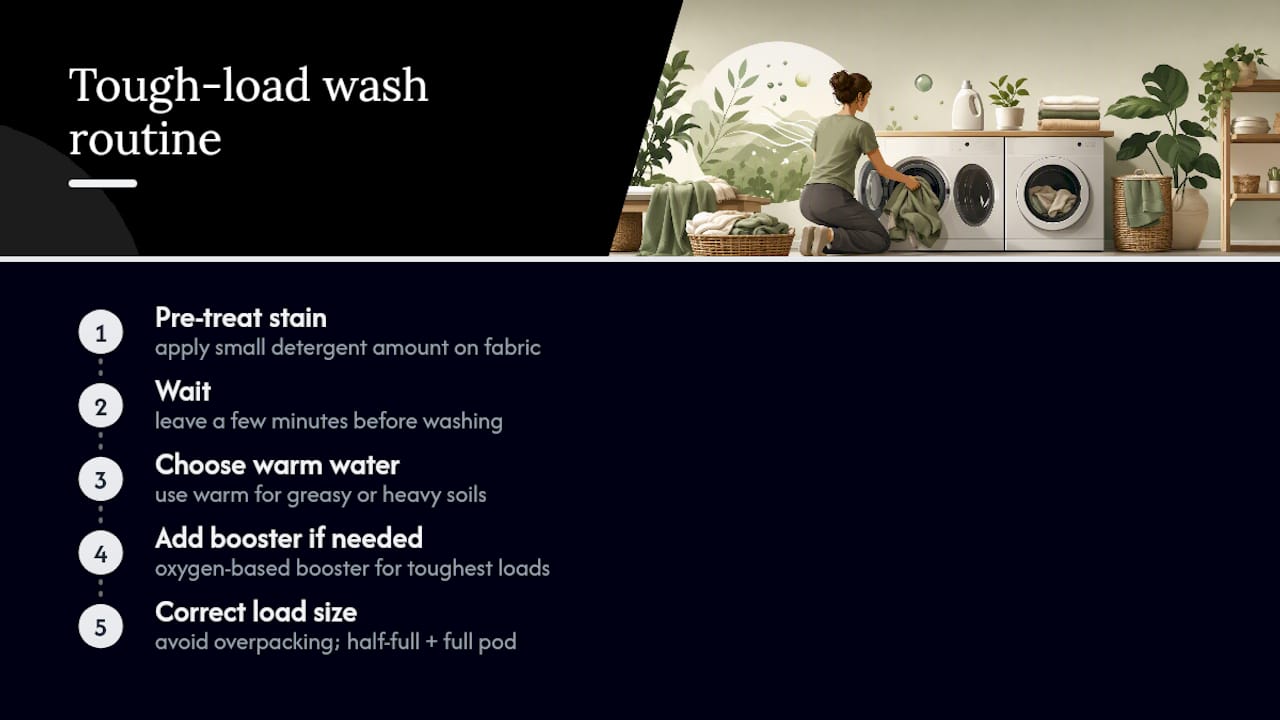
Water temperature matters more with plant-based surfactants than with synthetic ones. Cold water saves energy and works fine for lightly soiled everyday loads, but greasy or heavily soiled items generally need warm water to help natural cleaning agents activate fully. If you’re not seeing the stain results you expected from Dropps or Blueland, try bumping the temperature before blaming the formula.
Load size directly affects concentration. Overpacking the drum dilutes the detergent’s contact with each item, which hits pods and sheets harder than powders since their dose is fixed regardless of load size. A half-full load with a full pod is actually the better ratio, not a waste of product.
For dissolvable sheets specifically, tear or fold them rather than tossing them in whole, and add them at the start of the cycle so they have maximum time in water before the wash agitation begins. Sheets that don’t fully dissolve leave residue on dark fabrics, a common complaint that’s really a usage issue, not a formula flaw.
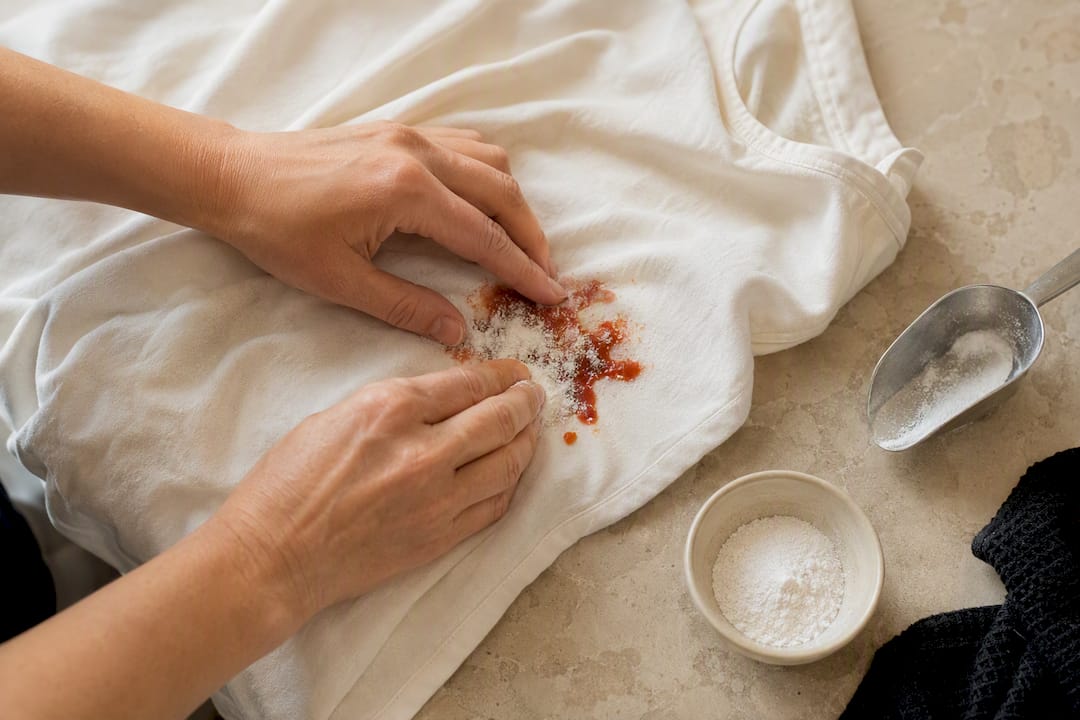
Pre-treating heavy stains with a small amount of the detergent directly on the fabric, then waiting a few minutes before washing, closes most of the performance gap between eco and conventional detergents on tough stains. Combine that with an oxygen-based booster for the toughest loads, and format-based limitations mostly disappear.
Cleaning performance and waste reduction pull in slightly different directions, and pretending otherwise sets people up to quit halfway through a box of powder that didn’t dissolve right the first time. The realistic approach is picking the format that fits your actual laundry pile, not the one with the prettiest packaging photo.
Sustainable swaps work best when they’re gradual and specific to your household’s real habits, which is the same logic behind why eco-friendly cleaning supplies make sense beyond just the laundry room. If you’re switching detergents for the first time, do it with a smaller load first so you can judge dosing before committing to a full-size box.
— Cozee
Swapping in a lower-waste detergent solves one plastic problem, but paper towels, plastic wrap boxes, and flimsy drawer organizers are still piling up single-use packaging in most kitchens and bathrooms. There are handcrafted bamboo alternatives built to last years instead of weeks, cutting out the repeat cardboard and plastic waste that comes with disposable versions.

Our bamboo paper towel dispensers, wrap and foil organizers, and drawer organizers are designed for households already thinking the way this guide encourages: fewer disposable purchases, more durable materials doing the same job better. If your detergent switch has you looking at what else in the house creates needless waste, browse the Cozee-bay collection and see which bamboo swap fits your kitchen or laundry room first.
Comments will be approved before showing up.