Your Cart is Empty


TL;DR:
- Choosing truly sustainable toilet paper involves evaluating certification, material source, and bleaching process beyond simple labels. Bamboo, recycled, and virgin fibers each have distinct environmental impacts, with bamboo offering high comfort and rapid renewability. Top brands like Who Gives A Crap and Reel Paper prioritize certified, chlorine-free options, helping consumers make eco-conscious choices confidently.
Standing in the toilet paper aisle, surrounded by claims like “tree-free,” “carbon neutral,” “100% recycled,” and “sustainably sourced,” can leave you more confused than confident. And if you’ve already read a few product descriptions without getting clearer answers, you’re not alone. Picking truly sustainable toilet paper means weighing material type, bleaching process, certifications, comfort, and packaging all at once. This guide cuts through the noise so you can choose wisely, compare the top brands side by side, and finally feel good about what’s in your bathroom.
| Point | Details |
|---|---|
| Scrutinize eco labels | Look closely at FSC sub-types, Green Seal, and bleaching processes to avoid greenwashing. |
| Comfort vs. sustainability | Bamboo options often offer better softness and strength than recycled varieties but compare certifications and real-world needs. |
| Comparison is key | Weigh brand performance, eco-credentials, and cost in a side-by-side table to find your ideal fit. |
| Small changes add up | Choosing the right toilet paper brand makes a meaningful impact on your household’s sustainability. |
With labeling confusion so common, let’s break down what truly makes a toilet paper brand sustainable. There’s more to it than just “recycled” on the wrapper. Knowing what to look for in certifications, materials, and manufacturing methods will save you from making a purchase you later regret.
Certifications that actually mean something
The most trustworthy labels come from independent organizations that hold brands accountable. The Green Seal standard GS-1 covers environmental, health, and social requirements for sanitary paper products including bathroom tissue, specifying fiber requirements and post-consumer recycled content calculations. A product bearing the Green Seal mark has passed more than just a marketing review.
FSC (Forest Stewardship Council) labels are also worth knowing, but not all FSC labels carry the same weight. There are three sub-types: FSC 100% (from fully certified forests), FSC Recycled (from reclaimed fiber), and FSC Mix (a blend of certified and recycled sources). Label literacy in toilet paper is genuinely important because the FSC Mix label, while still meaningful, covers the widest range of supply chain practices. If you want the strictest sourcing guarantee, look for FSC 100% or FSC Recycled on the package.
Bleaching methods: What ECF and TCF actually mean
Bleaching is one of the most overlooked parts of toilet paper production, and it matters for both environmental and health reasons. According to Choice on FSC and chlorine-free processes, ECF (Elemental Chlorine-Free) means the paper is bleached using chlorine compounds rather than raw chlorine gas. TCF (Totally Chlorine-Free) goes further, using oxygen, hydrogen peroxide, or ozone instead. Unbleached is the most natural option, but it results in the recognizable brown paper texture.
For eco-friendly bathroom essentials, TCF or unbleached products are generally the better choice. They reduce the risk of harmful chlorine byproducts, known as dioxins, entering waterways.
Material types: Bamboo vs recycled vs virgin paper
Comfort vs sustainability trade-offs
A toilet paper that falls apart isn’t sustainable in a practical sense. You’ll use more sheets, defeating the environmental purpose. Look for bathroom health essentials that balance sheet strength and softness alongside their environmental claims.
“Not every eco-label is created equal. FSC Mix products can still include a significant share of virgin wood fiber, so read the sub-type carefully before buying.”
Pro Tip: Look for brands that publish their third-party audit results or NRDC (Natural Resources Defense Council) scorecards on their websites. It takes 30 seconds and tells you far more than the packaging ever will.
Now, with the selection criteria in mind, here’s how the top sustainable toilet paper brands stack up. Each brand below has been evaluated for material type, certification, bleaching process, comfort, and overall value.
| Brand | Material | Certification | Bleach Process | Comfort | Price Range |
|---|---|---|---|---|---|
| Who Gives A Crap | Bamboo or 100% Recycled | FSC, B Corp | TCF | High | Moderate |
| Reel Paper | Bamboo | FSC Certified | TCF | Very High | Moderate |
| Seventh Generation | 100% Recycled | FSC Recycled | TCF | Moderate | Low to Moderate |
| Caboo | Bamboo + Sugarcane | FSC | TCF | High | Moderate |
| Grove Co. | Bamboo | FSC, B Corp | TCF | High | Moderate |
A closer look at the standouts
Who Gives A Crap is probably the most recognized name in sustainable toilet paper, and for good reason. They offer both bamboo and 100% recycled options, both certified and TCF bleached. They also donate 50% of profits to sanitation projects, which adds a social sustainability layer that most brands skip entirely.
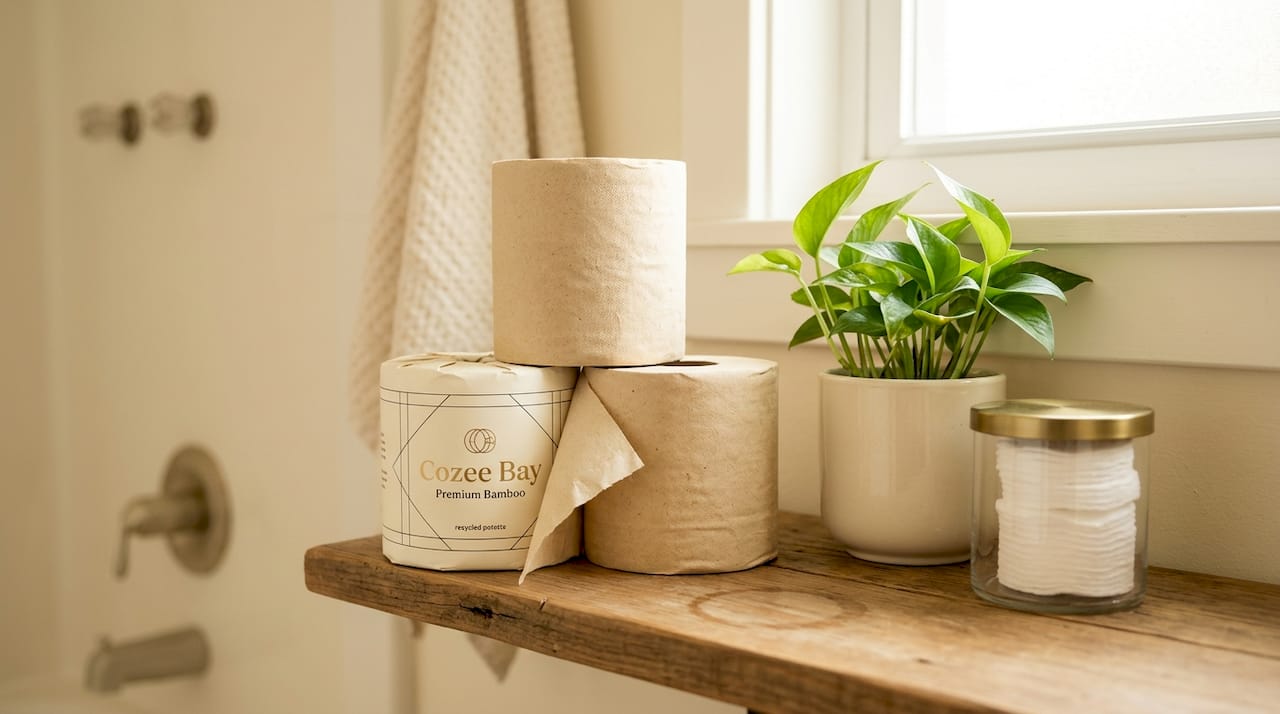
Reel Paper focuses exclusively on bamboo and consistently earns praise for its softness, making it one of the few eco options that feels comparable to conventional premium paper. Bamboo paper towel options share many of the same material advantages, which is why bamboo has become the eco-conscious consumer’s material of choice across paper products.
Seventh Generation sits at the more budget-friendly end. Their 100% recycled option is among the most widely available in regular grocery stores, making the switch to sustainable paper far more accessible for families who don’t want to wait on subscription delivery.
Caboo brings a unique bamboo-sugarcane blend to the table. Sugarcane fiber, also called bagasse, is an agricultural byproduct, meaning no additional crops are grown just for paper. This combination produces a surprisingly strong and soft sheet.
According to CNN Underscored’s bamboo vs recycled performance testing, bamboo toilet paper typically performs better on durability and feel than recycled toilet paper, although overall sustainability impact varies by material choice. If comfort is your primary barrier to switching, bamboo is your best entry point.
Pro Tip: Bamboo papers often score highest for comfort among eco options. If you’ve tried recycled paper and found it scratchy, give bamboo a chance before giving up on sustainable alternatives altogether. You might be pleasantly surprised.
If you’ve been exploring bamboo paper towel guides and already love the material, making the switch to bamboo toilet paper will feel like a natural extension of your sustainable living choices.
Understanding the shortlists, it matters whether you lean toward bamboo or recycled. Let’s compare these two head-to-head for real-world usage so you can make a decision that fits your life, not just your values checklist.
Why bamboo performs so well
Bamboo fiber is naturally strong and long, which translates to better tear resistance and a softer sheet. This matters especially for people who use bidets alongside toilet paper. As CNN Underscored’s testing confirms, bamboo performs better on durability and feel compared to recycled options in standardized testing. When you’re using a bidet and only need a small amount of paper for drying, you want that paper to hold together reliably.
Bamboo also grows incredibly fast, some species mature in three to five years compared to the 10 to 30 years required for most timber trees. It regenerates from its root system after harvesting, eliminating the need to replant. These qualities make bamboo one of the most renewable fibers available for paper production.
Where recycled paper shines
Recycled toilet paper, especially products made from 100% post-consumer content, eliminates tree harvesting entirely by using fiber that already exists in the waste stream. From a circular economy (using resources in closed loops to minimize waste) standpoint, this is the gold standard. You’re extending the life of paper fiber that would otherwise end up in a landfill.
The trade-off is comfort. Recycled fiber tends to be shorter and less uniform, which can result in a slightly coarser texture. Modern processing has improved this significantly, but in direct comparisons, bamboo still tends to win on softness. For a detailed look at how this choice compares to bidet vs toilet paper environmental impact, the calculus shifts depending on your bathroom setup.
| Factor | Bamboo | Recycled |
|---|---|---|
| Softness | High | Moderate |
| Durability | High | Moderate |
| Tree-free | Yes | Yes (if 100% PCW) |
| Bidet compatibility | Excellent | Good |
| Post-consumer content | Low to none | High |
| Cost | Moderate | Low to Moderate |
Situations where each option wins
Choose bamboo if:
Choose recycled if:
Choose a blend or rotate if:
“The best eco-friendly toilet paper is the one you’ll actually keep buying. A paper that holds up to your real routine is always more sustainable than one you abandon after a single roll.”
For more ideas on eco-friendly bamboo products across your home, bamboo has proven itself far beyond just the bathroom aisle.
But even top brands can greenwash. Greenwashing is when a product’s marketing overstates its environmental benefits, sometimes deliberately, sometimes through vague language. Here’s how to confidently decode toilet paper labels and certifications so you never fall for it again.
FSC sub-types: Know the difference
As noted by Choice on FSC and chlorine-free processes, not all FSC labels represent the same level of environmental rigor. Here’s the breakdown:
ECF vs TCF vs unbleached
Bleaching language matters more than most people realize. ECF uses chlorine compounds (safer than raw chlorine, but not entirely clean). TCF uses no chlorine at all, relying on oxygen-based processes. Unbleached paper skips whitening entirely, producing a natural brown color. For understanding toilet paper labels, recognizing these distinctions helps you evaluate actual environmental performance beyond surface-level claims.
How to spot greenwashing: A checklist
The Green Seal GS-1 standard covers environmental, health, and social requirements comprehensively, including fiber sourcing and post-consumer content calculations, making it one of the most reliable third-party signals for sanitary paper products.
“Packaging that feels eco-friendly is not the same as product that is eco-friendly. Always follow the certification, not the color scheme.”
Pro Tip: Rely on independent resources like the NRDC’s “Issue with Tissue” scorecard, which ranks major toilet paper brands on sustainability criteria. These scorecards aggregate data that no single product label can convey, and they’re free to access. For broader toilet paper sustainability standards, these resources give you an honest baseline.
After walking through all the criteria, certifications, and comparisons, here’s our honest take on what makes a sustainable toilet paper brand genuinely worth your loyalty.
The most common mistake we see is placing all the trust in a single certification or one “tree-free” claim. People see bamboo on the label and assume the job is done. But bamboo can still be bleached with chlorine compounds, shipped in plastic packaging, and produced by a company with no third-party accountability. One impressive claim does not make a complete picture.
Comfort matters more than eco enthusiasts like to admit. A household that switches to scratchy recycled paper and quietly goes back to conventional brands within two weeks hasn’t reduced its environmental impact at all. The sustainable choice has to fit your life to stick. That’s why we always say: start with bamboo if you’re comfort-sensitive, because it dramatically reduces the friction of making the switch permanent.
We also encourage you to think about your whole bathroom setup, not just the roll. A stylish bamboo paper towel holder or dispenser next to a thoughtfully chosen toilet paper brand turns a small sustainability win into a daily reminder of your values. Style and sustainability are not mutually exclusive. Choosing products that delight you and protect the environment is the goal, and it’s absolutely achievable. For deeper sustainable living insights, the same principles that guide toilet paper choices apply across every paper product in your home.
Be cautious with any brand that makes trade-offs sound like they don’t exist. Genuine sustainable brands are transparent about where they fall short and where they’re still improving.
Now that you know what to look for, here’s where you can find thoughtfully selected options that align with what you’ve just learned. At Cozee Bay, our collection is built around the same values this guide promotes: clear sourcing, honest materials, and products that make sustainable living feel genuinely good rather than like a compromise.

Whether you’re ready to pair your new sustainable toilet paper with a beautifully crafted bamboo dispenser or explore our full range of eco-friendly home essentials, we make it easy to build a bathroom (and a home) that reflects your values. Check out our bamboo paper product insights for more guidance on making bamboo work across every corner of your space. Free shipping within the contiguous U.S. and a money-back guarantee mean you can shop with confidence.
Both are strong eco-friendly choices, but they excel in different areas. Bamboo performs better on durability and comfort, while recycled options maximize post-consumer fiber content, so the best pick depends on whether you prioritize feel or zero-tree sourcing.
FSC indicates the paper comes from responsibly managed forests or recycled sources. For the strongest guarantee, look specifically for FSC 100% or FSC Recycled, since the FSC Mix sub-type allows a broader blend of fiber sources.
Check for recognized third-party certifications like Green Seal GS-1 or NRDC scorecards, and look for specific bleaching process disclosures and post-consumer content percentages rather than vague eco-marketing language.
Yes, bidet use can significantly reduce paper consumption overall, making it a more environmentally friendly option, especially when paired with a small amount of sustainable paper for drying.
Comments will be approved before showing up.