Your Cart is Empty


TL;DR:
- Choosing the right toilet paper involves matching roll size, ply, and material to your dispenser and environmental priorities.
- Monitoring cost per 100 sheets ensures value, while verifying septic safety prevents plumbing issues; eco-friendly options now match traditional softness.
A toilet paper roll is a cylindrical product made from layered tissue paper wound around a hollow cardboard core, defined by its width, diameter, ply count, and material composition. Whether you’re stocking a single bathroom at home or managing supplies for a restaurant, school, or senior living center, the roll you choose affects everything from comfort and cost to plumbing safety and environmental impact. Brands like Charmin, Kirkland Signature, and bamboo-based alternatives each offer distinct trade-offs in softness, sheet count, and sustainability. Getting familiar with the basics before you buy saves money, prevents dispenser headaches, and helps you make a genuinely greener choice.
Standard household rolls measure 4 to 4.5 inches wide and 4 to 5 inches in diameter, with an inner core diameter of 1.5 to 1.75 inches. Those dimensions have been the industry baseline for decades, and most residential toilet paper holders are built around them. Jumbo rolls used in commercial settings run 8 to 12 inches in diameter, which is why you see those large, lockable dispensers in restaurant restrooms and office buildings.
Understanding the difference between width, diameter, and core size matters more than most shoppers realize. Width determines whether the roll fits between the arms of your holder. Diameter determines how much paper is on the roll and whether it clears the holder’s clearance space. Core size determines which commercial dispensers will accept the roll at all, since core sizes range from 1.57 to 3.3 inches across product lines.
The table below shows how common roll categories compare across the dimensions that actually affect your purchase:
| Roll type | Width | Diameter | Core size | Typical use |
|---|---|---|---|---|
| Standard | 4 to 4.5 in | 4 to 5 in | 1.5 to 1.75 in | Home bathrooms |
| Mega / Double | 4 to 4.5 in | 5 to 5.5 in | 1.5 to 1.75 in | Home, light commercial |
| Jumbo | 4 to 4.5 in | 8 to 12 in | 1.5 to 3.3 in | Commercial restrooms |
| Mini Jumbo | 4 to 4.5 in | 6 to 8 in | 1.5 to 2.5 in | Schools, offices |
Sheet size also plays a role. A standard sheet is roughly 4.5 by 4.5 inches, though some brands have quietly reduced sheet dimensions over the years to lower costs without changing the sheet count on the label. Always check the total roll length in inches, not just the sheet count, for an accurate comparison.
Pro Tip: Measure the clearance space inside your current toilet paper holder before buying mega or double rolls. Rolls exceeding about 5.5 to 6 inches in diameter can rub against the holder’s edges and resist spinning freely, which turns a simple bathroom task into a frustrating tug-of-war.
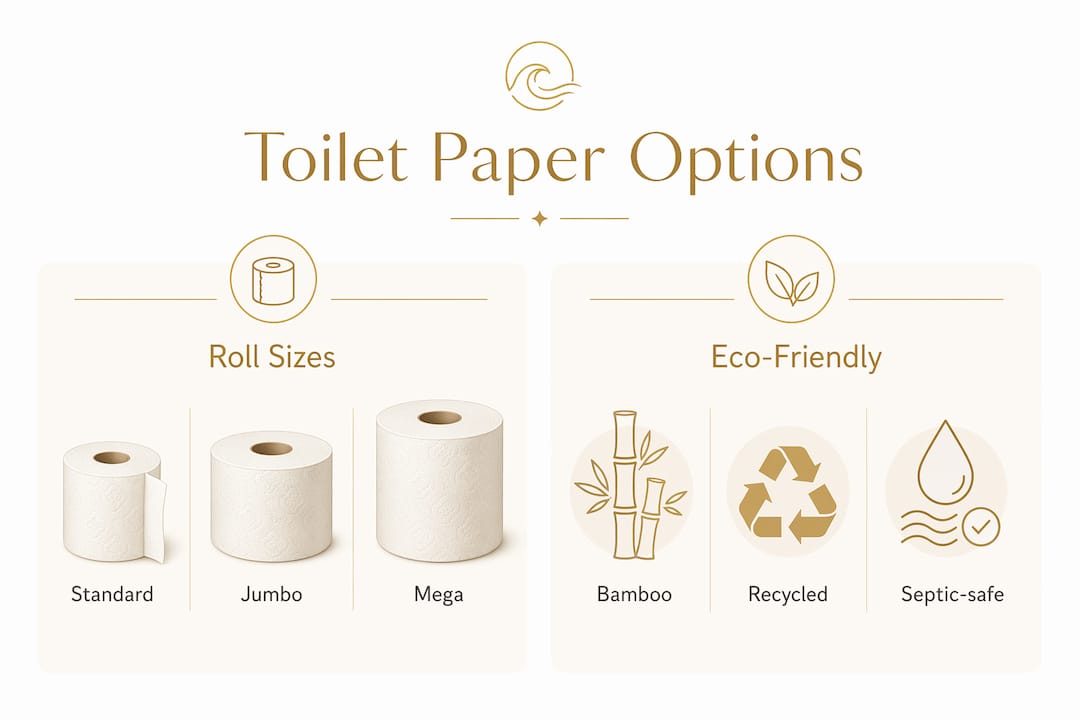
Ply refers to the number of tissue layers bonded together in each sheet, and it directly determines softness, thickness, and how quickly the roll depletes. One-ply rolls are thin and economical, common in high-traffic commercial settings where cost per use matters most. Two-ply is the standard for most households, offering a balance of comfort and durability. Three-ply and four-ply options exist for premium softness, though they come with trade-offs worth knowing.
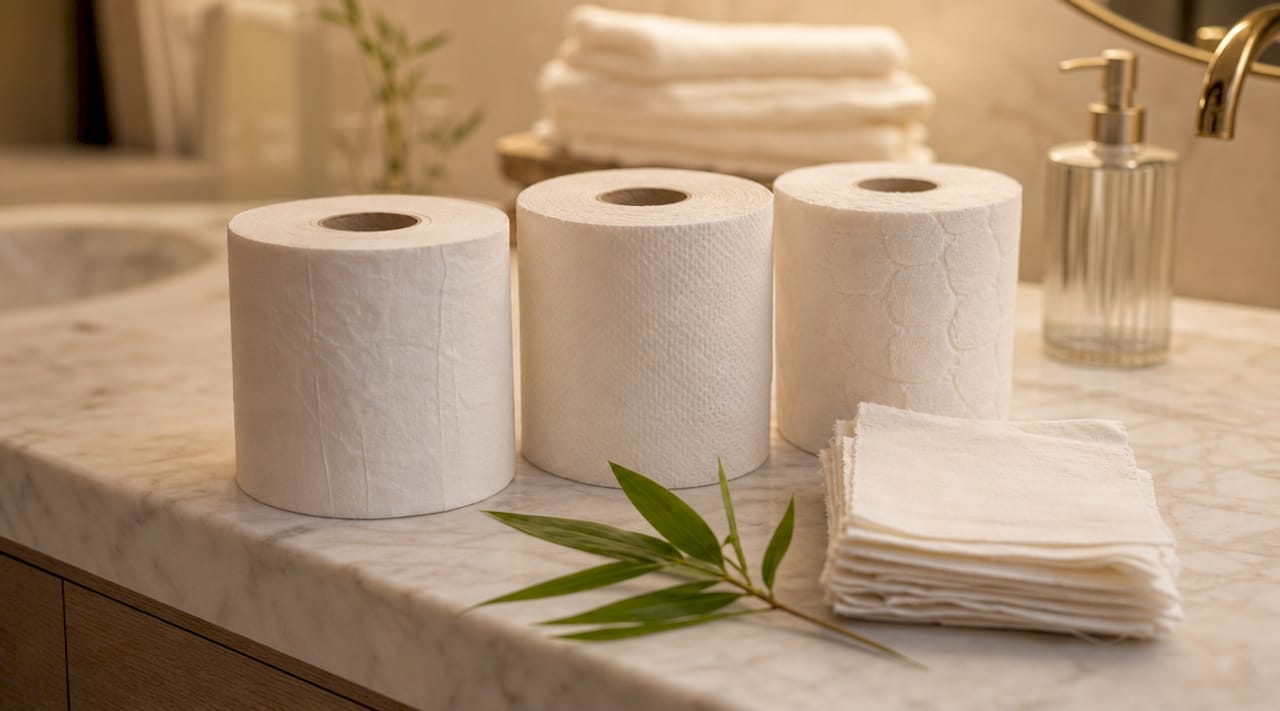
Standard rolls contain 200 to 500 sheets, while mega rolls typically exceed 300 sheets and commercial jumbo rolls can hold 800 to 1,200 or more inches of paper. More ply means each sheet is thicker, so a 200-sheet two-ply roll contains roughly twice the paper mass of a 200-sheet one-ply roll. That matters when you’re calculating actual value.
Here is what you need to know about material types and their real-world implications:
Septic safety is a separate concern that catches many shoppers off guard. Consumer Reports testing shows that some premium, thick brands disintegrate poorly in plumbing and septic systems despite their marketing claims. If your home uses a septic tank, prioritize rolls labeled “septic-safe” over assumptions based on ply count alone.
Pro Tip: One-ply rolls are not automatically septic-safe, and four-ply rolls are not automatically problematic. The fiber type and bonding method determine disintegration speed. When in doubt, check the manufacturer’s septic compatibility statement rather than guessing by thickness.
The package price on a roll of toilet paper tells you almost nothing useful. A 12-pack of 300-sheet two-ply rolls and a 12-pack of 200-sheet two-ply rolls can sit side by side at similar prices, but one delivers 50% more paper. The only reliable metric is cost per 100 sheets, which ranges from 17 cents to 69 cents depending on brand, ply, and retailer.
Follow these steps to calculate real value before you buy:
Marketing terms like “mega roll,” “double roll,” and “super roll” have no standardized definitions. One brand’s mega roll may contain 264 sheets; another’s may contain 400. Unit pricing metrics like cost per 100 sheets or cost per inch neutralize that confusion entirely and give you a number you can actually compare.
| Brand tier | Approx. cost per 100 sheets | Ply | Notes |
|---|---|---|---|
| Budget store brand | $0.17 to $0.25 | 1 to 2 | Lower softness, high volume |
| Mid-range (e.g., Kirkland) | $0.25 to $0.40 | 2 | Strong value, bulk available |
| Premium (e.g., Charmin Ultra) | $0.45 to $0.69 | 2 to 3 | Softer, but check septic safety |
| Bamboo / eco brands | $0.35 to $0.60 | 2 to 3 | Sustainable, improving in value |
Bulk buying lowers per-unit cost, but only if you have storage space and actually use the product before it degrades. Toilet paper stored in humid bathrooms can absorb moisture and lose quality over time. If you want practical tips on saving money through bulk purchasing, resources like bulk buying guides for household consumables offer transferable strategies that apply directly to toilet paper stocking.
Dispenser compatibility is the most overlooked factor in toilet paper purchasing, and it causes more day-to-day frustration than almost any other bathroom supply decision. A roll that looks right on the shelf can jam, tear, or simply refuse to spin once it’s loaded into your holder. The fix is straightforward: measure before you buy.
Here is what to check before purchasing any bathroom tissue roll for a specific dispenser:
For commercial settings like restaurants, schools, and senior living centers, the stakes are higher. A mismatched roll in a high-traffic restroom means staff are constantly unjamming dispensers or replacing torn rolls, which adds up in both labor and wasted product. Choosing a compatible toilet paper holder designed to accommodate a range of roll sizes eliminates that problem before it starts.
If you’re managing multiple restrooms in a commercial setting, standardizing on one roll size and one dispenser model across all locations dramatically reduces purchasing complexity and maintenance time.
Sustainable bathroom tissue rolls have improved dramatically in quality and availability over the past several years. Choosing one no longer means sacrificing softness or performance. Here is a breakdown of the main options and what actually matters when evaluating them:
For a deeper look at brands that meet these criteria, the top eco-friendly toilet paper brands guide covers the leading options with detailed comparisons. Switching to a sustainable roll is one of the easiest household changes you can make, and it adds up fast when you consider how many rolls an average household goes through each year.
Choosing the right toilet paper roll requires matching size and ply to your dispenser, your budget, and your environmental priorities rather than defaulting to brand recognition alone.
| Point | Details |
|---|---|
| Size dimensions matter | Standard rolls are 4 to 4.5 inches wide and 4 to 5 inches in diameter; measure your holder before buying. |
| Use cost per 100 sheets | Price ranges from $0.17 to $0.69 per 100 sheets; this metric cuts through misleading marketing terms. |
| Ply does not equal septic safety | Premium thick rolls can fail in septic systems; always check the septic-safe label explicitly. |
| Eco options are now competitive | Bamboo and recycled rolls match conventional quality and carry certifications like FSC and PCF. |
| Dispenser fit prevents waste | Core sizes range from 1.57 to 3.3 inches; mismatched rolls jam dispensers and waste product. |
For a long time, I grabbed the same brand out of habit, the one with the bear on the label, without thinking twice. It took a jammed dispenser, a plumbing scare with a septic system, and a closer look at the cost-per-sheet math to realize I had been overpaying for a product that was not even the best fit for my setup.
The biggest misconception I see is that thicker automatically means better. A four-ply roll feels luxurious, but if it does not disintegrate properly or costs three times as much per sheet as a solid two-ply recycled option, it is not actually serving you well. The same goes for mega rolls. They sound like great value until you load one into a holder with insufficient clearance and spend the next month fighting a roll that barely turns.
My honest advice: check your dispenser dimensions first, calculate cost per 100 sheets second, and then factor in material and sustainability. Bamboo rolls have become my personal preference because they perform well, carry credible certifications, and do not require me to choose between comfort and conscience. If you manage a commercial space, standardizing your roll size and dispenser type across all restrooms is the single change that will save you the most time and money over a year.
— Cozee

At Cozee-bay, we believe your bathroom should work as well as it looks, without costing the planet. Our handcrafted bamboo toilet paper holders and dispensers are designed to fit a wide range of roll sizes, from standard household rolls to larger eco-friendly options, so you never deal with a jammed or ill-fitting dispenser again. Every product ships free within the contiguous U.S. and comes backed by our money-back guarantee. Whether you’re outfitting a single home bathroom or stocking multiple restrooms for a restaurant or school, browse our eco-friendly bathroom essentials to find the right fit for your space and values.
A standard household toilet paper roll measures 4 to 4.5 inches wide and 4 to 5 inches in diameter, with an inner core of 1.5 to 1.75 inches. Commercial jumbo rolls are significantly larger, reaching 8 to 12 inches in diameter.
Standard rolls typically contain 200 to 500 sheets, while mega rolls exceed 300 sheets and commercial jumbo rolls can hold 800 to 1,200 or more inches of paper depending on ply and sheet size.
Both are strong eco-friendly choices. Bamboo grows faster and produces a softer sheet, while recycled toilet paper diverts post-consumer waste from landfills. The best option depends on your priorities: softness and renewability favor bamboo, while waste reduction favors recycled fiber.
Measure your holder’s width clearance and the distance from the back wall to the roll bar. Rolls wider than your holder or with a diameter exceeding 5.5 to 6 inches may not spin freely, causing tearing and frustration.
Septic-safe means the roll is tested to disintegrate quickly enough to pass through septic systems without causing clogs. Thickness and ply count do not determine septic safety. Always look for an explicit septic-safe label, especially with premium or ultra-thick brands.
Comments will be approved before showing up.